One afternoon when I was sitting on the sunny deck (still in Colorado for another few days) to read my book club book, Laddie came out and stood close by, searching my eyes and smiling his shy smile. He commented on how I wasn’t making much progress in Frankenstein. I teased him, “That’s because every time I sit down to read you come and talk to me.”
“You could go in your room and shut the door,” he said.
“But I like to talk to you, Laddie. It doesn’t matter if I finish this book. I can read it on the plane when I leave here.” Then we chatted for awhile, and more children came and went and climbed up on my lap and down again. Quickly and often the innocent and sweet conversation erupts into loud squabbling, but eventually equilibrium is restored and we go on.
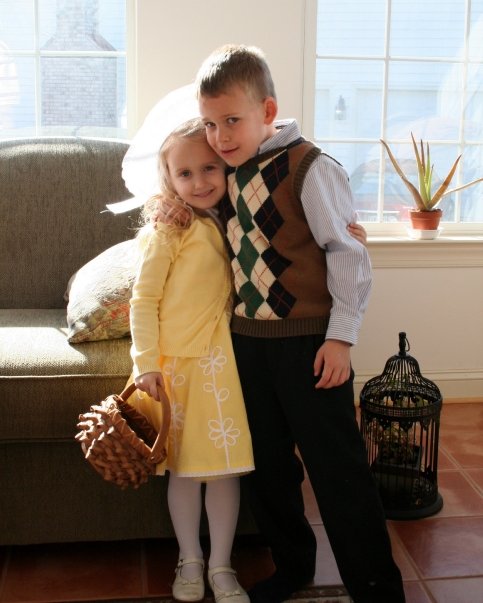
The flowers and creatures that I typically focus on here are complex and fascinating, but they are nothing so glorious as the human soul. When that inner person is glimpsed in the clear eyes and honest, unselfconscious tenderness of a child, I so wish that my powers of attention and description were better, that I could convey to you something of this child, this unique personality.
If I put up a photo of a flower that I encounter, along with not much more than its name, it doesn’t grieve me that I have failed to “capture” and convey its complexity and deep beauty. But when it comes to people, everything I might say seems like an unworthy reduction and distortion.
When I was the parent bringing up my own children, my thoughts were naturally more on training and teaching, and forming the character of the children. Now that is not my job, and I am at more leisure to observe and enjoy each grandchild as he is, at whatever moment I am present with him. Since none of them lives near me, more and more the most important thing I can do to affect their future is to pray.
With my limited writing skills, I will continue to tell you about the birds and the flowers.
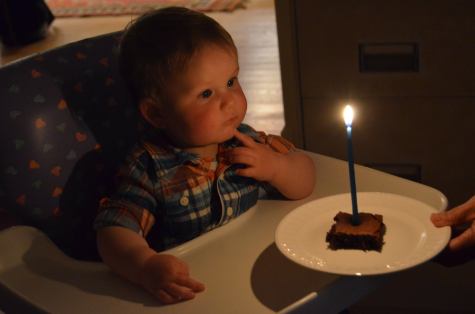
(Photos from previous years and younger grandchildren.)
I’m the opposite of bored here in Colorado with my son’s family, but I have had a terrible yawning problem since I arrived ten days ago. It must be the altitude (7300′), which I will blame for the sleepiness that comes over me at times, too.
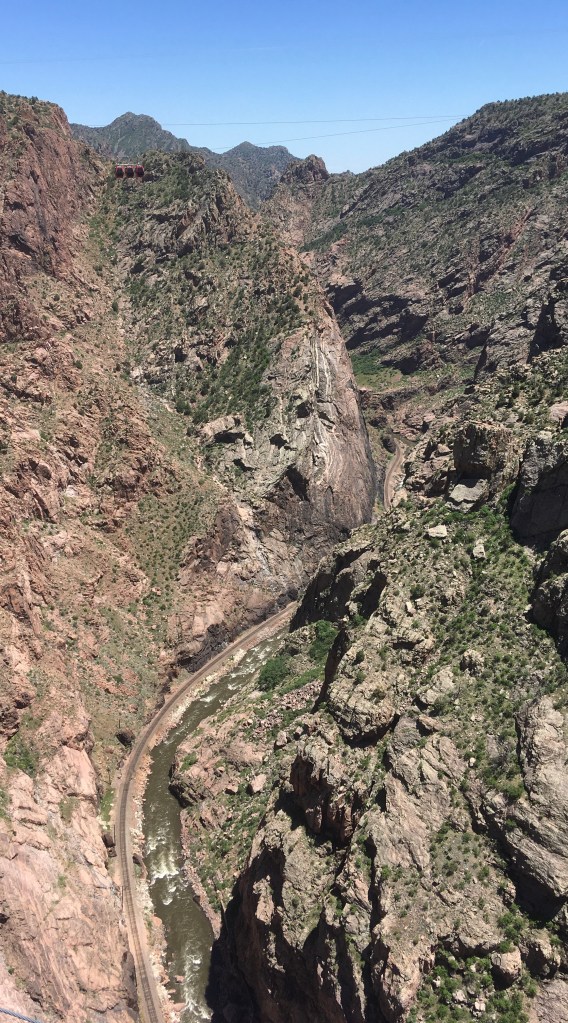
Today was the least yawny and sleepy. Soldier drove us south a bit to a lower elevation, where we also enjoyed warmer weather while we played around at the Royal Gorge. Maybe everyone has heard about this canyon above which a suspension bridge was built in 1929, 955 feet above the bottom, where the Arkansas River flows along a single railroad track.
It was another happy chance to identify wildflowers and plants. I’ve been doing that a lot.
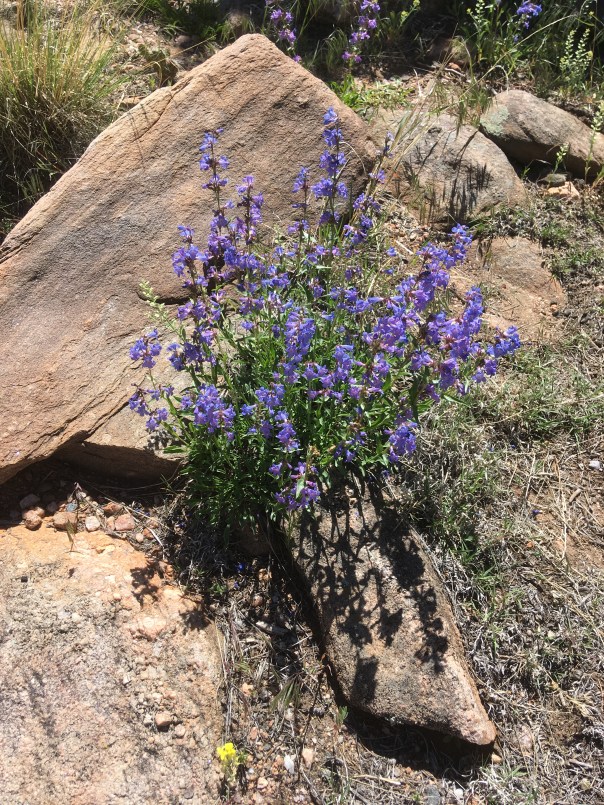
Beardtongue Penstemon
This penstemon called Beardtongue is all over around the Gorge.
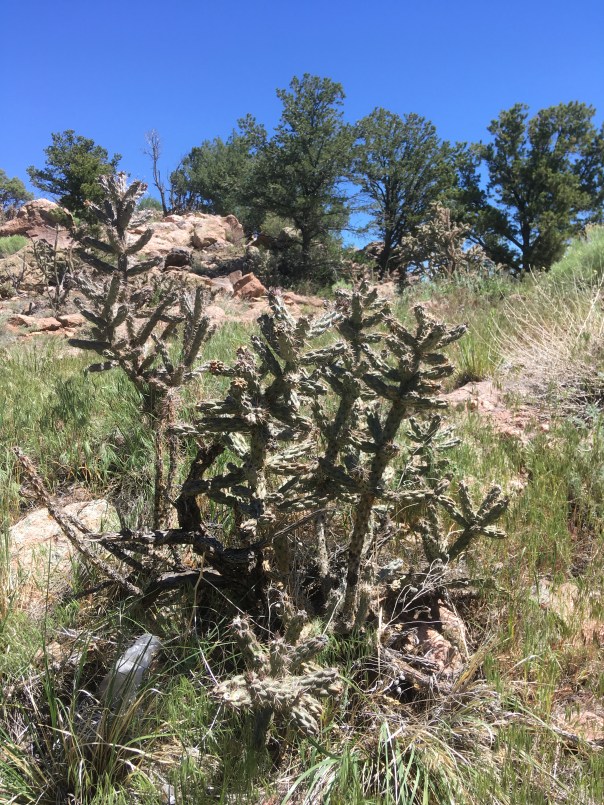
Also cholla cactus and prickly pear.
Starvation Prickly PearCholla
There were a lot of fun things to do at the Royal Gorge park. We all rode the gondola across the gorge, and before walking back across the pedestrian bridge the children played on giant slides and tunnels, and rode the carousel. I took pictures of plants — and grandchildren, of course.
Clara
All week I’ve just been hanging around with the tribe doing much of what they do, or merely observing the more rambunctious activities of the boys, and listening to little Clara’s feminine conversation.
The cold and rainy weather has passed. The last of it was the evening we sat bundled up with coats and blankets to watch Liam’s Little League game out on the plains. Now the temps are moving into the high 70’s, and I can get sunburned sitting on the deck so close to the sun.
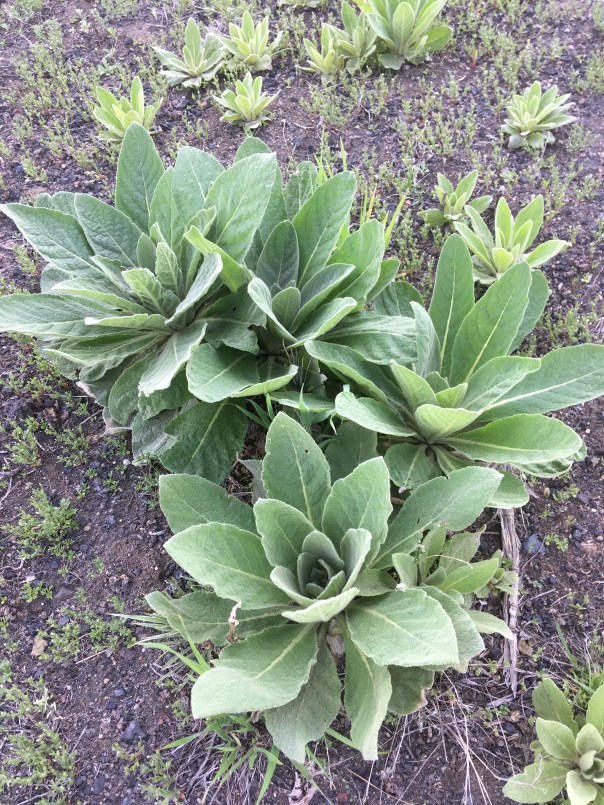
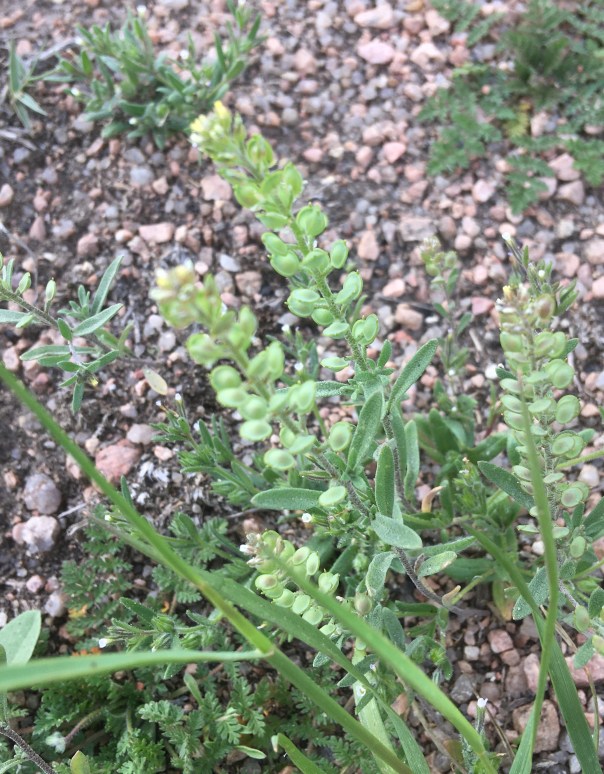
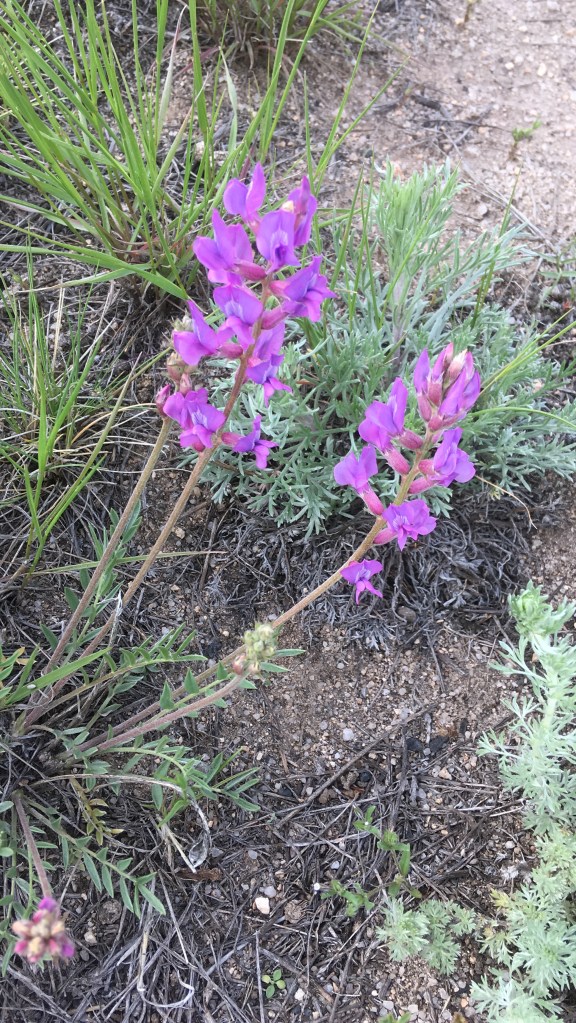
MulleinDesert MadwortStemless Point-vetch
Many of the wildflowers I’ve identified are scrubby looking sorts with the most diminutive flowers. Also the beautiful blue Royal Penstemon at top, which we discovered just down the path from the karate studio while Liam was in class, along with purple Stemless Point-vetch. Magpies, robins, flickers and Mountain Chickadees flit and sing among the pines and firs and spruces that grow thick in the neighborhood.
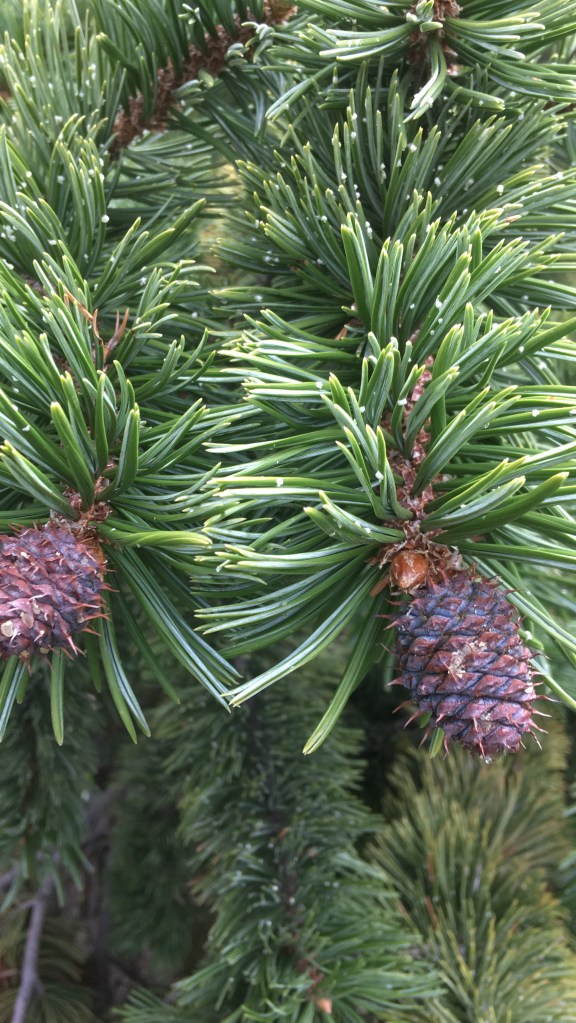
Rocky Mountain Bristlecone Pine
Just at the edge of the back yard is a giant clump of White Willow trees where the boys play. Laddie told me about the Bible studies he likes to have with their rabbit stuffie in particular, on a rock in the middle, encircled by more than a dozen trunks arching up and away.
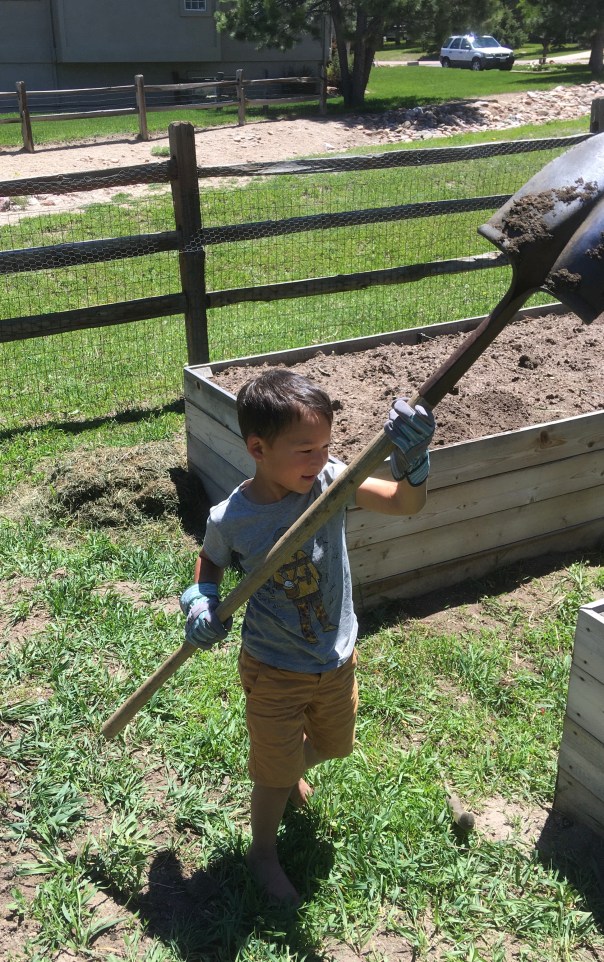
Yesterday everyone was digging and planting in hills and boxes, so I gave Brodie one of his birthday presents early: a pair of kids’ work gloves. He wore them all day, long after all the work was done, he loves them so.
Brodie
A wolf spider with an egg sac was disturbed by the digging and ran away from the squash hills. This evening while I was with Clara under the play structure in the back yard, I saw a Cutworm Wasp digging a hole in the sand that had escaped the sandbox. I decided not to show you the wasp’s unremarkable photo, but will close with the spider, because that sleepiness is coming over me again, and tomorrow is another big day. Happy June!
Here I am in Colorado, with my son “Soldier’s” family. It’s quite different from my last visit to the state, which was in the fall of 2018 when Clara was a newborn. The sky is blue and the grass green, the trees that were bare and brown back then are leafing out and the conifers have tender needle tips.
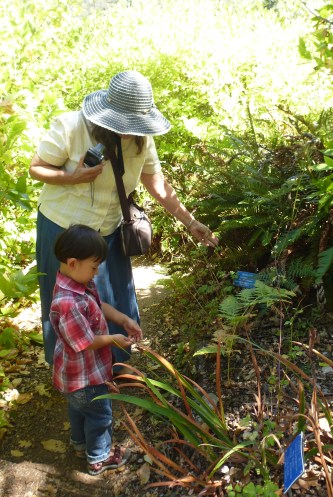
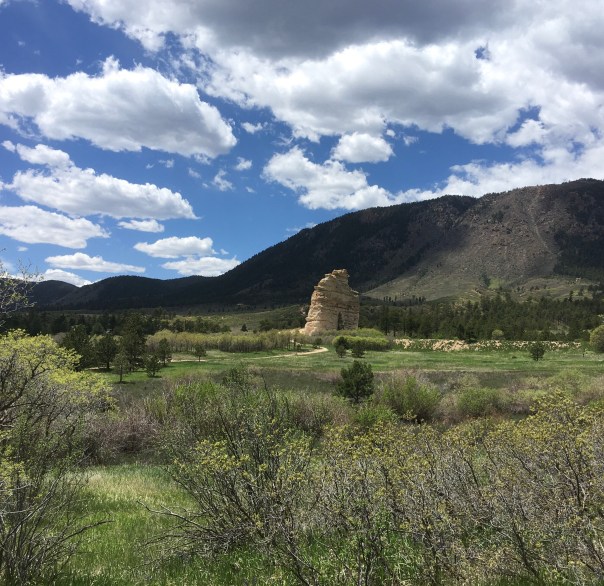
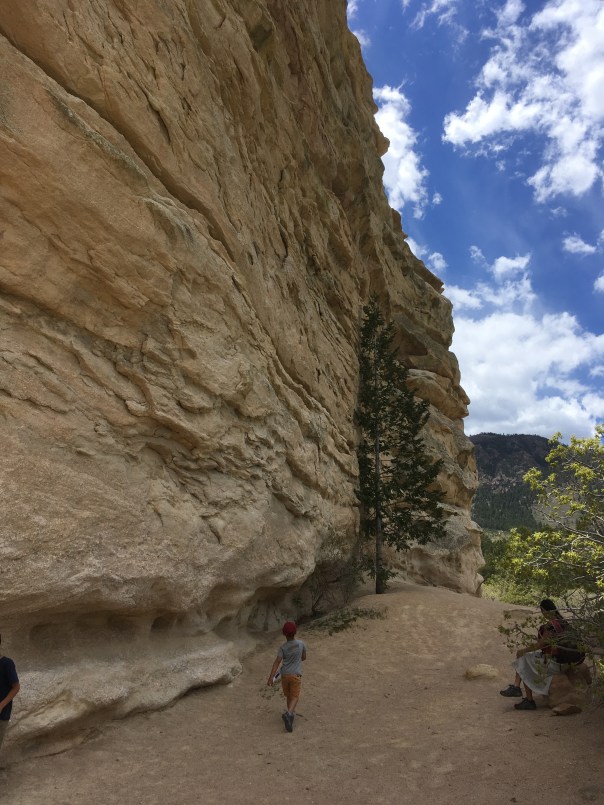
One day while Soldier was at work the rest of us walked at Monument Rock, through forests of gambel oaks to a monolith of sandstone. Other people on the path smiled to see all the children bending over one wildflower after another as we tried to find their names in my Seek app. “Which ones have you seen?” they asked. “The bluebells? And the Spring Beauties?”
Yes, we had. And many others: Crossflower, Nuttal’s Larkspur, Fringed Sagebrush, Tall Western Groundsel, Leafy Spurge, and Field Pennycress.
BluebellsSlender Phlox
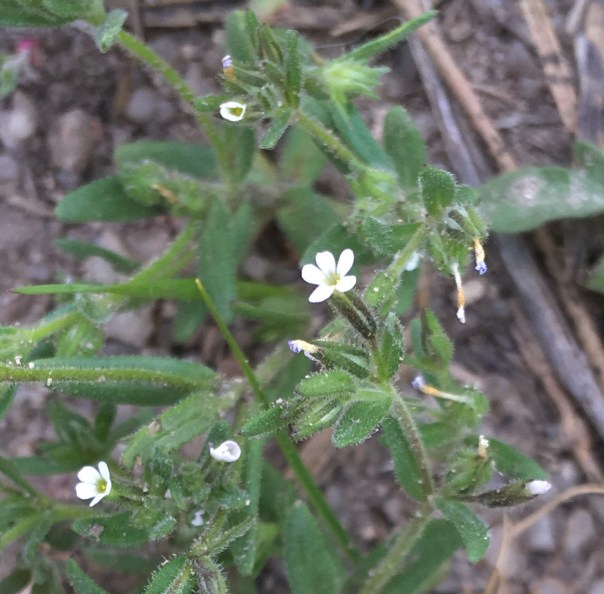
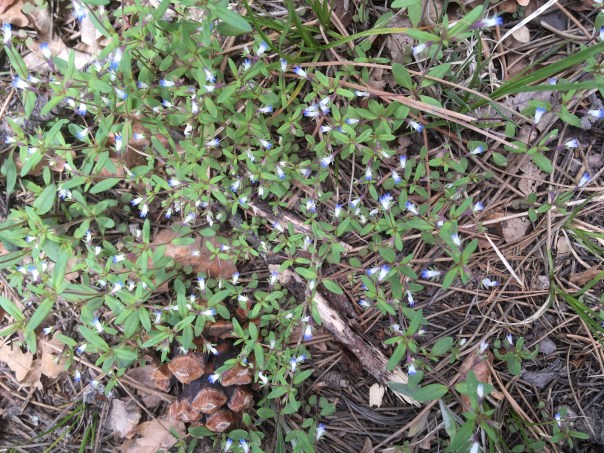
We were charmed to make the acquaintance of a tiny flower that Laddie was first to notice, a soft blue blur low to the ground at the side of the trail. We identified it as Small-flowered Blue-eyed Mary (collinsia). “Pleased to meet you, Mary!” the boys said, and carefully shook delicate stems.
Along the trail we also stopped to peer at small fish in a pond, and I collected sand for my collection at the base of Monument Rock. The sun gets hot here, at the eastern base of the Rocky Mountains, and it felt good to me to be in that dry, slow oven. Seeing Joy and Clara on the sandstone path made me think of that book I love, Along Sandy Trails. One of the boys reminded me that the girl in that book did not wear pigtails.
At home later, we zoomed in on the picture of the Mary flowers to admire their fine lines and clear colors. And we walked around the house to compare the Bittercress there with the Field Pennycress we’d seen on our outing. May appears to be the perfect time for a wildflower lover like me to visit Colorado and join with my grandboys to make new flower friends. And we met a grasshopper, too!
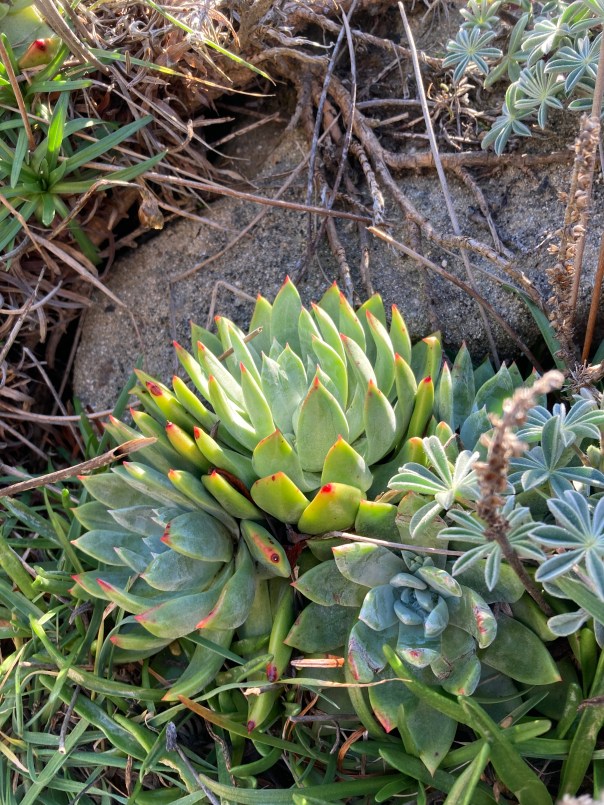
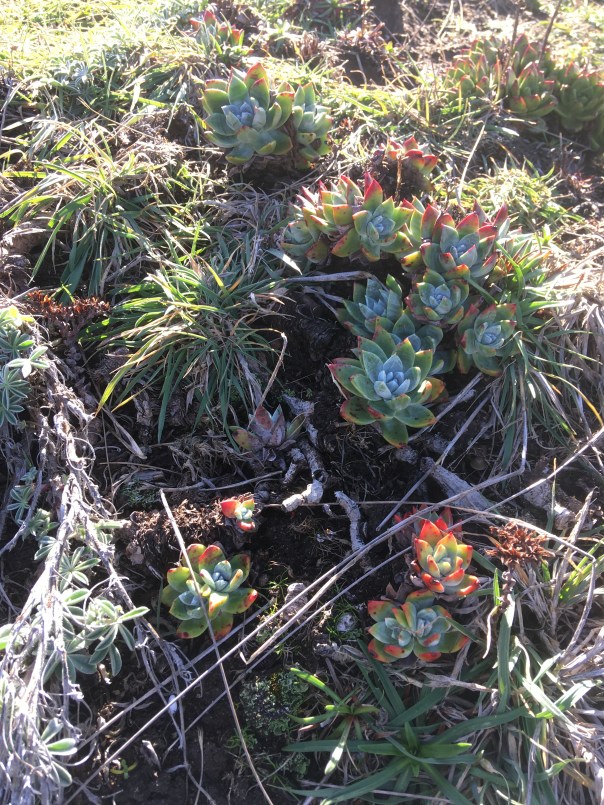
Succulents and mustard are related by their mutual membership in the plant kingdom, but also by being bright particulars of my weekend that also included lots of ocean watching.
“Why pay a premium for organic brassicas like kale and broccoli at the farmer’s market when all the free wild mustard you could ever ask for is likely waiting right around the corner?”
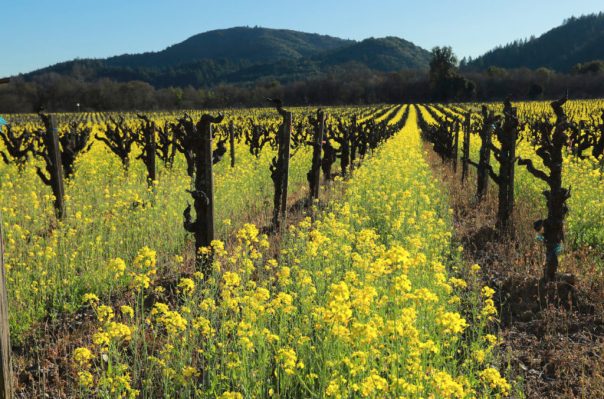
This question was posed in an article about food foraging that I read last weekend. Pippin’s family was here and we had opportunity to explore the topic. On Saturday we took a long drive to Salt Point State Park, farther north on the coast than I have been in many years, and passed by many vineyards looking like this:
We tried to remember whether the mustard we are used to seeing in springtime in California is at least a near relation to what one buys prepared in a jar, and that night we researched further, finding once again how many good edibles are in the Brassica family. We had no idea we’d get the chance to taste some very soon.
Yes, that mustard above ismustard, and in this context it isn’t considered a weed that needs eradicating. It actually helps suppress the nematode population among the grapevines, because mustard contains high levels of biofumigants in the form of glucosinolates. Evidently the sharp flavor isn’t appreciated by the nematodes. However the mustard got there, it’s ubiquitous now, and beneficial.
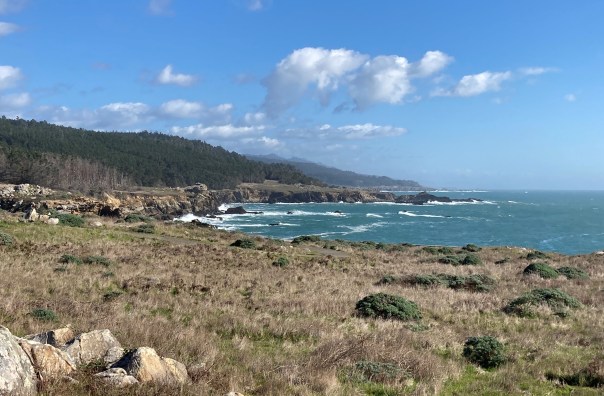
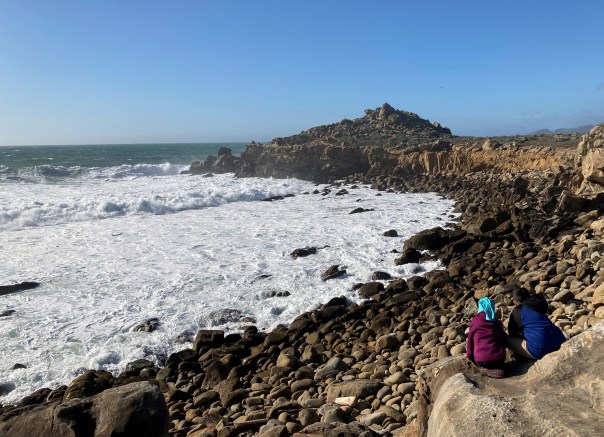
At Salt Point the sun shone on us brilliantly, and made us squint. The wind pushed us this way and that, and the sound of crashing surf thundered up the cliffs to where we walked along the headlands. Some of us had gaiters around our necks, which we pulled up to keep our hair out of our eyes and our cheeks warm.
We wanted to climb that “castle rock,” but Pippin thought she better go scout ahead for poison oak. She found a lot of it, so we gave up on that idea.
Most of the plants out there hug the ground or the rocks where they are growing. Even the milkmaids stay under cover. When Ivy took off her gaiter scarf, her hair needed re-gathering into its scrunchie; once we accomplished that, she bounced off musing, “Some people say, ‘Another day, another dollar;’ but we always say, ‘Another day, another hair out of place!'”
Milkmaids
Some brassicas are likely in this mix.
sanicle
lupine
Where the trail dropped down close to the shore, we explored the sandstone that has been carved into strange shapes by the wind. The surface of the rocks with the smoothest appearance, where I grabbed when I felt buffeted off balance, was like the coarsest sandpaper.
The children all napped on the way home that evening, but slept long in their bags after they went to bed again later that night. Before we knew it we were all up and going again, but southwest this time, aiming for a hike along the Marin Headlands. Marin County is the one just north of San Francisco County/City, and it soon became evident that this destination, so much closer to a large population, was going to be too crowded. There was nowhere to park at the trailhead.
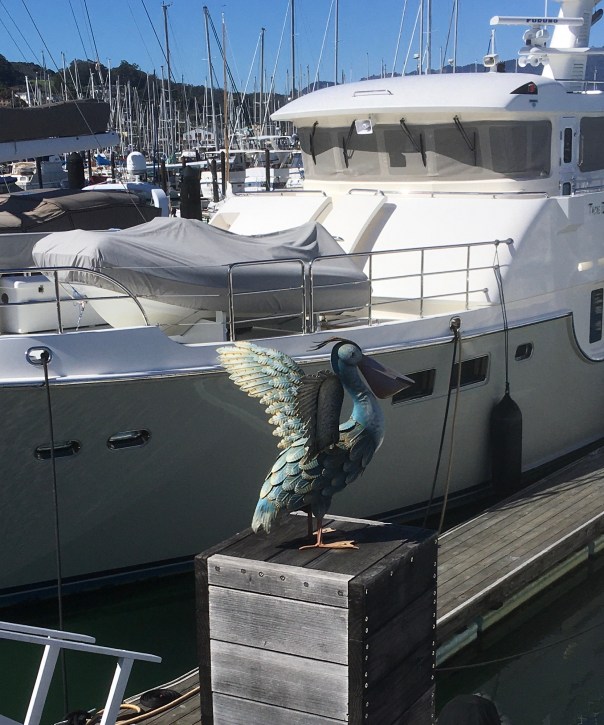
So we went into the town of Sausalito and looked at boats in the harbor, and ate our lunch at a little park with a view of Angel Island, and the Bay Bridge to the southeast.
The first wild thing we found to eat that morning was oxalis, or sourgrass, also called wood sorrel. Once I told the children about it, they continued to break off stems and chew on it for the rest of the day, it being everywhere we went. Ivy liked the flowers best, but most of us preferred the stems.
Plantain was growing everywhere beneath our feet, mixed in with the oxalis. Scout told me that if you get a rash from stinging nettle you can chew some plantain and put it on the rash to soothe it. But there were no nettles in this neighborhood, and we left the plantain alone.
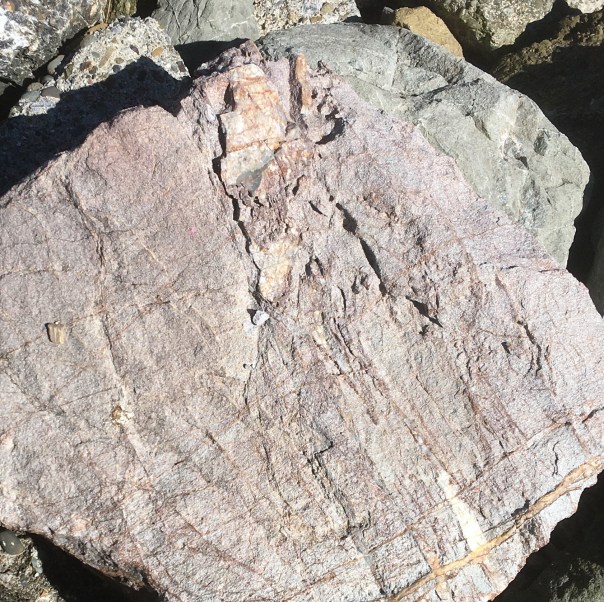
The water was glittering, and the children discovered countless crabs as they peered into their dark caves among the rocks. While the more agile folk spied on crabs, I admired the colorful minerals in the giant specimens bordering the sidewalk.
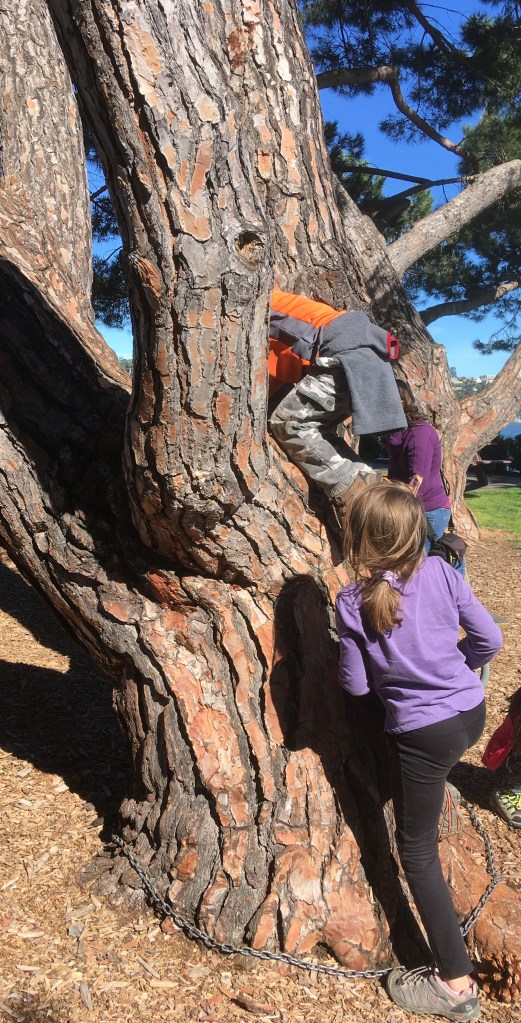
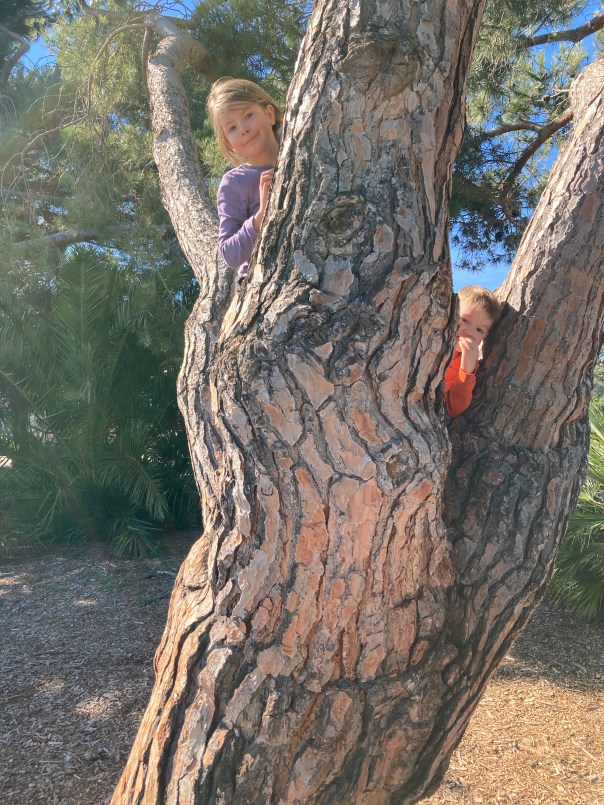
Big pine trees with gorgeous trunks shaded us at the park. Ivy and Jamie took on the challenge of climbing one of them. Their mother gave them tips from time to time; eventually Ivy gave Jamie her knee for a footstool, and he was up! Pippin then helped Ivy, and they finished their lunch in an elevated position.
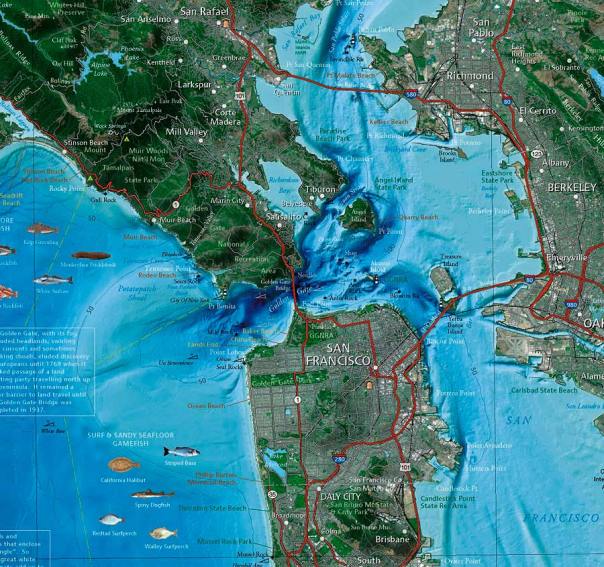
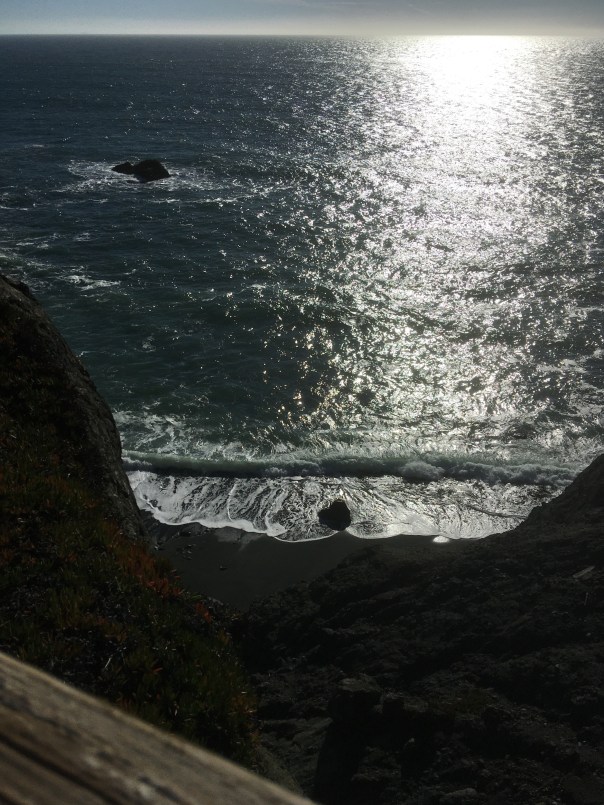
We drove to a different access point for the Marin Headlands and ended up at Point Bonita. Here is a map on which you can see the point, right where a lighthouse needed to be, outside San Francisco Bay at its north entrance. The lighthouse itself is closed currently, but we walked down the little peninsula as far as possible.
We stared and stared at the Golden Gate Bridge, from that perspective that we rarely get, looking in toward the bay. That narrow entrance to a huge bay was named the Golden Gate Strait by John C. Fremont:
“In 1846, when soldier, explorer and future presidential candidate John C. Fremont saw the watery trench that breached the range of coastal hills on the western edge of otherwise landlocked San Francisco Bay, it reminded him of another beautiful landlocked harbor: the Golden Horn of the Bosporus in Constantinople, now Istanbul. Fremont used a Greek term to name it: Chrysopylae – in English, Golden Gate. In his 1848 ‘Geographical Memoir,’ Fremont added another layer of meaning: The rugged opening to the Pacific, he wrote, is ‘a golden gate to trade with the Orient.'”
Here is another map of the bay from 1909, before the Golden Gate Bridge was built.
A couple dozen harbor seals were sunning themselves on rocks in Bonita Cove. We could see Ocean Beach in San Francisco to the south, and the skyline of the city with its new, tallest building, the Salesforce Tower, and indeed it towers over the others. I don’t think it’s as ugly as its name, which speaks volumes about our society. But let’s get back to more interesting things…
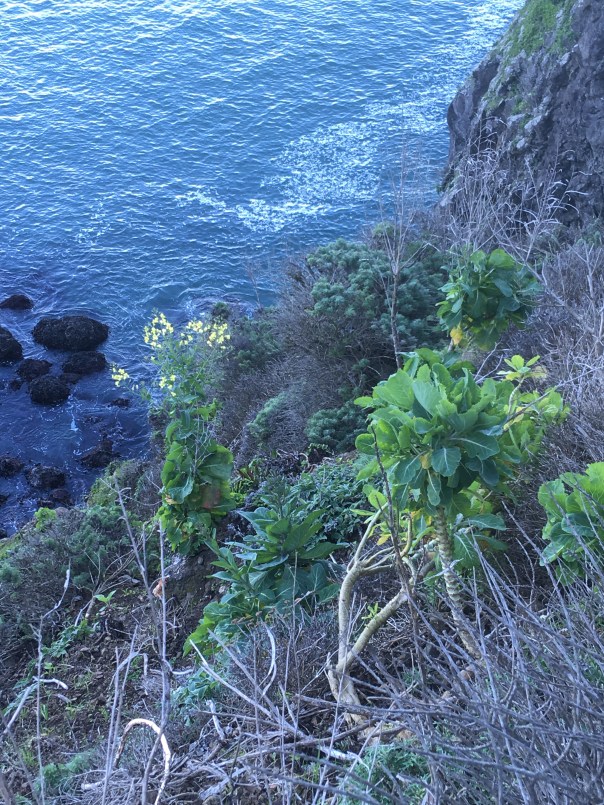
… And what do you think we saw at our feet? Mustard! I wouldn’t be surprised if these plants or their grandparents have been hanging around these bluffs for a hundred years or more; they are obviously robust and venerable.
Quite recently they’ve had baths and blow-drys, and the leaves looked so juicy…
… it’s no wonder Pippin wanted to taste a leaf. I of course had to follow suit… Yikes! That is the strongest tasting Brassica I ever hope to sample.
Ivy tried a periwinkle flower and spat it out. Then, the kids interacted with their environment with hands and feet, making their way up the rocky wall to our west.
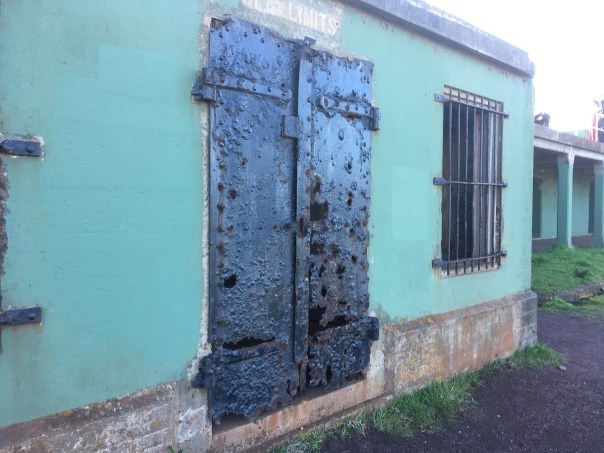
We walked back up the path and drove around the corner to the former Fort Cronkhite, now part of the Golden Gate Recreational Area. From the batteries we could see north up the coast and south to the lighthouse.
Another Brassica lives on that side, the very common wild radish, raphanus raphanistrum; shown here with violet blooms, though white and yellow are common, too. I used to notice these flowers as I walked home from the bus stop as a child. We didn’t taste this one.
wild radish
California Manroot
The last Brassica experience of the weekend was the next morning when Pippin took a little tour of my garden before they started home. She told me she’d eaten some of the flower buds of my collards. How did they taste? “Like broccoli.” I don’t normally eat my collards raw, but I decided to snap off all the developing flower stems, and I ate them right then. Mm-mm — they were so sweet and tender. And just around the corner of my own house.
 “You could go in your room and shut the door,” he said.
 description were better, that I could convey to you something of this child, this unique personality.










 Yes, that mustard above is mustard, and in this context it isn’t considered a weed that needs eradicating. It actually helps suppress the nematode population among the grapevines, because mustard contains high levels of biofumigants in the form of glucosinolates. Evidently the sharp flavor isn’t appreciated by the nematodes. However the mustard got there, it’s ubiquitous now, and beneficial.





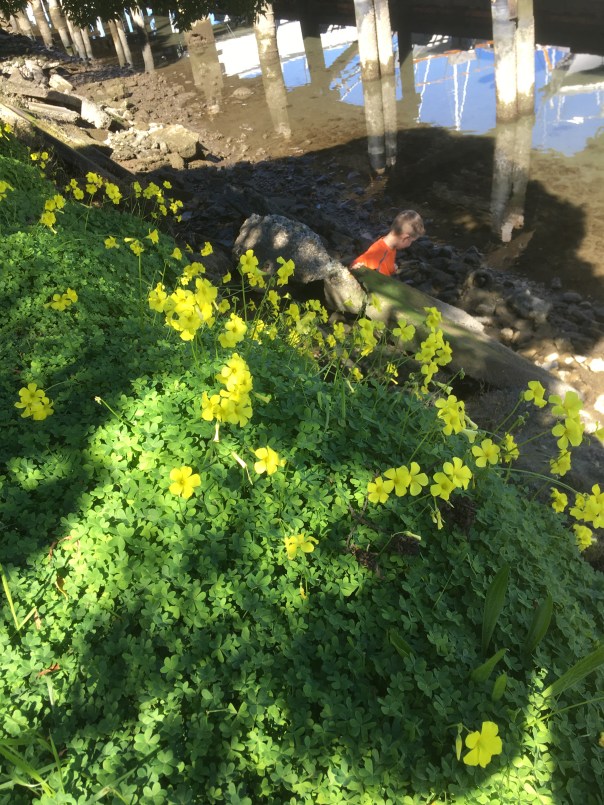
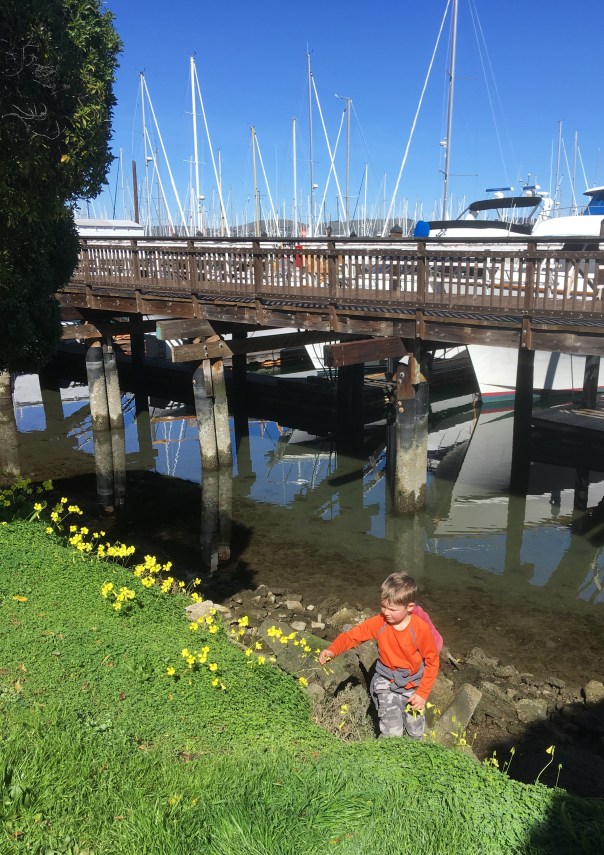
 Plantain was growing everywhere beneath our feet, mixed in with the oxalis. Scout told me that if you get a rash from stinging nettle you can chew some plantain and put it on the rash to soothe it. But there were no nettles in this neighborhood, and we left the plantain alone.