Many months ago I wrote the draft of this post, when I was making pudding frequently for my husband. In the last week of his life he ate little else. Cancer and chemo had made meals a challenge, and toward the end, this was the best solution to the various food-related problems.
He needed the extra-extra nourishment that is in this rich chocolate confection. For him I added additional egg yolks, which you might do, too, if you are cooking for someone who is anemic, or who can’t eat much at one time, and needs the mega-nutrition that is in each bite. Unless someone doesn’t like chocolate, they will probably find it easy to eat.
Though it is a truly delicious dessert to serve to anyone — even the healthiest people! — I myself surely do not need super rich nutrition, and after my husband died I couldn’t imagine what might move me to cook it again.
I found my motivator recently when a friend was in the rehab hospital after a painfully tedious ordeal. On the phone I arranged to go visit her and asked, knowing that the institutional meals were likely to fall short of fully satisfying to the whole person, if I might bring her anything. She requested chocolate pudding, having in mind a prepared version from the grocery store. I wasn’t familiar with that sort anyway, but since I had become such an expert at this version, I immediately knew that I would make it for her.
It really is not difficult, and you don’t have to practice as much as I did to find that out. I had a good system going for laying out my ingredients and working through the steps quickly. One day I even produced two batches, one in the morning and one in the evening! Any other dessert I’ve ever made has been rare enough that I wasn’t comfortable and familiar with the process in a way that let me experience that flow. At the time, I might add, I was consoled and cheered by being able to create something that was pleasing and and useful, even though I knew that its powers were limited.
This recipe is special because of the dark chocolate bar that is mixed in at the end. Before that addition it is more of a milk chocolate experience. Considering the amount of chocolate in the final product, the sugar is at a minimum. For that reason I just at this moment decided to add “Dark” to the name. You might find similar recipes that have more butterfat and no egg yolk — I reject those in favor of versions that include that lovely and elegant food, the egg, which has such a vast nutritional gift to give.
Double Dark Chocolate Pudding
2/3 cup sugar
1/3 cup unsweetened Dutch-process cocoa (I like Ghirardelli)
1/4 cup cornstarch (or arrowroot)
1/4 teaspoon salt
2 1/2 cups whole milk
4 large egg yolks (or more)
2 tablespoons unsalted butter
1 teaspoon pure vanilla extract
4 ounces dark chocolate, chopped, plus shavings (85% or 90% Lindt is nice)
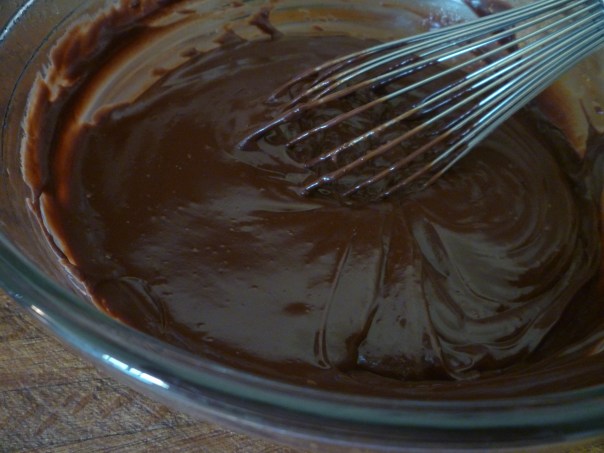
Place a fine-mesh sieve over a medium bowl; set aside. In a medium saucepan, whisk together sugar, cocoa, cornstarch, and salt. Gradually whisk in milk, taking care to dissolve cornstarch. Whisk in egg yolks.
Whisking constantly, heat over medium until you notice some thickening at the bottom of the pan, 5-10 minutes. Reduce heat to low; cook, whisking, 1 minute. Remove from heat; immediately pour through sieve into bowl. Add butter, vanilla, and chocolate; stir until smooth.
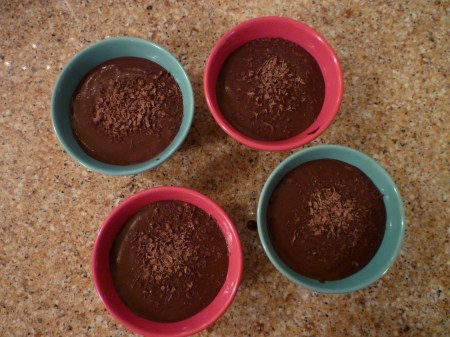
Divide among 4-6 small bowls and smooth the surface of each one with a swirl. Garnish with more dark chocolate shavings. Eat warm or cover and chill.
Other than adding more egg yolks for my husband, and using arrowroot powder instead of cornstarch, I didn’t make any changes to this recipe I found on Martha Stewart’s website.
My friend was quite happy with my gift. I brought enough for two servings, in a bag with some ice on the bottom, so she could eat half later. It was very comforting.
I thought I might be able to do a little something for someone special, and it turned into a surprisingly big something. What surprised me was the chain of events that resulted from a simple idea that would have been too stressful even to even consider just a month ago.
The baptismal name of one of my goddaughters is Sophia, and the day that we commemorate Saint Sophia was this month, just a few days after The Feast of the Elevation of the Cross. On Sunday I suggested that she come over after Vespers on Wednesday, the evening/beginning of the name day, for a light meal to celebrate; Wednesday is a fasting day so it would pretty much need to be a vegan meal. I hoped there might be three or four of us eating it together, but wouldn’t have been surprised or unhappy if Sophia and I were the only ones celebrating.
<< (Favorite pewter water pitcher that my in-laws bought while traveling in Denmark)
This was not a very well thought out party I was giving, but was more the kind of thing that is "thrown together," though that phrase does not adequately describe the flowing way the guest list and the menu developed over the next two days, culminating in a dinner party for twelve! It seemed to me in the end that God had used this desire I had to bless my friend to steer me in the right direction, down the path at the end of which I discovered that I am adjusting to not having a husband to cook for, and that my grief is less consuming and disabling than before.
On Monday I shopped, after the festal liturgy, and put extra leaves in the table. Tuesday I made the soup and the cake. Wednesday afternoon I made the bread and cleaned house and set the table. I didn’t have twelve matching of anything, but I had six of the same placemats, spoons, napkins, etc., so I alternated around the table.
The soup is one I created thirty years ago out of necessity, when we lived in such a small town that I had to drive a distance to do my major grocery shopping. One day the cupboard was somewhat bare and I didn’t want to make that trip, so I concocted this stew using what I had on hand, that has the colors of the Italian flag in its ingredients, plus some Italian flavors, hence the name. It’s probably the only recipe I’ve created that has any kind of interesting name to go with it.
I haven’t actually tried using fresh basil, which is very odd since in the last decades it’s been so available in my garden and would seem to be preferable. Having pulled up my spent basil plants only the week previous, I didn’t have it available this time, either. I thought about buying a bunch, but decided to just go with the original recipe for this party and be safe.
Italian Flag Soup
½ cup olive oil
3 onions, chopped
garlic (optional)
5 cups large white dried beans
2 tablespoons salt
black pepper
1/3 cup dried basil (or equivalent in the fresh herb)
4 bay leaves
10-12 red potatoes in chunks
2 bunches Italian parsley, chopped
In a 16-qt pot or larger sauté the onions, and garlic if using, in olive oil. Add the beans and water to cover 2 inches. Simmer for about an hour.
Add the salt, pepper, and bay leaves. Simmer another hour, adding water as needed to keep it soupy.
Add the red potatoes, basil, and parsley. Simmer until the potatoes are tender, adding water as needed. Adjust seasonings and serve. Nice to make the day before so the flavors can mellow together longer.
It seemed to me that the soup and cake were the backbone of the culinary aspect, so I had to decide on those elements of the dinner at the outset. The cake I discovered on this website after browsing a while online. I wanted it to be vegan and also not chocolate, because these days I’m afraid of losing sleep over evening chocolate. The only change I made was to cut the sugar in the recipe from 1 1/2 cups to 1 cup, and it was just right.
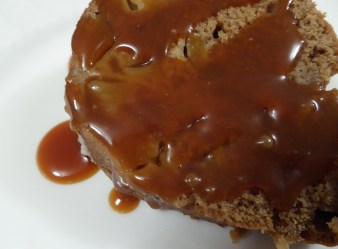
I did make the Caramel Sauce, which I think is optional. I wouldn’t make it again, because 1) Caramel is much better with butter or cream, 2) Making caramel is a bother, and I’m not sure I didn’t scorch it a little (though it did taste nice with the cake), and 3) Everyone said it was completely unnecessary because the cake is perfect the way it is.
I appreciated the lack of cinnamon in this cake, because I think it gets overused in baked goods, and the spices that were present were not so heavy that they overwhelmed the subtlety of the pears. I have transcribed the recipe after making my adjustment.
Gingerbread Pear Bundt Cake
For the cake:
1/2 cup coconut oil, melted
3 cups all-purpose flour
1 1/2 teaspoons baking soda
1/2 teaspoon salt
1 tablespoon ground ginger
1 teaspoon freshly ground nutmeg
1/8 teaspoon ground cloves
1 1/2 cups warm water
1 cup dark brown sugar
1/4 cup molasses (not blackstrap)
2 tablespoons apple cider vinegar
2 teaspoons vanilla extract
3 medium pears, peeled and diced 1/2-inch (about 3 cups diced)
1/4 cup powdered sugar for dusting the top, if desired
Caramel Sauce:
1 cup full-fat coconut milk
2 teaspoons vanilla
1/8 teaspoon salt
3/4 cup granulated sugar
1/3 cup water
Preheat oven to 350°F. Grease bundt pan and set aside.
In a large bowl, whisk together the flour, baking soda, salt, ginger, nutmeg and cloves. In a medium bowl, whisk together the melted coconut oil, water, brown sugar, molasses, vinegar and vanilla. Make a well in the dry ingredients and pour in the wet ingredients. Use a whisk to mix the batter together just until combined. Fold in the pears.
Pour batter into the bundt pan and bake until the cake begins to pull away from the edges slightly and a toothpick inserted into the center of the cake comes out nearly dry, 45 to 60 minutes.
Let cool for 5 minutes then use a knife to carefully loosen any stuck sides. Invert cake over a wire rack and lift off the pan. Let cake cool completely. Carefully transfer cooled cake to platter or cake plate and dust with powdered sugar, if desired.
While the cake cools, make the caramel sauce. In a small bowl, whisk together the coconut milk, vanilla and salt. Set aside. Add the sugar and water to a medium saucepan over medium-high heat. Stir just to combine, but do not stir after that! Allow mixture to come to a boil and watch it carefully. After about 6 minutes, the mixture will start to turn golden, then light brown, and it will smell like caramel. As soon as it has turned brown, slowly pour in the coconut milk mixture. The caramel will bubble enthusiastically at first. If the sugar hardens around the whisk, don’t worry, this is normal – just keep stirring and it will dissolve. Continue cooking, stirring occasionally, until the caramel sauce has thickened, about 5 minutes.
Slice cake and put on plates. Drizzle individual servings with the caramel sauce. Serve.
Notes
The caramel sauce may be made ahead of time and kept refrigerated in an airtight container. It keeps well for up to 5 days. Allow the sauce to come to room temperature to thin out a bit before serving. You can also warm it in the microwave for a few seconds to speed up the process.
It was a special evening in that two of my guests were named Sophia, and our priest was able to come, and “my” Sophia’s godfather as well. We had a lively group with more food contributions to the table coming in the form of salads, and much good and edifying conversation coming from everyone. The soup was popular and not much was left over.
We ate grapes, too, giant seedless Perfect Grapes, the consensus was. I made Himbasha bread, and it was the only part of the dinner that I wasn’t truly happy with. I overbaked it trying to make sure it would be chewy enough, and it ended up awfully crusty, but my friends thought it was wonderful because they like the crust. It was fresh, at least! I’ll have to keep working on that recipe, which I’ve told about before.
A couple of the women did most of the clean-up, so that part was easy, too. My feet were sore, but Sophia was radiant and blessed, which made me very happy.
My parish puts on a huge international food festival every year in September. I’ve written about it before, I think. We have to start baking and doing other kinds of preparations months ahead.
Earlier in the summer when Maggie was visiting we worked together at church on one of the cookie-baking projects, the Rainbow Chocolate Chip. Another week I helped make the Greek twisty cookies.
I always enjoy working on church projects like this, where I am on an assembly line and can chat and get to know people a little better. It’s not stressful when someone else has the recipe and the system all figured out and I can just do as I’m told.
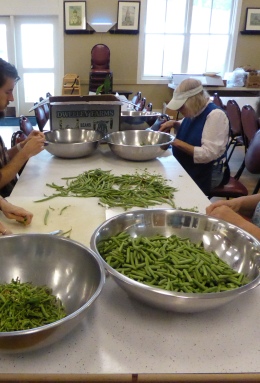
When the date of our event drew closer I went one day to cut up green beans for more than three hours; these would go into my favorite dish that we sell, Serbian Green Beans. The blanched beans are mixed with garlic-laden, buttered bread crumbs, then topped with sour cream and heated in the oven for about 20 minutes. Most of that process happens just before they are served steaming hot.
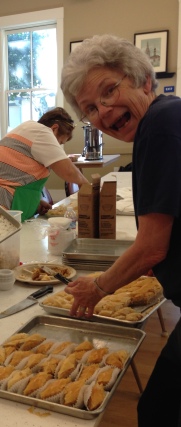
That prep day we were also making Sarma, which are stuffed cabbage rolls; the recipe includes a bit of sauerkraut, and the picture below shows the total amount that was needed. Actually, one gallon had already gone into the kitchen before I took the picture.
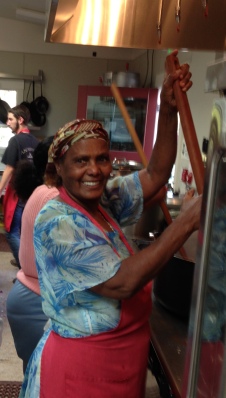
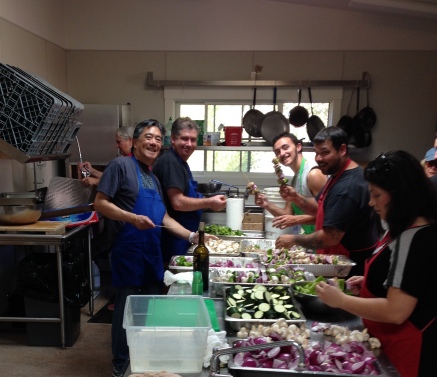
Just one day before, my friend Diane came with me and we offered our four helping hands. So many tasks had to wait until this day, such as cutting up vegetables for the kabobs, and stirring the Eritrean stews.
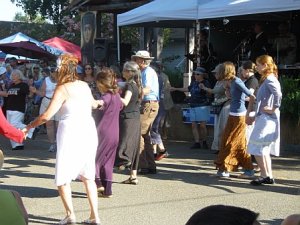
Year after year I notice how happy everyone seems to be, getting our party together, even if they are awfully tired by the end of it. We all see it as an expression of love to our community; if it were merely a fund-raiser I’m sure we couldn’t drum up enough energy for it. But it’s been going on for more than 25 years and a lot of people now look forward to the food, the music and dancing, and the joy.
That last day Diane and I ended up sitting at a table where we made finishing cuts to endless sheets of baklava and placed the diamonds carefully into individual serving trays. Some people avoid this job, because it is messy, but there are plenty of little broken corners to snack on while you work, so if you like baklava….well, come to think of it, that might be another reason to avoid that job.
My job on the festival day was not to work in a food or craft booth, or the beer garden or the children’s area, but to mind the bookstore – I’m sure that doesn’t surprise anyone. I served several hours, and then I had a hard time dragging myself away, even though I did need a rest.
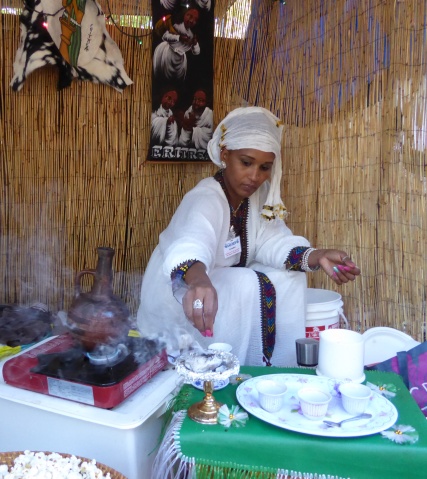
It was time for Vespers, which was the perfect thing to restore the soul that might be weary. After that I was looking around for a particular old friend I wanted to talk to, and I discovered her in the Eritrean tea and coffee tent, which I didn’t even know existed, maybe because it was tucked in a corner behind the main Eritrean booth.
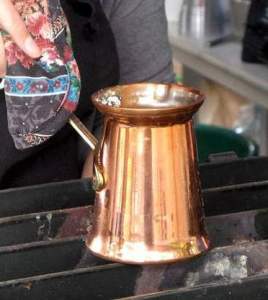
The woman who made tea for me was burning frankincense while she told another customer that this event is the thing she most looks forward to all year. Her colleague explained that the whole reason we make this offering of our time and effort is to express the harmony that we in our church share.
Now that Pearl’s family has moved to California, I have nearly half of my grandchildren within an hour and a half’s drive. It was so easy to pick up Maggie on the way home from the mountains, and to bring her here to spend almost a week with me.
First, though, the evening I arrived, her mom took a few of us to the Arboretum on the University of California campus in their town of Davis, so I could check out some of the many plants with low water needs. A rustic and rusty arch of shovels signals the beginning of this part of the gardens, with wide plantings of grasses and native California plants leading on into the Australian section, which is what I was most interested in. I have noticed in books that a lot of striking and unthirsty species come from Down Under.
Maggie had her camera, too, and found families of ducks to take pictures of. We didn’t spend too long, but I managed to take many pictures with identifying signs next to the plants that I liked, so I didn’t have to take the time to write down names.
I’m only posting a few of those, of the nicest looking, which I wouldn’t mind having in my new garden if I can find them in nurseries.
The next morning Maggie and I drove off to my town. I had downloaded Anybody Shining by Frances O’Roark Dowell from Audible on to my tablet so we could listen on the way home, which we did for about an hour, Maggie in the back seat because she’s a lightweight. We shopped that afternoon and evening, to resupply my fridge, and we watched “Cheaper by the Dozen,” under blankets on the couch.
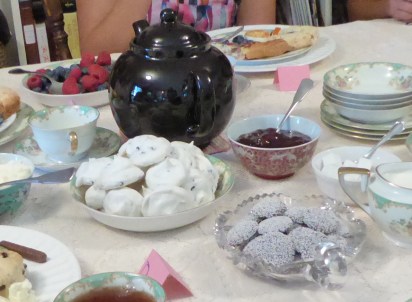
Shopping took a lot of our time during the next few days, because we were planning a tea party that we held last Saturday, and also were having company on Sunday. Giving the tea party was the focus of our time together; Maggie came up with several good ideas before we even got home.
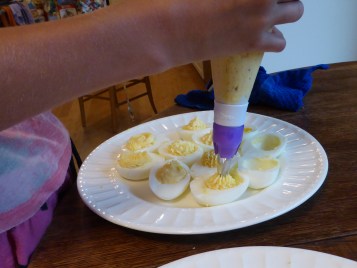
We planned and shopped and cooked and in the end we served: deviled eggs and mint chocolate chip meringues made by Maggie; two kinds of scones with jam and creme fraiche; chocolate pastilles; ham and Swiss quiche made on puff pastry; fresh blueberries and raspberries; chocolate orange sticks; some fancy chocolate and sprinkle-dipped Rice Krispy treats we discovered on one shopping trip; and of course the tea, black and rooibos, and hot cocoa for little girls who preferred that. They all did.
Eight of us ladies whose ages spanned the decades down to four years old enjoyed our party very much. My little goddaughter Mary, four months old, was also present but not enjoying the goodies. The conversation was edifying and stimulating. I sent scones home to the menfolk, and that evening Maggie and I ate leftovers.
We listened to more of our book on the computer and came to the satisfying end. The next day Maggie mentioned it in her own blog post. It is about a girl about Maggie’s age, living in the mountains of North Carolina about a hundred years ago, and her desire to have a friend. The history and the culture of the mountain people are the background of the story, in the telling of which the protagonist Arie Mae expresses her good heart and charming wholesome self through letters she writes to her cousin in the city. The descriptor “shining” she applies to at least two other people in the book, but Arie Mae herself is the truly shining character.
I made Maggie pause the recording so that I could write down a wonderful word of advice from Arie Mae – but could I find the paper I wrote on, just now? No! So I washed dishes and listened again to the last few chapters of the book till I could find the place again.
A sub-plot of the story is about the more educated people coming from the city to write down the songs and stories of the mountain folk, to start schools, to help them in various ways. One conflict concerns the dynamic of the outsiders coming in with their ideas and advice for the people who get the feeling they are not appreciated for who they really are.
The way Dowell ties this aspect of the story in with Arie Mae’s growing friendships is delightful. She writes to her cousin, “It takes time to get to know people. You got to listen to their stories, and you got to tell your stories back. It all goes back and forth, back and forth, until one day you turn into friends. Until that time, I expect it’s best to keep your opinions to yourself.”
My Maggie and I enjoyed more stories together during her visit, in the form of two more movies: First “Hook,” which we watched here at home. I find that story delightful, but I think Maggie at her age couldn’t enjoy the Robin Williams character as well as I. And maybe the lost boys were too familiar in their exaggerated annoying boyishness to a girl with three older brothers. Then we saw “Inside Out” at the theater. How wonderful to go out to a movie, just us girls. We even shared a bag of popcorn. I am liking this new phase of grandmotherhood!
Soon after the opening credits we were amazed to find out how perfect “Inside Out” was for us right now. The main character Riley has a few big things in common with my granddaughter: They are both twelve, and each has just moved with her family across the country to California. So many good ideas, so much wisdom is in this movie, I think I need to see it a few more times to be able to think about it more. Movies always go too fast for me, and there is a lot of fast action in this one, too, so that I found myself several times musing over the possible symbolic significance of an event – musing for a few seconds – and then another metaphor would interrupt me to suggest itself in the next scene.
Riley seems to be at the mercy of her emotions in this story; you might even say that the emotions are the real main characters, as they try to manage her life to make it good. What seems obvious to the ringleader Joy is that Riley needs to be happy, so Joy is always working very hard to program the right thoughts and memories into Riley’s mind to make her happy. The other emotions eventually find out that they have a role to play as well.
Both Maggie and I were uncomfortable with the implication that Riley’s decisions were based solely on her emotions, but there is a lot of truth to the way the thousands of memories in her bank could be used to cultivate various emotions. I loved the image at the end of the movie, after Riley has connected painfully well with her anger and sadness, and the islands of Family and Honesty have seemingly sunk into the sea — she ends up in the arms of her parents, being comforted. She has grown up a lot in the recent weeks and months and is stronger than before, and I’m sure her parents are wiser, too.
My granddaughter who was sitting next to me in the theater had decided a few months ago that she wanted to be baptized in her church before moving away. Back then I couldn’t get it together to celebrate such a happy event with her across the miles, so this week we went shopping for the present I wanted to give her, and found this lovely cross that we both liked. It is a symbol of Something deeper than a memory or an emotion, the great Story of God’s love and our salvation. I’m so thankful He is with us and for us as we go through all the trials that accompany every stage of life. He is the only one who really knows us inside-out.
 Many months ago I wrote the draft of this post, when I was making pudding frequently for my husband. In the last week of his life he ate little else. Cancer and chemo had made meals a challenge, and toward the end, this was the best solution to the various food-related problems.
 myself surely do not need super rich nutrition, and after my husband died I couldn’t imagine what might move me to cook it again.
 sh sieve over a medium bowl; set aside. In a medium saucepan, whisk together sugar, cocoa, cornstarch, and salt. Gradually whisk in milk, taking care to dissolve cornstarch. Whisk in egg yolks.


 made the soup and the cake. Wednesday afternoon I made the bread and cleaned house and set the table. I didn’t have twelve matching of anything, but I had six of the same placemats, spoons, napkins, etc., so I alternated around the table.










 oo, and found families of ducks to take pictures of. We didn’t spend too long, but I managed to take many pictures with identifying signs next to the plants that I liked, so I didn’t have to take the time to write down names.
 scones with jam and creme fraiche; chocolate pastilles; ham and Swiss quiche made on puff pastry; fresh blueberries and raspberries; chocolate orange sticks; some fancy chocolate and sprinkle-dipped Rice Krispy treats we discovered on one shopping trip; and of course the tea, black and rooibos, and hot cocoa for little girls who preferred that. They all did.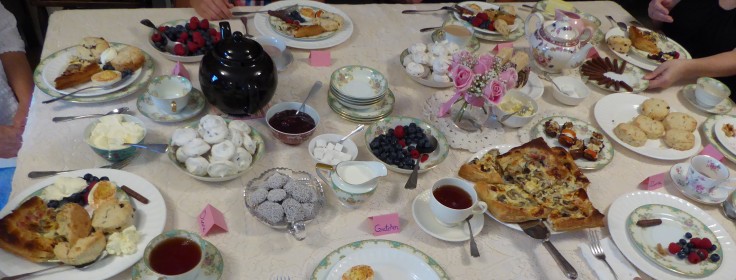
 ae – but could I find the paper I wrote on, just now? No! So I washed dishes and listened again to the last few chapters of the book till I could find the place again.
 ger than before, and I’m sure her parents are wiser, too.
 Gladsome Lights