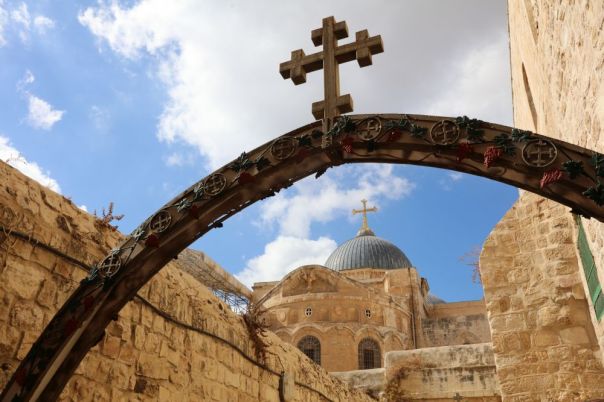
We are celebrating the Feast of the Elevation (or Exaltation) of the Holy Cross. This is a commemoration of historic events in the Orthodox Church, and an opportunity to ask ourselves what these outward expressions of faith have to do with our lives in the current age. The original events are more than a thousand years distant from us, but the human condition is unchanged.
“The Exaltation of the Lord’s Cross has arrived. Then, the Cross was erected on a high place, so that the people could see it and render honor to it. Now, the cross is raised in the churches and monasteries. But this is all external. There is a spiritual exaltation of the cross in the heart. It happens when one firmly resolves to crucify himself, or to mortify his passions—something so essential in Christians that, according to the Apostle, they only are Christ’s who have crucified their flesh with its passions and lusts (cf. Gal. 5:24). Having raised this cross in themselves, Christians hold it exalted all their lives. Let every Christian soul ask himself if this is how it is, and let him hearken to the answer that his conscience gives him in his heart.”
-St. Theophan the Recluse, Letters on the Spiritual Life
’Tis said our monarch’s liberal mind Is like the ocean unconfined. Happy are they who prove it so; ’Tis not for me that fact to know: I’ve plunged within its waves, ’tis true, But not a single pearl could view.
-Ferdowsi (Abu ʾl-Qasim Ferdowsi Tusi) (935 – 1020) Iran
This poem made me curious about the particular sultan Ferdowsi was referring to, so I poked around. The poet lived in Medieval Iran, and from this detailed Wikipedia list of the Monarchs of Iran, it must have been Mahmoud of Ghazni he was writing about. I learned from another site more about the backstory of this cleverly insulting verse, how it is an example of the relationship challenges between artists and their patrons going back centuries:
“In addition to his military prowess, Mahmud was also a patron of learning and the arts, and Ghazni became a cultural center second only to Baghdad. The great Persian poet Ferdowsi presented his epic poem the Shanameh (Book of Kings) to Mahmud in 1010 CE. Although the Shahnameh is recognized as the greatest and most influential work of Persian literature, Mahmud was not so impressed, and instead of paying Ferdowsi the promised one gold dinar per couplet, instead only gave him a silver dirham per couplet. Despite this unfortunate incident, Mahmud is nonetheless considered a great patron of the arts.”
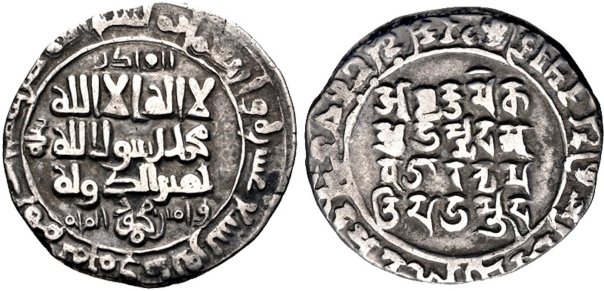
Below are examples of the bilingual coins used during Mahmud’s reign, with Arabic on one side and Sanskrit on the other:
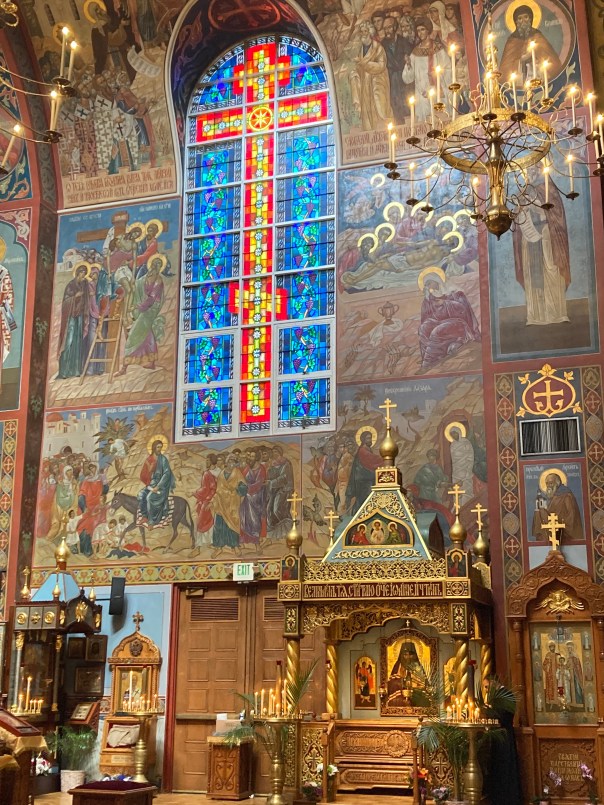
St. John (Maximovitch) of Shanghai and San Francisco reposed in 1966. Twenty-five years later Hieromonk Peter Loukianoff, who had been close to St. John in the last few years of his life, and whose family had known the saint since the time they lived in Shanghai, wrote down his recollections: “Remembering Vladika [Bishop] John.”
Partly this was to correct falsehoods that had begun to circulate in the years since Archbishop John had reposed. In addition to conversations Acolyte Peter had with his bishop about various matters that might be of interest mainly in the altar, he relates many stories from everyday life that illustrate what kind of man St. John was, and the profound effect of his life on those who knew him.
With Acolyte Peter
He conveys how fatherly St. John was with the youth, including alar servers such as Peter — kind and gentle even when he was strict. Peter Loukianoff himself was consecrated a bishop in 2003, and was eventually elevated to the rank of Archbishop of the Diocese of Chicago and Mid-America. He reposed in 2024.
One of the stories is about St. John’s feet:
From the day of his-monastic tonsure, Vladika slept in a sitting position. As a result he had swollen legs and it was painful for him to wear proper shoes, so he wore sandals. At home, in his cell, or when he served at St. Tikhon’s he often went barefoot–not for the sake of foolishness-for-Christ, but because it was easier on his feet.
Abbess Theodora, the late superior of Lesna Convent in France, told how once when Vladika was visiting the convent one of his legs gave him great pain, and she called a doctor, who prescribed rest in bed. Vladika thanked her for her solicitude but refused to lie in bed; nothing could persuade him. “Then,” related Matushka, “I myself don’t know how I was so bold, but I said to him bluntly, ‘Vladika, as the abbess of this convent, by the power given me by God, I order you to lie down.'” Vladika looked with surprise at the abbess, and went and lay down. The next morning, however, he was in church for Matins, and that was the end of the “course of treatment.”
And another story is about his letter-writing:
Vladika’s daily schedule was as follows: In the morning he served Matins, followed by the Hours and Divine Liturgy. After services, if he served in the cathedral, he would stop on the way home in some hospital where he would visit all the Orthodox patients. Arriving home, he would tend to business. In addition to his official duties, he received scores of personal letters to which he would reply himself. (In his three and a half years in San Francisco he received more than ten thousand letters.)
At the top of each letter Vladika always neatly placed a large cross. In folding the letter to place it in an envelope I had to make sure that the cross was not creased or put in sideways or upside down. Vladika did not allow us to lick envelopes shut, and insisted they be opened with a knife. He used to remark with a smile that only Stalin ripped envelopes.
St. John was canonized in San Francisco on July 2 1994.
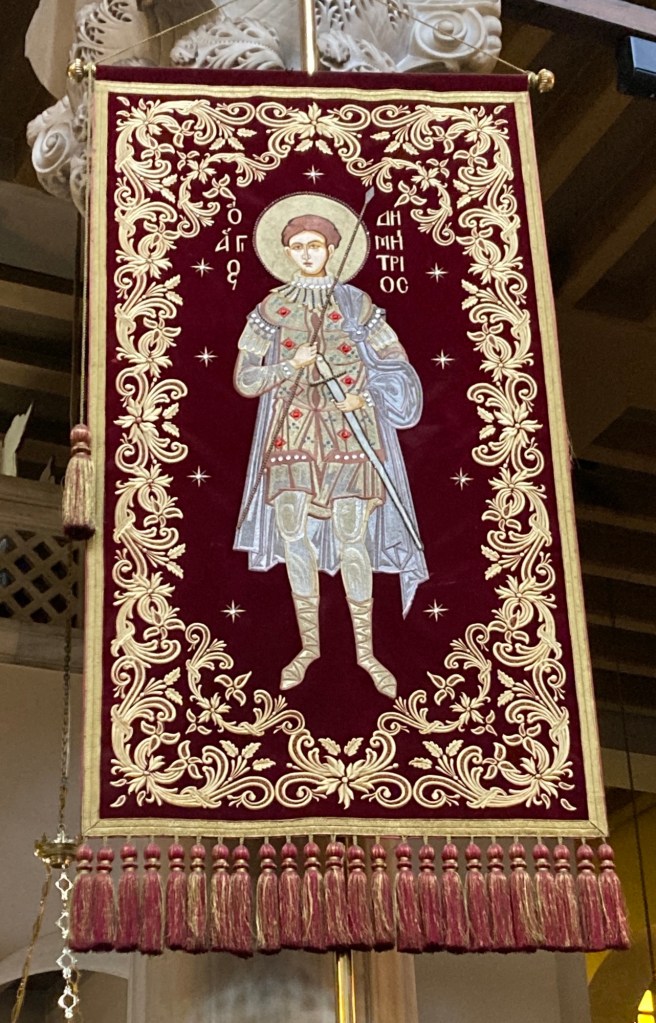
Saint Demetrios entered the story of my trip to Greece almost at the beginning, and before I end my telling I want to bring him back into it more fully. As I write, I’m still in Greece, but in Athens and on my way home.
The Church that houses the saint’s relics was built on the site of a Roman bath house, believed to have been the place of his imprisonment and death. Emperor Maximian Galerius — yes, the same one who built the Arch and the Rotonda — had appointed young Demetrios proconsul of Thessalonica district, not knowing that he was a Christian.
One of his duties was to put to death Christians, but instead he preached the faith, and was said by some to be a “second Apostle Paul,” for Thessalonica.
When Galerius found out, he ordered his imprisonment, and eventually his death, on October 26, 306. This article tells the story of his life in detail, including subplots concerning his friend Nestor’s martyrdom at the same time, how Demetrios became so beloved of the Slavs, and how he never would allow his relics to be moved to Constantinople.
St. Demetrios mosaic Kiev, 12th century
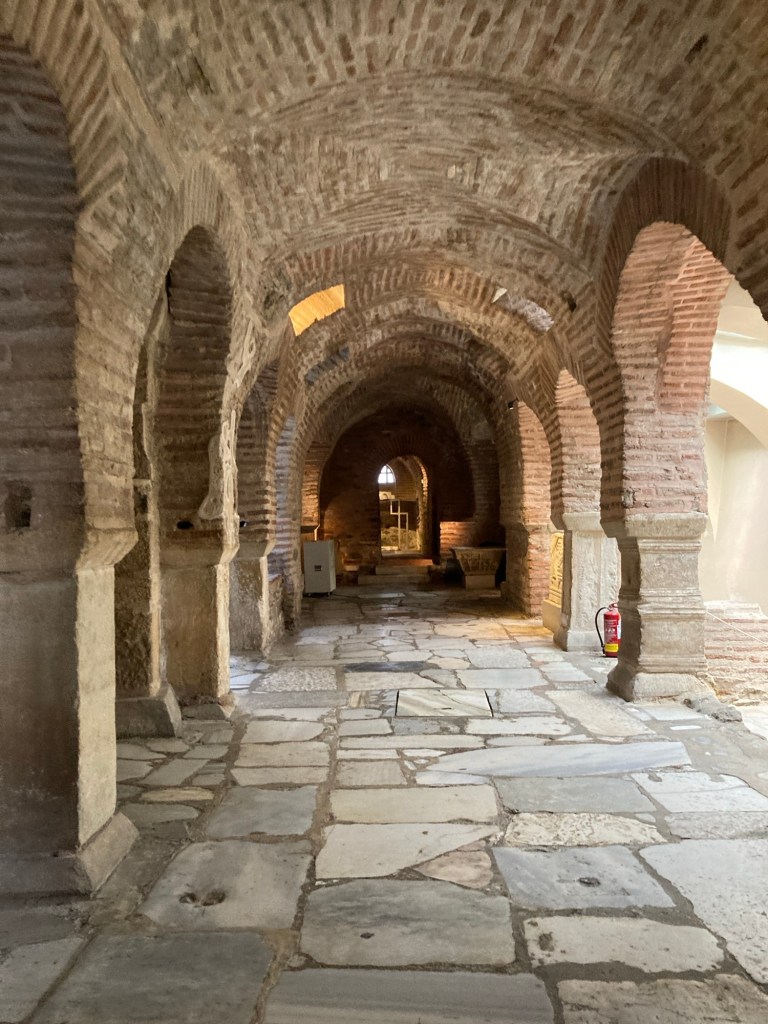
During the reign of St. Constantine the first church was built on the site, and in later centuries the Christians began using the old bath house structures.
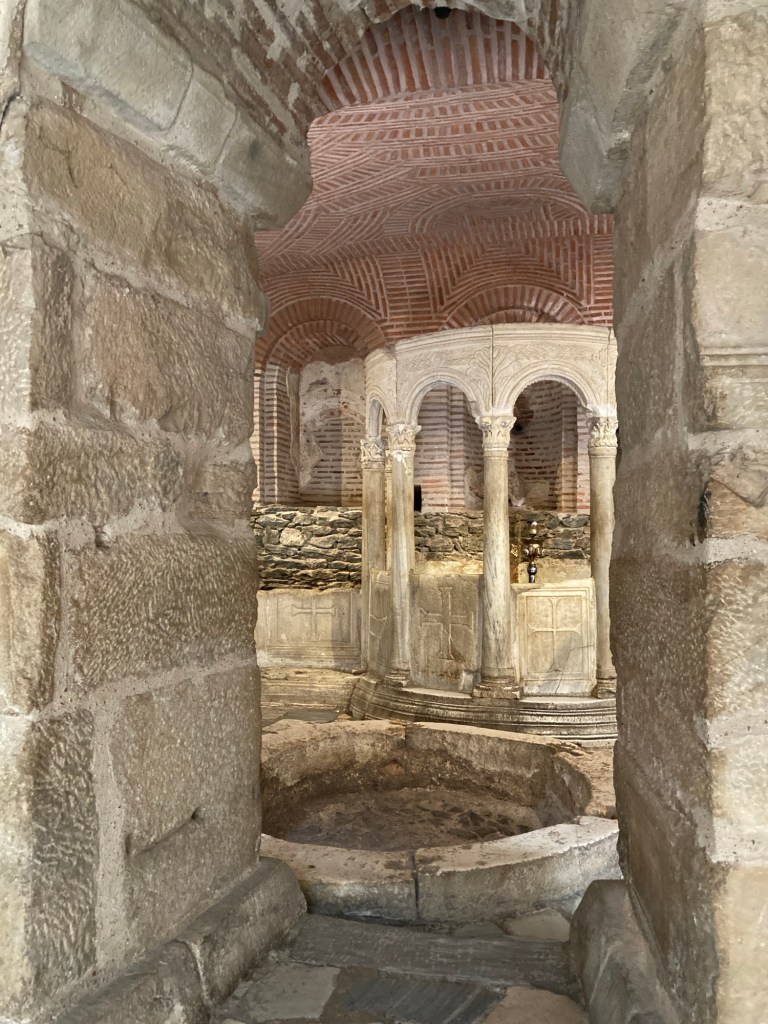
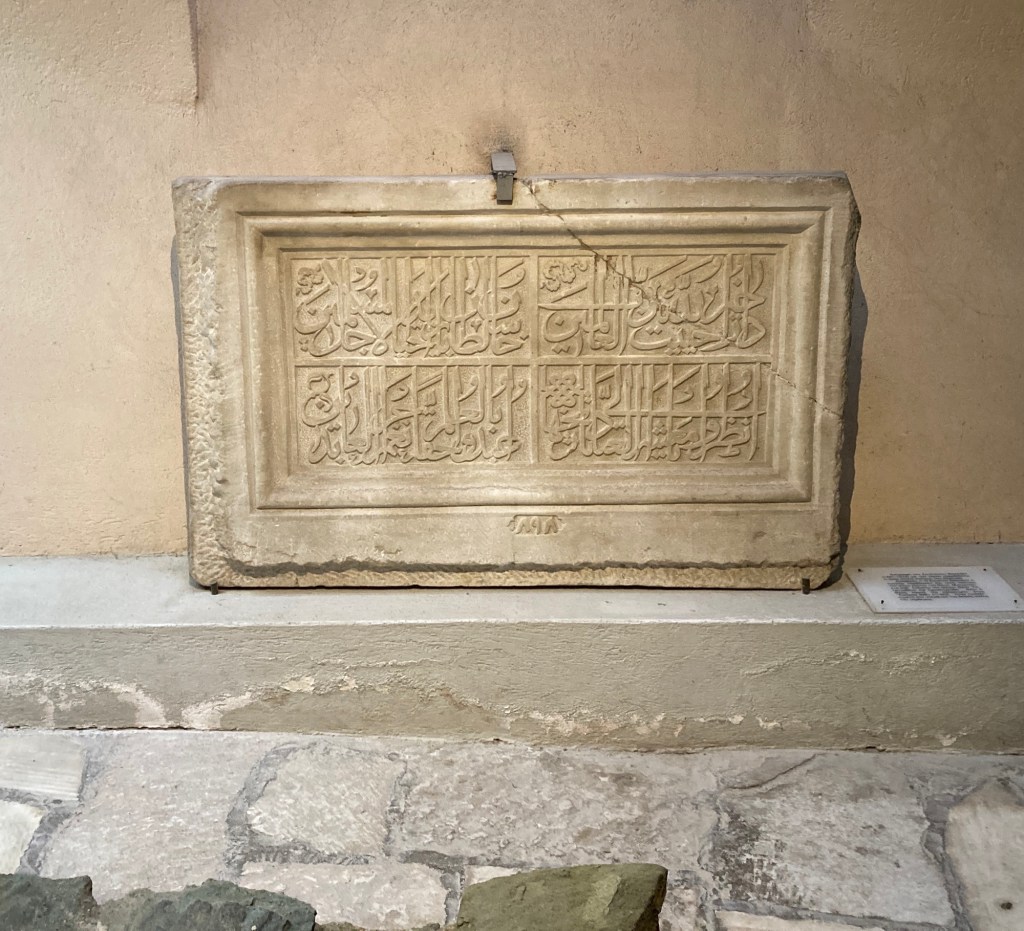
It was during the Ottoman rule when it was a mosque that the underground part became cryptic or “secret,” because whether by their intent or neglect, it was filled with earth and forgotten, until the fire of 1917 that destroyed much of the city; during restoration work on the church the crypt was revealed.
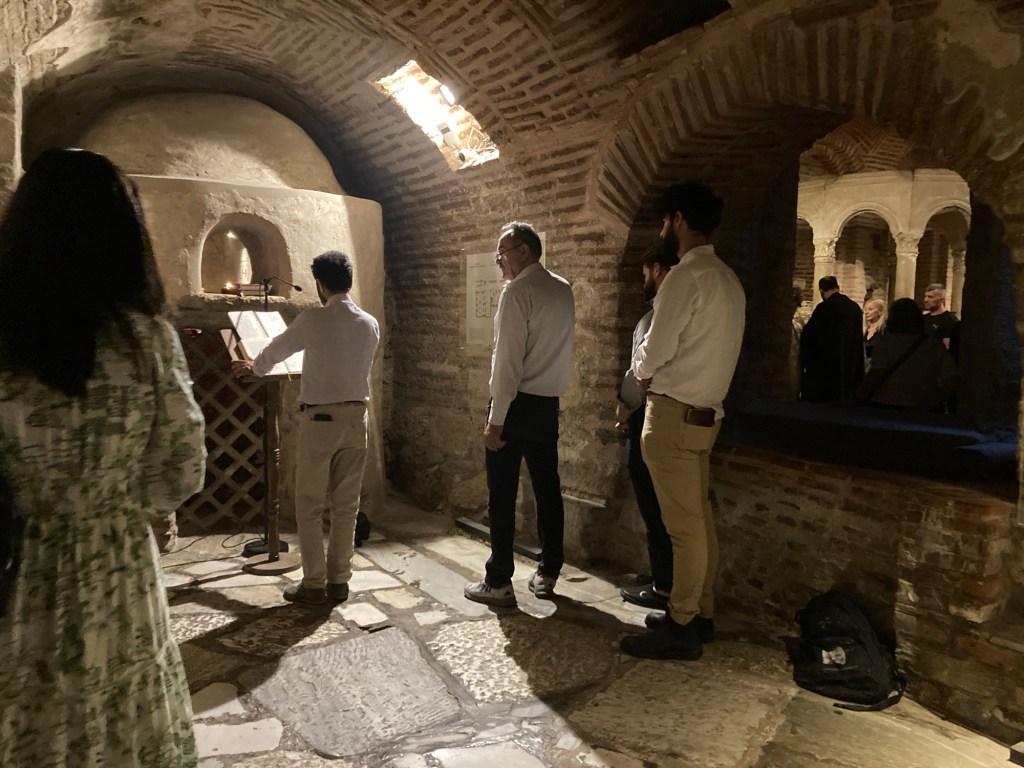
In recent years Orthodox services are often held in the space. I walked up to the church last Friday for Divine Liturgy that was served down there, where so much history is embedded in the stonework and the venerable marble floors.
The day before, the priest at the Church of the Panagia Acheiropoietos had reminded me, over coffee in his office, that there is nowhere on earth that God’s blessing is not present. You might think that He is here in Greece in a way that He is not to be found at the North Pole, for example, but it’s not true.
I have been thinking about that a lot. We Orthodox pray daily to the God Who “is everywhere present, and fills all things.” Also, we experience the eschaton at every Divine Liturgy, when Christ descends to commune with us.
The presence of God has been my experience in Greece, and He will be as immanent as ever back home when I return to the “same old” everlasting mercies of God new every morning. As I embark on my long, long day of travel, I hope I can keep in mind this constancy of grace.
Given the dailiness of our earthly pilgrimage, I can’t be too sad to leave Greece, and at the same time I’m extremely thankful for the short and rich time I’ve had here. Glory to God for all things.






 Gladsome Lights