 Today was my Slow/Stay at Home/R&R/Catch up Day. That sounds like a lot to expect of one day, especially when you stay up writing until the hands of the clock are telling you it has already become that day, and therefore you will start out short on sleep.
But what a blessing it turned out to be! The first gift was a phone call from my grandson and his wife, the parents of my great-granddaughter, and that was heartwarming. I loved talking about maternity care — what she got as well as cultural trends — with Izzie, who is bouncing back with the resilience of youth and those hormones a woman gets a good dose of in childbirth. The whole family and her mom were walking at a park when Roger decided to phone me and we had our satisfying visit.
And then a spell of plant identification. 🙂 Yes, and I didn’t even have to go out and discover the plant myself. My farmer friend from whom I buy lamb every year had posted a picture of flowers on Instagram, glad to see them in the pasture before the sheep ate them. She didn’t say their name so I assumed she didn’t know, but they were so pretty, I wanted to find out.
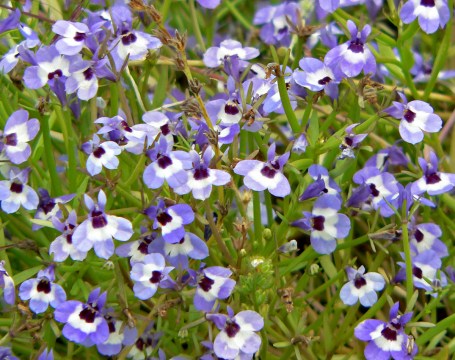
I asked Pippin’s help, but she didn’t know them, either, so I looked in the Wildflowers of the Pacific Northwest guide, even though the authors don’t try to include my area of California in their book; I might still find a clue. And I did see one very similar, which was enough to take to the Internet and search with. I’m pasting the Wikipedia photo here, almost identical to the farmer’s, of downingia concolor or calicoflower, which is in the Campanulaceae Family. Aren’t they darling? I wonder if the sheep have eaten them by now…
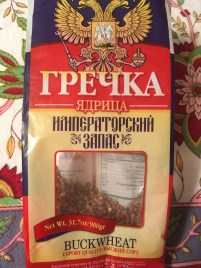 Kasha, or roasted buckwheat groats, is one of my favorite things to eat on fast days. I like to cook a potful so that I have several servings on hand, but I had run out of that a couple of weeks ago. This package that was given to me by a friend is nearly used up now; it cooks up the way I like it and has the best flavor, so I think I will try to get this type from now on. I got to eat kasha for lunch, and stashed three containers in the fridge and freezer.
I had told myself that I would not read or write blogs today, since I did just do that last night, and because I wanted to catch up on one or two of the many other things that I’m behind on. Lately it’s become R&R just to wash the dishes, and when I was washing up my kasha pot I just kept going, and ended up spending a couple of hours on the kitchen. What took the longest was giving my stove top and range hood a thorough cleaning of the sort is hasn’t had for ages. After that experience, my hands told me they needed a manicure.

The sun came out — but not until 6:00 p.m. But after bending over my housework all that time, and feeling not rushed, the sunshine was all the encouragement I needed to get outside. I would just take the easiest stroll, no hurry.
Once I was in the neighborhood where I took pictures for my “Roses on My Path” series a long time ago that doesn’t feel that long ago (before my husband was even sick), I remembered that I wanted to go back to the house I called the Rose House back then, to find whether anything had changed.
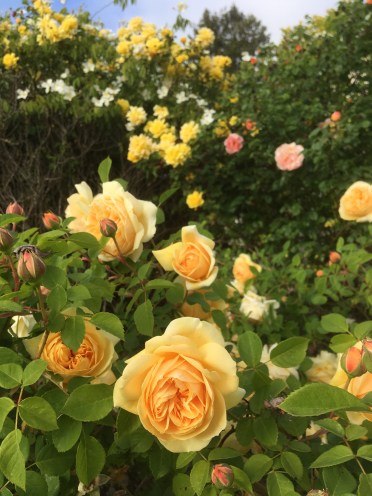
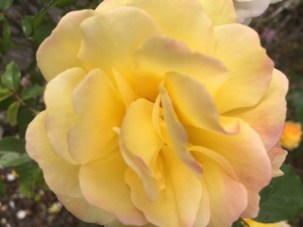
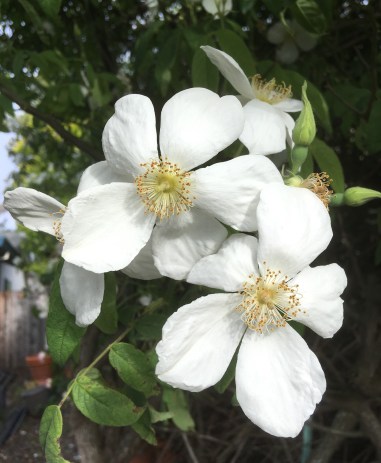
I found it, and the display was more opulent than ever. This is the house where the roses do not appear to be cared for, though I continue to think they must be getting water from somewhere to make it through our rainless summers. All the roses on this post are from that house, and a link to the previous post might show up as one of the “related” posts below.

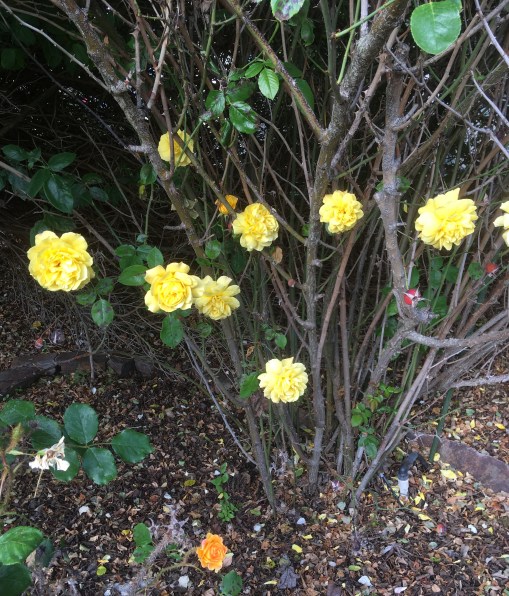

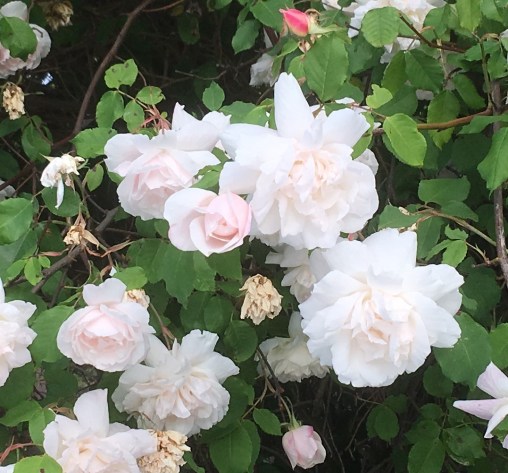
They still have the mailbox with stylistic roses painted on it, but now it is hidden deep under a broad spray of blooms hanging down. I think maybe that bush seems twice as tall as before because it has climbed into a tree behind it.

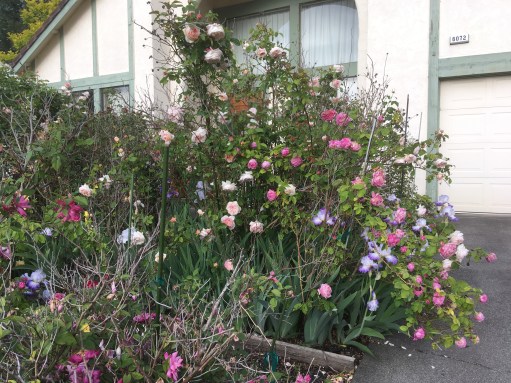
The profusion of flowers is probably a result of the rain of the last two years. The species are very special. I can’t tell you much about them, except that I find them exquisite, but many of my readers will know things just by looking. This time I noticed an identifying tag at the base of one bush that has the trunk of a tree. It was grown from a cutting taken in 2001; how long, I wonder, was the rose bush cared for before it was allowed to grow wild?


I feasted my eyes and my nose for quite a while, walking and gawking up and down and wishing I were in an official rose garden with a proper bench. I wanted to sit for a while to gaze at their loveliness, bursting out through the tangled canes and deadwood. Eventually there was nothing to do but go home. I felt thoroughly loved through those roses.

But when I got here I had to write after all, while it is yet today.
It’s one way I have of thanking God for all His wonderful gifts
that pour down even on — or is it especially on? — a slow day.

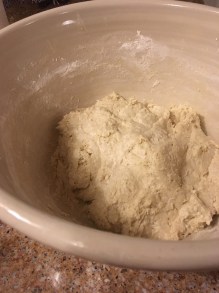 This time around I made a rather plain sourdough, which turned out to be even plainer than I wanted. It was all unbleached wheat flour, no seeds or rye or anything exciting. I made a smaller batch that would produce two medium loaves, and originally hoped to get it done in two or three days instead of what’s been happening lately, where my sourdough sponge waits in the cold garage day after day till I can finally be home for a day to finish it.
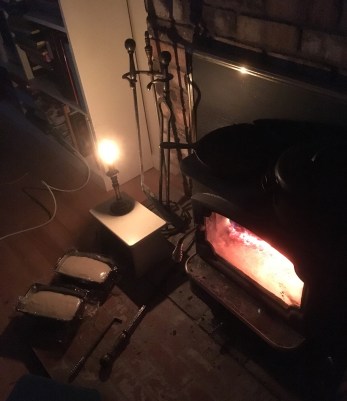 Friday: Moved the bowl to the cold garage.
 Monday evening: I had got a fire going in the wood stove, and began to realize that I’d need to bake the bread using that heat somehow. At first I thought I might put the pans right on the coals, but Mrs. Bread (haha, you would imagine she’d have good advice!) made me realize that it would be too much direct heat for aluminum pans. So I heated the cast iron Dutch oven on the narrow shelf of the stove for a half hour and sort of poured the two proofed loaves into it, and put the lid back on.
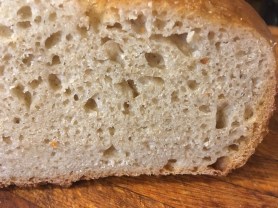 As soon as the bread was out of the pot, I had to try a slice. Oh, it has the nicest crumb, so “custardy” as they say, and the skin is crispy! Actually, the bottom was burnt, but easily sliced off. The sourness is perfect. But – as soon as I took a bite, I realized that I had not put in the salt!! Aaargh. So, in addition to being baked in an old-fashioned way, it has a rather old-fashioned flavor. I read once that our colonial foremothers who baked bread every day made a plain loaf that would seem terribly bland to our taste, with little to no oil, sugar, or salt. At least mine is tangy. 🙂
 Gladsome Lights