I’m ashamed to think of how much cilantro has gone bad in my fridge over the years. I love it, and so I buy a fresh bunch from time to time, which isn’t usually that 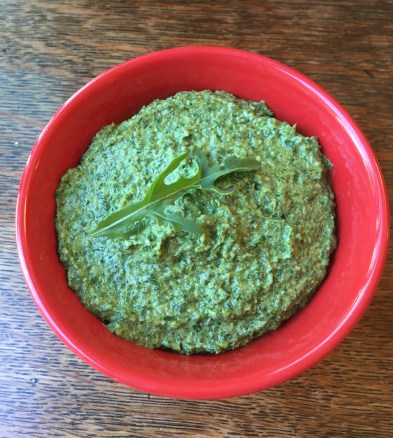 pricey, but still, when it goes into the trash slimy and blackening, it’s a sad waste. 😦
Today I was busying myself cooking up vegetables that came in my CSA (community supported agriculture) box, and I came to the bunch of cilantro… Hmm… Maybe I had planned to combine that with tomatoes and peppers to make more Indian Egg Bhurji. But — No tomatoes were in the house, and I didn’t want to spend time de-stemming cilantro anyway. (I must need a special prayer to pray while I am doing that perfectly lovely job that seems so tedious. That’s what Kate told me to do about my boring floor exercises.)
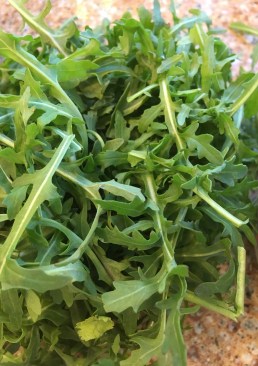
An idea came to me when I saw the bag of arugula I’d bought yesterday — also something that I love, which I probably thought I’d put in a green salad, if I could get around to washing the lettuce… When I was a child, the task of preparing the large, leafy-green salad that without fail was part of our evening meal always fell to us children. I always wonder if I am harboring a childish rebelliousness deep in my psyche, that makes me resist salad-making, too.
The thought that occurred was, Could I make a sauce or pesto by combining arugula and cilantro? I’m not confident enough as a chef to go right at it, so I looked online and found that many people had done just that, with great variations. I customized mine to be fast-friendly (vegan) and not too lemony, and to use more arugula than cilantro, because I had a lot more of that leaf on hand. I kept the ingredients list short, and didn’t add garlic or pepper because the greens are both pretty flavorful already.
Here is what I came up with. All the amounts below are approximate. Many people like their pesto less thick, and will add more oil. Before washing the cilantro, I cut off the longest stems while they were still tied together in a bunch, but left the rest of the stems for the food processor to deal with. No de-stemming by hand!
SAVE the GREENS PESTO
3 cups packed cilantro
4 1/2 cups packed arugula
1/3 cup sunflower oil
3/4 teaspoon salt
juice of 1/2 lemon
1 cup toasted walnut pieces
Grind the walnuts in the food processor and then add the other ingredients to make a paste, adding more oil or salt or lemon to taste.

Until today I never paid much attention to all those “pestos” made from everything but the classic basil-olive oil-Parmesan combination, but recently I learned how to make Tarragon Salsa Verde from Jo, and found it very adaptable and always delicious. (I have planned to share my results with you but this recipe pushed ahead in line.)
I think its versatility gave me the hope that other green things could work together the same way. And they did indeed form something easy that saved us, greens and human, from possible shame, and added another tasty and healthy item to my menu options. Now I can spread my salad on crackers!
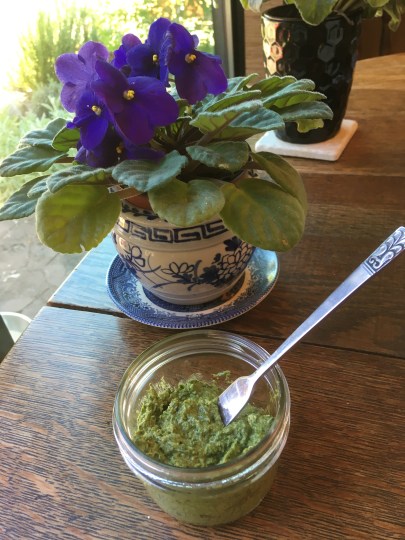

 Because of the strange and wonderful arrangement of me having two housemates to share my big house, my kitchen is a warmer and livelier place than it would be otherwise. Kit has her favorite mugs and her red teapot that she frequently fills, and a collection of tea that has swelled my original holdings to bursting.
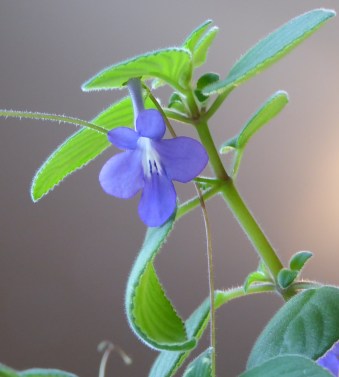 ut this flower is on the original plant, which is not a frequent bloomer for me, but because of that each flower is even more exquisite and precious. Every kitchen should contain something growing, and at least occasionally blooming, don’t you think?
 The one on the right above is Oneida brand, and it is almost a whole teaspoon, as I found out with the a
 id of a medicine cup. The one on the left is new and relatively inexpensive, and it seems to be just right, while the one in back is probably a hundred years old, and it seems to be a little less than a half-teaspoon. I often have wondered if the really old measuring spoons have had their edges worn down over the decades…. But what am I to think of this overall lack of standardization?


 things are also high on my list. She writes, “When you put on an apron, you do not merely protect the garments. You also announce your commitment to the task at hand, your willingness to suffer the slings and sputterings of the pots and pans, your resolve to see the work out to the end.”
 Gladsome Lights