More and more I notice that people, including me, use the words brain and mind interchangeably; but they are not the same thing at all. No scientist has been able to find the mind in the brain. And when we are considering mind vs. heart, where is the heart exactly? As the Scripture says, “We are fearfully and wonderfully made.” The more researchers probe into the intricacies of the human body and its functions, the more complex we are found to be, the more questions emerge.
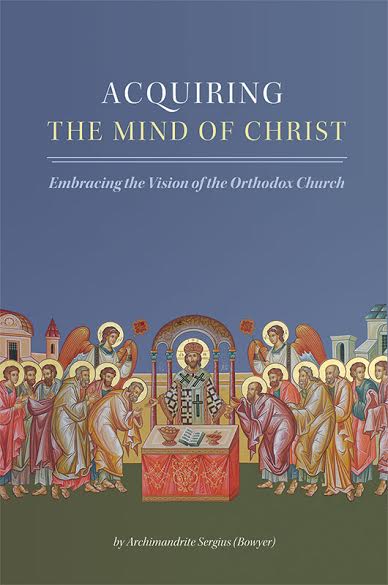
I am using the photo of the book cover at right only to illustrate one use of the word mind; it’s been a while since I read it, but I think the author may have been thinking of this passage of Scripture:
Let this mind be in you, which was also in Christ Jesus: Who, being in the form of God, thought it not robbery to be equal with God: But made himself of no reputation, and took upon him the form of a servant, and was made in the likeness of men: And being found in fashion as a man, he humbled himself, and became obedient unto death, even the death of the cross.
Father Stephen Freeman draws attention in a recent article to the way we moderns tend to think about minds and our thinking:
“We are material beings. We are not souls that have bodies, or bodies that have souls. The soul is the ‘life’ of the body, but is not, strictly speaking, a thing in itself. Most moderns mistake the soul for consciousness, and they imagine that at death their consciousness migrates somewhere else (to heaven, etc). And, we do not care very much about what then happens to the body, so long as our precious consciousness abides. This, I might add, is the mythology of Star Trek, where in at least several episodes, Spock’s consciousness is deposited in various other places. It is not, however, true Christianity.”
“Of all tyrannies, a tyranny sincerely exercised for the good of its victims may be the most oppressive. It would be better to live under robber barons than under omnipotent moral busybodies. The robber baron’s cruelty may sometimes sleep, his cupidity may at some point be satiated; but those who torment us for our own good will torment us without end for they do so with the approval of their own conscience.”
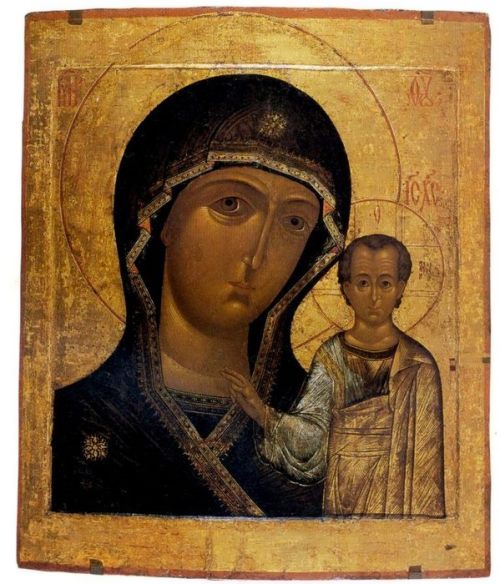
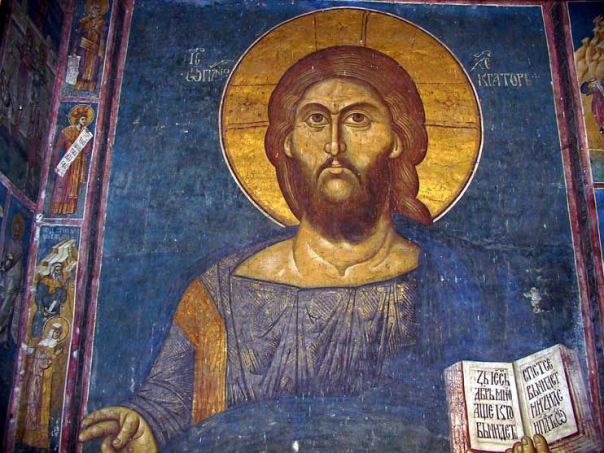
“The intimate darkness of our most precious cognitive organ constantly reminds us – whether we like it or not – that the “inner” content of any human is never absolutely available to our cognitive powers. The most powerful among the senses, thus, recognizes the deepest human cognitive powerlessness precisely during the encounter with the most powerful sense organ of another human being. However carefully we approach or analyze it, the unique personal existence of every human always stays partly hidden in the darkness of the unknowing.
“And this is most expressively manifested when we encounter the small black dot that is the pupil of the eye. At this place we truly do “enter into the human soul,” but at the same time –confusingly and paradoxically – we realize that we cannot enter it. In this kind of darkness, we can get lost and go crazy, or feel warm and safe – for the same reason: because we cannot possess what it reveals/hides. This darkness can be scary or the most welcoming place in the world for the very same reason: because, herein, we recognize the utmost freedom of the human being.
“Through the encounter with the pupil of another human being, we fall directly into the other’s personal infinity, which can never be fully attained – even if our faces are only a few centimeters from each other. Experiencing this kind of infinity, finally, becomes the cognition of the utmost human freedom – freedom that does not depend even on itself.”
I added paragraph breaks to this excerpt from an article by Todor Mitrović from the Orthodox Arts Journal, on “The Epiphany of the Eye.”
I found the author’s ideas fascinating, and convincing. I am not an artist, but I do gaze upon icons quite a bit. When I do, I am looking through the “window,” not caring to analyze what features of the image are having what effect on me. This article nonetheless does help me to better appreciate the whole phenomenon. The artistry of an icon is not the most important thing about it, but contributes to its beautiful effect on our souls, our deepening relationship to Christ through prayer.
I was not alone on my trip home, and I know you understand what I mean. I’m referring to the fact that because God is present, we are never alone, even when we might lack for human connection. I’m not referring to any companionship with the hundreds of other passengers surrounding me on the planes or in the airports; it was absent, though in the past I’ve had more occasion to experience it, even when going by myself. Traveling with another person who acknowledges your existence makes a huge difference, as I was reminded when Pippin and I were together on our way to Greece last month.
In my experiences of air travel in the last ten years, I find that people are generally not as friendly as they used to be, which I well understand. It’s an unnatural situation to be so close physically to so many other humans who are total strangers, and it’s hard to figure out how to maintain one’s emotional space, or to give the other person privacy of some sort, when there is pretty much zero physical space between you and the one in the next seat. I try at least to say hello or give a nod and a smile when we take our places, but fewer people than in the past are willing to make eye contact or even look my way.
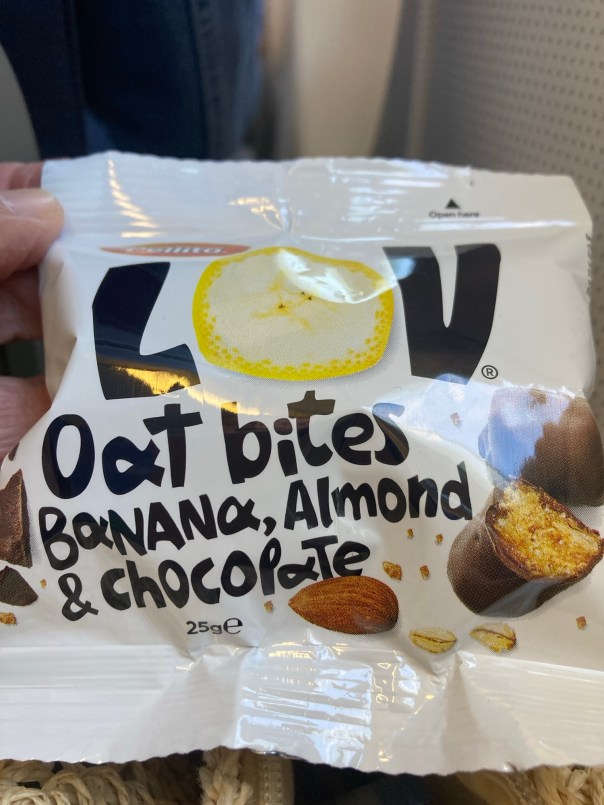
Snack on Aegean Airlines
The whole situation leads us to go into survival mode, whatever that means for the individual. For most, it seems to mean watching as many movies as will fit into an 11-hour flight, escaping into those stories. I only watch a few minutes at a time of whatever I can see of others’ screens across the aisle or next to me, and seeing everything as a silent movie with no captions makes most of the stories appear ridiculous or inane.
In survival mode, I know I personally like being fed, which my child-self knows is essential to survival, though for my adult self it might actually be more helpful to keep a water-only fast. My child self wants comfort food, and was glad for the beef stew, lasagna and calzone. Even pretzels on a shorter flight are sustaining to the soul.
On my last long day of being in multiple airports and planes, for the first time ever when traveling, I realized I was feeling lonely, and was nearly brought to tears. But in getting to and from those airports, I also was blessed by two Uber drivers (one Greek, one Afghani) who were very companionable humans, with whom I was able to have positive and real, nourishing conversations, and my trip ended on that warm note.
I hadn’t thought to write about these things until I read the poem below (which is almost a prose poem, no matter), and it reminded me of the many times during my lifetime that I have been rescued in various ways on my travels. I don’t remember if I have been in a position to rescue any other travelers, though I do remember looking at a lot of pictures of his children that a man once showed me. I would say the same as Naomi: This is the world I want to live in.
GATE A-4
Wandering around the Albuquerque Airport Terminal, after learning my flight had been delayed four hours, I heard an announcement: “If anyone in the vicinity of Gate A-4 understands any Arabic, please come to the gate immediately.”
Well — one pauses these days. Gate A-4 was my own gate. I went there.
An older woman in full traditional Palestinian embroidered dress, just like my grandma wore, was crumpled to the floor, wailing. “Help,” said the flight agent. “Talk to her. What is her problem? We told her the flight was going to be late and she did this.”
I stooped to put my arm around the woman and spoke haltingly. “Shu-dow-a, Shu-bid-uck Habibti? Stani schway, Min fadlick, Shu-bit-se-wee?” The minute she heard any words she knew, however poorly used, she stopped crying. She thought the flight had been cancelled entirely. She needed to be in El Paso for major medical treatment the next day. I said, “No, we’re fine, you’ll get there, just later, who is picking you up? Let’s call him.”
We called her son, I spoke with him in English. I told him I would stay with his mother till we got on the plane and ride next to her. She talked to him. Then we called her other sons just for the fun of it. Then we called my dad and he and she spoke for a while in Arabic and found out of course they had ten shared friends. Then I thought just for the heck of it why not call some Palestinian poets I know and let them chat with her? This all took up two hours.
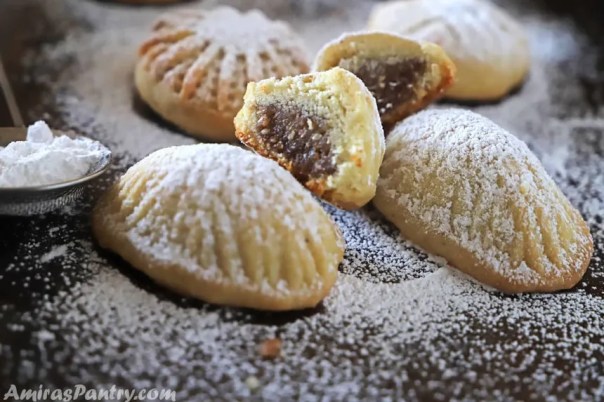
She was laughing a lot by then. Telling of her life, patting my knee, answering questions. She had pulled a sack of homemade mamool cookies — little powdered sugar crumbly mounds stuffed with dates and nuts — from her bag — and was offering them to all the women at the gate. To my amazement, not a single woman declined one. It was like a sacrament. The traveler from Argentina, the mom from California, the lovely woman from Laredo — we were all covered with the same powdered sugar. And smiling. There is no better cookie.
And then the airline broke out free apple juice from huge coolers and two little girls from our flight ran around serving it and they were covered with powdered sugar, too. And I noticed my new best friend — by now we were holding hands — had a potted plant poking out of her bag, some medicinal thing, with green furry leaves. Such an old country tradition. Always carry a plant. Always stay rooted to somewhere.
And I looked around that gate of late and weary ones and I thought, This is the world I want to live in. The shared world. Not a single person in that gate — once the crying of confusion stopped — seemed apprehensive about any other person. They took the cookies. I wanted to hug all those other women, too.
This can still happen anywhere. Not everything is lost.
 More and more I notice that people, including me, use the words brain and mind interchangeably; but they are not the same thing at all. No scientist has been able to find the mind in the brain. And when we are considering mind vs. heart, where is the heart exactly? As the Scripture says, “We are fearfully and wonderfully made.” The more researchers probe into the intricacies of the human body and its functions, the more complex we are found to be, the more questions emerge.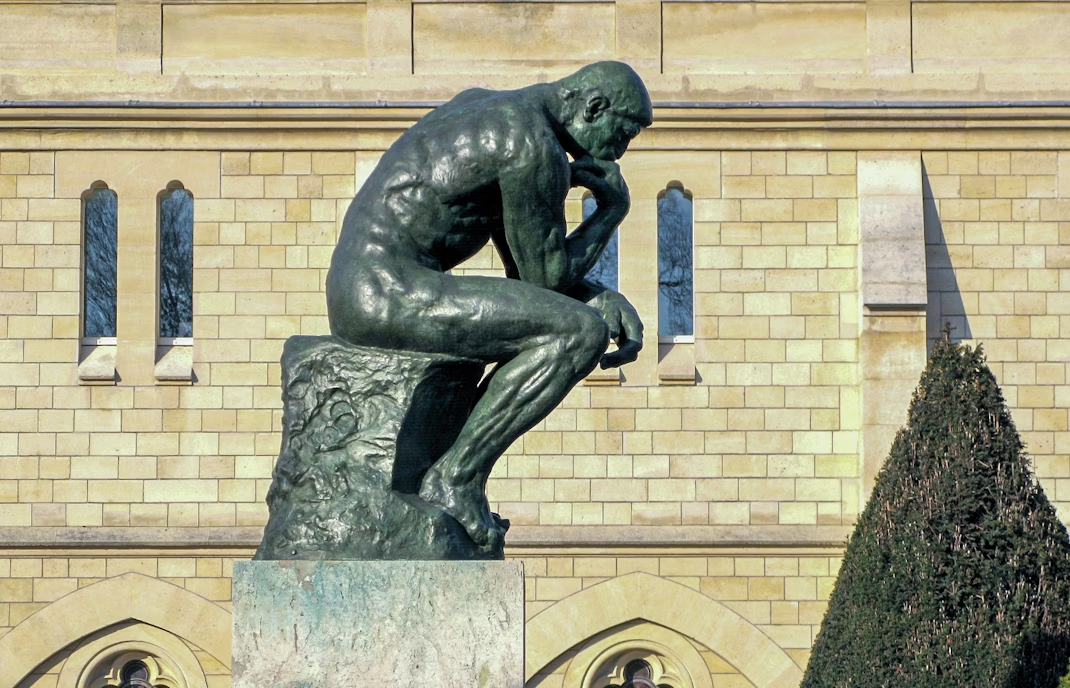



 Gladsome Lights