From Father Stephen Freeman:
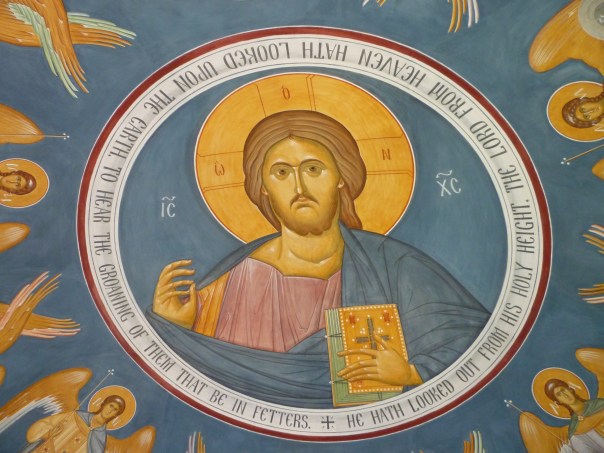
When the Fathers used the word “symbol,” they understood that something was actually, really and truly made present. A symbol makes present that which it represents. This is fundamental in the doctrine of the Holy Icons. In our modern world, a symbol represents something that is not there, it is a sign of absence. Indeed, because our modern world-view is essentially one of nominalism, we believe that the ancient notion of symbol is simply impossible. It feels like superstition to the modern consciousness.
…..
But this brings us to my description of sin as not being a “legal problem.” St. Justin says that “sin defiles a man and his being.” This is not contemporary language. He means exactly what he is saying. It is of a piece with St. Athanasius’ description of sin as death, corruption and non-being. Sin is something, not just a thought in the mind of God. It kills us, and not because God is doing the killing. Sin is death itself. The “lawlessness” of I John 3:4 is the anarchy, chaos, and disorder of death and corruption. Sin is utterly contrary to the life that is the gift of God.
This is why St. Justin (and the Church) can say that the remedy of sin is holiness, the “synthesis and unity of all the holy virtues and grace-filled energies.” When we partake of the holy mysteries of Christ’s Body and Blood, they “cleanse us from all sin.” This is not a simple change of our status in the mind of God. His Body and Blood are life. They are the antidote to death, decay, corruption and non-being. They destroy the lawlessness that is the anarchy, chaos and disorder of death and corruption.
You can read the entire article here: Secularized Sin

 not what the title of my post refers to. It is a phrase from the hymnography of the Orthodox Church for the commemoration of the Beheading of John the Baptist, which we who use the Gregorian Calendar remember on August 29 every year.
 Gladsome Lights