Tag Archives: Eucharist

The day that the LORD has made.

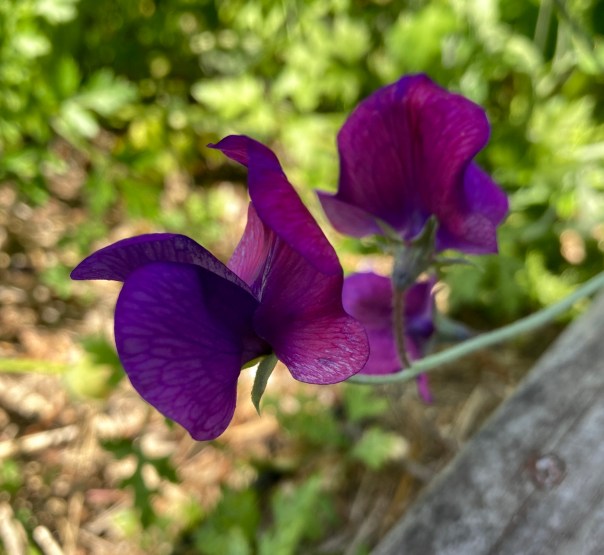
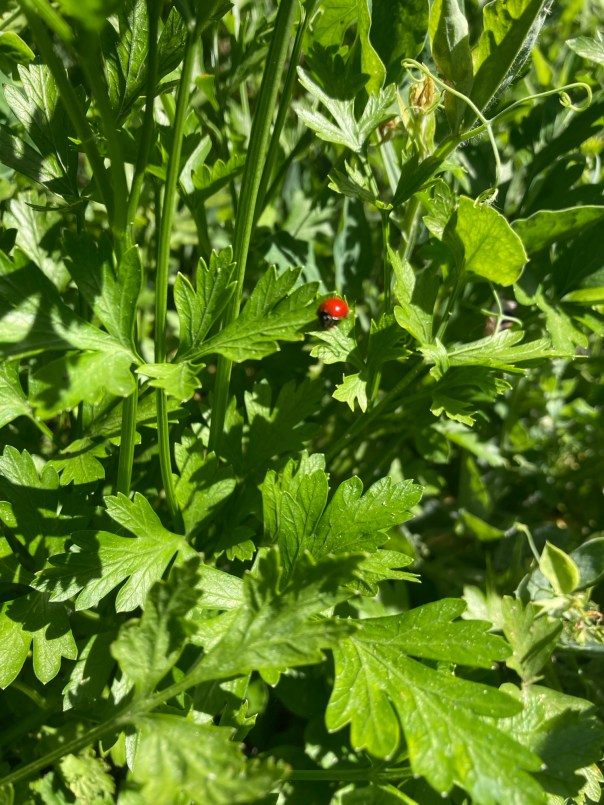
Sweet peas in September!

Do you know a chorus or hymn to those words in my title?

This is the day that the Lord has made;
We will rejoice and be glad in it.

We used to sing it in the Bible churches that my family attended back in the day, and now I sing it in the Orthodox Church, in a different setting. Many times recently I’ve had cause to meditate about the significance of both the fact and the exhortation in those lines from the Psalter. Often I wonder, as does G.K. Chesterton,

Here ends another day,
during which I have had eyes, ears, hands
and the great world around me.
Tomorrow begins another day.
Why am I allowed two?
I could not possibly list all the things I am thankful for every day. But I can occasionally write a blog post about a few of them, which I am doing this afternoon…

It’s Sunday, so fresh on my heart is the most extravagant and Life-giving thing: that I was a recipient of the Holy Mysteries of the Eucharist, the very Body and Blood of Christ. I was not kept at home by illness, nor was my attention distracted from the service by pain — right there are two of those Things That Didn’t Happen that are always infinite in number for any of us. If we are feeling grumpy, thinking on those non-events, the ones we wouldn’t have desired, can help move the mind in a positive direction to things that actually exist.
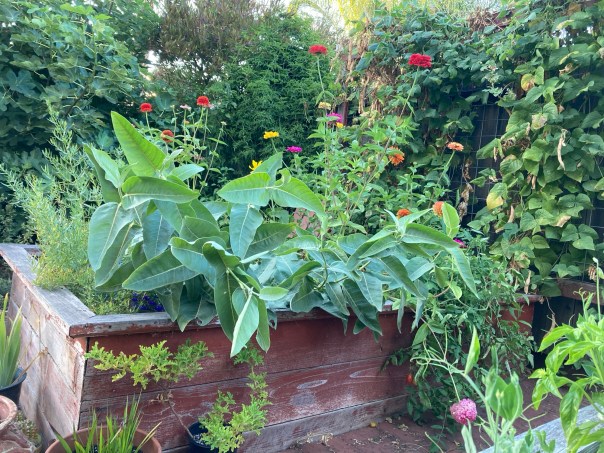
If my garden is full of unsightly areas, and posing problems for me to solve, I can go for hours or days without worrying about them, because I am so thankful to have a garden of any sort.  I feel like saying to God, “I have a gorgeous fig tree! How can it be possible that I also have a lemon tree, a begonia, and a fountain??”

Time Management is a term I do not like. Long ago, I used to think a lot about my days in terms of T.M., and it wasn’t happy thinking. It was Happier thinking when I was sitting on the couch with several children around me, reading A Child’s Garden of Verses, or Winnie the Pooh, or The Jungle Book.
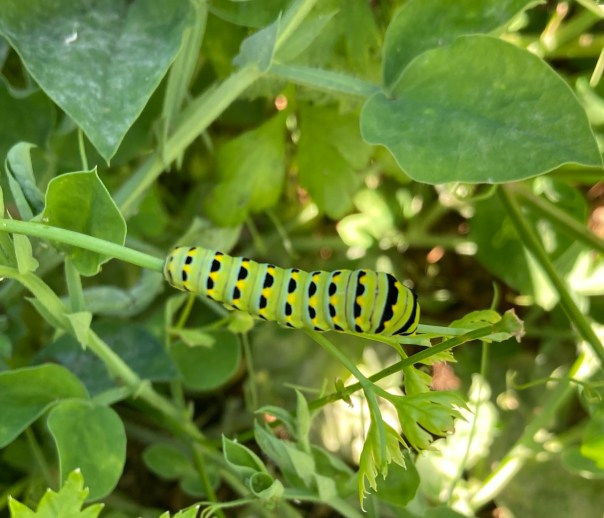
Anise Swallowtail

Another Happy kind of thinking is when I walk around the garden considering all the wildlife out there. Currently we have caterpillars feasting on the plants, including two Anise Swallowtails in the parsley patch. On the milkweed, Monarch Caterpillar #2 has entered the pupa stage, and Caterpillar #3 is still munching. This is a pollinator gardener’s joy  ❤  and I hope that there are dozens more caterpillars that I haven’t noticed, that are reaping the bounty and thanking God with me. …even if they are Cabbage Whites, which like to eat everything — though I haven’t seen many of those around this year.
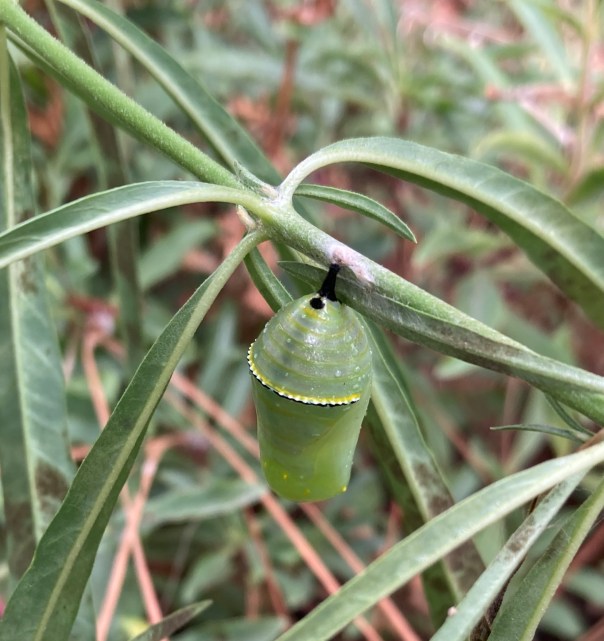
Monarch chrysalis

The problem that Time Management poses is, “How can I get everything done?” But I now know that I can’t. Whenever I’m doing one thing, like typing here, and/or exulting in the caterpillars and flowers, I’m not doing dozens of other things, which threaten to Never Get Done.

There is some kind of Russian proverb that I remember roughly as, “If I don’t die today, I can do Those Things later. If I do die today, it won’t matter that I didn’t do them.” 

Even King David could not do everything he wanted. He wanted to build a temple, and God even told him that was a Good Idea, but that it wasn’t for him. It seems like the vast majority of Good Ideas I’ve had throughout my life have not or will not come to fruition, so they will remain in the Theoretical category. I want to focus on the Real things that I am participating in right now.
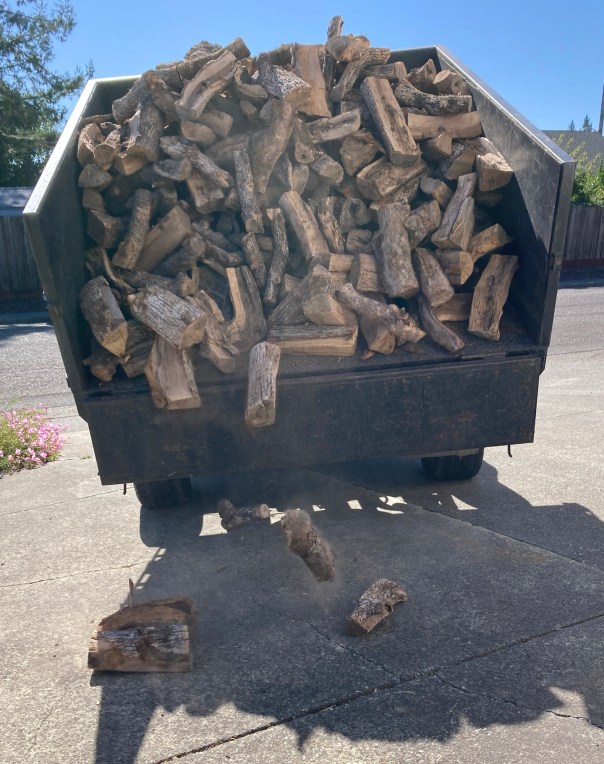
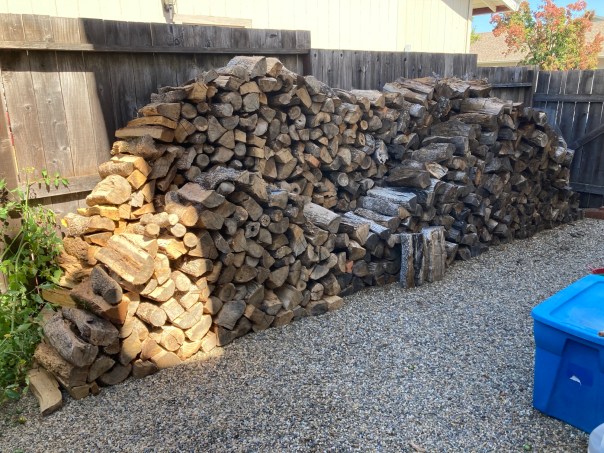
It probably wouldn’t have mattered, if I hadn’t got a delivery of firewood this month. I feel a little silly about it, because I still have wood left from the last two late-summer deliveries. I will definitely be prepared, if the power fails. After Bea and I stacked it, at one end of the rows that were left over, it seems that I must have well over a cord, and maybe I won’t have to buy wood next year. The newer, golden logs are on the left, and the oldest, grayest ones on the right. It looks like rolling hills of cordwood; that wasn’t planned.
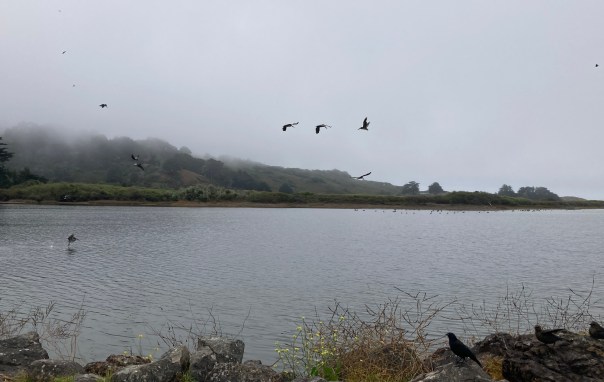
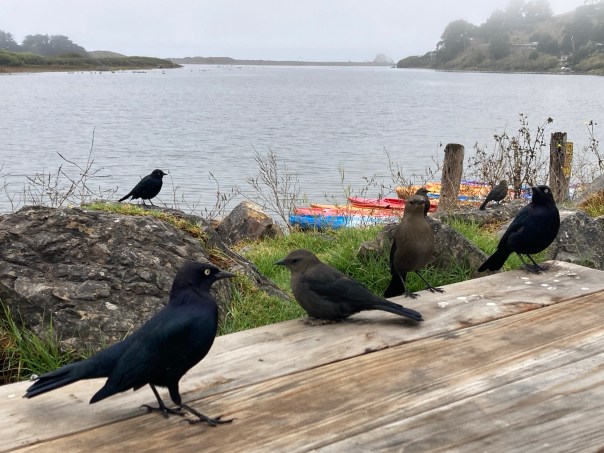
Last week I drove my friend Mrs. C to the coast, where we ate clam chowder overlooking the mouth of the Russian River, in the town of Jenner-by-the-Sea. I had been mentally dragging my feet about spending the time, but once I got out the door the day unfolded perfectly. It was the Day That the LORD had made, after all. If I had stayed home, I may have cleaned the bathroom (probably not), but I would not have been able to watch a hundred pelicans swirling, swooping, and doing belly flops on the river. Even the fog was not unpleasant; I had forgotten that it would not be a cold fog out there. Inland it had been quite rainy, but by the river we were able to sit outside, where blackbirds joined us at our table and welcomed any crumbs we offered.
The recent rain was a very welcome change from the chill winds we’d been having, that made me fear for an early departure of summer. Once the clouds moved in, the temperatures rose. I will be able to relax again, and hope for more figs ripening.
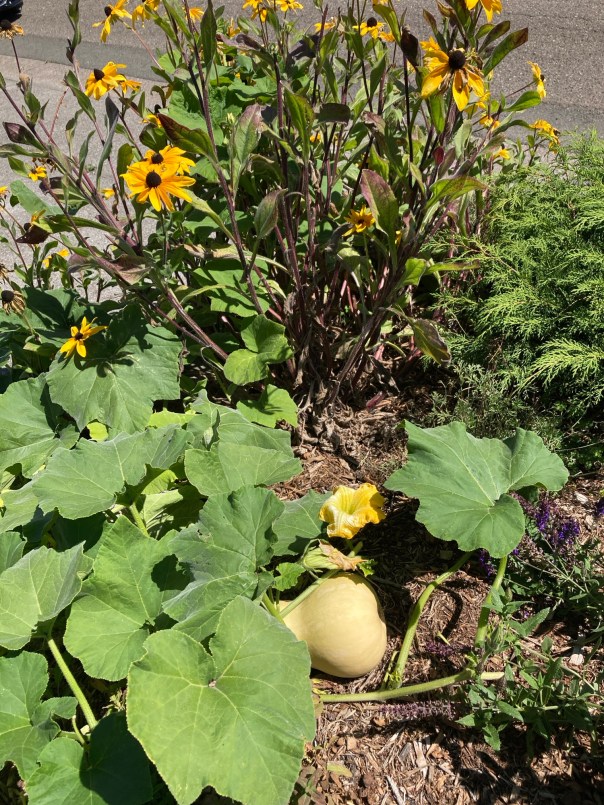
Several butternut squashes are ripening on the plants that have spread into the driveway. This one peeking out (above) is one of the largest. The rudbeckia at that corner of the driveway has been blooming for months and months and I have been amazed at it all summer. But it is winding down…

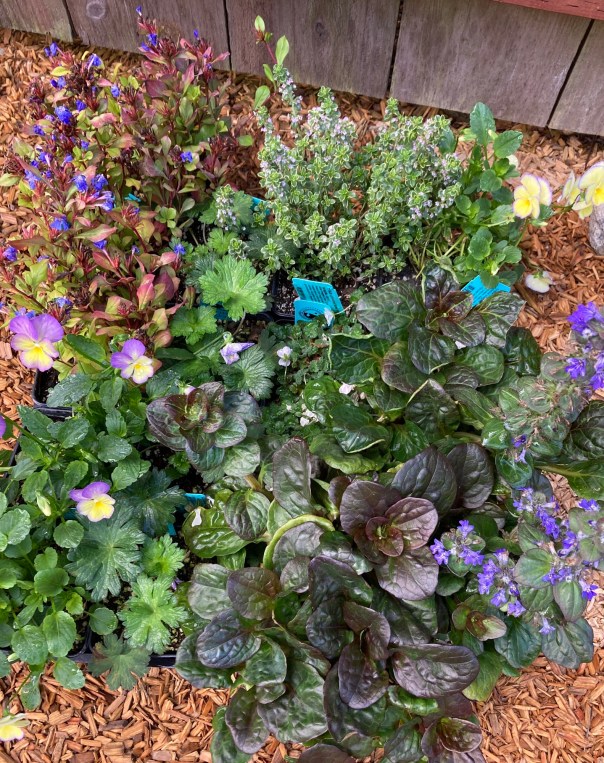
Just before the rain, I had bought a flat full of plants for that challenging area by my front door. These are all species that can thrive in Part Shade. I will hope to plant them this week or next; ajuga, violas, cranesbill, dwarf plumbago, and more.
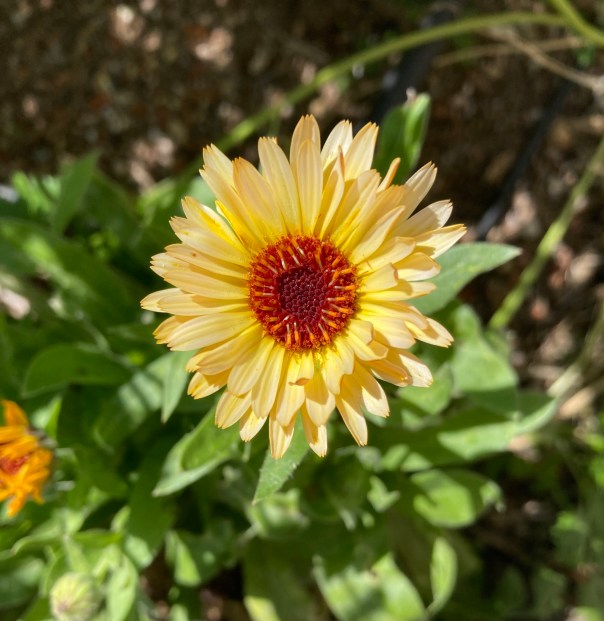
A late calendula.

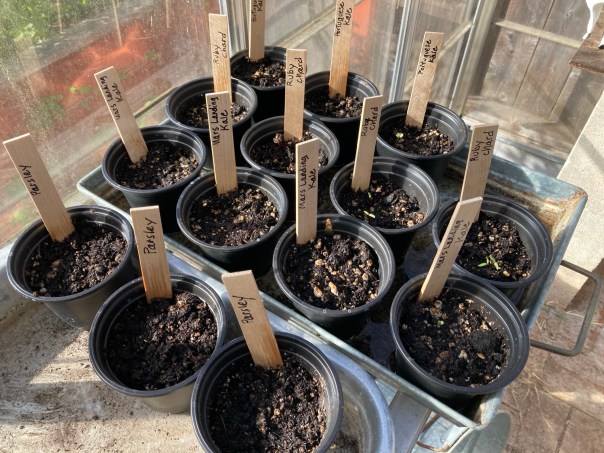
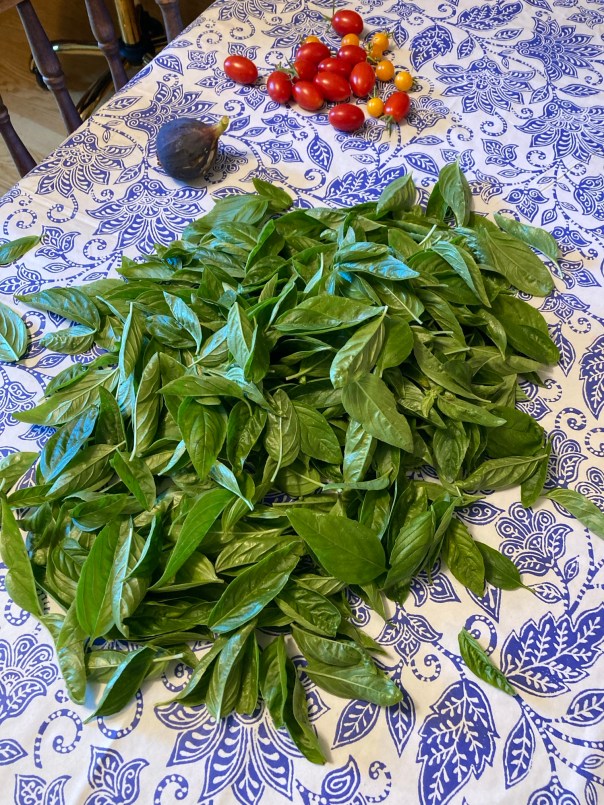
My leafy green seeds have sprouted, indoors and out. I harvested a pile of that basil that had been calling to me, and made pesto. There’s been a lot of Happy Thinking-Thanking through the days in Gretchen’s Garden. It helps that more than any other month, I love September.
Blessed is the kingdom…

Pantocrator OW Hagia SophiaIn The Eucharist, Fr. Alexander Schmemann lays before us the glories of the faith, which “manifests and grants that to which it is directed: the presence among us of the approaching kingdom of God and its unfailing light.” The very Kingdom of God seems to shine directly from the pages of Fr. Alexander’s book into my heart; it feels that way because he brings to mind what I have experienced in our services.
Jesus himself referred to the kingdom as something present on earth when He was among his disciples; as something within us; as something for whose coming we ought to pray in The Lord’s Prayer. Truly the Divine Liturgy is where we both experience heaven and anticipate the fullness of the kingdom to come.

The Orthodox Divine Liturgy, the Eucharist, begins with the announcement, “Blessed is the kingdom of the Father, and of the Son, and of the Holy Spirit, now and ever, and unto ages of ages.”

What does it mean to bless the kingdom? It means that we acknowledge and confess it to be our highest and ultimate value, the object of our desire, our love and our hope. It means that we proclaim it to be the goal of the sacrament — of pilgrimage, ascension, entrance — that now begins. It means that we must focus our attention, our mind, heart and soul, i.e., our whole life, upon that which is the “one thing needful.” Finally, it means that now, already in “this world,” we confirm the possibility of communion with the kingdom, of entrance into its radiance, truth and joy. Each time that Christians “assemble as the Church” they witness before the whole world that Christ is King and Lord, that his kingdom has already been revealed and given to man and that a new and immortal life has begun. This is why the liturgy begins with this solemn confession and doxology of the King who comes now but abides forever and shall reign unto ages of ages.

– Father Alexander Schmemann

Does the lady eat rye bread by the lake?

I was a gardener long before I had a blog — still, it’s surprising I didn’t tell my magic bean story here before. [Hmm… well, I did tell it, as the “related article” boxes below just revealed to me!] It started with friend Elsie… A Long Long Time Ago she and I used to share garden lore and harvest, and mysteries. The biggest mystery was how the special bean ever came to be growing in her vegetable plot.

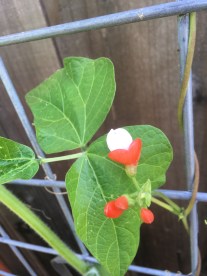
It must have been in 2006 at her house that she led me to a bed of earth next to a fence, to show me runner beans with big pods and pretty flowers. “Maybe you can tell me what this bean is,” she hoped. She always thought I might have the answers to any garden question. She hadn’t planted it, and her neighbors had no garden. I was clueless, but I went home and tried to find its picture online. It didn’t take long, even though at the time you could not easily find the seeds to buy. I read that only one runner bean has a bicolor flower, and this definitely matched the pictures of that variety called “Painted Lady.” Baker Creek Seeds in 2018 has this to say about it:

Traditional English bi-color grown since 1596! The name had mention to Queen Elizabeth I, ‘who was heavily made up with rouge and white chalk.’ The gorgeous flowers of red and white are among the most beautiful of flowering beans. The large beans are also good as snaps, freshly shelled or as dry beans, which are chocolate and tan mottled in color.

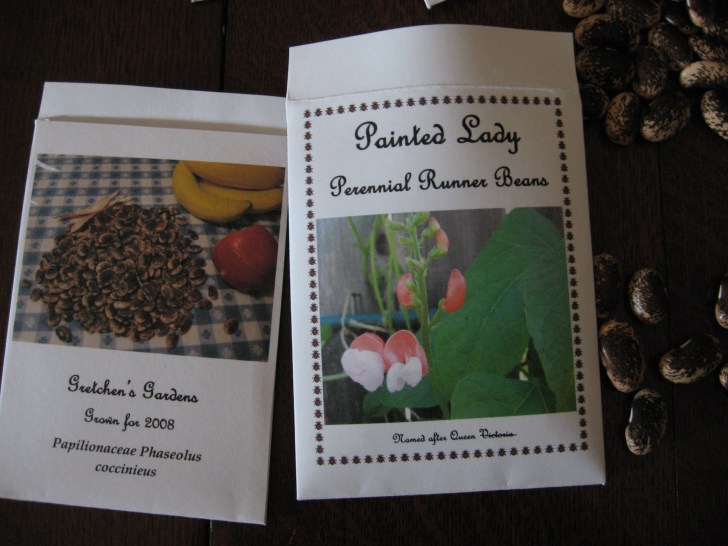
Just today I read on Wikipedia that this is a cultivar of the plain old Scarlet Runner Bean. They are all perennial, which is a great boon for someone like me who takes forever to get around to planting in the spring. The beans are pretty large, not the sort of seed you would imagine a bird dropping into the soil… Its appearance in our neighborhood and these other special features of the plant made it seem magic indeed, admittedly in a different way from those in the story “Jack and the Beanstalk;” but  Elsie gave me seeds that fall, I planted them the following spring, and in a few months I had lots to give to friends in these packets I made, with an error in the name of the associated queen. Oops.

2007
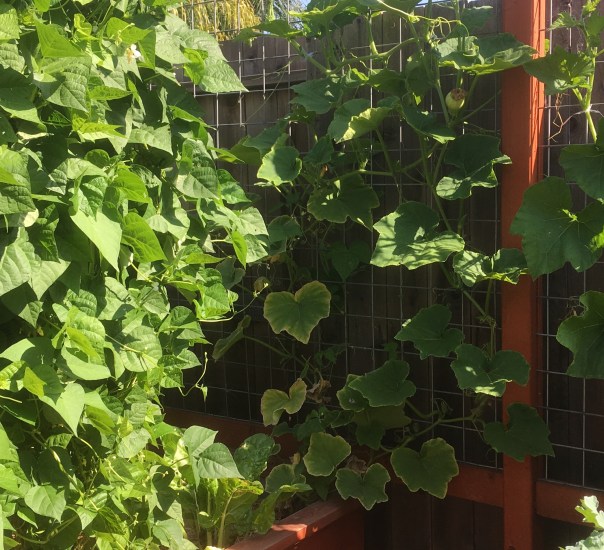
butternut,basil, and pole beans right now
2018

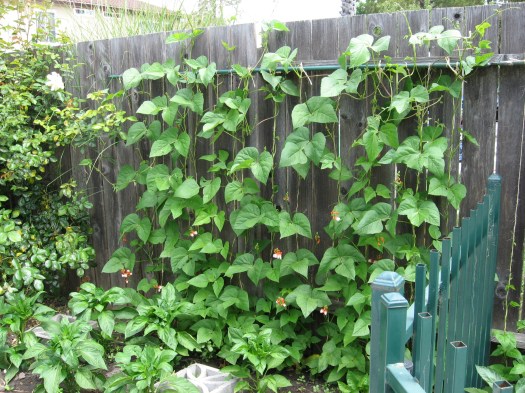
It’s been many years since these beans have been given a spot in my garden, but I found a handful of seeds of uncertain age to try training along with the butternut squash on my sturdy trellis — and they sprouted!

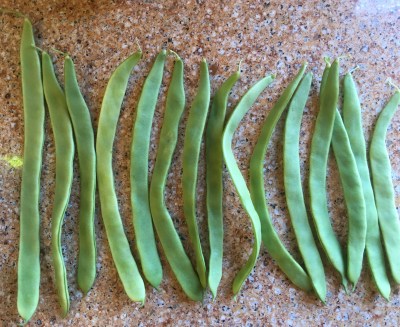
Nearby, the green beans named Blue Lake and Spanish Musica are reaching for the sky. I was lying in bed last night letting the poetry of bean names evoke images of Spanish ladies swimming in blue lakes, and composing a blog post about my wealth of beans. I had already made three pickings of the Spanish Musica, and Soldier came by to eat them with me — after I’d taken a picture of the last bunch, one of which was 11 inches long! They were very good eating, and their being stringless made them quick to prepare for the pot.

This morning at church the Gospel was the story of the Feeding of the Five Thousand. Father James’s homily ranged over the whole Bible and the goodness of God to feed us: The manna in the wilderness was a type of Christ, as He explained to His disciples at the Last Supper when they said,

Our fathers did eat manna in the desert; as it is written, He gave them bread from heaven to eat.

Then Jesus said unto them, Verily, verily, I say unto you, Moses gave you not that bread from heaven; but my Father gives you the true bread from heaven. For the bread of God is he which comes down from heaven, and gives life unto the world.

Then said they unto him, Lord, evermore give us this bread.

And Jesus said unto them, I am the bread of life: he that comes to me shall never hunger; and he that believes on me shall never thirst….Verily, verily, I say unto you, He that believes on me has everlasting life. I am that bread of life. Your fathers did eat manna in the wilderness, and are dead. This is the bread which comes down from heaven, that a man may eat thereof, and not die. I am the living bread which came down from heaven: if any man eat of this bread, he shall live for ever: and the bread that I will give is my flesh, which I will give for the life of the world.

Now we have the body and blood of Christ in the Eucharist week by week, imparting Christ the Bread of Life to us. Our homilist reminded us of the prayers that many people pray at meals, including those going back many millennia such as Jewish prayers like “Blessed art thou, O Lord our God, King of the universe, who bringest forth bread from the earth,” and “Blessed art Thou, O Lord, who feeds the world.”

When the theme of bread was added to the swirl in my head, a song popped up (naturally, because of Musica!) and joined in, one that our family used to sing as a grace before meals, part of Johnny Appleseed’s song adapted to the theme of dinner:

The Lord is good to me
and so I thank the Lord
for giving me the things I need:
the bread and the milk
and the bowl of beans;
the Lord is good to me!

It just so happens that I made bread last week, too, part of my ongoing project of combining “artisan no-knead” technique with my sourdough starter and experience. This latest effort was very satisfying, and makes me want to get another batch going tomorrow.


I assembled the ingredients for the Swedish Sourdough Rye on Tuesday…

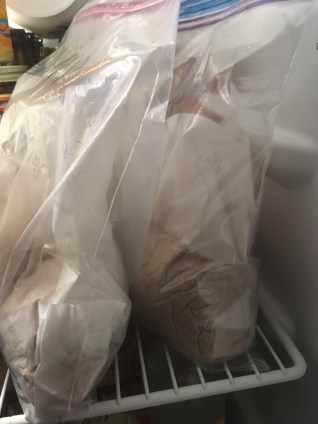
…and put two lumps of wet dough in the fridge in plastic bags.

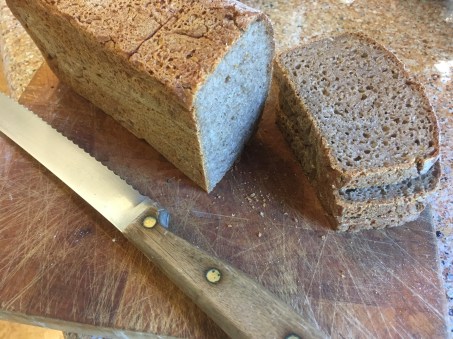
On Friday I baked one as a boule in the Dutch oven, and Saturday I baked the other in a bread pan, resulting in this 2-pound loaf:

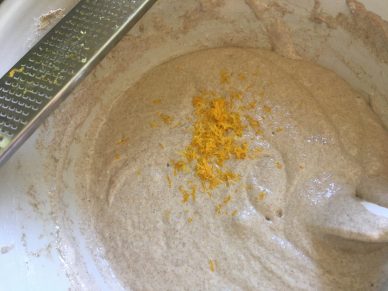
It is incredibly moist, what they call a custardy crumb, and nice and sour, with the anise and caraway and orange peel I got the idea for from Mabel last fall in Tucson. I sort of forgot to put any white flour in this batch, though it has whole wheat flour with the rye, and it is therefore dense, but it’s not doughy or heavy.

I bought the book at right but have read only a couple of pages. Before it arrived I had perused many recipes online but was too intimidated by all the details to follow any of them. After you’ve baked bread in a rather relaxed (a.k.a. sloppy) fashion for 40+ years the idea of completely starting over step-by-step was paralyzing. So I picked up some general principles and hoped that I might learn by experimentation; I’ve been keeping notes on my own trials and results. But I don’t know if I will ever have a real recipe to share with you all. I do know what is working for me currently:

1) Keep the dough wet and loose, more runny than biscuit dough.
2) Let it spend a good amount of time in the refrigerator.
3) When you take a lump out to bake it, handle it gently and don’t knead.
4) Bake it hot, at 450° or 500°F, and for longer than seems reasonable.

It’s not easy to see, but in the center of the photo below the Spanish Musicas are reaching across the space to hold hands with the trellis climbers. The poem that is being played out in my garden is too elaborate a ballad for me to follow easily (though Albert will likely jump at the chance to translate it), but tomorrow I’ll go out in the garden and try to soak up a few more lines.