Category Archives: icons

We encounter the small black dot.

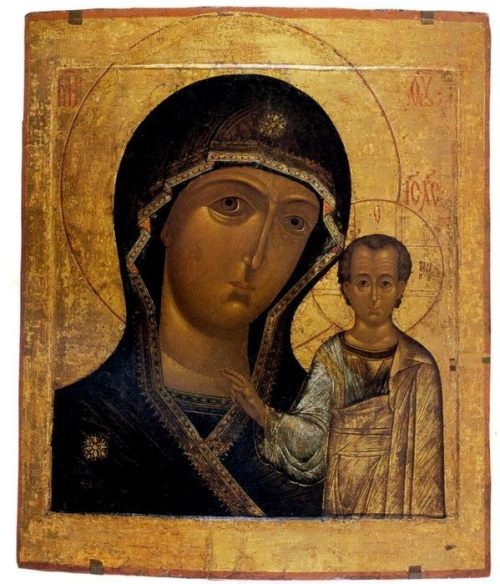
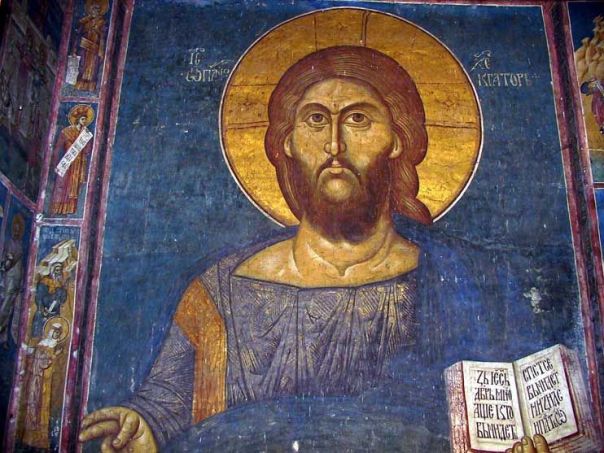
“The intimate darkness of our most precious cognitive organ constantly reminds us – whether we like it or not – that the “inner” content of any human is never absolutely available to our cognitive powers. The most powerful among the senses, thus, recognizes the deepest human cognitive powerlessness precisely during the encounter with the most powerful sense organ of another human being. However carefully we approach or analyze it, the unique personal existence of every human always stays partly hidden in the darkness of the unknowing.

“And this is most expressively manifested when we encounter the small black dot that is the pupil of the  eye. At this place we truly do “enter into the human soul,” but at the same time –confusingly and paradoxically –  we realize that we cannot enter it. In this kind of darkness, we can get lost and go crazy, or feel warm and safe – for the same reason: because we cannot possess what it reveals/hides. This darkness can be scary or the most welcoming place in the world for the very same reason: because, herein, we recognize the utmost freedom of the human being.

“Through the encounter with the pupil of another human being, we fall directly into the other’s personal infinity, which can never be fully attained – even if our faces are only a few centimeters from each other. Experiencing this kind of infinity, finally, becomes the cognition of the utmost human freedom – freedom that does not depend even on itself.”

I added paragraph breaks to this excerpt from an article by Todor Mitrović from the Orthodox Arts Journal, on “The Epiphany of the Eye.”

I found the author’s ideas fascinating, and convincing. I am not an artist, but I do gaze upon icons quite a bit. When I do, I am looking through the “window,” not caring to analyze what features of the image are having what effect on me. This article nonetheless does help me to better appreciate the whole phenomenon. The artistry of an icon is not the most important thing about it, but contributes to its beautiful effect on our souls, our deepening relationship to Christ through prayer.
The Holy Spirit at the peak of Mount Sinai.

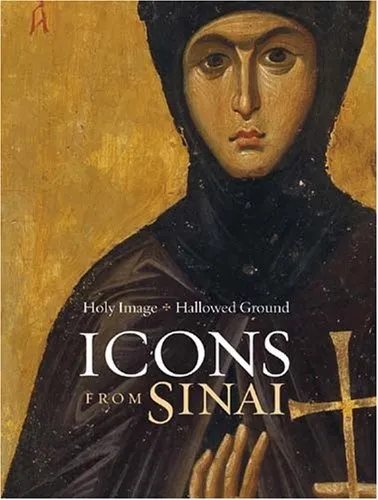
When the Getty Museum in Los Angeles hosted the exhibition “Holy Image, Hallowed Ground: Icons From Sinai” in 2006-07, the courier and caretaker of the artifacts on display was Father Justin Sinaites.
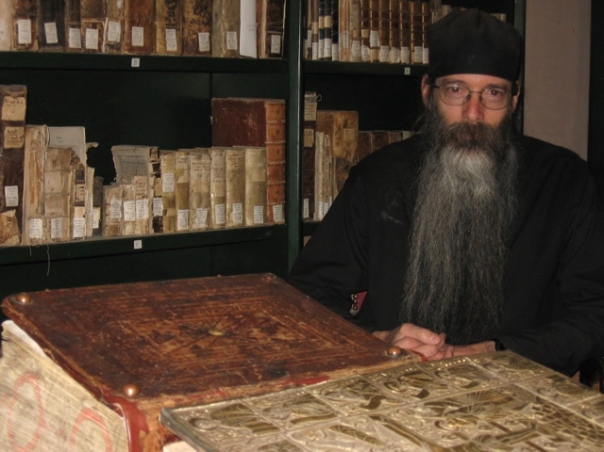
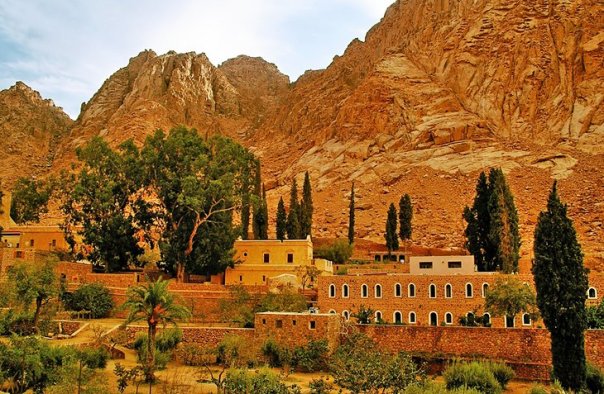
He is the librarian at Saint Catherine’s Monastery on Mount Sinai, where the extremely dry climate has kept ancient manuscripts from deteriorating the way they might in many places in the world. This monk librarian came from Texas to the Egyptian monastery many years ago; at least once before I mentioned him on my blog after my late husband and I heard him speak in Berkeley, California.

As I write, the sun has set on this Sunday of Pentecost, a celebration full of joy and light. So we are now, according to Church Time, in the day after, on which the Orthodox Church celebrates Holy Spirit Day; Father Justin has written a blog post about how they keep the feast at St. Catherine’s: “Liturgy at the Peak of Mount Sinai”:

“Every year, we celebrate the Divine Liturgy at the peak of Mount Sinai on the day after Pentecost, the Monday of the Holy Spirit. This year, we were joined by pilgrims from Greece and Russia. We made the ascent in the night, and began the Liturgy at 4:00 AM.”

The blog post consists mostly of Fr. Justin’s own photographs, which I always find very appealing. I learned more about the monk himself in this interview on the Travel Potpourri website: “Saint Catherine’s Monastery Interview with the Librarian Father Justin.”

One paragraph:

“I didn’t go from El Paso, Texas, to Sinai, in one big step. There were lots of little steps. But even in El Paso, I read the account of Moses and the Exodus in the Bible. I saw Cecil B. DeMille’s “The Ten Commandments,” which contains scenes filmed at the traditional Sinai, with Charlton Heston climbing up the mountain, and walking along a ridge with the Sinai range in the background. Also, El Paso is a desert. I used to wander in the desert for hours and came to love the stark beauty of the desert landscape. All of this was in the background when I began to read about the history and the theology of the Orthodox Church.”

If you are interested in the manuscript collection itself, you may want to look at: This Reuters article, which explains that the abbot of the monstery feels an urgency about completing the project of digitizing all 4500 manuscripts in the library, many of which are in the Syriac and Arabic languages, and very rare.

But today, all I want to do is visit Fr. Justin’s blog, and through his photographs get another glimpse of the daily life and worship at Saint Catherine’s, Sinai.

Sunday of the Last Judgment

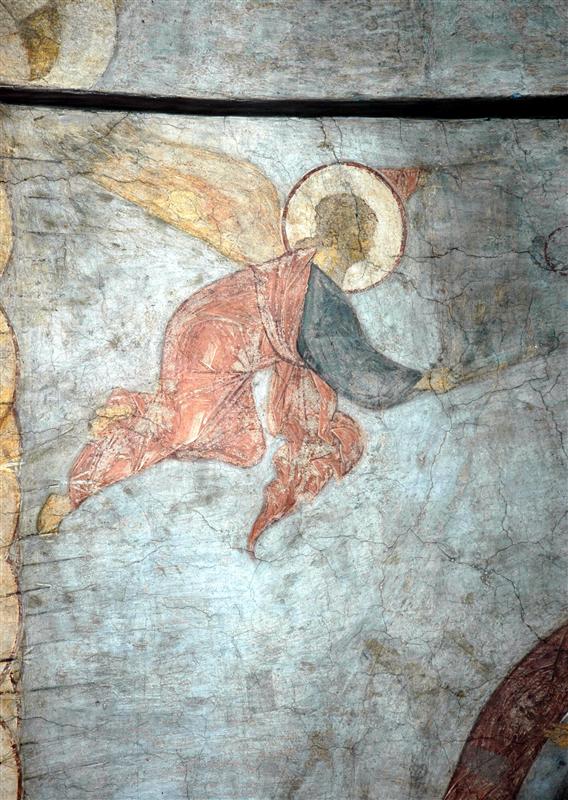
Andrei Rublev – The Last Judgment (detail), Assumption Cathedral, Vladimir, Russia, 1408

The Gospel for today: Matthew 25:31-46 

When the Son of Man comes in His glory, and all the holy angels with Him, then He will sit on the throne of His glory.

All the nations will be gathered before Him, and He will separate them one from another, as a shepherd divides his sheep from the goats.

And He will set the sheep on His right hand, but the goats on the left.

Then the King will say to those on His right hand, ‘Come, you blessed of My Father, inherit the kingdom prepared for you from the foundation of the world:

for I was hungry and you gave Me food; I was thirsty and you gave Me drink; I was a stranger and you took Me in;

I was naked and you clothed Me; I was sick and you visited Me; I was in prison and you came to Me.’

Then the righteous will answer Him, saying, ‘Lord, when did we see You hungry and feed You, or thirsty and give You drink?

When did we see You a stranger and take You in, or naked and clothe You?

Or when did we see You sick, or in prison, and come to You?’

And the King will answer and say to them, ‘Assuredly, I say to you, inasmuch as you did it to one of the least of these My brethren, you did it to Me.’

Then He will also say to those on the left hand, ‘Depart from Me, you cursed, into the everlasting fire prepared for the devil and his angels:

for I was hungry and you gave Me no food; I was thirsty and you gave Me no drink;

I was a stranger and you did not take Me in, naked and you did not clothe Me, sick and in prison and you did not visit Me.’

Then they also will answer Him, saying, ‘Lord, when did we see You hungry or thirsty or a stranger or naked or sick or in prison, and did not minister to You?’

Then He will answer them, saying, ‘Assuredly, I say to you, inasmuch as you did not do it to one of the least of these, you did not do it to Me.’

And these will go away into everlasting punishment, but the righteous into eternal life.”