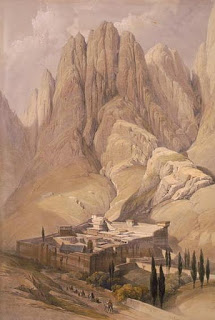
From Father Justin’s blog on the treasures and scenes of St Catherine’s Monastery in Sinai, I am sharing a link to his post from last year featuring a very old mosaic icon of the Prophet Hosea, from the sixth century. He writes in the comments:
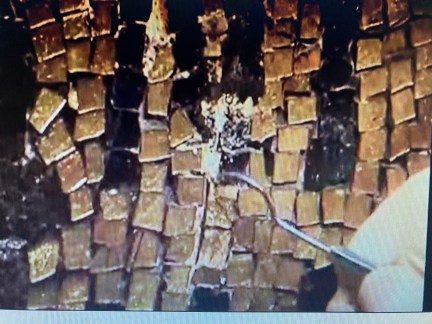
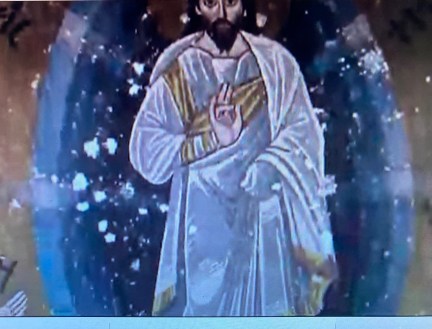
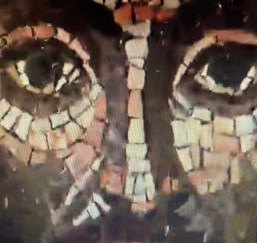
“Roberto Nardi and his team of conservators recently carried out a major program to consolidate and clean and conserve the mosaic. From their detailed study, they became convinced that it is the work of artisans from Constantinople. The portrait medallions of the apostles around the arch, and the prophets around the base, are each very striking and individualized. An examination of the mosaic up close reveals surprising colour juxtapositions, that the artisans knew would blend together when the mosaic was seen from a distance. Every detail is a source of wonder.”
You can see Fr Justin’s close-up photo of the brilliant icon here: “The Prophet Hosea.” He says of the prophet that, “He recalled the sojourn in the wilderness with longing,” because during that period the Israelites were close to God, whereas in the time during which Hosea lived, their faith was weak.
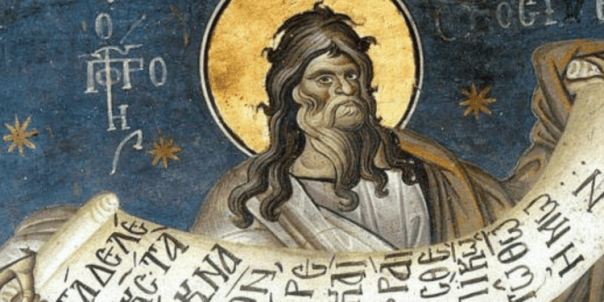
This fresco below is not that mosaic icon, and is very different from it; I like its energy. It is featured in another article on the prophet here, which gives more of his story from the Bible: The Orthodox Times.
I hope you will take a look at Fr. Justin’s photo of the sixth century mosaic: Prophet Hosea.
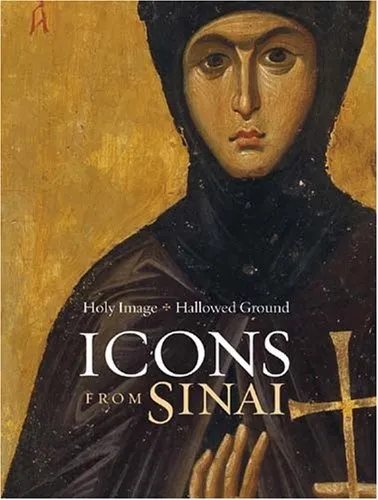 When the Getty Museum in Los Angeles hosted the exhibition “Holy Image, Hallowed Ground: Icons From Sinai” in 2006-07, the courier and caretaker of the artifacts on display was Father Justin Sinaites.
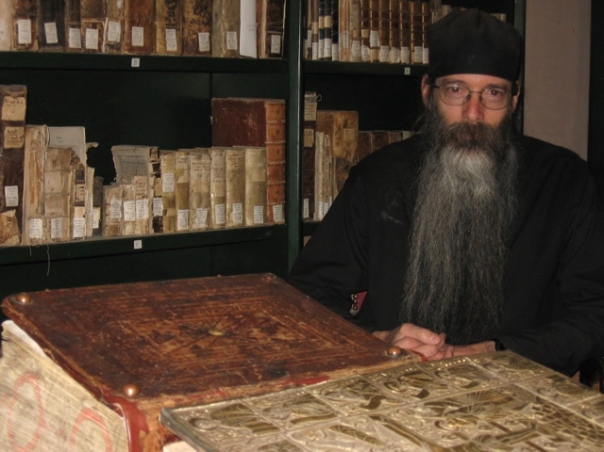
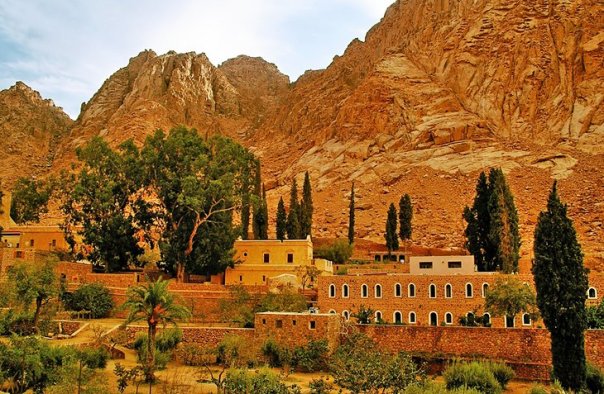

 He starts with the history of the monastery, which he admits goes back to Moses and the burning bush, on through St. Helen and St. Justinian; the mosaic was installed soon after the church was built. In 1847 a Russian monk named Samuel did a huge amount of restoration work on the mosaic, and in 1957 archeologists sounded an alarm about its deteriorating condition, but it lasted 50 more years to the point where this 5-year project began. By then, 20,000 tiles were missing (though of course monks had saved them in boxfuls), which equaled 4% of the total, and a great number of the remainder were no longer actually attached to the base layer.