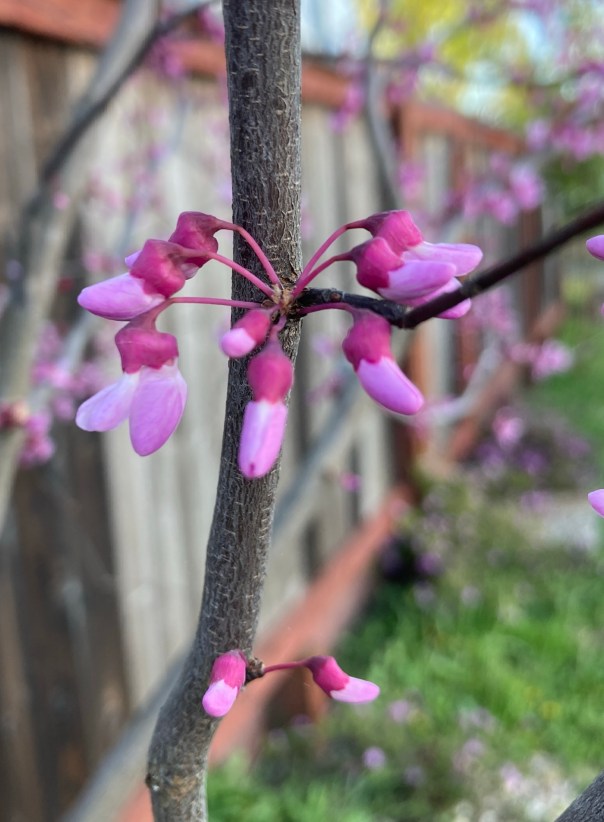
This is the season when every day’s wandering in the garden reveals sprouts and blossoms that startle me: Can this lithodora already be filled out, and I didn’t notice it happening? When did the coral bells get as high as my nose?
At church the scents of wisteria and other blossoms are heavy in the air, and when I walk to and from my car I have to slow down and focus on breathing as I make my way.
Maybe all of this botanical activity wouldn’t be as surprising if I’d been more attentive to the garden, but I’ve been restraining myself from going to the nursery or planting anything new just yet; the next month or so involves a lot of traveling, when I won’t be able to tend to anything. The reason for travel is, two of my grandsons will marry this spring, and one granddaughter. But in between the May weddings I hope to put a few zucchini seeds in the planter boxes where they will get automatic irrigation.


The plant just above, I can’t remember the name of. [Mrs. Bread already looked in here and reminded me that it is Tasmanian Flax, Dianella tasmanica.] This one is at church, but Mrs. Bread gave me a specimen last year and I’ve planted it here; mine isn’t blooming yet. They eventually have berries that look like elongated dark purple grapes.
I bought one more wall calendar to help me do better at keeping track of where I am in time. I love having calendars and clocks all over the house. It’s from Beauty First Films and claims to promote “the overthrow of months.” I ordered it late, so we are already into Lent, which is revealed by this calendar to transcend the months, and to infuse the everyday chronos of life, emphasizing the gifts of the Church that lead to kairos. This year’s version also features the churches of Serbia:


Many years ago Mrs. Bread and I split a six-pack of smallage plants. Then I re-landscaped and let mine go. She gave me a sprout from hers a year ago and it is Not Small At All now. I like having smallage around because it’s nice to put in soups, but I don’t really want to give a quarter of the planter box to it. Unfortunately, I think the boxes are the only place it would get the amount of watering it likes.

Swiss chard, on the other hand, I can’t have too much of. I procrastinated picking this crop for a couple of months, during which time a couple of snails fattened themselves on it. There was still plenty left for me, and I finally took off every last beautiful leaf from a dozen plants and cooked it all up. Most of it went into the pot to make my favorite lenten Garlicky Chard with Cannellinis. I’m showing the Italian Silver Rib Swiss Chard, but I actually harvested about twice as much Rhubarb Chard.
April may have rushed in to my life, but now that it’s here I’m pleasantly surprised that we’re only half way through the month. We Orthodox are more than half way to Pascha, which is also surprising. I can tell I was made for kairos, because I never can get used to this chronos life!
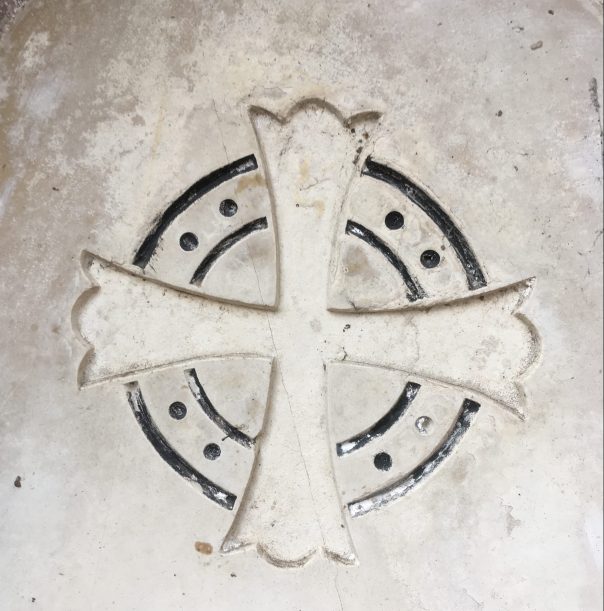 Fresh news just before publishing: My dear friend and brother in Christ, “Mr. Greenjeans,” who started me working in the church garden and taught me tons about plant and plant names; who for many years and several times a month made all the huge bowls of dough for our church prosphora bread; who got me literally up to speed chanting the Hours in church; who became an even closer friend since 2020 when he and his wife began hosting small tea-and-talk sessions at their house — That Friend no longer has to struggle in this chronos world, but has fallen asleep in death, has gone to his rest, to await the Resurrection. Memory Eternal!

 Today we commemorate St. John Climacus, also known as
  The Orthodox Church starts Lent off with the Vespers of Forgiveness, which all are strongly encouraged to attend, and to participate in, by asking forgiveness of everyone else in the church, one by one.

 revealed this necessity to him through an extraordinary vision: One day, as though in a light sleep, Gregory saw himself holding a vessel in his hand full to overflowing with milk. Gradually, the milk turned into wine which likewise spilled over the rim, and drenched his hands and garments.
 Gladsome Lights