Don’t worry about saving these songs! And if one of our instruments breaks, it doesn’t matter.
We have fallen into the place where everything is music.
The strumming and the flute notes rise into the atmosphere, and even if the whole world’s harp should burn up, there will still be hidden instruments playing.
So the candle flickers and goes out. We have a piece of flint, and a spark.
This singing art is sea foam. The graceful movements come from a pearl somewhere on the ocean floor.
Poems reach up like spindrift and the edge of driftwood along the beach, wanting!
They derive from a slow and powerful root that we can’t see.
Stop the words now. Open the window in the center of your chest, and let the spirits fly in and out.
On this feast day of St. Kassiani, I have a few items to share with you. Kassiani was a Byzantine abbess, poet, composer, and hymnographer, born at the beginning of the 9th century in Constantinople. This short biography is a good introduction: “Kassiani the Hymnographer.”
So is this five-minute video: “The Story of the Hymn of Kassiani.” In either of those tellings you will learn about how she wounded the pride of the young emperor Theophilus when she appeared before him in a “bride show.” He rejected her because, as some put it, she was “too clever.”
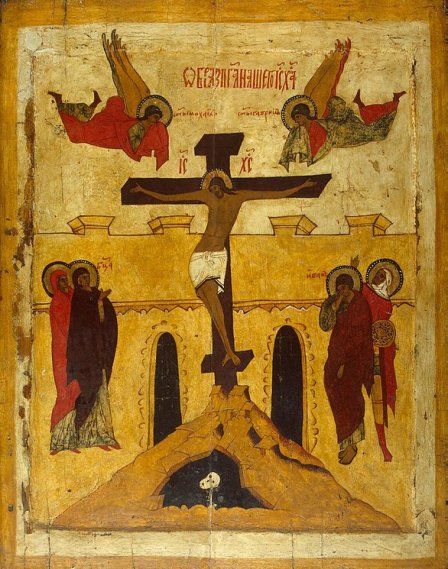
In the Orthodox Church that particular hymn is sung during Holy Week, and more than twenty others have been included in liturgical books over the centuries. Fifty of her compositions are extant.
One of my favorite renditions of the most famous composition is this pure and simple one from a parish in Utah: “The Hymn of Kassiani”
But if you like a professional choir, Cappella Romana’s singing of it in Greek is is beautiful:
This long-playing collection of Kassiani’s hymns is also lovely if you want to soak up medieval music for a while: “Kassia Byzantine Hymns”
And this last one is a choir of men with big voices, who sound like they are singing in a huge old church: “Troparian of Kassiani”
“He died although he cannot die; he dies although he is immortal, in his very human nature inseparably united with his Godhead. His soul, without being separated from God, is torn out of his body, while both his soul and his flesh remain united with the Godhead. He will lie in the tomb incorruptible until the third day, because his body cannot be touched by corruption. It is full of the divine presence. It is pervaded by it as a sword of iron is pervaded by fire in the furnace, and the soul of Christ descends into hell resplendent with the glory of his Godhead.
“The death of Christ is a tearing apart of an immortal body from a soul that is alive and remains alive forever. This makes the death of Christ a tragedy beyond our imagining, far beyond any suffering that we can humanly picture or experience.
“Christ’s death is an act of supreme love. It was true when he said, ‘No one takes my life from me; I give it freely myself.’ No one could kill him — the Immortal; no one could quench this Light that is the shining of the splendor of God. He gave his life, he accepted the impossible death to share with us all the tragedy of our human condition.”
–Metropolitan Anthony Bloom
I attended Matins of Holy Friday this evening; it’s a long service during which twelve Gospel readings of Christ’s passion are read, while we stand holding candles. One of the most beloved hymns of this evening is: “Today is Hung Upon the Tree.”That link is to the version that our parish choir sings, but at a somewhat more stately pace. Tonight we had plenty of men singing, and the sound was full, and appropriately worshipful.
“We worship Thy passion, O Christ. Show us also Thy glorious Resurrection!”
If you have not already put away every thing pertaining to Christmas, perhaps you are like me in some way… I have various reasons, year by year, to leave up the lights around my kitchen window, or to be slow about putting away my basket of music CD’s about the Christ Child and the glorious message of God With Us. I just mailed the last of my Christmas cards this week.
My Orthodox parish celebrates the Nativity of Christ on the “new calendar,” December 25th, like most of you, but many of my friends only began on January 7th their feast both liturgical and dietary, and this year in particular I am grateful to continue my heart’s celebrations with them.
These monks in Ukraine gave a concert some years ago, and a full 15 minutes of their carol-singing is in this video, which I’ve been listening to over and over. Their joy infuses me, and I weep for being comforted. “Comfort ye, comfort ye, my people…”
Comfort ye! Comfort ye, my people! Saith your God. Speak ye comfortably to Jerusalem, and cry unto her that her warfare is accomplish’d, that her iniquity is pardon’d. The voice of him that crieth in the wilderness, Prepare ye the way of the Lord, make straight in the desert a highway for our God. Every valley shall be exalted, and every mountain and hill made low, the crooked straight, and the rough places plain. -Isaiah 40
I don’t need to know a word of their language to hear the message: Christ is born!!!
If this is a little too much exultation for you at this time, because you celebrated plenty already, it might be you could benefit from reading Auntie Leila‘s encouraging words about how to wind down from the overstimulation of the Christmas season. I was greatly helped by her simple and homey ideas, with easy “action points,” in this article, “An Epiphany Thought.” She writes:
“We didn’t used to call it overstimulation back when I was young, but when I recently saw something about this idea for moms, I reflected on how, as a young woman definitely fighting through to a quieter situation, I developed some strategies to address just that issue, of needing to be calmer so that I could think!”
In many ways it was easier to keep a quiet sort of focus and household when I was a young mother maintaining a certain atmosphere in the home, for the sake of a large family who lived together. Now that I have only myself to keep in order, I don’t do such a good job, and I am grateful for reminders like this, of how to “mother” myself.
One factor in the overall mood of a home certainly is the weather outside, and many of you have asked me how we are faring in my area of northern California, with the storms, high winds and flooding. They haven’t been a big problem for anyone I have talked to, and though I’ve been out and about the last few days, I haven’t come across any flooded areas. We have had these wet winters before, and to me this one doesn’t seem unusual. But I am just one person.
In spite of unfortunate damages, I can’t help being very glad that we are getting so wet. It’s a perpetually arid land, and I’m afraid people will always be fighting water wars. When extra water is falling from the skies, it feels like showers of blessing from Heaven, and cause for at least a temporary cease-fire in those battles. I will go on ignoring the weather news and will try to pay closer attention to what’s happening in my garden — and in my heart and home.