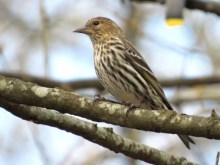
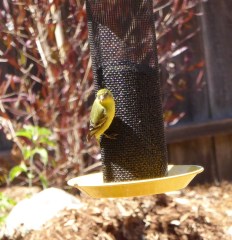
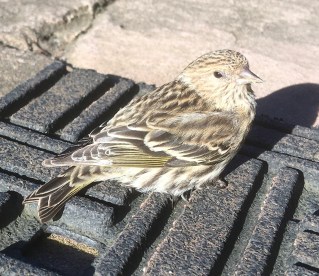
The local pine siskins are experiencing an epidemic, and I feel very bad about it for their sake and mine. Watching the birds at the feeders in my back yard, seeing the number of species increase every season, learning to identify and recognize most of them — it’s all been a steady comfort and joy. But now I need to encourage them to go elsewhere and find food in other, larger spaces.
It appears that in the case of the pine siskins, and in some places goldfinches, when they unnaturally congregate at feeders they keep spreading salmonella around. I’ve read news articles from British Columbia, Oregon, and California, all saying basically the same thing:
“Salmonellosis is an infection caused by bacteria of the genus Salmonella. These bacteria primarily attack the digestive system, notably the throat, making it difficult for the birds to feed. The symptoms are not always obvious in wild animals, but infected birds may appear thin, fluffed up, and lethargic.
“How you can help birds avoid disease:
“Salmonellosis is primarily transmitted by fecal contamination of food and water by sick birds, although it can also be transmitted through bird-to-bird contact.
“High traffic spots, such as bird feeders, create a source point of transmission and can exacerbate the spread of this deadly disease. Removing the feeders completely is the best solution to encourage birds to disperse, thereby minimizing the potential for infection. If you choose to keep your feeders up, they must be properly maintained to foster a healthy bird environment.”
They make it sound as though the outbreak has developed this winter, but now that I’ve seen images and descriptions of sick birds compared with healthy, I’m pretty sure that last winter some of the pine siskins (which I thought then were sparrows) at my feeders were ill.
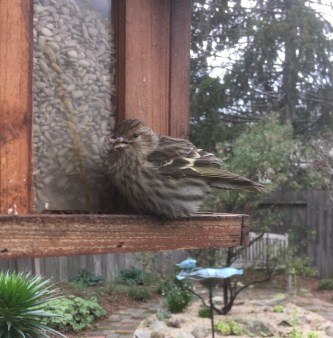
Just last week I encountered one at the tray feeder who I now understand was “lethargic.” At the time, and back in 2019, I only wondered at how calm and friendly they were. I also thought it strange that some of them would sit contemplatively on the hopper feeder, doing nothing. Now I get that they were too weak to fly away.
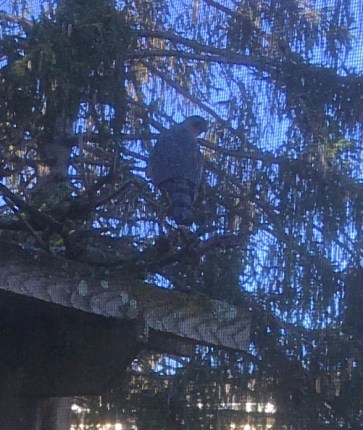
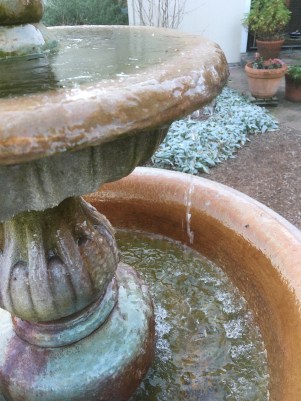
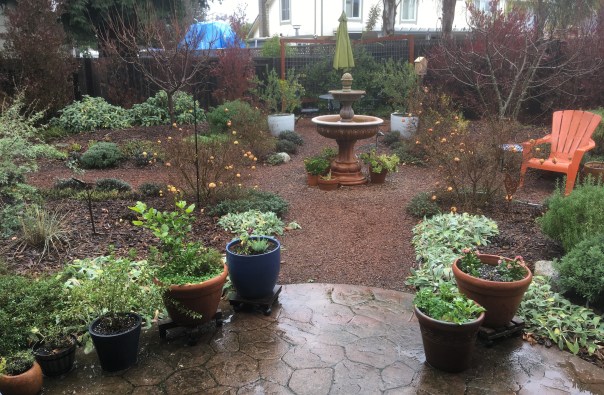
The Cooper’s Hawk that has been coming around more boldly all the time, taking advantage of the flocks of finches, will probably stop visiting. I plan to stop feeding the birds at least until next winter. I am not the tidiest housekeeper anywhere, and if I need to disinfect the birdbath, fountain and feeders regularly in order to be a good bird-feeding friend, I think it best to revert to nature.
How can I explain to these creatures about the changes? “This hurts me more than it does you!” I do have lots of plants with seeds or fruit that various birds can enjoy, and have been eating all along. Plus insects — yes, a good supply of those. Many birds pay little attention to my seed offerings.
And I still have the hummingbird feeder!

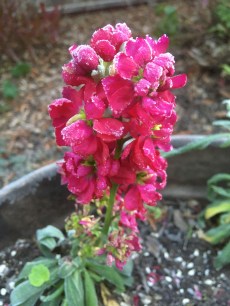
On another garden topic, the daphne by the front door is getting really big and is covered with blooms right now. When the sun shines on it in the morning the scent wafts up at me when I go in or out, and I swoon.

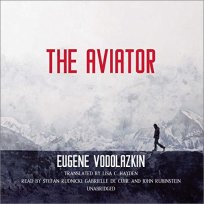 Did I tell you I have been reading The Aviator by Eugene Vodolazkin? I have the audio as well as the print format. The possibility of sinking into that book makes me look forward to any longer drive to anywhere. I can’t concentrate on a book, lecture, etc. while doing anything else at home; even while driving, I can only attend well while following a familiar route. I make frequent use of the rewind button (Is there another word for that now that there is no actual winding involved?), including at times when I have to concentrate more, as at an intersection, and briefly lose the thread of the story.
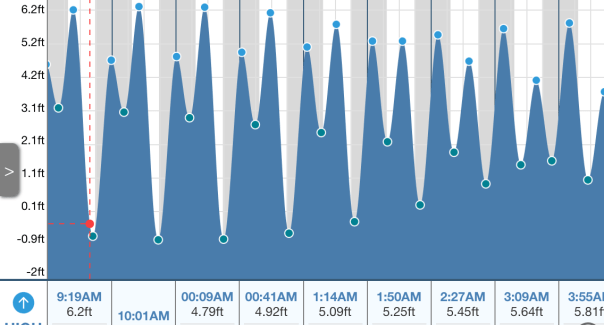
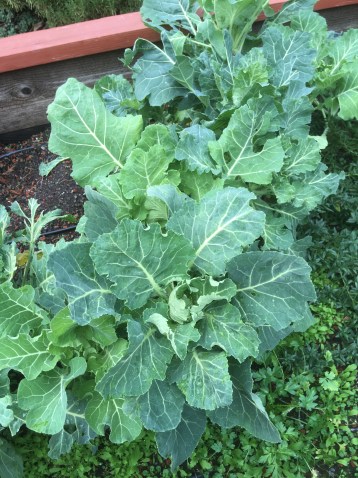
 My garden suffered what may be the worst cold it will have to endure this winter, just two days ago. I know it was several degrees of frost — and this area has had a winter or two in the last decades without even one freeze; it rarely gets down to 20 degrees. By the time that morning’s weather test occurred, I had been doing my own trials of the new greenhouse equipment, necessitating a few emergency visits in my nightgown at 2:00 or 3:00 a.m., to adjust the thermostat. So everything was okay in there. And you know, collards get sweeter by suffering frost.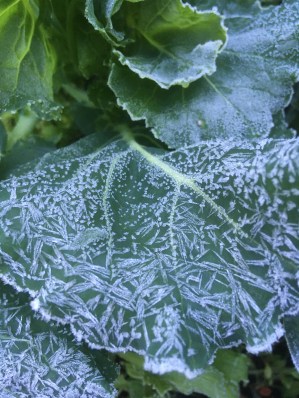

 rs to check on the greenhouse heater that I finally installed last week. The thermostat was set so that it should have come on, going by my phone, where I read that the outdoor temperature was 32 degrees. Yes! Success!
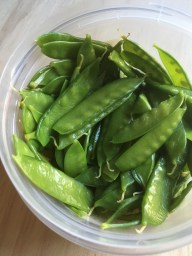
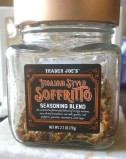 But this morning the peas I’d saved were a welcome addition to the pan to which I added eggs, and this seasoning mix from Trader Joe’s that I seem to be sprinkling on everything lately.

 I’ve been trying to find the right food to scatter on the patio for the doves and other ground-feeders. So many blends I have tried in the past have some ingredients that are ignored, and go to waste. My latest offering is something designed for pigeons, and many of the birds have been eating most of that mix. There are still some split peas, they look like, that go untouched so far. When this bag is gone, I will just buy some plain millet; that’s what I have been looking for for a year, but haven’t found it yet.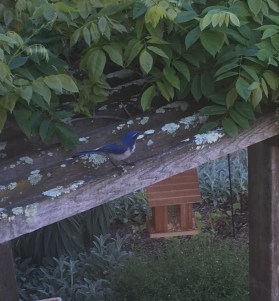
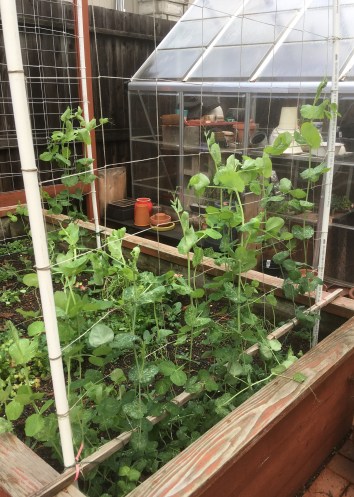
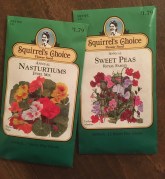 I received a Christmas gift of flower seeds, which made me realize that I really do need to get busy and finish the upgrading of my greenhouse that was begun by my neighbor Bob in October. He supplied it with electricity and installed grow lights, but it remains for me to set up the heater, thermostat, fan and timer.


 Gladsome Lights