Category Archives: my garden

September is in my blood.

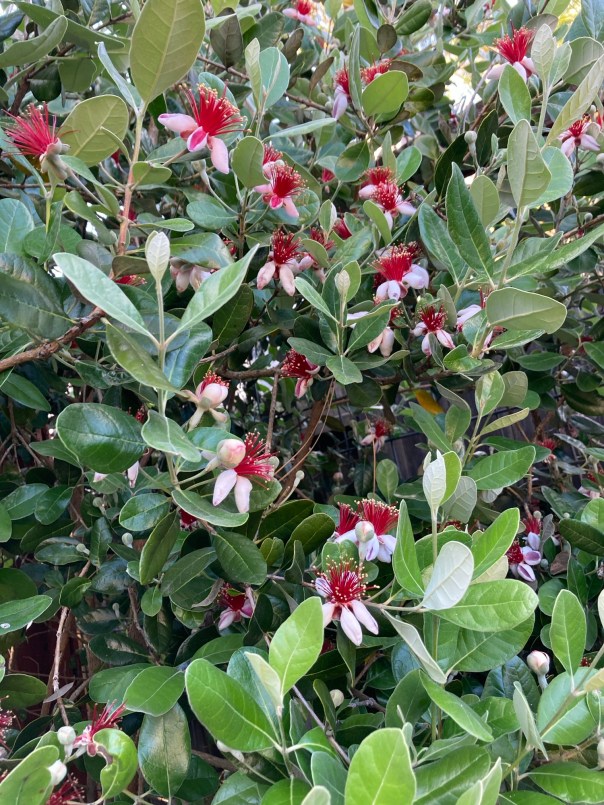
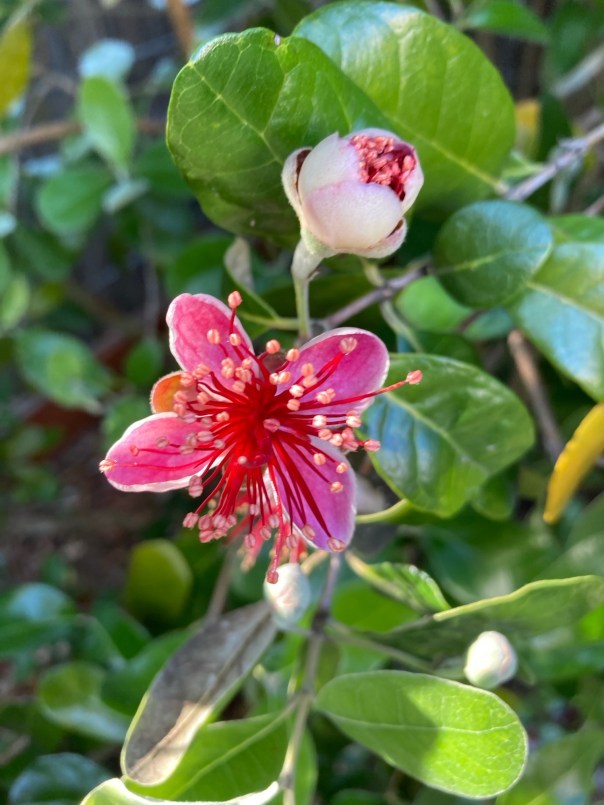
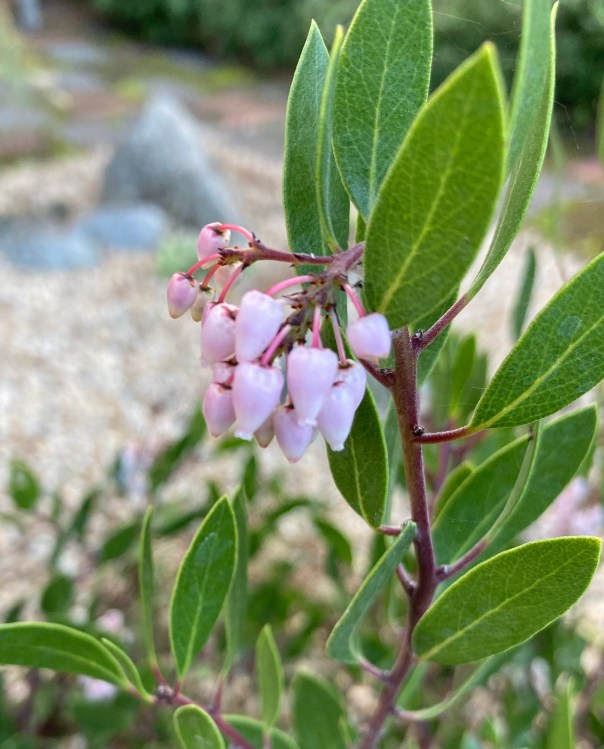
Blooms on arbutus unedo, the Strawberry Tree.

The American Labor Day holiday is on the very first day of September this year. This prompts me to pay closer attention at the outset, because that’s also the first day of the liturgical year for Orthodox Christians. I’ve been supremely blessed by various aspects and events of the day…

First, it’s quite warm, which is too hot for some people, but I guess it’s in my blood, to want to be enveloped by air that is not much colder than my body temperature. (Of course I don’t feel the same way about it when the humidity is approaching that of my blood.) No marine breeze has come against me for a couple of days; even at night, when the temperature eventually drops to the usual mid-50’s, evidently it lingers in those lower registers more briefly. It is sweet, to feel fully relaxed, without sweaters or quilts. This kind of day is why I love September so much.

My sometimes helper Alejandro wanted to come and work this morning, so he could do family things later on. He probably would have come at sunrise if I’d let him, but he was willing to come a little later, and he cleaned up and trimmed the most parched and spent things around the place. That lifted my already floating spirits a few feet higher.

I pruned the lemon tree a bit, and removed numerous pine needles and spider webs from it, then texted with my brother about what might be causing some fruit to be deformed. He helped me figure out that it is citrus bud mites. I don’t know, if anything, what I will do about this. Maybe some insecticidal soap…

I admired the tallest sunflower I have ever grown.
I dusted one bench, and sat on another
to admire my favorite echinacea flowers.

I watched the skippers on the zinnias,
and tidied up the apple mint and the lemon verbena.
I made tea with the trimmings of the verbena.

Bent-lined Carpet on the other side of the glass one morning.

From time to time I consider tossing out the orchids that have come to me over the years, all but one of which has never bloomed again. But a friend told me that I should give them the kind of nourishment they like, food that is designed specifically for orchids. She said there are different orchid fertilizers depending on the species of orchid, and whether it is in the bloom period or not. I bought just one type so far; that is a start! My plants have been outdoors for the summer, in the shade, where I remember to water them more often, and they seem to be generally very happy, even if only the one is blooming. Today I will start being a less lazy orchid farmer.

Orchid, with lemon tree in background.

I really would like to grow amaranth in my garden, but I keep forgetting to try again. The one time I planted seeds, they did come up, but I think they were shaded by zinnias or other vegetables and never thrived. Maybe next year. In the meantime, I discovered that a type of amaranth has self-sown in the cracks of my driveway.

Amaranthus blitoides, Prostrate Amaranth

Is gardening labor, or is it work? Many people have weighed in on the difference in meaning between the two words, and after a brief perusal of their ideas it seems to me the discussion gets too complex for a day like today, when I am relaxing while working. I know working is the word I much prefer, unless I am talking about the births of my children.

Creeping thyme waiting to be planted.

I find a short quote about the words labor and work is not too taxing to think about on this non-laborious day:

“[Hannah] Arendt points to how language itself has always put a consistent break between them: “ponein and ergazesthai” in Greek, “laborare and facere” in Latin, “travailler and ouvrer” in French, “arbeiten and werken” in German, labor and work in English.” -Front Porch Republic 

In any case, I’m sure I will continue to do both, through September and onward, and I will try, I will even work, to be thankful for all of it, whatever God gives me strength to do.

Ladybugs warned me.

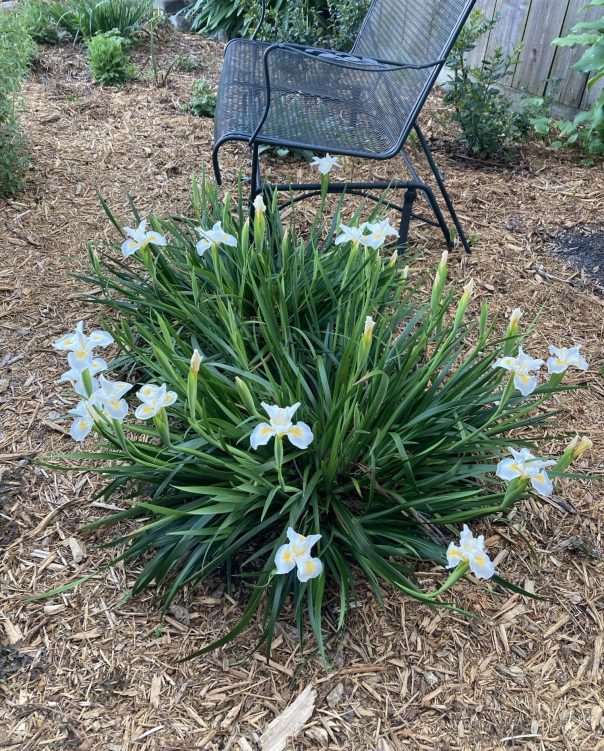
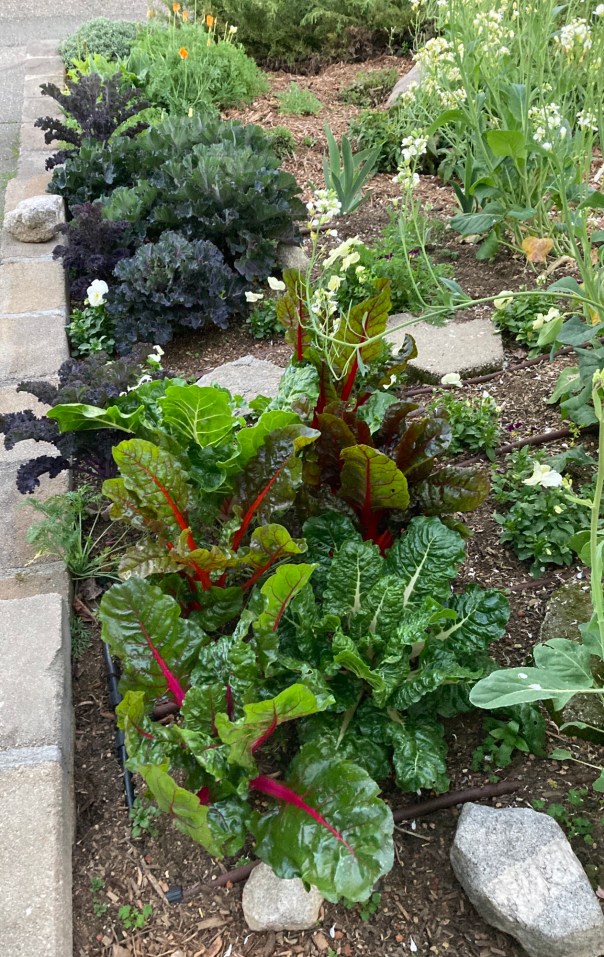
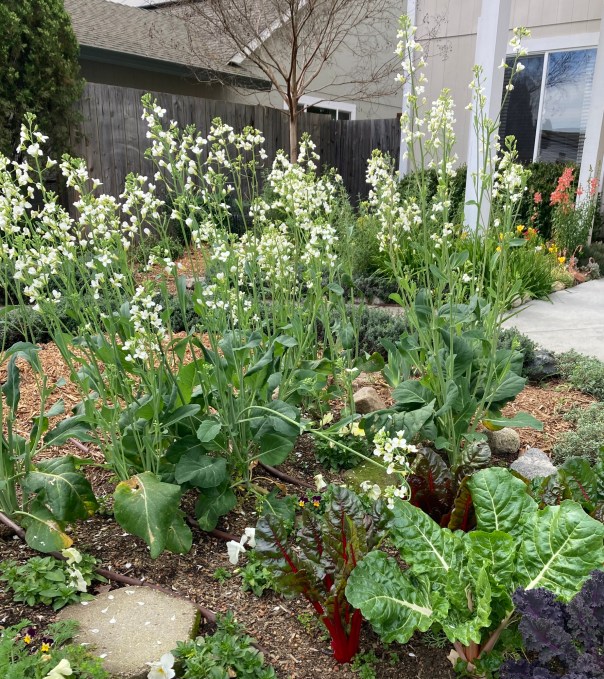
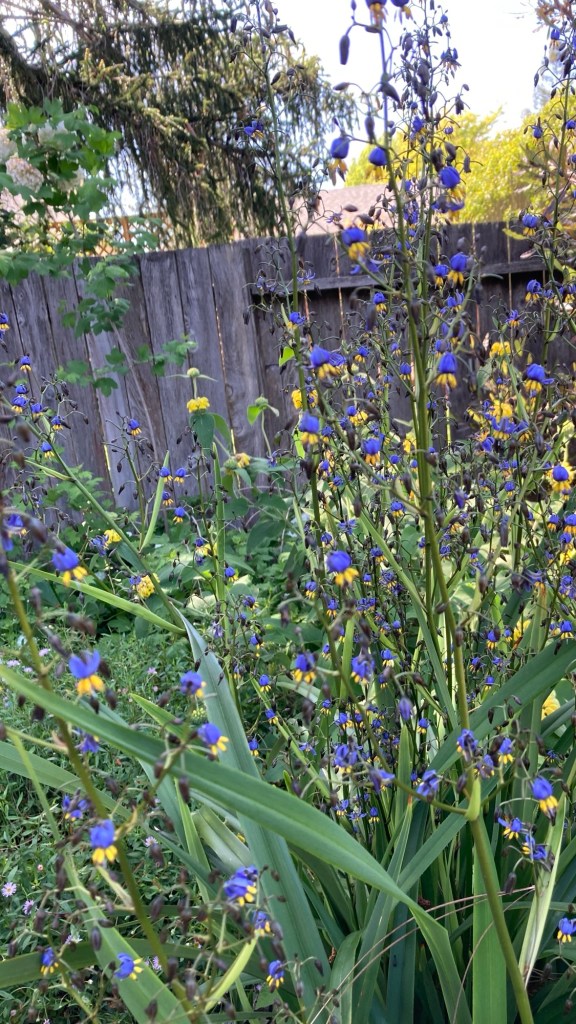
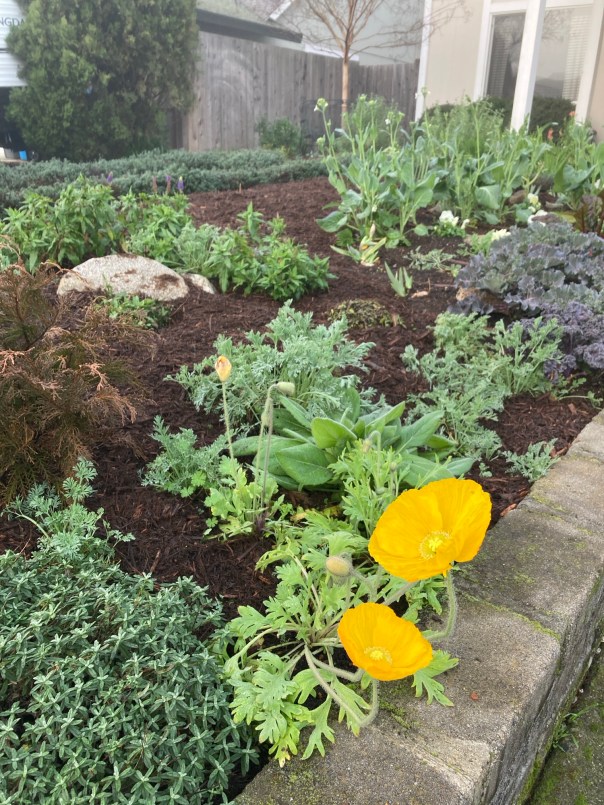
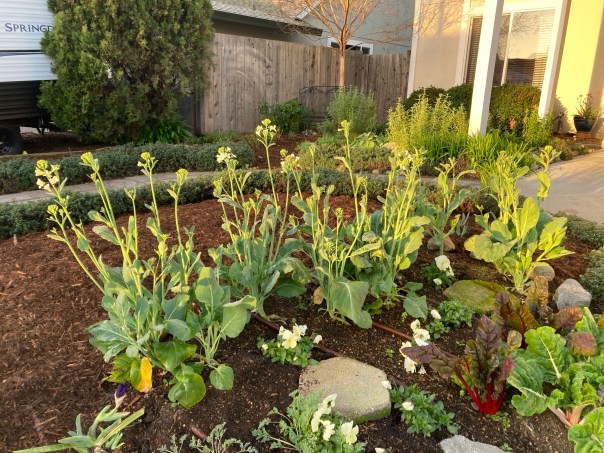
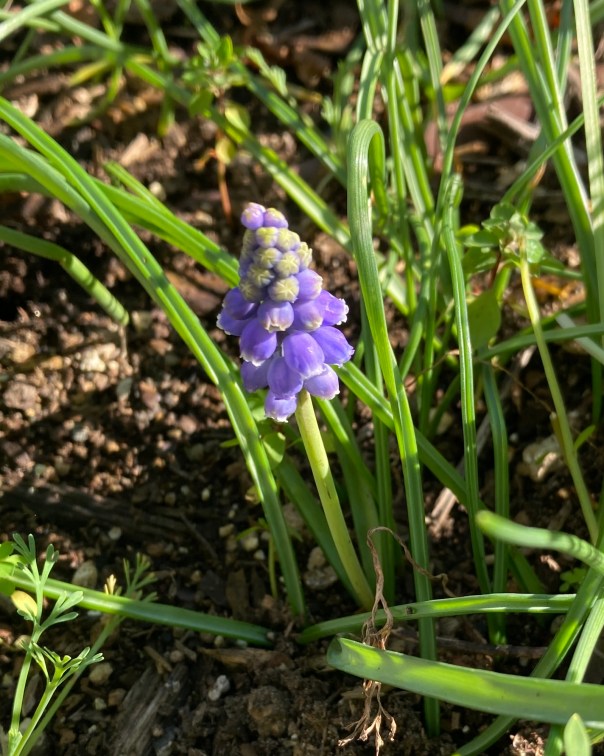
A picture from my garden in springtime:

It seems I never wrote last summer about how I had to prune my asparagus early. I didn’t have time, because of how that project consumed me. The same phenomenon is forcing me to do it again this year: an infestation of aphids in the thick jungle of fronds. Last week I saw a few ladybugs on the plants, and thought, Oh, no, I bet it’s happening again. I looked more closely, but the invasion wasn’t obviously imminent.

Then today, as I was trimming the irises, I noticed that some of their leaves had the sticky “honeydew” sign of aphids. That’s exactly what I was doing last year when, as today, I looked up at the asparagus fronds bouncing off my head — Why oh why hadn’t I worn a hat? — and saw the shiny mess everywhere. I had taken a lot of pictures last year (including two I’m posting now), but never got around to sharing anything of that experience; there were immensely more pleasant things to tell about.

Searching online, I did not discover any tricks to prevent this happening every year, though I did learn that much of California is so mild that aphids are a problem with many crops; there are aphids specific to many plants, a fact I didn’t know before. Maybe I have the European Asparagus Aphids.

A single adult ladybug can eat up to 50 aphids per day, and the ones that arrived in my garden this month have feasted well, but they can’t keep up. One is supposed to wait to prune asparagus after cold weather makes the fronds turn brown, so that they have as long as possible to carry on photosynthesis. But if aphids are destroying them anyway, not much is lost by doing it early.

Ladybugs in ’24 after I took away much of their food.

Jacques the Gardener in San Diego shows in his video how he had the same problem I do, in his much smaller plot, and his reasoning about having to cut down the plants months before the usual time helped me to feel better about doing the same. Last year there were so many mild-weather months remaining after I removed the decimated fronds, a whole new crop of them sprouted, which I knew would start over the process of turning the fall sunshine into food for the crowns. Eventually they had to be cut off also. My spring crop following all that was pretty good this year, but it’s possible that a continued aphid plague will weaken the plants.

August 2024, after one of two beds had been cut back.

Today, I only cut off a few of the stalks, to clear the way for me to finish cleaning up the irises. In the process aphids and aphid carcasses drifted down on my hair and clothes. In the next couple of months I’m dividing and replanting the irises and changing things around in that area, so I think after cutting all the asparagus to the ground I’ll take the mulch off the whole space as well and start with fresh everything. I hope that might reduce next year’s aphid population a little.

In the meantime, I will close with a more positive visual reminder of why I do all this work:


Samwise and the swallowtail.

Ladybug on sunflower leaf.

When I woke today, a multitude of urgent tasks filled my mind and sent me off in the wrong direction. Eventually I was rescued by the Jesus Prayer, by Jesus Himself. As I calmed down I realized that a few of the tasks were not that urgent, and when I began to consolidate my lists, one task fell off altogether, being a completely unnecessary outing, and large project that would have followed. That was a drive to the apple ranch to get Gravenstein apples, a variety that I usually miss out on because they are so early. But it won’t hurt to miss out on them again — why change tradition?

Volunteer Delta Sunflower

I’d wanted to water the garden early, but it ended up being not-so-early, and what do you know, that was not a disaster. Putting the hose on thirsty plants — or were they plants that merely look dry because it is August? — gave me so much joy, I could hardly bear it. I remember when my current garden went in, ten years ago, with its extensive automatic irrigation, my daughter Pearl was concerned and said, “But Mama, you love watering the garden!” Evidently that is true. It’s a great gift to have such work.

Viburnum coming along after hard pruning.

It seems to me that the irrigation system needs some adjusting; my thought is that as the plants are more in number and greater in size than when we first programmed it, and even since the last changes, I should customize it further. That job is a mental challenge for me, as there are six different valves/lines and three programs, for each of which one has to determine how many days per week and how many minutes of run time. As I have done so often, I will have to study the diagram and how to enter the settings via the dials and buttons, because it never sticks with me. If I just give some areas a little more water by hand, that will relieve my anxiety. It will be easier to tackle the problem if I am confident that nothing is dying of thirst right now.

Path mulch reapplied after 9.5 years.
Salvia clevelandii

As I walked around with the hose, noting how many things are alive and obviously growing, happiness filled me. The thoughts of J.R.R. Tolkien that Eugene Terekhin writes about recently in “Why Gardeners Will Save the World” make me think that my garden is helping me while I am tending it:

Quoting a letter Tolkien wrote to a friend: “I think the simple ‘rustic’ love of Sam and his Rosie (nowhere elaborated) is absolutely essential to the study of his (the chief hero’s) character, and to the theme of the relation of ordinary life (breathing, eating, working, begetting) and quests, sacrifice, causes, and the ‘longing for Elves’, and sheer beauty.”

Terekhin: “Mythically speaking, Sam [the character in Lord of the Rings] was ‘down to earth.’ He was a gardener who loved all things that grow — as all hobbits do.”
….
“The most important thing one can do in wartime is to grow a garden. Because when we grow things, they grow us. It takes a long time to grow something, and as we tend our garden we grow together with it.”

I know for sure that just being out there, soaking up the scents and the colors, watching the bees and butterflies drink from the flowers I tend on their behalf, is to me that most essential, ordinary life such as Tolkien shows us. For quite a while I followed this glorious, common swallowtail in all its glory, a creature that was drinking from just about every zinnia in the planter boxes. He and I were of the same mind about Being, and being down to earth.

Happiness is a butterfly, which, when pursued,
is always just beyond your grasp,
but which, if you sit down quietly,
may alight upon you.

-Nathaniel Hawthorne

Weeks and weeks of homebody bliss.

I’ve been home from my travels more than two weeks already, and before any more trips loom on the horizon, I have eight more weeks of homebody bliss remaining. It’s still high summer, when the days –or at least, the afternoons — are of the warm sort that energize and call me to the garden. This is the greatest good fortune. Glory to God, that I have a garden. Glory to God!

Stinking Chamomile

Other things besides the garden have helped to fill my days, and are filling my calendar into the near future. When I am home, I can be a host, and have guests! My house is happy when extra people are enjoying its spaces, and feeling the breezes blow through. That’s happened twice already in the last two weeks, and I’m expecting it to happen more.

When guests come in the summertime, they can stroll about the garden and pick a plum, and younger guests can play in the playhouse. The last one who did that made a soup entirely of tarragon and fountain water, and then dumped it into the fountain. Speaking of the fountain, when I am home I can keep it running, and keep it clean. It’s not very cheery to have a fountain turned off.

Lesser Goldfinch – internet photo

The birds are enjoying the summer. I hadn’t noticed the goldfinches much in the last couple of years, but this week they have been frolicking around the fountain; they seem to have plenty of time to play, probably because they’re not burning so many calories to keep warm. Today the house finches came along to drink and bathe as well. And one goldfinch made a side trip to the arbor, to perch on a long wisteria runner that was reaching out horizontally. He made short and quick jumps down toward the tip, which dropped a couple of inches in elevation with each jump, pecking at the buds, or maybe at insects, until he was at some critical point, after which I suppose he’d have found himself upside down if he’d held on — so he flew away.

Spanish Clover

It was a wet spring here, and the early summer was cool, but now everything not in watered gardens is crisping up. I took my friend to one of my favorite parks for an easy hike, but it was so dry that the trail in many places had deep and wide cracks that made walking difficult, even in my boots. I guess I’d never been there at this time of year before? It did smell good out there, I must admit, and amid the crackling grasses we saw lots of wildflowers — first, masses of Yellow Star-Thistle, Centaurea solstitialis, an invasive plant that is in bloom now.

Yellow Star-Thistle

Star-Thistle is one of the many invasives that one can learn about on the website of the California Invasive Plants Council website, which I only just discovered. I think I’ll like to return there. The website of Yosemite National Park also features articles about such plants locally, and one of them tells about the great lengths different agencies go to, to control what is in California considered a weed. A Wikipedia article is unclear about whether the star-thistle is considered noxious in six or in 23 of the U.S. states where it is present. Are you my U.S. readers familiar with it? Evidently the purple star thistle is essentially the same thing, except for the color.

Star Thistle

The pennyroyal that amazed me at Tomales Bay also grew along the path in less spectacular displays; and Spanish Clover, and Stinking Chamomile (Anthemis cotula), photo above. That chamomile was new to me; Gwen sniffed it and said that indeed it did not smell good.

Domesticated and not-stinky chamomile is growing in my planter box, just one specimen that sprouted from the old seeds I threw in there before I went to Greece. I should plant it every year, it is so cheery.

Last week we celebrated the Procession of the Cross, and the festal cross stayed in the middle of the temple until the Forefeast of Transfiguration. Now we will celebrate Transfiguration for about a week until the Leavetaking of Transfiguration which is the day before we celebrate Dormition (Assumption) of the Theotokos in the middle of the month. I love the way the calendar anchors me to the church, and reveals the abundance of saints and events who fill the year with the glory of God.

Before the service, before all the fruit had arrived.

As usual we brought baskets of fruit, and after Liturgy processed through the vineyard singing. It wasn’t as prickly as the trail I walked on last week, but it required careful stepping around grape prunings and blackberry brambles.

I pruned the lavender this week, and set it aside to take to a friend so she can add it to the straw in her chicken coop, to sweeten up the atmosphere:

A different friend came for lunch, and we were able to eat outside on the patio, after a leisurely tour of the garden. It was just warm enough to thoroughly relax, but not to wilt. I added snips of my parsley and tarragon to the salad we made together. I could have put a few calendula petals in as well, but I didn’t think of that.

This has been a pretty unfocused ramble, I’m afraid, so rambling that I don’t know how to sign off. So, let’s just pretend we were talking together next to my planter boxes, and looking at the zinnias, and then I went into the house and didn’t come back.

But I will return eventually!