Sunday mornings I would reach high into his dark closet while standing on a chair and tiptoeing reach higher, touching, sometimes fumbling the soft crowns and imagine I was in a forest, wind hymning through pines, where the musky scent of rain clinging to damp earth was his scent I loved, lingering on bands, leather, and on the inner silk crowns where I would smell his hair and almost think I was being held, or climbing a tree, touching the yellow fruit, leaves whose scent was that of a clove in the godsome air, as now, thinking of his fabulous sleep, I stand on this canyon floor and watch light slowly close on water I’m not sure is there.
I don’t think I’ve ever experienced such a dramatic springtime as here in Wisconsin, the sort of place where winter covers everything with snow, and the plants have to do their thing fast once the warm winds begin to blow.
These small flowering trees seem to have calculated how many buds and flower petals can possibly be squeezed out of their sap — then they produce a few hundred more for good measure.
A day or two later, the leaves are pushing the blossoms aside, saying, “Our turn! Gotta hurry!”
DECIDUOUS SPRING
Now, now the world All gabbles joy like geese, for An idiot glory the sky bangs. Look! All leaves are new, are Now, are Bangles dangling and Spangling, in sudden air Wangling, then Hanging quiet, bright.
The world comes back, and again Is gabbling, and yes, Remarkably worse, for The world is a whirl of Green mirrors gone wild with Deceit, and the world Whirls green on a string, then The leaves go quiet, wink From their own shade, secretly.
Keep still, just a moment, leaves.
There is something I am trying to remember.
~ Robert Penn Warren
Each morning the goslings by the lake appear to have doubled in size. Clouds race across the deep blue sky, darken and thicken, and pour down rain. The anemone buds droop, the sun blazes out, and the white flowers open gladly to take in the rays.
Snowdrop anemones in Pearl’s garden.
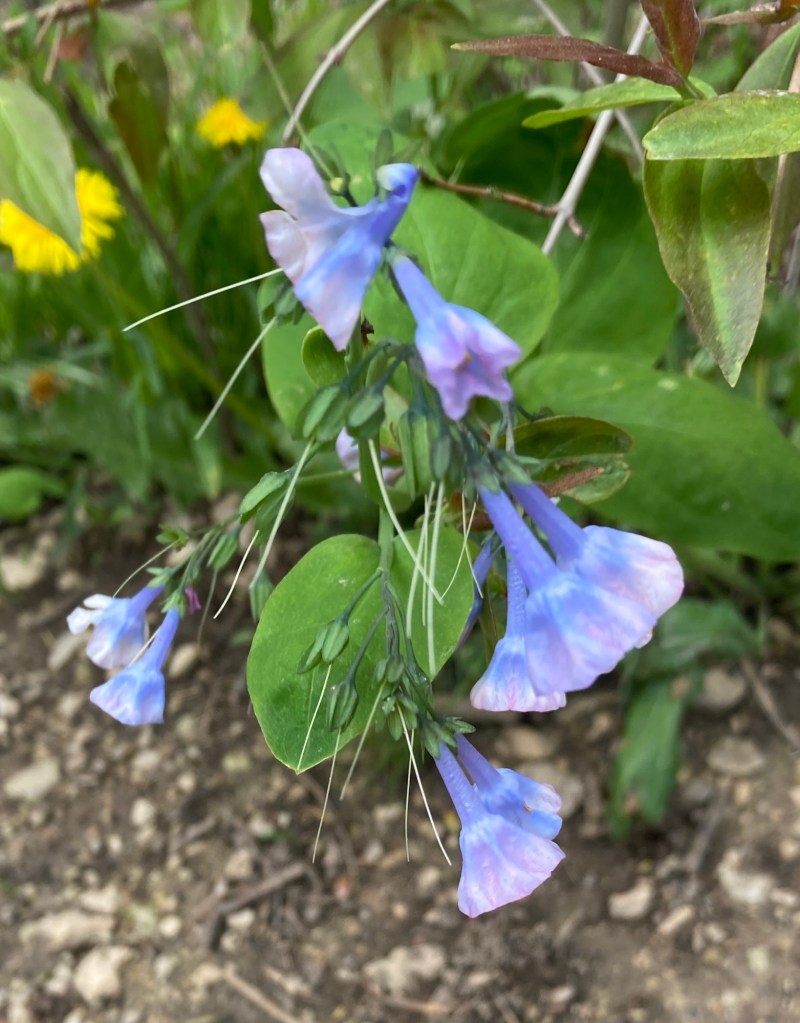
Pearl and I took the dogs to the dog park where they had a fine romp, and I admired more trees and flowers.
Virginia Bluebells
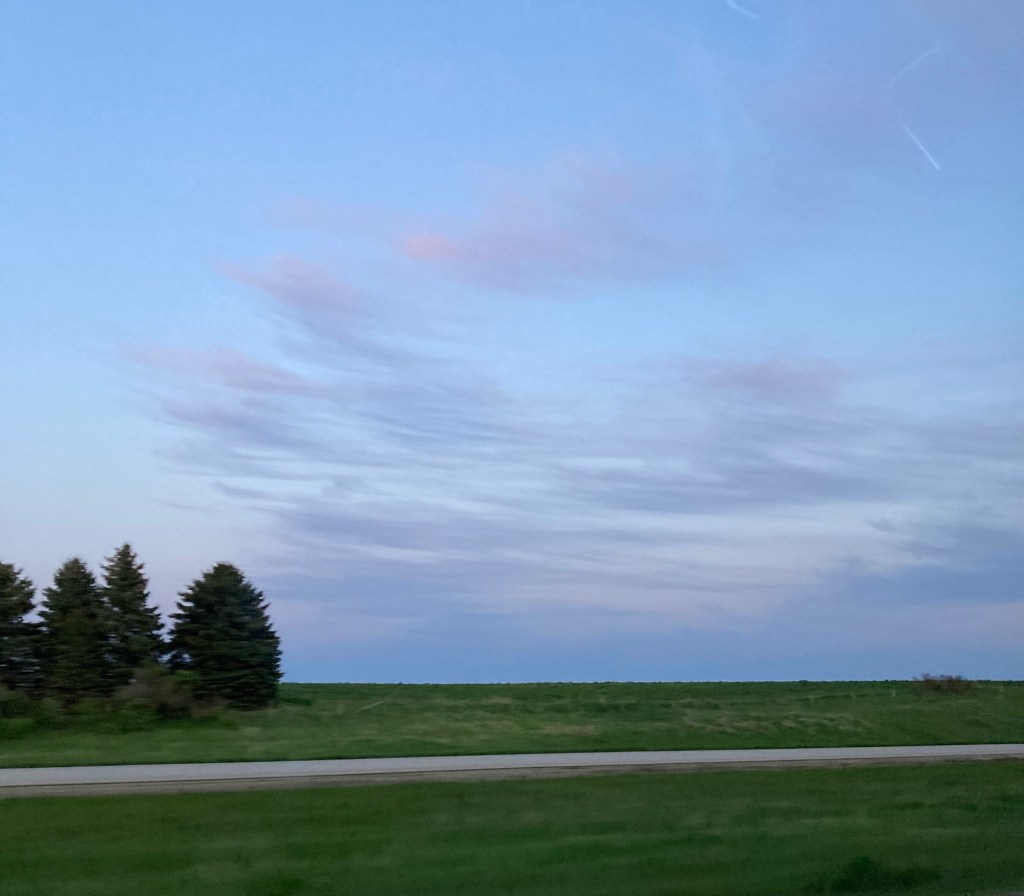
Earlier this week we drove to Sheboygan for dinner, and all along the road I got to see lots of handsome farms with beautiful silos, surrounded by bright green fields. On the way home I was quite taken with some stripey clouds.
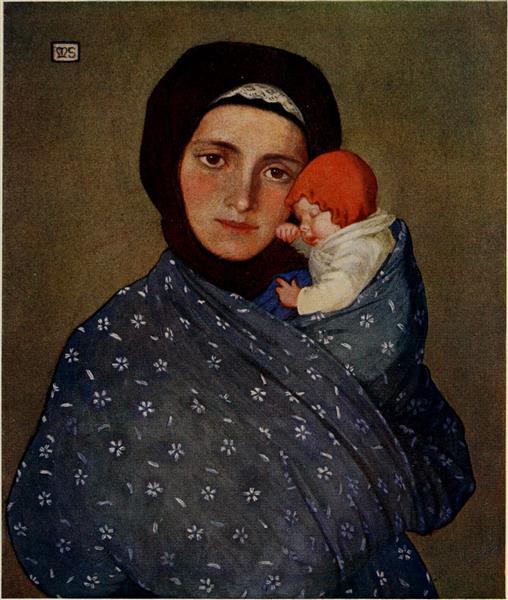
“After birth, the child further develops this primal resonance. This doesn’t happen haphazardly. The child achieves a kind of symbiosis with the mother through its creative imitations of her sounds and facial expressions; in this way, it will feel what she feels. As it takes on its mother’s happy expression, it also feels her joy; if it takes on her sad expression, it shares in her unhappiness.
“Something similar applies to the exchange of sounds: In the clinking and clanging of the mother’s language trembles the well and woe of her being, and the child who imitates that language resonates with it on the same psychological wavelength. This early resonance between child and its (social) environment leads to a unique phenomenon: The young child’s body gets ‘loaded’ with a series of vibrations and tensions that become embedded in the deepest and finest fibers of its body. They form a kind of ‘body memory’ that not only programs the function of the musculature, glands, nerves, and organs, but also predisposes the child to certain psychological conditions, or disorders.
“The human body is, in the most literal sense, a stringed instrument. The muscles that span the skeleton, and the body’s other fibers, are put on a certain tension in early childhood through imitative language exchanges. This tension determines with which (social) phenomena one will resonate; it determines the frequencies to which one will be sensitive in later life. That’s why certain people and certain events can literally strike a chord; they touch the body and, as such, touch the soul. It is for this reason that the voice can make the body ill. Or, conversely, heal it. That is why the voice is of vital importance, especially at an early age. Lack of a voice is fatal to the young child.”





 Gladsome Lights