Category Archives: nature

Oregon – Granite Man, Pennyroyal, and Deer Brush


An hour before the race began

On the first of June Mr. Glad competed with other members of the family in the Granite Man Triathlon in southern Oregon. It was one of several events and meetings that formed the outline of a little trip around our neighboring state.

My husband was doing the swimming leg, as was the other grandpa of our Oregon grandchildren, and the two of them were the team captains. Our son and three grandsons made up the remainder of the teams, with the younger athletes compensating somewhat for the slowness of their elders. We womenfolk and some out-of-town kin were the support crew and also played with the baby (cute boy even if he isn’t one of my grandchildren).

My favorite swimmer left of center with his hands on his hips

Perfect weather, and a lovely setting, with trees leafing out, flowers beginning to bloom. As we stood around on the grassy slope of Applegate Lake waiting for the race to start with the swimmers’ portion, I had my first botanical experience of the trip. It started with a smell that only gradually broke into my consciousness enough to make me look down and search out what source my feet were tramping on.

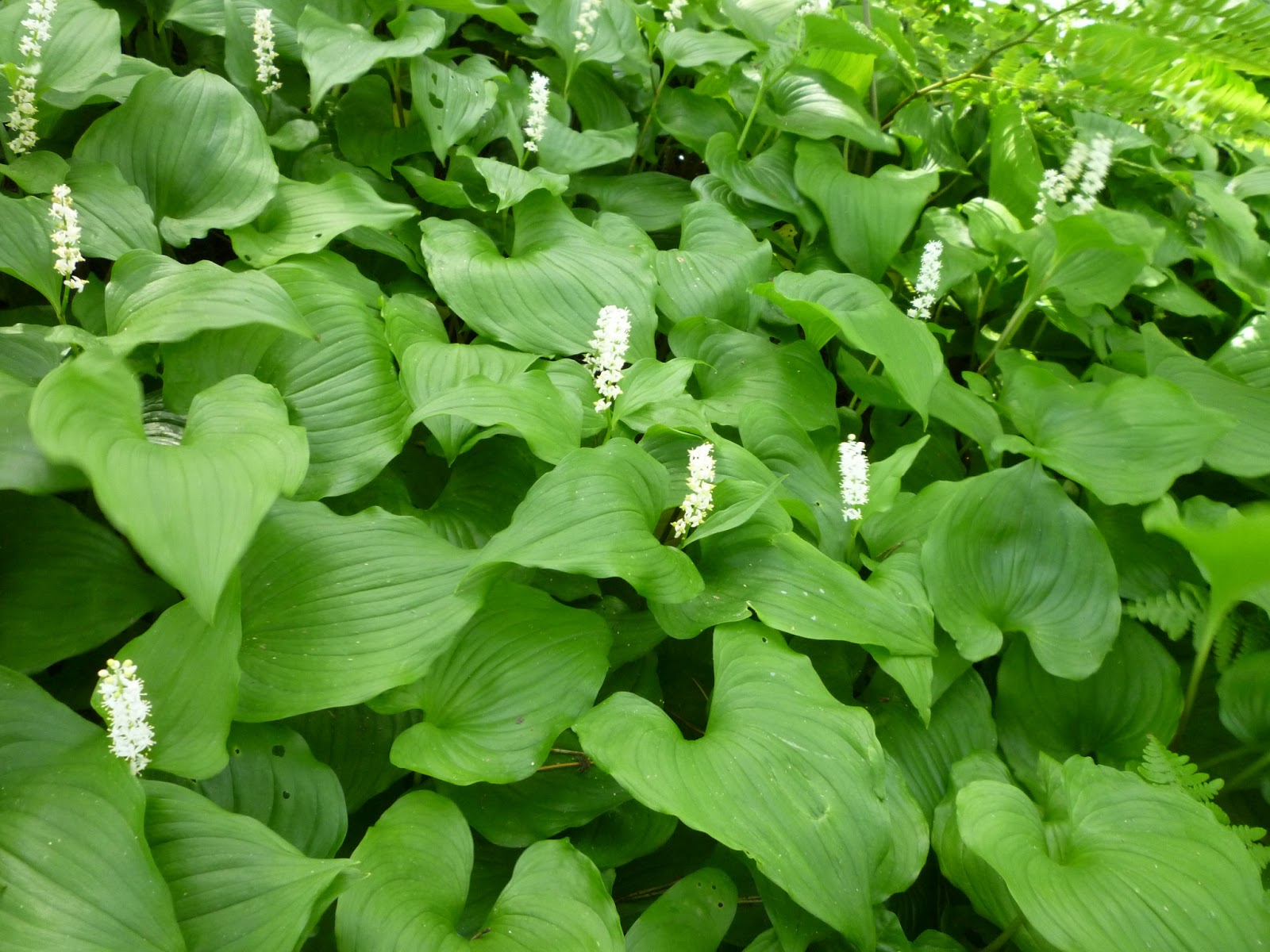
pennyroyal – or not?

Pennyroyal was my first thought, as I picked off some of what was growing in the wild lawn, and in case you aren’t familiar with it, I outlined one cluster faintly in red, in the photo above, in the lower right corner. Even so, you may have to click on the photo to see it.

But it doesn’t exactly look like pictures of Mentha pulegium, though that pennyroyal is considered mildly invasive in California and Oregon. It doesn’t even look like pictures of the Oregon “field mint” Mentha arvensis, which I looked at in case my sniffer is not able to distinguish between members of the mentha family.

Pennyroyal has what I’d call a sharper aroma than most mints, and this one under my feet had that distinctive smell that I have met many times in my life, often in the mountains. Was I mistaken? Its leaves do look in some ways more like Monardella odoratissima, whose common names include “Mountain Pennyroyal” – but not exactly.

This Applegate Lake variety looks like a cross between it and another mint, as I study it further. And that impression might not be too far from reality, because it turns out that pennyroyal has an ability to hybridize with other mint species, adding to its troublesome weediness. It may crowd out native plants and even threaten Oregon’s commercial peppermint and spearmint crops, as I read in this article.

I learned a new word while reading it: allelopathy: a biological phenomenon by which an organism produces one or more biochemicals that influence the growth, survival, and reproduction of other organisms. I am familiar with this kind of influence from my experiences in gardening, but I didn’t know the name for it. The latest instance is the way nothing much grows under my manzanita bush because of its negative allelopathic qualities. The authors of the article experimented by treating seeds of a rare Oregon plant with a weak extract of pennyroyal root, and found that the germination rate dropped.

Deer Brush near Applegate Lake, Oregon

I didn’t know all of this bad stuff when I was lolling about in such a bucolic place; I was only pleased to have found a plant to check on as soon as I got home.

When we went out to the parking lot after all our guys were done (and some were done-in) I found another, a bush covered with honey-scented flowers. I thought it might be a type of Ceanothus, and I was right. But about the common name, I was wrong. I guessed Mountain Lilac, and it is in fact called that by some people, but maybe by mistake…? It’s officially known as Deer Brush.

The flowers come in shades of light blue and white, mostly, and it’s native to the western states. All of its uses are positive: animals eat it, the Indians made baskets from it, and it fixes nitrogen in the soil. Everybody likes this one!

Ceanothus integerrimus

Gardening? I’m on it!

pimiento peppers with nasturtiums

I thought I would skip this week’s discussion of The Hidden Art of Homemaking at Ordo Amoris, because what on earth — or about growing things in the earth — could I possibly say, that I haven’t said in my 115 blog posts that already have the tag “garden”?

But this chapter comes in springtime when it’s hard not to talk about gardening. I’d rather be in the garden doing it, but what do you know, it’s raining as I begin this ramble. And I happened to run across a couple of other blog posts as reminders that I haven’t covered every aspect of the subject.

kale with Mexican bush sage

The spiritual aspects of gardening are well treated by Vigen Guroian whose book is excerpted in  this blog. But I have a hard time making myself read about gardens or gardening, and if I wanted to convince a non-gardener to give it a try, I would just have them work in my garden with me a few times, and hope that they might by osmosis come to see the fun to be had.

If you don’t have a yard, as Edith says you can have a pot of something, and if you don’t want that, you can grow some sprouts on your kitchen counter. There are so many kinds of sprouting seeds available that you can grow a tasty and gorgeous salad in a week or so.

I do love to visit other people’s gardens and even look at pictures of my own yards of yesteryear, so I looked long enough at this Garden Rant post to see that it was about the gardener’s dismay when he realized that he had planted a dreadfully monochromatic and inartistic design.

His problem is the flip side of what I am careful about, the planting of clashing colors. What? you say, echoing my husband, don’t all the colors go together, as in God’s creation? It doesn’t seem to work that way in my gardens. Magenta flowers have caused me problems in the past – they don’t look nice with some of the red flowers nearby.

Once a bunch of bright red-orange flowers pretty much spoiled the look of my pale yellow and pale pink roses when they sprouted up in between, while the lavender bush in the same spot blended in nicely. So, I try to avoid mismatches and matchy-matchy. Most of the pictures I’m posting here are of nice contrasts in my own garden, but the one below is from our friends’ neglected beach cottage yard. It’s surprising how glorious these bright and wild colors look together. In foggy coastal areas it seems that whatever flowers you have are a welcome brightness, and they always steal the show by contrast with the white or grey skies.

Here’s a much quieter scene: Greyish Lambs Ears make a soft contrast to almost any bright color, as with these pincushion flowers.


And even the magenta rhododendron is nice with blue campanula. I have learned to think of my garden beds as individual paintings, each with its own color scheme that may change somewhat with the seasons. Some have magenta, while some on the other side of the yard have red.

unusual California poppy with Hot Lips salvia

Either color can go with yellow or orange or blue…

It’s fun creating landscapes, if you don’t mind surprises, and  w – a – i – t – i – n – g  for things to grow and bloom, and sometimes having to re-do your design or be happy with a missing part that died. If you take pictures or actually take paints to paper and save an image of the way your plants’ colors and textures have miraculously blended to become Beautiful, you can remember and enjoy your past gardens for years to come.

The parasitic snow plants are blazing at Tahoe.

Mr. and Mrs. C. invited us to their cabin again on the south end of Lake Tahoe. At 6,000 ft. elevation it’s still pretty brisk in May, but the sky was SO blue, the lake was SO blue, and the air was dry, full of the smells of pine trees and cedars with some wood smoke thrown in. I breathed deeply.

Here is a map if you need to get your bearings. The lake itself lies on the Nevada-California state line. We usually approach from the southwest and drive through the state capital of Sacramento to get there.

I had escaped the world down below where picture storage was one of the many time-consuming computer problems that had recently worn me out, and I arrived with a reluctance to use my camera. Of course that didn’t last long, especially when wildflowers are out. May in the Sierras brings flowers you can’t see in the summertime, so I had to seize my opportunity, didn’t I? My other blog posts about the Tahoe area have different photos from what I came away with this time.

Cascade Lake in foreground, Tahoe in distance.

We hiked to the top of Cascade Falls one day. It drops and flows into Cascade Lake which lies just south of Emerald Bay, a little higher in elevation. This picture was taken from a granite shelf looking as straight-down as I could manage to the bottom of the falls.

Sticky Cinqefoil
                      This looks to me like some kind of buttercup but I haven’t found it in a book yet. (Update: I added the caption after one of my readers enlightened me.)

The Snow Plants have popped up all over, here and there on the floor of the conifer forest, with no leaves. Mrs. C. was coveting one, wondering how she might get a specimen to grow near the cabin, but what I found out on Wikipedia when I came home makes me think that would be near impossible to make happen.

The snow plant is sarcodes sanguinea, the only species in the genus sarcodes, in the heath family. It is unable to photosynthesize its own food, “…a parasitic plant that derives sustenance and nutrients from mycorrhizal fungi that attach to roots of trees.” Now I can imagine the roots of these bright plants extending deeply into the world of tree roots. If we are lucky, perhaps the right conditions will in the future concur and surprise Mrs. C. with a burst of red.

A lagoon by Kiva Beach

Another color that got my attention was the sand around Lake Tahoe. We took the yellow lab to swim and fetch and I sat on the shore and considered how all the grains of sand were warm golden tones, not like any ocean beach I’ve seen.


Wooly Mule’s Ears, also known as mountain mule’s ears, were in bloom, and I got a photo of them as in a perennial bed planted by Mother Nature, with a border of Squaw Carpet in front.

Wyethia mollis and Ceanothus prostratus

Here’s a nice flowering bush that I don’t know. Maybe someone reading this knows this plant? It grows in the forests on public land and in private yards. (Update: the same reader in a comment below is kind enough to tell us that this is Western Serviceberry.)


Did you ever do a Google image search of “lichen”? Amazing, amazing plants. Here is one of the more subtle designs, which we saw on a rock at the top of Cascade Falls, a lovely arrangement of vegetable and mineral and just one example of how God’s artwork is splashed all around the world for our pleasure and His glory. Thank You, Lord, for the refreshment.

I did it for love of manzanita.

I am reposting this story from two years ago for the Hidden Art of Homemaking discussion at Ordo Amoris. It’s about one of my projects that illustrates some of the difficulties and satisfaction of interior decorating.
 
A botanical theme has emerged.

Decorating is a homemaking job that I wish I could get over and done with and on to other things. This post is about how the realization of that wish is a long time coming. On one level the story bores me to death, even though it’s my own house I’m writing about, the house I’ve been investing in for 20 years. That should warn most of my readers to leave right now and go read something more entertaining.

What’s makes me want to tell this too-long tale anyway is the way it illustrates how an incredible amount of mental and physical labor can go into what seems a simple project. I suppose I’m not used to this precisely because I’m not into home decorating and haven’t applied my perfectionistic creative energies to it so much before. In a way it’s a larger-scale version of my doll clothes effort: what I envision doesn’t come in a kit.

If I could make a kit out of it no one would buy it. It’s just the best that we could do given our priorities, and with a tract house that doesn’t have enough walls to be cozy or enough windows to brighten the view. The story I tell is also amusing if one considers the output of my mental energies compared to the mediocrity of the results.

G.K. Chesterton said,

It is the main earthly business of a human being to make his home, and the immediate surroundings of his home, as symbolic and significant to his own imagination as he can. 

I’m not sure what all G.K. meant by that, but he does seem to give me liberty, and even to tell me it is my duty, to spend time on my house and property with the purely physical and aesthetic aspects in mind.

One year ago

So, I push on. Last year we changed the arrangement of the living room furniture so that the pictures on the wall didn’t work anymore. It seemed that the painting that used to be above a couch was too “heavy” after we moved the piano under it. It was then the largest wall item above the largest piece of furniture. Also, the TV had come out of the closet and found a new and permanent place in a corner, and the emptiness above it bothered me for months while I tried to figure out what to put there.

The first thing that came to mind was a manzanita branch such as I remembered my grandmother having in her living room for a while, a natural curio of sorts. Hers had sat on the coffee table, I think, but mine would hang above the TV to fill some of that airspace and balance out the piano nearby. (We’d need to get a smaller something to put above the piano, too.)

I started looking online for manzanita, but I found only small and twiggy, pale specimens, for use in flower arrangements. So I gave up for a while and spent hours looking for a decorative mobile. Nothing pleased. By that time we were in the middle of the remodel, so it wasn’t urgent.

Then in April we went north to Pippin’s place, where the previous winter’s record-breaking amounts of snow had piled up everywhere. As we walked through her forest we saw several manzanita bushes with large branches broken off. My mind started twirling around the idea that I could prepare my own decorative branch. The others helped me choose a couple that might work and we hauled them home.

Nine months ago

I still didn’t know if I could accomplish what I envisioned; I’ve never been one to do woodworking of any sort. I knew enough to trim off the flowers and small twigs. Then it occurred to me that wood needs to dry out before one can work it. I read that manzanita tends to split, so people have trouble making furniture out of it. Maybe my branches would split too much as they dried?

I left them sitting around in the garage for a couple of months and they only split a little bit. On the Internet I read somewhere to paint them with Danish oil to preserve the wood, so I did that. And one of my children said I should stain the trimmed ends of the branch so the whiteness of the wood wouldn’t distract from the lovely smooth and dark bark.

I think this is the one I didn’t use.

It was B.’s upcoming birthday party that put the fire under me to get the chosen branch up in the corner. We bravely screwed two hooks into the smooth new ceiling, and I painted them white so they would fade into the background. Then three strands of fishing line were tied to those, and to the branch.

Soldier was here and helped me position it just so; he’s tall and strong and could stand there calmly holding it in midair while I fumbled with the almost invisible threads. Then voilà! At last, that one part of my decor was in place (now we only had to ignore the empty space above the piano) and all our party guests could admire it. I began brainstorming on a solution to that remaining space nearby.

Three weeks later I dusted the manzanita with a feather duster and the next morning it crashed onto the TV and to the floor. Nothing was harmed. Guess we needed stronger filament. It took me about two months to get to the store to buy it. Then it took another month before B. and I could make ourselves re-hang the branch. See what kind of do-it-yourself-ers we aren’t?

I was sure I knew how to orient the branch, the way Pippin had told me to, but after B. and I got it centered and hung and he’d gone bike-riding, I realized by looking at previous photos that I had it exactly backwards, and it truly didn’t look the best. I tried just flipping it over, and that sort of worked; I only had to re-tie one filament, and we were o.k….except that now the branch was a little closer to the ceiling than ideal, and the top of it was vaguely lined up with the curtain rod, which didn’t look right. I suffered with that all through Christmas, trying not to care. Of course most people said it was fine because no one wanted to go through the difficulty of doing it over.

I had to buy a piano lamp before I could decide what would go behind it; our old one was shot. Piano lamps are expensive! The cheapest one I could settle on was out of stock for a few weeks, so we waited on that. I had looked at so many paintings or other wall decorations, many hours of browsing over several months, and found nothing I wanted enough to spend money on.

So I thought I would saw and paint some wooden birds to hang up there…they needed to be warm and colorful, because the corner with a black TV and a stark naked branch turned out surprisingly modern and chilly. (Maybe what I need is a branch about five times that big, just sitting on the floor behind the TV and reaching toward the ceiling…and permanently trimmed with Christmas ornaments…? )

But then we must return to how I’m not a woodworker, or a painter for that matter. I think it was on New Year’s Day that I felt desperate to make some progress; I decided to spend money and get something. B. and I knew we needed color there, and we knew the parameters of what the measurements needed to be. I bookmarked some paintings, and when B. came home from watching a football game we chose one and ordered it. Whoopee!

The painting arrived and sat on the floor near its destination for over a week. I knew we needed to be in the right mood to even talk about putting it up. In the meantime, one day I got a burst of courage and all by myself re-did the lines supporting my manzanita. I think it might be as much as an inch lower. A most satisfying inch.

Last week we hung the picture. Those are giant poppies providing the splash of color. I hope Mr. Chesterton is happy and won’t mind if I get back to my sewing and reading now.