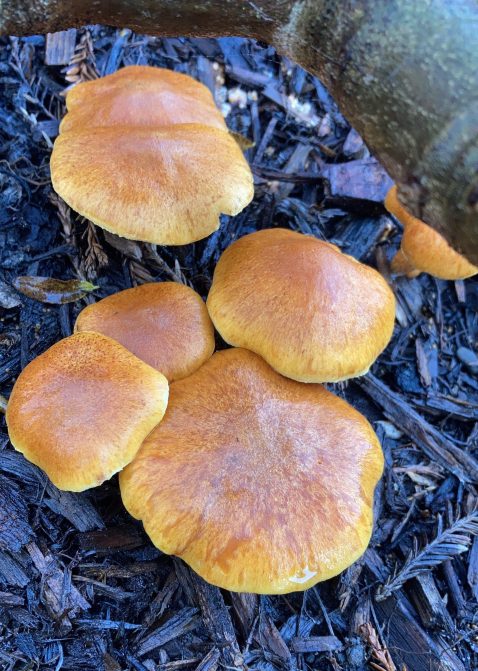
Late this morning the sun came out again, and shined on all the droplets of dew and fog. I had a date to keep in town, but I noticed through the window that the fountain was dripping instead of flowing, so I went out to put the hose in there for a few minutes. Of course I saw many glowing leaves and caught the scent of decay. How can decomposition smell so fresh, and how does the earth’s breathing wake up my whole body?

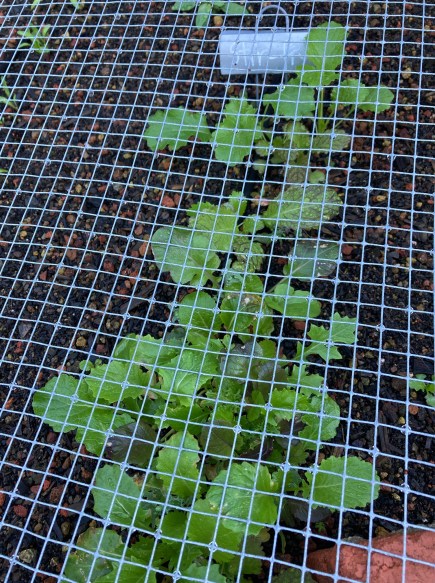

I took a few pictures and then I was happy to be on my way, on to the community garden to meet my friend Bella where we have been together a few times before. Strolling through other people’s gardens is thoroughly relaxing and nourishing; lots of interest and no  responsibility. A garden comprised of dozens of gardens, each with its special personality, is even better.
Often we get to take home some treats, for immediate food or for seeds. Bella found ears of corn lying in the path, and she showed me where a few beans hung from a trellis, the seeds somehow still dry and clean inside the mildewed pods. How could I not bring a few home to try? The way those beans offered themselves suggested a small planting, which is not intimidating. And they are intriguing Mystery Beans to me as yet; does anyone here know what kind they are? Such a dreamy-creamy color… (below).
After my first big greenhouse planting project last winter, and the way so many of my starts did not take off, or for various reasons never bore fruit in my own garden, I am ready this spring to try just a few things, a few seeds…. a more minimalist garden.
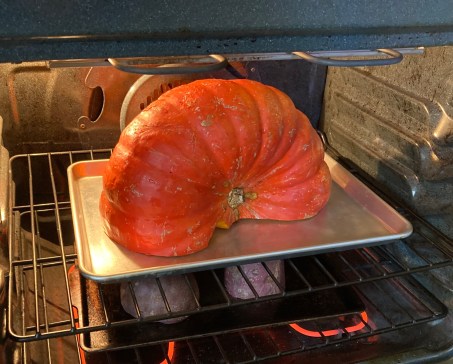
 What if my pumpkins had been successful, and I’d ended up with half a dozen of those gorgeous French cucurbits such as I roasted yesterday? They would have been too heavy for me to lug around the neighborhood as gifts.
I picked a bagful of meaty, rainwashed collard leaves from Bella’s plot, and the sweetest parsley ever from the free-for-all borders. The calendulas I gave my friend last spring are still blooming there under the collard canopy, and looking wintery — the sun may be bright on days like today, but its rays are sharply slanted, and every image is darkened by shadows.
Another plot owner was there with his teenage daughter, whose name I didn’t learn, but I will call her Maria. They gave me cilantro from their bed, a generous bunch of it, which I’m sure was the most fragrant I’ve ever got a whiff of, just picked after being hydrated for 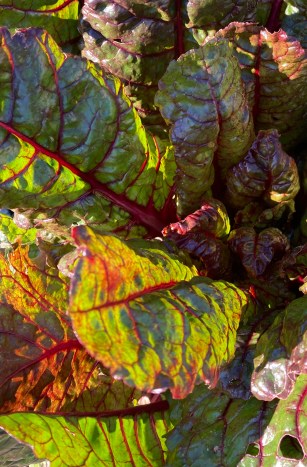 weeks. Maria came to talk to me while I was bent over the parsley, and we chatted about cooking. She filled me in on the hearty ham-and-eggs meal she had helped to make for breakfast this Saturday morning, and agreed that cooking for only oneself the way I do would be difficult.
Her father José talked about how his children don’t like to come to the garden with him. Maria explained, “We never want to bother getting out of bed and going outside unless something is happening that day, if we are going somewhere or people are coming over….” She smiled when I said, “Oh, but things are happening here: the plants are busy growing!”
 Today, of course, was unlike any other, and I felt the restfulness of January, and cautioned how it would not even be a good idea to pull weeds when the soil was so wet. Maria and her father seemed quite contented. She may have had the same unconscious rejuvenating response in her body and psyche that Bella and I were having, being in the open air surrounded by trees and grass, fava bean plants and every kind of brassica exhaling oxygen. And Maria did get to be with people.
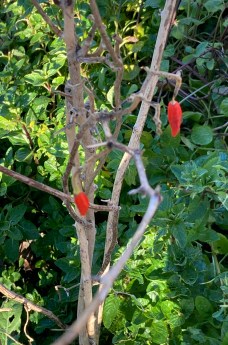
After our new friends left, Bella and I wandered up and down the rows, admiring every leftover bit of life, such as two tiny bright red peppers clinging to dead stick stems. We examined a banana tree that appeared to have been stricken by frost, but we hoped not killed. And we sat at a picnic table listening to the tinkle of the wind chimes, as hummingbirds swooped back and forth over our heads. It was a simple gift of a day.



 had eaten too many, and I’m proud to say I have continued with restraint. They are the sort of treat we can’t seem to produce every year. Maybe next year I will bake some myself; on the way home I bought one of the ingredients that is often not easily found except at truck stops.
 My red berries from the bike path cotoneaster bushes dried out before Theophany, and I had to wander the garden a bit to find something to extend the season for my kitchen windowsill. In January it’s succulents and olives.





 Gladsome Lights