Category Archives: Pascha

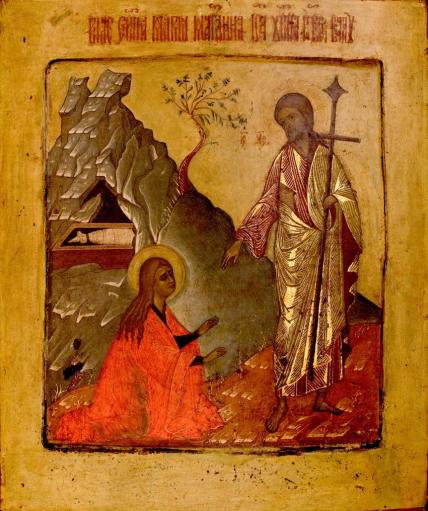
Easter Dawn

XV EASTER DAWN

He blesses every love which weeps and grieves
And now he blesses hers who stood and wept
And would not be consoled, or leave her love’s
Last touching place, but watched as low light crept
Up from the east. A sound behind her stirs
A scatter of bright birdsong through the air.
She turns, but cannot focus through her tears,
Or recognise the Gardener standing there.
She hardly hears his gentle question ‘Why,
Why are you weeping?’, or sees the play of light
That brightens as she chokes out her reply
‘They took my love away, my day is night’
And then she hears her name, she hears Love say
The Word that turns her night, and ours, to Day.

by Malcolm Guite, who reads his sonnet here.

Mary and Gardener yellow orange

Heralds and singers all day long.

On the church calendar, we are still in Pentecost, that 50-day period between Easter/Pascha and Pentecost. We even take note of Mid-Pentecost, which was last week.

Of course, it’s never inappropriate to remind one another that “Christ is risen!” but during these weeks we make a special point of it and try to remember, instead of “Hello!” to greet one another with those words of joy and hope. For truly His resurrection from the dead, His overcoming of death, shows the power of God to deliver us from our own patches of darkness, no matter how impossibly deep and cold the current “grave” we find ourselves in.

Last night a robin came around to chirp the falling of dusk to me, “my” robin who always seems to be sent as an emissary from the Father – or more precisely, a herald: Gretchen, remember, God is here with you! I forgot to tell you that in my hotel in Atlanta earlier this month, the night when I was staying alone, a robin chirped right outside my ground-floor window just before darkness and a rainstorm.

This morning I woke to birdsong floating in from the garden and the trees. As I made my bed I joined in with them and sang a meditative version of the hymn, “Christ is risen from the dead, trampling down death by death, and upon those in the tombs bestowing Life.”

Next week will be the Leave-taking of Pascha, after which we will focus on the Ascension of Christ. At Vespers the evening before, we will sing all those rousing Paschal choruses for the last time liturgically. I know the little sorrows and worries, confusing thoughts and maybe even some big heartaches won’t disappear from my earthly life, and I will want to keep singing these re-orienting melodies of Christ’s transforming Life.

I’m counting on the birds to be my helpers.

What the women forgot.

The second Sunday after Pascha we remember the Myrrhbearers who came to the tomb to anoint the body of Christ. And my saint, Joanna, was among them. 🙂

And they said among themselves: “Who shall roll away the stone from the door of the sepulchre?” This was the subject of the Myrrh-bearing Women’s conversation as they climbed up to Golgotha, looking for nothing unexpected. The women’s weak hands were not strong enough to roll the stone away from the tomb’s entrance, for it was very great.

Those poor women! They did not remember that the labour to perform which they were hastening so zealously to the tomb had already been performed during the Lord’s earthly life. At Bethany, at supper in the house of Simon the Leper, a woman had poured precious spikenard over Christ’s head. The omniscient Lord said at the time about this woman: “In that she hath poured this ointment on My body, she did it for My burial” (Matthew 26:12). He had a clear foreknowledge that His body would, in death, receive no other anointing.

You may ask: then why did Providence allow these devout women to be so bitterly disappointed? To buy precious myrrh, to come fearfully through the dark and sleepless night to the tomb and not to perform that loving act for which they had sacrificed so much? But did Providence not reward their efforts in an incomparably richer way, in giving – in place of the dead body – the living Lord?

–St. Nikolai Velimirovich , Homilies

Myrrhbearing women at the tomb