Category Archives: philosophy

Let them believe.

It is assumed that the skeptic has no bias; whereas he has an obvious bias in favor of skepticism.

That is the one eternal education:
to be sure enough that something is true
that you dare to tell it to a child.

— G.K. Chesterton

These quotes having to do with teaching and learning remind me of something I read years ago when we were in the middle of our 25 years of homeschooling. It was in John Senior’s book The Restoration of Christian Culture, which I had borrowed and still don’t own, so it may be that I am not remembering it exactly right. I’d love it if any of you know enough to correct me or just articulate more clearly what I am trying to get at.

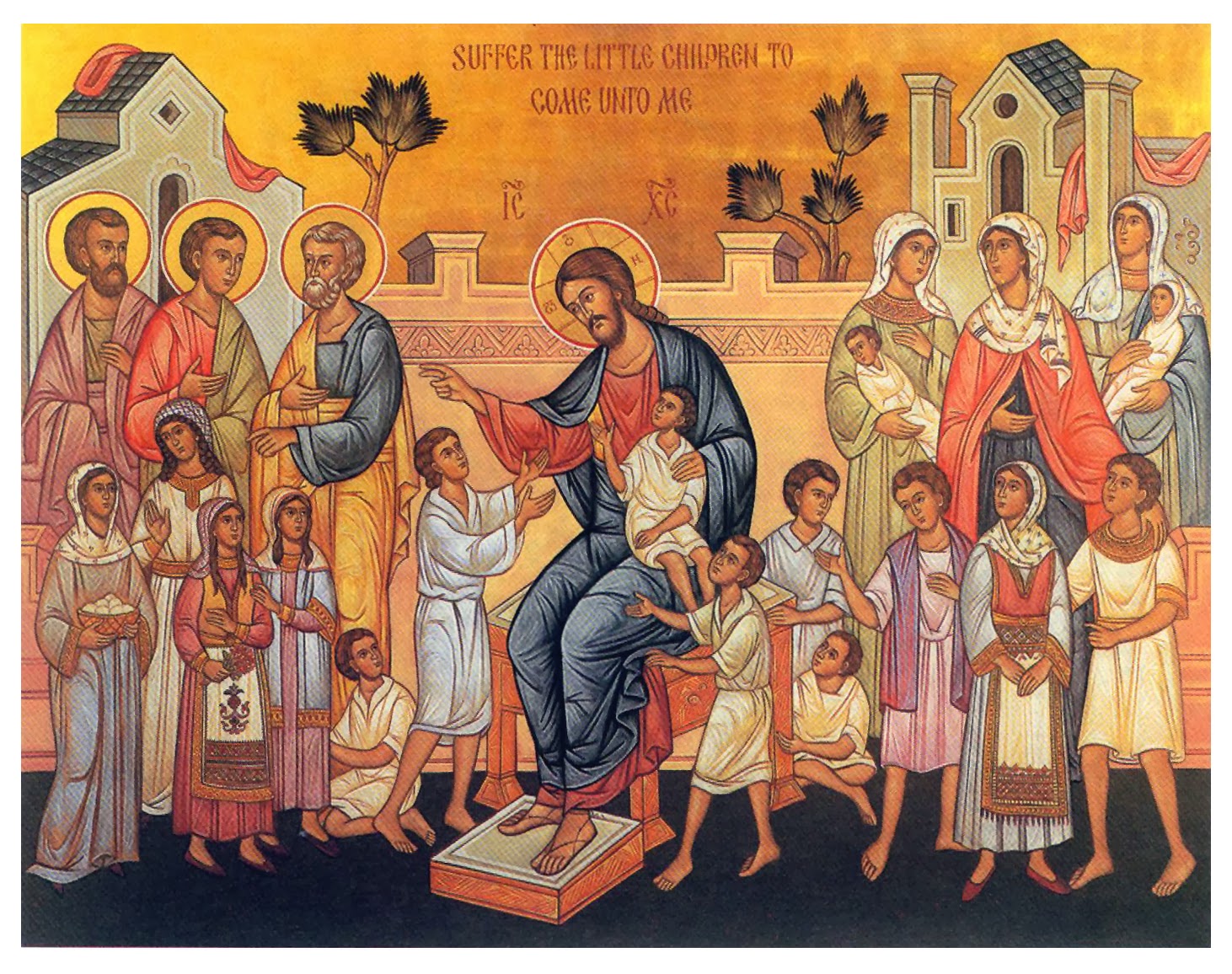
Dr. Senior warned parents against teaching children what modern educators call “critical thinking,” because it would turn them into skeptics and take away the simplicity of their childhood. They need to be taught to believe, rather than to doubt, and to have their joy and love for the world nurtured. If we teach them to be skeptics we are guilty of stunting their souls.

I thought about these things when I read an article by Ken Myers that was published last summer in Touchstone, titled “Trinity & Modernity” (unfortunately not available online). In it he introduces us to the book The One, the Three and the Many: God, Creation and the Culture of Modernity by Colin Gunton, and Myers discusses the fragmentation of current culture and thought, and the necessity of Trinitarian faith and the Body of Christ if we are to be saved from “modernity’s fatal confusion.”

His introductory paragraphs are what I want to share here, about our universal Christian story:

“We have been told that to be postmodern is to approach metanarratives — the Big Stories that explain Life, the Universe, and Everything — with incredulity. Of course, this raises the question of whether or not this definition of the postmodern temperament is itself a metanarrative…”

“…I do detect among most younger people a yawning indifference to efforts to explain history or theology or ethics or art in terms of grand and arching chronologies or chronicles. I suspect their minds and hearts have been colonized by thousands of what [Jean-François] Lyotard called petit récits, small amounts of highly particular and often idiosyncratic episodes, all blithely disconnected from any framework, all resistant to organization in any structure of meaning. Perpetual exposure to a numbing torrent of bewildering bursts of narrativish fragments — increasingly in fewer than 140 characters — leaves little time or mental space for attending to connections and causality.

“I remain unrepentantly pre-modern in my love of metanarratives. If the gospel has any power, it is only because it tells a great story that explains all things. It is a very particular story and it makes universal claims, which make both card-carrying moderns and postmoderns nervous. It was foolishness to the Greeks as well.

“This fragmentation and lack of understanding was a problem even in Chesterton’s day, but certainly it’s worse in more recent decades, with the giving over of education to a woefully pragmatic vision (Perhaps we do have a metanarrative: Do Whatever You Have To, To Get a Good Job.) and the gazillion bits of information and “communication” of the computer age.”

In my case, I always had Truth to tell to my children, because I knew at heart that Christ was the “yea and amen to all the promises of God,” and God was the Creator and upholder of everything. But in my experience the Protestant Evangelical world lacked cohesion, and certainly the continuity with the historic faith that would make it a true metanarrative.

It was incomplete, fragments that could not explain Everything, and I am sorry that I couldn’t tell my young children the Big Story that I am learning now, now that I am coming to know Christ and His Church. In The Church we have Christ the Head of the body. They go together, and can’t really convey the faith any other way. Christ comes to us in His Church, “the fullness of Him that filleth all in all.”

The intellectual focus of the West — which even we in the Eastern Orthodox Church breathe in the air of the modern world — seems to make it hard for me to avoid skepticism in myself. I can’t see that anything but prayer and sacrament can keep my heart tender and trusting. Let’s pray for the children, too, that they might be saved from the spirit of the age.
Linking up to Weekends with Chesterton
The Art of Travel

If our lives are dominated by a search for happiness, then perhaps few activities reveal as much about the dynamics of this quest — in all its ardour and paradoxes — than our travels. They express, however inarticulately, an understanding of what life might be about, outside the constraints of work and the struggle for survival. Yet rarely are they considered to present philosophical problems — that is, issues requiring thought beyond the practical. We are inundated with advice on where to travel to; we hear little of why and how we should go — though the art of travel seems naturally to sustain a number of questions neither so simple nor so trivial and whose study might in modest ways contribute to an understanding of what the Greek philosophers beautifully termed eudaimonia or human flourishing.

This paragraph from the first chapter of Alain de Botton’s book The Art of Travel sums up what it is about. The author likes to think about things, and especially about how to have a good life, which naturally is a concern of my own as well. His conclusions and even many of his presuppositions are different from mine, however, which makes the reading of his books into a stimulating discussion with myself as I also haltingly debate with him.

He provokes me to clarify my thoughts on matters I am already familiar with and introduces me to quite a few people I haven’t known well, in a context that helps me engage with their ideas and principles, too. Flaubert, Baudelaire, Van Gogh, and some non-French and/or lesser known personages both real and fictional such as Edward Hopper, Duc des Esseintes and Alexander von Humboldt make appearances in the pages of this book. Wordsworth gushes over the beauties of the Lake District and John Ruskin gives drawing lessons.

These people are “guides” whom de Botton brings along on his philosophical rambles, and whose travels, writings, and works of art help us to think creatively and usefully about our goings-forth. Parts of the book are given to Anticipation, the Exotic, Curiosity, Possessing Beauty, and Habit.

The fact is, this book has got me pondering and arguing on so many topics that I’m going to need several sittings at the keyboard in order to sift through the potpourri and rearrange it to my liking. In my mind and notebook I’ve been taking parts from one chapter to stick in a different place altogether, and making some new categories of my own.

There are critics at all levels who don’t appreciate de Botton’s style and objectives. For a few, it is because he tells us the obvious. That is a problem some of us have: We speak of what we are thinking about and other people say (hopefully just to themselves), “Well, duh!”

I don’t blame you at all, if you are one of these people. But I count myself among those who enjoy staring back at all of those things that are staring us in the face; we notice how this thing is connected to that one and the other, and the light is bouncing from one facet off the face of another obvious something and caroming all over the place. And we can’t help writing about it.

The Hungry Soul – How Science Disappoints

Previous posts on this book:

In the Introduction to his book, Leon Kass writes of his purposes: “I hope to provide evidence that the modern corporealists — those who deprecate or deny the soul — and their modern rationalist or humanist opponents –those who deprecate or deny the body — are both mistaken, both about living nature and about man. I seek such evidence in an examination of eating.”

Here the author conveys an understanding of reality that is more in line with orthodox Christianity than that of many who profess Christ, for he sees that we are unified creatures; our bodies are essential to who we are, not just shells that we hope to escape. He even goes further than what I would assent to, stating that his meaning of “soul” is “primarily not a theological but a biological notion!” (Yes, he put that exclamation point there himself.)

“You should know at the outset, however, that I use the term [soul] advisedly and without apology, even though I know that it will cause most scientists to snicker and many others knowingly to smile. These skeptics need to learn that it is only because they in fact have a soul that they are able to find such (or any) speech intelligible, amusing, or absurd. Indeed, only the ensouled — the animate, the animal — can even experience hunger, can know appetite, desire, longing.”

It is not, then, only the scientists who are giving us only part of the picture, but also the teachers of humanities (I don’t want to call them humanists, as their vision is too stunted), whom Kass and his wife would call colleagues, as they both are themselves university professors in the humanities.

“…the humanities have long been in retreat from the pursuit of wisdom. Analytical clarity, logical consistency, demystification, and refutation; source criticism, philology, and the explication of thinkers solely in terms of their historical and cultural contexts; and the devotion to theoretical dogmas – formerly romanticism and historicism, nowadays Marxism, deconstructionism, multiculturalism, feminism, and many other “isms” – all these preoccupations keep humanists busy with everything but the pursuit of wisdom about our own humanity.”

James Le Fanu

While I was in the middle of thinking about Kass’s book, I heard another writer on scientific topics interviewed on Mars Hill Audio. James Le Fanu is a physician and author whose book The Rise and Fall of Modern Medicine won the Los Angeles Prize Book Award in 2001. He was speaking in the interview about his recent book Why Us?: How Science Rediscovered the Mystery of Ourselves.

Le Fanu is also concerned about the reductionist and unsatisfying science that purports to tell us all there is to know. Before the notion of science appeared in the early 19th century the idea of the metaphysical was part of the common sense of mankind. Galileo and Newton and Kepler had an instinctive recognition that whatever science couldn’t explain, there was “something beyond.” Their study of Natural Philosophy was encompassed in the larger whole of the love of wisdom.

Nowadays, says Le Fanu, science is boring, and “to be a career scientist is to be in a very small hole,” as they are so specialized in their work, and in their education there is nothing like the older biology textbooks that were “full of awe and wonder and astonishment.” Le Fanu said that in the scientific journals he reads and in his talks with scientists, he has not noticed that any individual scientists are fully appreciating the mystery and glory of the human being.

But we assume that at least some of those scientists leave their holes each night and go home to prune the roses, eat a tasty dinner and play with their children, showing what Kass calls “the disquieting disjunction between the vibrant living world we live in and enjoy as human beings and the limited, artificial, lifeless, objectified, representation of that world we learn about from modern biology.”

As Kass is seeing the non-material aspects of our humanity demonstrated through the very material and natural activity of eating, so Le Fanu sees them revealed ever more obviously by the recent discoveries of science. Everything we learn seems to show how amazingly complex and unknowable by scientific study is “the most important part of the human experience…the nonmaterial thoughts and ideas and feelings and relationships..all the sorts of things we do the whole time….”

I loved listening to someone who is knowledgeable about the latest breakthroughs in the world of science talk about the “five cardinal mysteries” of the human experience. I ordered his book and have been relishing it on every level. Here is another man whose own soul is well-rounded and developed enough that he is a good writer, a practicing physician, and a person who can wonder at the Creation.

If we had a few more men like Kass and Le Fanu, true Natural Philosophers who don’t reduce life and reality to systems and ideologies, but who are willing to be open to that Something Beyond, the world would be a better place. Perhaps some of the upcoming homeschoolers who are getting a foundation in the kind of Poetic Knowledge that Charlotte Mason and James S. Taylor teach will have the ability to benefit from their scientific studies and to find them not boring but joyful.
 

The Hungry Soul – Struggle to Stand

The charming children we get to know in the recent documentary “Babies” are, at the end of the film, struggling to become toddlers, persons enjoying the upright posture that is a mark of homo erectus. They don’t even think about it, because it seems to be a given that children want very much to stand up and walk.

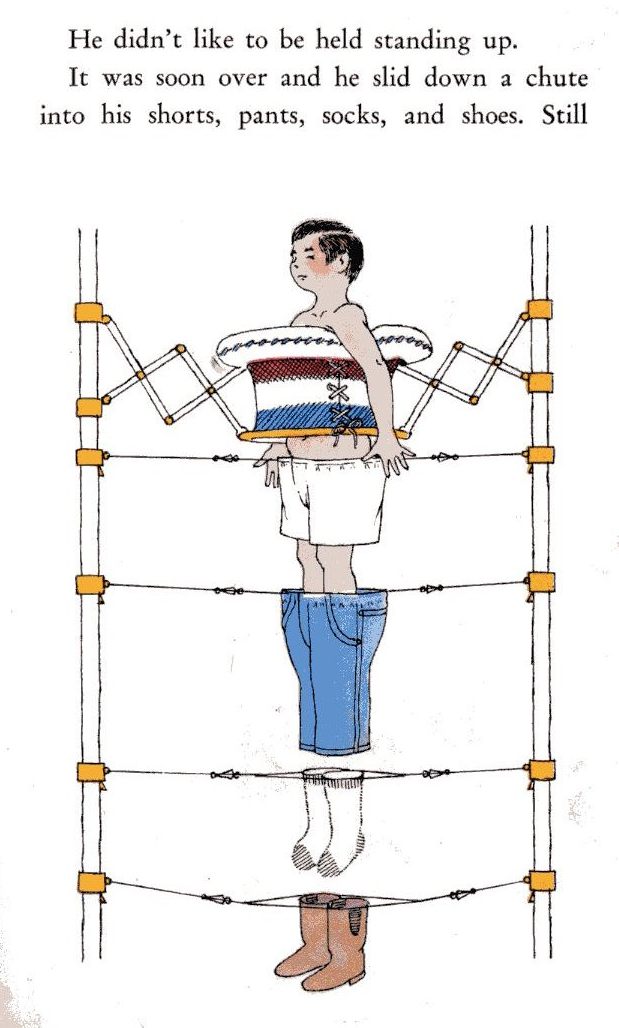
That is, unless you are Lazy Tommy Pumpkinhead, who lives in an electric house that does everything for him; Tommy can’t bring himself to get out of bed or even stand up without assistance. But his story is meant to teach any self-respecting child to be self-respecting, to be human, and not lazy. He is the hero of a children’s book I liked to read to our children.

In the chapter on “The Human Form,” in his book The Hungry Soul: Eating and the Perfecting of our Nature, Leon Kass examines how the erect and forward-facing posture that distinguishes us from most of the animal world contributes to our outlook and coordinates with our calling to be lords of creation, as it were. He takes many of his foundational ideas on this subject from the neurologist-psychologist Erwin Straus, and from his essay titled “The Upright Posture.”

In my reviews I’m skipping around in the book, but I should explain that the first chapters make a case for the primacy of form. That is, all living beings are more than a collection of the same kinds of particles. Even though absolutely all our material is replaced during our lifetime, we retain the same recognizable form. And as this is a book about the human soul, the subject is next narrowed to the human form. From there the author goes on to discuss what humans do with these bodies.

The uprightness of our form is what I am trying to stick to in this post. I think of this a lot now, when I wake up in the mornings and am lying in bed for at least a few seconds. Rarely do I have to get up with an alarm clock, for which I am grateful. And at this time of my life no baby is demanding that I get up to feed her and no child will be late for school if I linger a bit. This morning when I woke I realized that God had answered my prayer to be wakened in time to go to Bridegroom Matins, so I hopped out of bed.

But it isn’t always so easy. Wouldn’t it be lovely if we could keep that verve that children have, that makes them get up, or cry to be let out of their cribs, as soon as they wake up? It seems that God gives us a special grace, when we are new to the world, to work hard at standing before we know what work is.

Though upright posture characterizes the human species, each of us must struggle to attain it. Our birthright includes standing, but we cannot stand at birth. Feral children who have survived in the wild were not found upright but were able to become so. As with other distinctively human traits (speech, for example), human beings must work to make themselves do or become what nature prepares them to be or do. Upright posture is a human, and humanizing, accomplishment.

Kass quotes Straus:

Before reflection or self-reflection start, but as if they were a prelude to it, work makes its appearance within the realm of the elemental biological functions of man. In getting up, in reaching the upright posture, man must oppose the forces of gravity. It seems to be his nature to oppose nature in its impersonal, fundamental aspects with natural means. However, gravity is never fully overcome; upright posture always maintains its character of counteraction.

And Kass elaborates:

Effort does not cease with rising up; it is required to maintain our uprightness. Automatic regulation does not suffice; staying up takes continuous attention and activity, as well it should, inasmuch as our very existence is at stake. Awakeness is necessary for uprightness; uprightness is necessary for survival. Yet our standing in the world is always precarious; we are always in danger of falling. Our natural stance is, therefore, one of ‘resistance,’ of “withstanding,’ of becoming constant, stable.

It doesn’t get any easier, does it? As we get older and weaker, the temptation is to sit down more often. I notice that tendency in church, where in my tradition we stand during the services, which means for one or two hours at a time we stand. What better attitude could we take toward The Holy Con-substantial Life-Creating Trinity?

Yes, we can prostrate ourselves, and I know people who do that when their ailing backs prevent their standing in prayer. But I notice in the Bible that after people fall on their faces before messengers of God, they are told to stand up. The Psalms speak of standing in His presence, and in the New Testament we are told, “…having done all, to stand.”

Stand firm, stand in the gap, stand still and see the salvation of the Lord…The posture is both a metaphor for and a support to our efforts, the whole Christian life being a struggle against laziness, even to the point of, “Let us labor therefore to enter into that rest.” (Hebrews 4) Perhaps if I stand a little longer than is comfortable in church, or work a few more minutes at my household chores before sitting down, it will make me call out to God and ask for help to be the kind of person He wants.

And if I doubt my ability, let me remind myself, “You’ve been doing this your whole life, resisting gravity, walking this precarious walk against natural forces that want to pull you down. You can keep doing it, you can!” I will call to mind the words of T.S. Eliot: “Only those who will risk going too far can possibly find out how far one can go.” And not forgetting the difference between the metaphor and the reality, I’m only too aware that some people who are no longer able to stand with their bodies are standing in the gap for me.

As to lying in bed, for most of us it is a near necessity, though the saints’ lives testify that some of them avoided it like the plague. One wants to avoid the condition described in Proverbs 26, “As a door turns on its hinges, so a sluggard turns on his bed.” I haven’t yet figured out how exactly it fits in without spoiling my thesis, but I have to mention my dear G.K. Chesterton’s delightful essay, “On Lying in Bed,” in which he cautions tongue-in-cheek against legalism and hypocrisy, mostly about how early one rises:

A man can get used to getting up at five o’clock in the morning. A man cannot very well get used to being burnt for his opinions; the first experiment is commonly fatal. Let us pay a little more attention to these possibilities of the heroic and the unexpected. I dare say that when I get out of this bed I shall do some deed of an almost terrible virtue.

This drawing of Lazy Tommy illustrates what happens after he is all dressed and fed, and the long afternoon stretches ahead of him with nothing to do but propel himself up the stairs — not walking, but crawling, it should be noted — but his bed is the attraction that gives him that much energy.

I like this picture, only because it shows that even Tommy is capable of struggling. Maybe we could think of him as a late bloomer, crawling when he should have learned to walk — but at least he is showing some spunk. At the end of the book he experiences enough discomfort resulting from an electrical outage and the failure of technology that he resolves to “turn over a new leaf.”

As I finish this post we are in Holy Week. All through Lent I wanted to write something about the wonderful midweek services that we have (and at which I hope to worship tonight), but it seemed to be beyond my ability to capture even a bit of the sweetness in words. One thing I love about them is that all the Psalms that are called Songs of Ascent are read at each service. And the last of those, Psalm 134, provides a fitting picture of our souls’ posture before our God.

Behold, bless ye the LORD,
all ye servants of the LORD,
which by night stand
in the house of the LORD.
Lift up your hands in the sanctuary,
and bless the LORD.
The LORD that made heaven and earth
bless thee out of Zion.

Other posts on this book: The Hungry Soul — Intro (Why I love this book) and The Hungry Soul – How Science Disappoints