I will make you brooches and toys for your delight Of bird-song at morning and star-shine at night. I will make a palace fit for you and me, Of green days in forests and blue days at sea.
I will make my kitchen, and you shall keep your room, Where white flows the river and bright blows the broom, And you shall wash your linen and keep your body white In rainfall at morning and dewfall at night.
And this shall be for music when no one else is near The fine song for singing, the rare song to hear! That only I remember, that only you admire, Of the broad road that stretches and the roadside fire.
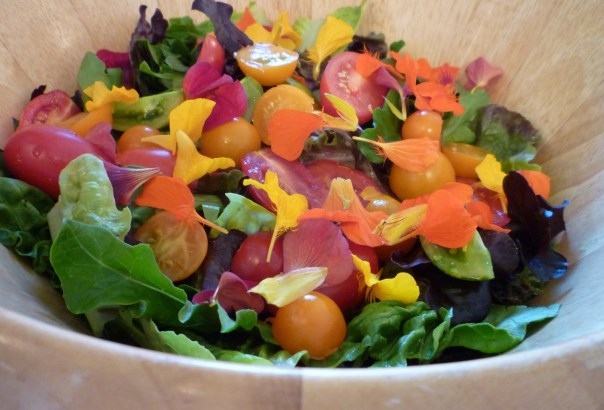
Onions spring compassion. Mulberries promote change.
Corn is a generous mother. Artichokes are modest knights.
You cannot love thy neighbor without eating your vegetables.
You can stop world wars with the kindness of a single fruit cup.
-Katerina Stoykova
This poem is for me like a series of riddles, or an exercise in analogies: How is an artichoke like a knight? And so on. A couple of them are pretty easy, but I am not savvy enough to know all the allusions here, much as I love vegetables, and fruits. But I try to love them purely, for what they are in themselves, which is: recurring miracles.
There will be a singing in your heart, There will be a rapture in your eyes; You will be a woman set apart, You will be so wonderful and wise. You will sleep, and when from dreams you start, As of one that wakes in Paradise, There will be a singing in your heart, There will be a rapture in your eyes.
There will be a moaning in your heart, There will be an anguish in your eyes; You will see your dearest ones depart, You will hear their quivering good-byes. Yours will be the heart-ache and the smart, Tears that scald and lonely sacrifice; There will be a moaning in your heart, There will be an anguish in your eyes.
There will come a glory in your eyes, There will come a peace within your heart; Sitting ‘neath the quiet evening skies, Time will dry the tear and dull the smart. You will know that you have played your part; Yours shall be the love that never dies: You, with Heaven’s peace within your heart, You, with God’s own glory in your eyes.
Here is another poem by Miriam Pederson. Though she refers to mothers, in my case it makes me think more of my grandmother.
One tradition I was fond of in the Presbyterian church of my childhood was tied to Mother’s Day, when every person in the congregation was noticed for having a mother, and given a rose to commemorate her. I am not certain about this, but I think it was a white rose if she had died, a red rose if she were living. It might have been the first time I as a child was made to feel equal in some way to the adults. We all had mothers, and my rose was no different from everyone else’s.
MOTHERS NEWLY GONE
Our mothers are leaving us. One by one they flutter through the door as if we had expected it, as if we had prepared for this good-bye. We can hardly follow their recipes. Their remedies for flu, for heartache, are somewhere in the cupboard; the names of relatives to be invited are mixed in with the old Green Stamps. How can we, their busy daughters, sew on patches to make things last? What are we to do with these old compacts, these letters, cards and cold creams? How will we behave without their disapproving frowns, their Listen, honey… their Oh, sweetheart! We’re standing up straight, we’re being kind, and we’ve sent off the thank-you notes, but they are minding other business beyond the blue, leaving us in middle age to sift through their precious lives for clues to who we are.


 Gladsome Lights