I have always loved this hymn since singing it in the Presbyterian church of my childhood. I included it in a booklet of Thanksgiving hymns I put together some years ago, for our family to sing when we gathered for the feast. Here is John Rutter conducting a choir singing it: We Plough the Fields and Scatter. The lyrics have undergone some adaptation over the decades, which you can read about on Wikipedia where the hymn has its own entry.
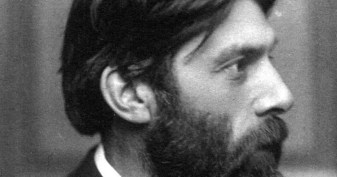
Matthias Claudius published this poem in Germany, where it was set to music attributed to Johann A. P. Schulz, in 1800. I also like this bold instrumental version: We Plough the Fields and Scatter.
WE PLOUGH THE FIELDS AND SCATTER
We plough the fields and scatter
the good seed on the land,
but it is fed and watered
by God’s almighty hand;
he sends the snow in winter,
the warmth to swell the grain,
the breezes and the sunshine,
and soft refreshing rain.
He only is the Maker
of all things near and far;
he paints the wayside flower,
he lights the evening star;
the wind and waves obey him,
by him the birds are fed;
much more to us, his children,
he gives our daily bread.
We thank thee, then, O Father,
for all things bright and good,
the seed-time and the harvest,
our life, our health, our food.
Accept the gifts we offer
for all your love imparts,
with what we know you long for:
our humble, thankful hearts.
All good gifts around us
are sent from heaven above;
then thank the Lord, O thank the Lord
for all his love.
-Matthias Claudius (1740 – 1815) Germany