Category Archives: poetry

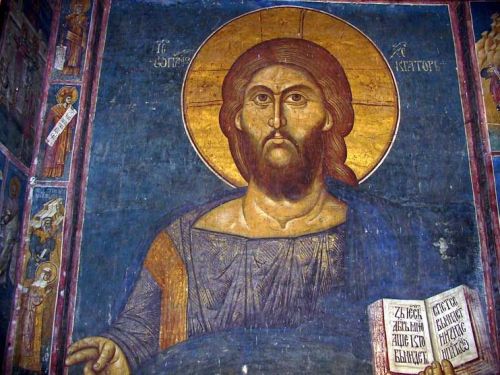
Sunday of The Prodigal Son

I found this poem on Maria Horvath’s blog more than ten years ago, and have kept her introductory words attached. This week in the Orthodox Church we remember the story of the Prodigal Son. I noticed that this poem can be sung, if you want, to the same tune as “Amazing Grace.”

Today’s poem, “The Prodigal Son,” tells of a father’s unconditional love for his son. It was written by John Newton (1725-1807). He is the former slave trader who became famous for “Amazing Grace,” the folk hymn that also examines the nature of forgiveness, his own in this case:

Amazing grace! (how sweet the sound)
That sav’d a wretch like me!
I once was lost, but now am found,
Was blind, but now I see.

The poem recounts the story of one of Christ’s best-known parables. The younger of two sons asks his father for the share of his inheritance, only to squander it all on loose living. Humiliated and desperate, he comes crawling back to his family.

THE PRODIGAL SON

Afflictions, though they seem severe;
In mercy oft are sent;
They stopped the prodigal’s career,
And forced him to repent.

Although he no relentings felt
Till he had spent his store;
His stubborn heart began to melt
When famine pinched him sore.

What have I gained by sin, he said,
But hunger, shame, and fear;
My father’s house abounds with bread,
While I am starving here.

I’ll go, and tell him all I’ve done,
And fall before his face
Unworthy to be called his son,
I’ll seek a servant’s place.

His father saw him coming back,
He saw, and ran, and smiled;
And threw his arms around the neck
Of his rebellious child.

Father, I’ve sinned — but O forgive!
I’ve heard enough, he said,
Rejoice my house, my son’s alive,
For whom I mourned as dead.

Now let the fatted calf be slain,
And spread the news around;
My son was dead, but lives again,
Was lost, but now is found.

’Tis thus the Lord his love reveals,
To call poor sinners home;
More than a father’s love he feels,
And welcomes all that come.

-John Newton

Turn the poet out of door.

It’s the “false spring” one day, and the next, not. When I was at church to bake communion bread, it was spring for sure. Of course the dough knew it, and behaved accordingly.

Yesterday, the wind and various other factors contributed to further thaw the bones of my soul. While I was in my own garden trimming the lemon tree, pomegranate bushes, lavender and a few other plants, a series of great gusts came up suddenly, and made a clattering of doors and toys and other blowing-around stuff in the neighborhood.

The poem below doesn’t originate in my area of the country, so it will never perfectly fit the weather here, but I love the spirit of it, and I’m sure it will please a few of you in more northerly parts of the world. If you tend to be impatient with poems, try reading this one out loud.

TO THE THAWING WIND

Come with rain, O loud Southwester!
Bring the singer, bring the nester;
Give the buried flower a dream;
Make the settled snowbank steam;
Find the brown beneath the white;
But whate’er you do tonight,
Bathe my window, make it flow,
Melt it as the ice will go;
Melt the glass and leave the sticks
Like a hermit’s crucifix;
Burst into my narrow stall;
Swing the picture on the wall;
Run the rattling pages o’er;
Scatter poems on the floor;
Turn the poet out of door.

-Robert Frost

Because we haven’t had any rain in several weeks — or has it turned into months? — I had to put the hose on potted plants that aren’t on the automatic drip system. Hidden behind one big pot, this little great-grandbaby of a cactus I started was in full baby bloom. I brought her indoors to brighten up my kitchen, still lit also by the fairy lights, which are there for the days when spring is clearly not. yet.

You who have stood at the bedposts.

We have a new baby in my parish, over whom we are rejoicing, though we haven’t met him yet; he has a few weeks to go before being brought to church on the traditional 40th day after birth. It’s a good time to post this poem that I only recently discovered. 

Every baby coming into the world is a unique event, and my own feelings about births I’ve been present for have also been various. The group of people who have been appointed, as it were, to participate, each in her own way, bring all their personalities and prayers, and God is always present. 

I’m sure that many of my readers also retain impressions and images from standing by the bedposts (or lying in the bed), during or just after childbirth. None of the photos I might put here (the one above is from the internet) are much good by comparison with the golden moments that remain our personal possessions, even if with time they lose their crispness in the mind.

“Nothing else was ever so important.”

BEING BORN IS IMPORTANT

Being born is important.
You who have stood at the bedposts
and seen a mother on her high harvest day,
the day of the most golden of harvest moons for her.

You who have seen the new wet child
dried behind the ears,
swaddled in soft fresh garments,
pursing its lips and sending a groping mouth
toward the nipples where white milk is ready —

You who have seen this love’s payday
of wild toil and sweet agonizing —

You know being born is important.
You know nothing else was ever so important to you.
You understand the payday of love is so old,
So involved, so traced with circles of the moon,
So cunning with the secrets of the salts of the blood —
It must be older than the moon, older than salt.

~ Carl Sandburg (1878-1967)

Here’s a little something about Carl Sandburg’s own children.

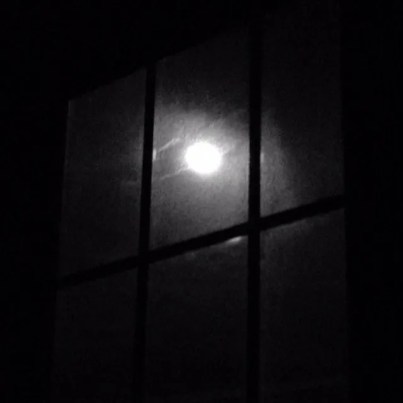
What is night will soon be day.

Ogden Nash makes me rejoice in the English language as it presents itself to his peculiar, playful mind. I liked this galloping poem, and won’t argue with it, because that’s not what humor is for. But I will say that the line I chose for the title of my post led me from laughing to silent theologizing…

TIME MARCHES ON

You ask me, brothers, why I flinch.
Well, I will tell you, inch by inch.
Is it not proper cause for fright
That what is day will soon be night?
Evenings I flinch the selfsame way,
For what is night will soon be day.
At five o’clock it chills my gore
Simply to know it isn’t four.
How Sunday into Monday melts!
And every month is something else.
If Summer on the ladder lingers,
Autumn tramples upon her fingers,
Fleeing before the jostling train
Of Winter, and Spring, and Summer again.
Year swallows year and licks its lips,
Then down the gullet of next year slips.
We chip at time with clocks and watches;
We flee him in love and double scotches;
Even as we scatter in alarm
He marches with us, arm in arm;
Though while we sleep, he forward rides,
Yet when we wake, he’s at our sides.
Let men walk straight or let them err,
He never leaves them as they were.
While ladies draw their stockings on
The ladies they were are up and gone.
I pen my lines, I finish, I scan them,
I’m not the poet who began them.
Each moment Time, the lord of changers,
Stuffs our skins with ephemeral strangers.
Good heavens, how remote from me
The billion people I used to be!
Flinch with me, brothers, why not flinch,
Shirts caught in the eternal winch?
Come, let us flinch till Time stands still;
Although I do not think he will.
Hark, brothers, to the dismal proof:
The seconds spattering on the roof!

-Ogden Nash