Category Archives: quotes

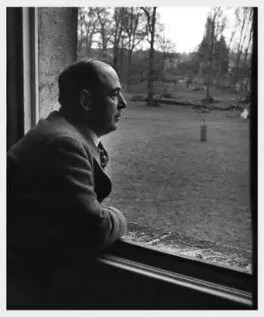
Boredom, your window on undiluted time.

“When hit by boredom, let yourself be crushed by it; submerge, hit bottom. In general, with things unpleasant, the rule is: The sooner you hit bottom, the faster you surface. The idea here is to exact a full look at the worst. The reason boredom deserves such scrutiny is that it represents pure, undiluted time in all its repetitive, redundant, monotonous splendor.

“Boredom is your window on the properties of time that one tends to ignore to the likely peril of one’s mental equilibrium. It is your window on time’s infinity. Once this window opens, don’t try to shut it; on the contrary, throw it wide open.”

― Joseph Brodsky

It’s interesting how metaphorical the poet Brodsky gets in this passage on boredom — and his metaphors are so physical. Boredom hits us, and crushes us. We sink under water, we hit bottom. Then we surface fast, and even when encountering a window, we don’t just look through it but throw it open. Take the bull by the horns, I might add. Don’t miss the opportunity — go for it!

It may be that my interest in boredom has something to do with its connection to Time. When we are experiencing the restless kind of boredom, it’s often because we think whatever we are doing is a waste of time, or at least that there might be a better use of our time than what has been given to us, what we are stuck doing. But Brodsky doesn’t see time that way, as something to use. We are beings in time, and just letting the seconds and minutes go by as we contemplate that reality — something splendorous — can reveal aspects of our existence that we might miss, if we keep ourselves constantly busy.

Contemplation is mental and hopefully spiritual work. Not laziness, not sloth. Possibly the opposite of sloth, which is another word for acedia. I still hope to explore the idea of acedia, but that will probably not happen soon. In the meantime, I’m growing bored with thinking about boredom. Here’s one last thought to contemplate:

Boredom is the feeling that everything is a waste of time;
serenity, that nothing is.
–Thomas Szasz

Boredom, the guide to mystery.

Eric Hyde is an Orthodox Christian psychotherapist writing at Eric Hyde’s Blog. I appreciated his brief musing, on the increase of his understanding of boredom from reading Heidegger; he combined it with his own experience and that of his clients, in this post: “Heidegger’s ‘Profound Boredom’: using boredom to cultivate the soul.”

Heidegger names three levels of boredom, the most extreme which is profound. To many people, the idea of profound boredom probably sounds frighteningly close to deep depression — a condition to be avoided at all costs. But I have heard more than one person say that they welcome boredom — even if it is said half-jokingly, as in, “I wish I had time to be bored!” But there are various ideas out there about what boredom is, and theories about what to do about it, if anything. I’d like to learn more about the difference between boredom and acedia. So this probably won’t be my last post on the subject.

Eric Hyde writes:

“If you’ve ever sat alone at the beach, or in the mountains, or the country, or sat gazing at the fully illumined night sky and had that deep sense of your own smallness, of your own seeming triviality in the broad scope of existence, and yet rather than crushing your soul it gave you a sense of calm wonder, a sense of spiritual ordering, then you’ve likely had the experience of profound boredom as Heidegger described it.

“In short, what I found so powerful in the notion of profound boredom is that boredom has the power to grant a person ‘attunement’ to oneself and to existence as a whole—or more properly speaking, attunement to Being as a whole—in a truly spiritual manner. Rather than causing torment, boredom, if used properly, can be at once a guide to peace and a guide to the very mystery of being.”

I’m familiar with this attitude, because it is commonly taught in the Orthodox Church; offhand I think of books on prayer by Metropolitan Anthony Bloom.

Hyde gives three tips:

1. Don’t wait for boredom to find you—search it out.
2. Once there, allow boredom to reveal its message.
3. Repeat daily.

Venerable Paisios Velichkovsky

Today is the feast day of St. Paisus Velichkovsky, whose story you can read on the website of the monastery founded in his honor, St. Paisius Monastery, where I went on pilgrimage two years ago: “The Life and Mission of St. Paisius Velichkovsky.”

A quote from the saint for contemplation:

“One must clean the royal house from every impurity and adorn it with every beauty, then the king may enter into it. In a similar way one must first cleanse the earth of the heart and uproot the weeds of sin and the passionate deeds, and soften it with sorrows and the narrow way of life, sow in it the seed of virtue, water it with lamentation and tears, and only then does the fruit of dispassion and eternal life grow. For the Holy Spirit does not dwell in a man until he has been cleansed from passions of the soul and body.”

+ St. Paisius Velichkovsky, “Field Flowers”

He drops by a silken thread.

More than one reviewer of Richard Wilbur’s late collection of poems noticed that after his wife died, the poet wrote more about death, as in this example below. That would be a natural response, of course, for someone 90 years old, even if he hadn’t been recently widowed.

I know it’s recommended that people of all ages live with awareness of the shortness of our lives, as in Psalm 90: “Teach us to number our days, that we may gain a heart of wisdom.” Or as another translation goes, “Teach us to realize the brevity of life….”

If our dearest friends and family have departed, it could exacerbate any feeling of weariness we already had with this earthly existence. In the same Psalm the poet mentions the less-than-thrilling aspects of life: “The days of our years are threescore years and ten; and if by reason of strength they be fourscore years, yet is their strength labour and sorrow; for it is soon cut off, and we fly away.”

A MEASURING WORM

This yellow striped green
Caterpillar, climbing up
The steep window screen,

Constantly (for lack
Of a full set of legs) keeps
Humping up his back.

It’s as if he sent
By a sort of semaphore
Dark omegas meant

To warn of Last Things.
Although he doesn’t know it,
He will soon have wings,

And I, too, don’t know
Toward what undreamt condition
Inch by inch I go.

~ Richard Wilbur

Richard Wilbur was a lot smarter than an inchworm, so I like to think he had this verse from I Corinthians in mind when he wrote those last lines: “But as it is written, Eye hath not seen, nor ear heard, neither have entered into the heart of man, the things which God hath prepared for them that love him.”

Because the Preparer is Love, our Last Things, though unimaginable, will be the best.


I first shared this poem of Wilbur’s ten years ago, before he had passed over, into what we might think of as the pupa stage; today I read this about the inchworm:

“After the larva hatches, he feeds on leaves for about a month before he drops to the ground via a silken thread. In late spring or early summer, the larva burrows up to 4 inches into the ground, spins his cocoon and pupates. If he’s a fall worm, he’ll emerge in the fall, usually between November and early December. If he’s a spring worm, he’ll wait until the next late winter to emerge.”

At the time of Wilbur’s death I posted one article written about him for the occasion, but just now I found another tribute in USA Today, in which the journalist remarks on the unusual quality of happiness in this poet, and quotes Wilbur:

“I think many people associate happiness with shallowness,” Wilbur told the AP. “What people don’t want is someone who is complacent. And I know that I am not a complacent man.”

Richard Wilbur was the farthest from complacent that I can imagine. He spent his life being attentive to the world around him and pursuing love and beauty. I hope that in his present state he knows even more what C.S. Lewis meant when he said:

“Joy is the serious business of Heaven.”

Geometer inchworm moth – Scopula Decorata or Middle Lace Borer