Category Archives: quotes

Hans Christian Andersen on Greek Easter

Hans Christian Andersen’s travel memoirs from the 1840’s, when he witnessed both Roman and Greek Easter festivities. He did love the Greek way:

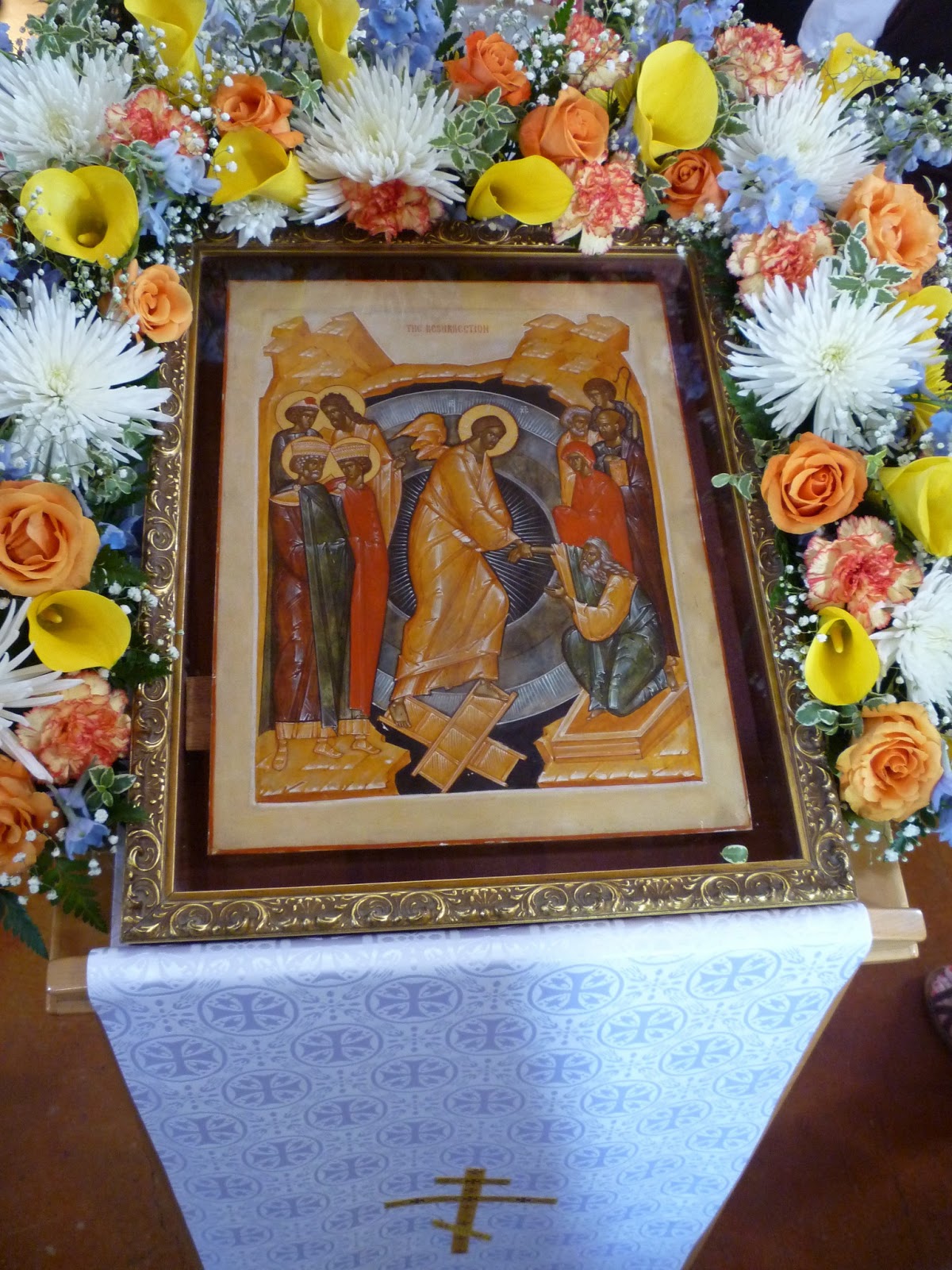
Day and night the church was filled with people. The King, the Queen, and the whole court were there on the midnight before Easter Day: the priests stood praying and mourning around the flower-filled coffin; the whole congregation prayed in silence. The clock struck twelve, and at the same moment the Bishop stepped forth, and said: “Christ is risen!”

“Christ is risen!” burst from every tongue. Kettle-drums and trumpets sent forth their strains; the music played the liveliest dances! The whole people fell on each other’s necks, kissed, and joyously cried, “Christ is risen !” Shot after shot was heard outside; rockets darted into the air, torches were lighted, men and young lads, each with a candle in his hand, danced in a long row through the city. The women kindled fires, slaughtered lambs, and roasted them in the streets. Little children, who had all got new fez and new red shoes, danced in their shirts around the fires, kissed each other, and exclaimed like their parents, “Christ is risen!” O, I could have pressed each of these children to my heart and exulted with them. “Christ is risen!” It was touching, elevating, and beautiful.

Read the whole thing here.

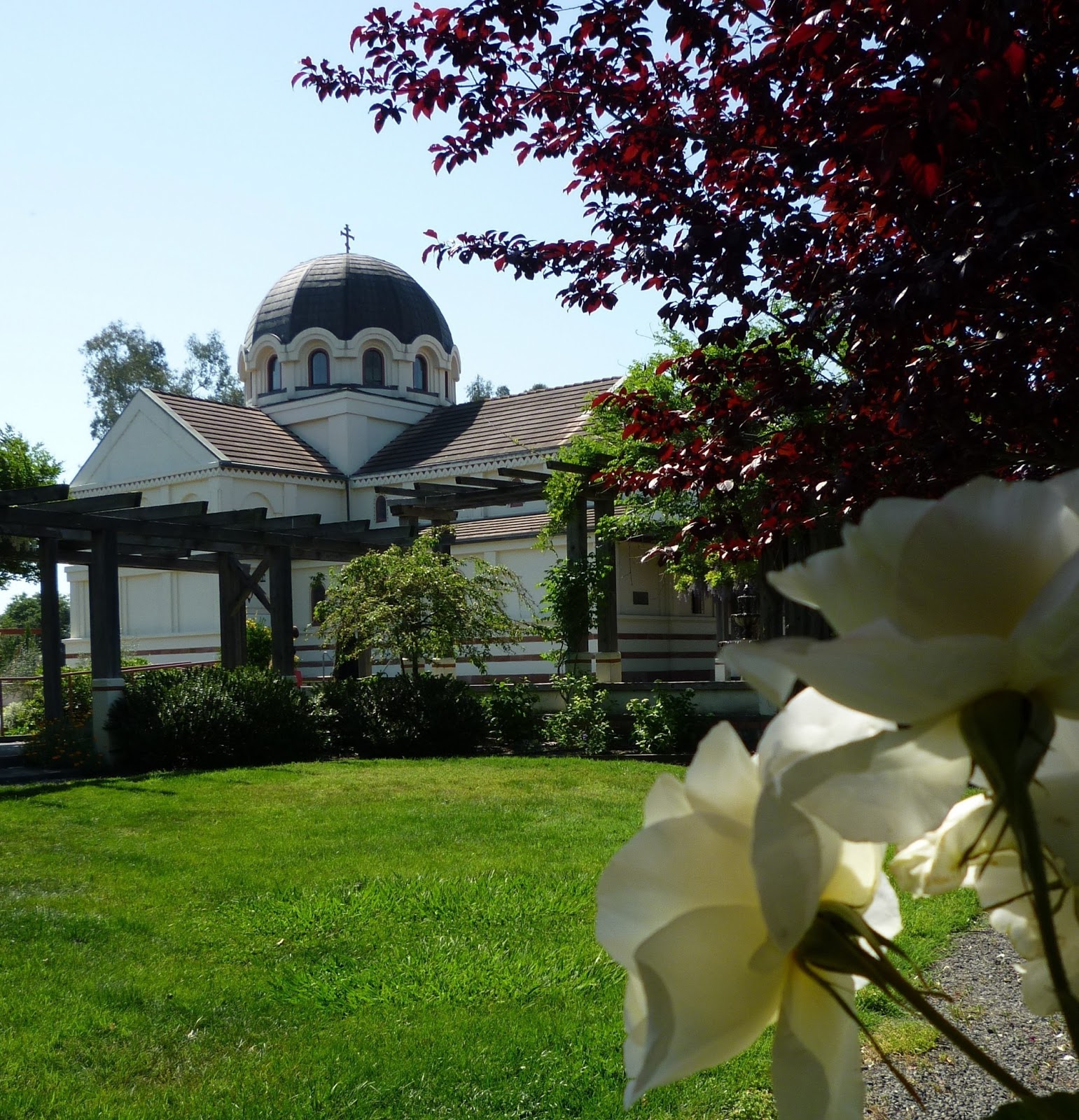
(In California, as the clock struck twelve.)

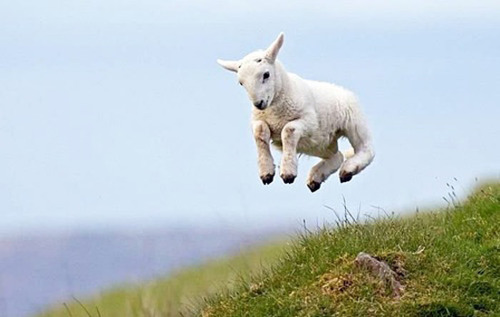
little goats now in the spring

The hymns of Pascha and Bright Monday are playing themselves in my mind every day, all day long, like heavenly prayers. Christ is risen indeed! And my house is filled with honeysuckle scent, as a consequence of a long gardening party I’ve been having with myself.

I’ve been on my hands and knees in the dirt quite a bit this week. Above you can see one perennial bed I’ve been thinning and re-planting. Eleven tomato plants have been tucked into various places all over the yard, and in order to make a sunny home for one of them it was necessary to severely prune the honeysuckle vine that was starting to bloom profusely. Beforehand, as I walked past it several times, the sweetness almost made me woozy, and reminded me of the lilies in church on Holy Friday, as at a funeral.

I couldn’t bear to throw all the prunings into the yard waste bin, so I cut carefully and put the trimmings in three vases to enjoy indoors. There were still so many left, I filled another jarful to give to a neighbor, but it’s still here, too. Even though the petals are drying and starting to fall on the table, all of this flowery flavor is still permeating my days.

A wonderful story was passed on to us on the blog Mystagogy, of the Athonite monk Elder Porphyrios (1906-1991) who on a Bright Tuesday visited his cardiologist, overflowing with Easter brightness and quoting a hymn:

What happiness is in the Resurrection! “And leaping for joy, we celebrate the Cause.” Have you ever seen the little goats now in the spring who jump on the grass? They eat a little from their mother and begin to jump again? This is what it means to leap – to jump. This is how we should also jump for unspeakable joy at the Resurrection of our Lord and our own.

It is a sweet and not long anecdote you can read here.

There is this lightness and heavenly singing, but pressing in on all sides, sorrow and pain. In the lives of extended family, and friends near and far, things happen even in Bright Week that reek of death. A husband commits suicide, a child dies suddenly and mysteriously, a sweet woman becomes incapacitated with irrational fears….

How to make sense of it all? How to carry the joy along with the burdens of the people you love? It probably requires a measure of the Holy Spirit I haven’t acquired in order to do a good job of it. My joy is often a shallow emotionality, and certainly my burden-bearing is hampered by laziness and the distraction of my own burdens that I needlessly carry.

Or is it needlessly? It was only a short time ago I was ruminating on the yoke of Christ — and He did say His burden is light. He was exhorting us to take up His yoke. I want to “be there” for people who are hurting, and often the only thing to do, and it’s not minor, is to bring them to God’s throne in my heart and prayers. If I will just stay there I should be able to hold on to this sweetness and Light as well. 

Christ is risen!

See and be His art.

The second chapter of The Hidden Art of Homemaking is short, and titled “What is Hidden Art?” I love reading all the many women’s thoughts on this topic, which [used to be found, but not these several years later] on Ordo Armoris where the discussion [was] taking place.

It’s a huge topic! Each human is a living and complex demonstration of creative powers, as is revealed by the uniqueness of each woman’s life as expressed in her contributions to these discussions. The stories, the photos on the Hidden Art Pinterest page, the glimpses into the families whose wives and mothers are taking time to share their creativity online in addition to the never-ending work they do in their homes….it’s all a glory to the Creator.

Obviously, art is hidden as long as you don’t see it. That seems a basic point of this discussion. For me, having children opened my eyes to the world in a new way, because I often thought of my babies as tiny foreigners who were themselves seeing things in this new “country” for the first time. It was fun being the tour guide, and it challenged me to look afresh at my environment.

Sometimes just pointing a camera at some everyday scene helps to reveal a pattern of beauty – or to preserve the art when there isn’t time for a quick sketch. My picture that I titled “Butter Art” so many years ago still makes me happy with its hominess, and it calls to mind the intangible kinds of creativity that I also brought to bear on the task of mothering my children, small “art” projects that took place in the kitchen, or the garden, or — the heart.

I’m still pondering the thoughts of my previous post on this inward kind of creativity, which the author I quoted says “begins with the ability to change — to change intentionally. Creativeness begins with the ability a being has…to become what he is not yet, to start at the point at which he was created and then grow into a fullness that he did not possess before…”

Might this not include the developing in us of the fruits of the Spirit, the love, joy, peace, kindness, longsuffering, etc. that are so essential to making a home? I know that Edith Schaeffer in the book under discussion is primarily dealing with outward, visual or sensory beauty. But what if we could “create” peace by our very presence, or transfer some of our own joy into our children’s hearts?

Mothers naturally do those kinds of things, and often it’s by the attitude they have while they are accomplishing practical works such as laundering the socks, changing them from stiff and smelly to soft and fresh. It all starts with something we are. The artistry of our God is not just something to imitate, but is His active work in us, with which we participate, and by which we become ourselves lights in the world.

Tonight’s the night!

The victory is in each of us, the victory is in all those of us who believe that death cannot separate us from God….However frightening and dark the world is nowadays, we know that victory has already been won, that God has won and that we who believe in him partake together with him in his victory. And therefore, let us bring, to all around us, this message of life and glory!

— Metropolitan Anthony Bloom