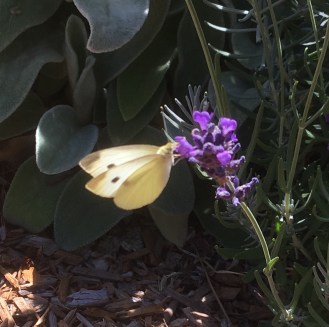
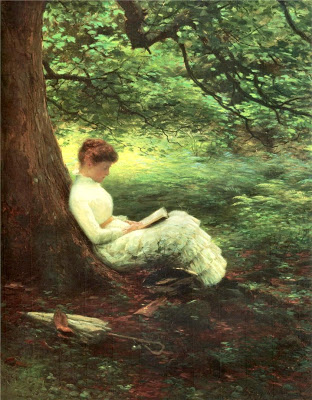
Today I spent most of the afternoon and evening working in my garden, happy to act out the quote from Elisabeth in the last post. Often on Mondays I end up trimming and weeding, because it’s tonight that I put out the garbage cans to be picked up in the morning, including the big green bin that is for all green waste.
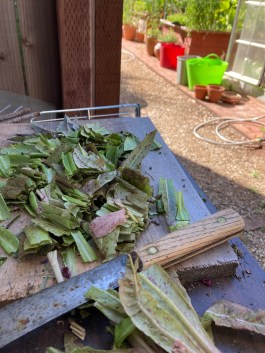 The lettuces that had bolted I chopped up and gave to my worms. Out there I set up a board by way of a chopping block just for this purpose. I probably have four times as many worms as I started with last fall, because the man who gave me my starter batch moved far away and couldn’t take his worm farm; he gave them all to me! He consolidated all three or four of his bins into one new one, before bringing it to my house, so I fear that they are overcrowded, and I plan to modify my set-up so that they have more room. But they seem to be doing well on the diet I provide.
I tied the new tomato stems to the long tree prunings I am using for stakes; I removed a lot of spindly new nigella sprouts that are still coming up everywhere even though the weather is not conducive to their health. And I picked lots of kale and Swiss chard.
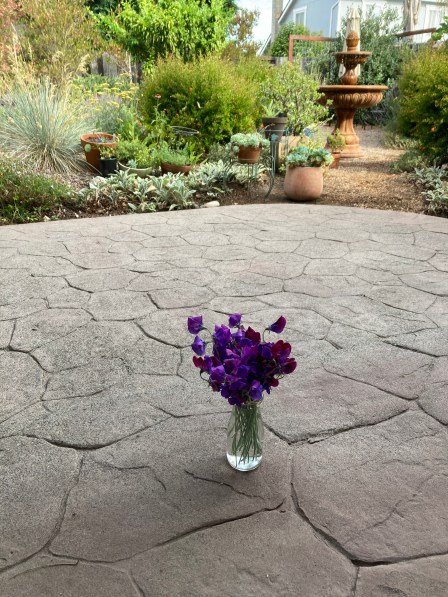
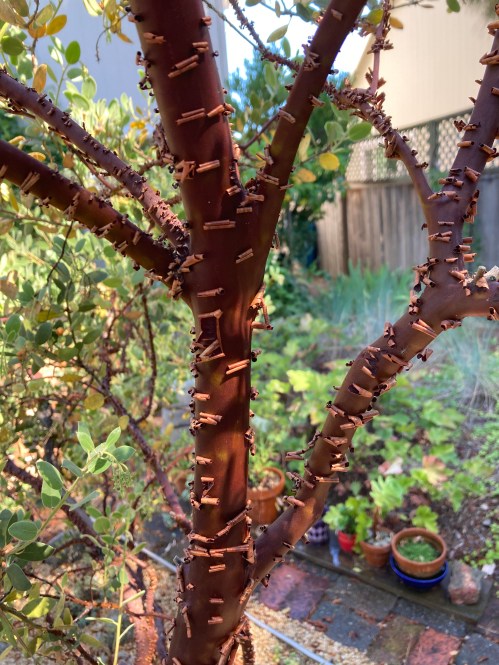
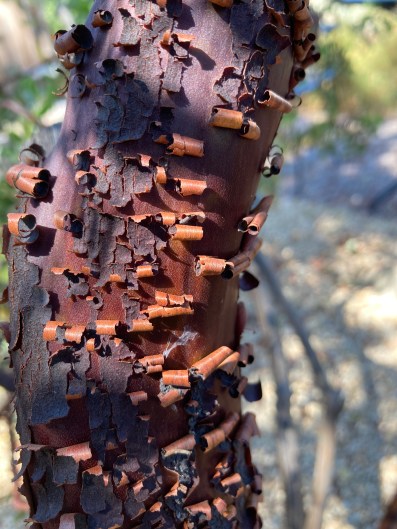
Last Saturday my patio got scrubbed and power-washed. I’d noticed only this spring how black it had turned over the winter; it hadn’t been cleaned since it was installed twenty years ago. While that was happening I picked a few of the sweet peas from the vines that are crisping up, as I pulled out the plants. The patio was left to dry and won’t be sealed until later this week, so in the meantime all my potted plants are waiting on the paths. I was watering them this morning when I noticed the manzanita’s bark curling as it does at this time of year. Here are new pictures of that artistry.
At six o’clock I was still going strong, and I didn’t want to stop and cook dinner, so I came in and just found cold things in the fridge to eat quickly — a lamb chop and a few roasted 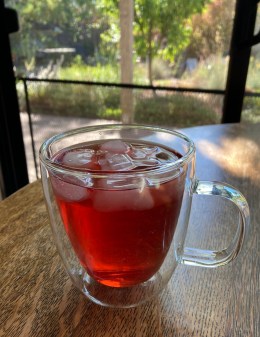 Brussels sprouts. There was cold tea as well, pretty fancy stuff that had just arrived today.
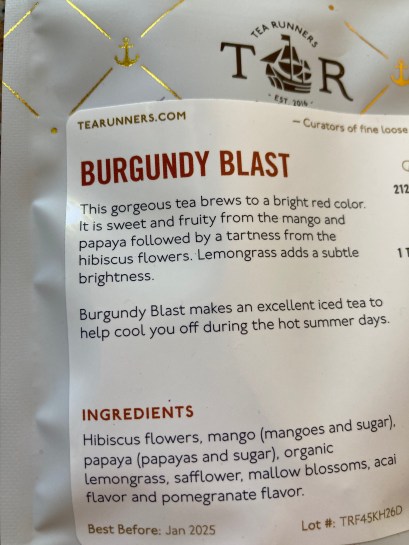
Last year I gave my grandson Scout a subscription to a few orders of Tea Runners blends of tea, and when I visited him recently he made tea for me from a flavor of my choice, from his collected packets. I was so impressed with the various flavors I decided to order a few for myself, and today I made Burgundy Blast as iced tea. Its color and flavor reminded me of the Kool-Aid that my siblings and I used to drink in the summers of my youth; I say that, quite glad not to have drunk Kool-Aid for many decades. But this was just barely sweet (I see from the ingredients list that the mangoes included were sweetened), and so fruity and yummy. And beautiful. This is what it looked like before the boiling water was poured over:

For several years I used to pick lavender flowers from my many plants, hoping to put them into sachets. I stored them in the freezer against the day I would have time for that project. But it never happened, and I stopped trying. This year I got the idea to make lavender simple syrup, but I didn’t pick the buds in time, and now they are fading. Oh, well, I gathered a cupful of blooms anyway, and maybe I will make lemon & lavender shortbread… maybe.
 A lovely thing happened on this gardening day: I received in the mail this book The Fragrance of God, by Vigen Guroian (2006). I noticed it online when I was buying the new edition of Tending the Heart of Virtue: How Classic Stories Awaken a Child’s Moral Imagination. The Fragrance book seems to be on the same theme as the author’s previous book, Inheriting Paradise: Meditations on Gardening. I couldn’t help leafing through it right away, though I was too busy to give it proper attention. Just now I did take time to glean one quote with which to end my mostly garden post. I am reveling in my own heart’s portion of Paradise tonight.
“When Adam left it, he took a portion of Paradise with him. That piece of Paradise is more deeply etched in the human soul than all the memories of this impoverished world. Scratch beneath the skin of a genuine gardener, and you will find this memory of Paradise. When he looks into his backyard, Paradise is what he envisions. But Paradise is not just inside of every man and woman. In these regions of ‘sin and woe,’ William Cowper remarks, ‘Traces of Eden’ may still be seen, ‘where mountain, river, forest, field, and grove’
remind us of our ‘Maker’s power and love.'”