In the middle of the night when I have lost my way back to the Land of Nod, I sometimes listen to a book that I wouldn’t mind falling asleep to; that usually indicates one I’ve already read. Recently I chose The Everlasting Man by G.K. Chesterton, which seems to work well enough. It’s been so long since I read it in print, I do hope I might go back and really pay attention again one day. The feeling of exhilaration that book gave me still lingers.
In the meantime, the nighttime stories remind me of my ample supply of quotations by the author that are always useful for the opposite purpose, to make me wake up and think. The one I chose for today is both by and about Chesterton, from a lecture by Dale Ahlquist, which I noted that I’d found on the Chesterton Society site, a lovely place to browse if you want to read more.
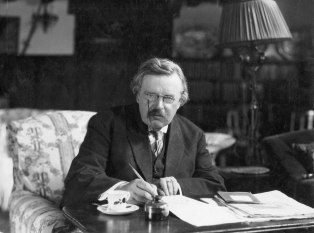
“Not only has no one expected him to write about religion in a secular newspaper, he writes about religion in a way no one expects. Not surprising then, that he says religion must be paradoxical. Chesterton was already becoming famous for his paradoxes, and many of his readers and admirers assumed that he was being merely paradoxical by defending religion in general and Christianity in particular. But the jovial Chesterton was quite serious even if he was quite funny.
‘All paradoxers,’ he writes, ‘if they be also honest men, are aiming joyfully at their own destruction. We have paradoxes, and it is our effort, day and night, to turn them into truisms.’ What he is striving to achieve is not the paradox, but the platitude. ‘Every man who is fighting for his own beliefs is fighting to take it away from himself. He may be clever in dull places and important in mean places; but in the land that he desires he will be nothing—a reed with the reeds in the river.’ A truism is a popular truth, a paradox an unpopular one. But they are both true.”
Dale Ahlquist is President of the Society of Gilbert Keith Chesterton and has written five books about Chesterton.


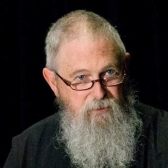 “Before looking at the nature of good and evil, it is worth seeing the problem involved when choice is inserted into the conversation. What happens in that approach is that we are no longer speaking about the nature of good and evil, indeed, both are relativized in importance. Everything quickly revolves back to the nature of choosing, and makes the actions of our will the center of the good. Thus, there is no true good or evil, only good
 this? And how to sort out the choices that we have made? How many of our ignorant or hasty choices turned out for “evil”? Fr. Stephen recalls the example of Joseph in the Old Testament, who was the victim of his brothers’ evil choices.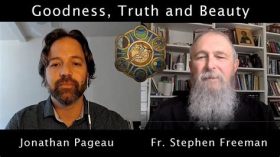

 Gladsome Lights