Category Archives: quotes

Holding on can be hard work.

On his blog Snakes and Ladders, Alan Jacobs quotes from Tony Tanner’s book, Jane Austen, a passage about the heroine of Mansfield Park, who is the opposite of an activist, in that she seems to do so little. But is she then inactive? Jacobs shares a good chunk of analysis that Tanner makes of one scene in Mansfield Park, which Jacobs thinks is “the single most brilliantly conceived and executed scene in all of Austen.”

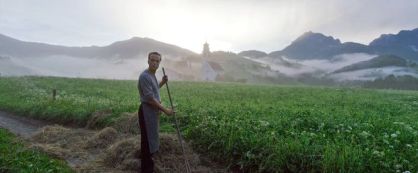
Jacobs compares Austen’s Fanny Price to the character of Franz Jägerstätter in Terrence Malick’s new film, “A Hidden Life,” in the way that (quoting Tanner): “In her stillness she is not inactive: on the contrary, she is often holding on strenuously to standards and values which others all around her are thoughtlessly abandoning.”

I was very impressed by Mansfield Park when I read it a few years ago, but I missed the subtleties of the scene in the park when Fanny sits on a bench, while her friends are busy coming and going around her; you might like to go to Jacobs’ blog to read about it. It’s not long.

I’ve never read one of Alan Jacobs’ books, but I have read numerous essays by him and listened to him interviewed on a breadth of topics on the Mars Hill Audio Journal. He is always thought-provoking. I’ve also not seen “A Hidden Life” yet, but I surely am eager to. It’s likely that many of my readers have thoughts on the film, or the broad topic of quietness in the midst of noise, etc. As always, I love to hear them.

But if you prefer to remain silent, I can appreciate that, too. Jane Austen herself is quoted in the article as having asked a pertinent question,

“What is become of all the shyness in the world?”
Born into everyone’s business.

Encounters with strangers often leave me feeling deeply connected at the fundamental level of our common humanity. People you don’t know, who may be needy themselves, or may help you in an emergency, or with whom you share a crisis, are often easier to feel close to than your dearest friend or your cousin you’ve loved since you were children. That is because you have nothing but your humanity to connect with. No offenses given or received have been stuffed into your baggage regarding that person.

Like the Indian woman I once sat next to, so very close to, on a plane from Mumbai to Frankfurt. She actually had been seated behind me when we first boarded, but before we were told to fasten our safety belts the man next to me, I guessed he was her son, traded places with her, perhaps so she could sit by a woman. I don’t know, but she and I liked each other, we could tell by our smiles, though we said not a word to each other during eight hours, not knowing the words.

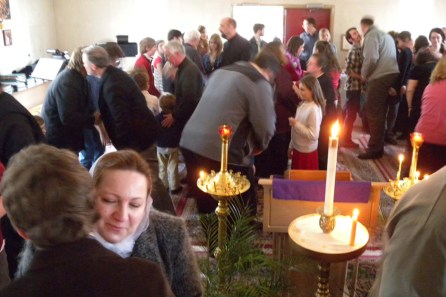
Today in the Orthodox Church we enter Great Lent with the Vespers of Forgiveness, when we also connect with many people we hardly know, on the ground of our fallen humanity. We admit with a bow and a kiss that we have sinned against them, whether we’ve ever spoken to them or have even seen them before. We exchange the words, “Please forgive me!” with each person in the service in turn, and each of us responds, “God forgives!”

Why? Because, as Elder Sophrony said, “Every sin, manifest or secret, committed by each one of us, affects the rest of the universe.”

I’m sure many of us find it difficult to comprehend, but going through this exercise every year will help us learn the truth in our hearts. Father Stephen Freeman helps, too, in passages like this:

The universe as an event of communion, a reality in which we literally participate, is quite foreign to the modern mind. The fiction of our radical individualism is an invention designed to promote the most irresponsible account of human freedom possible. It tells us that our lives “are our own,” and that we can act without consequences for anyone other than ourselves. “It is none of your business!” is the heart-cry of modernity. But this is simply not true.

We are born into everyone’s business and everyone’s business sets the stage and the very parameters of our existence. The language we speak, the thoughts we think, everything in our lives comes to us already burdened with the history and experience of the world around us. The saints treat this reality in the strongest possible sense. “My brother is my life,” St. Silouan says. By this, he does not mean simply that he cares strongly about his brother. He means it in its most literal sense. Not only is my own life not my own, but the life of the other is, in fact, my true life, or my true life certainly has no existence or reality apart from the life of the other.

Read the rest of the article: Why We Forgive

And if you are keeping Lent, I pray that through your efforts and God’s grace you and we all will grow in understanding of this life that we share. God bless you!

Seoul, Korea

*pictures found online

Pull your feet out of the muck.

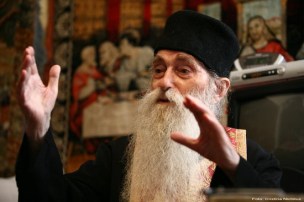
“You gain much for tomorrow by being spiritually down-to-earth today!  Don’t expect to have wings and fly, but get your feet pulled out of the muck, being mindful of eternal joy, and thus you will develop healthy wings that will keep you soaring aloft.  Let us be truly faithful and understand the importance and beauty of difficult days, and how precious today’s offenses and spitting will be one day!  At least now I choose the best method:  to keep silent and endure; I meditate seriously and conscientiously on the day of my life’s judgment.”
Eternity in the Moment: The Life and Wisdom of Elder Arsenie Papacioc

Dashing off downhill.

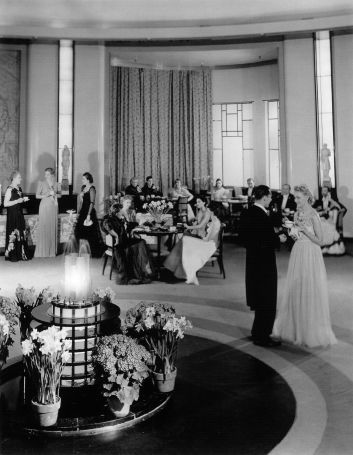
“There was an actress who wore a white dress with a circle cut in it just above her navel so that her skin could be seen, which looked very pink. Against the white, it was as if she had dropped a slice of ham on her lap; but it showed good feeling and willingness to think out new ways of pleasing.”

The actress appears at a party in New York, in the last pages of Cousin Rosamund by Rebecca West. At the end of the third novel in the Aubrey Trilogy, Rose is talking about her visit with her sister Mary to the United States during the Great Depression; West herself did visit many times, not as a musician but as a journalist and author. What she does in these books I think of as the best kind of historical fiction, the autobiographical kind; when I do my time travel I like to go about with a friend who knows the places and people well, who is observant, analytical, and attentive to every detail.

“Since the crash in America Mary and I were not offered nearly such good tours… but we could not keep away, and we felt a longing… to be with our friends again. They were so friendly and they were so violently engaged in life; being with them was like getting on a toboggan behind somebody one liked, putting one’s arms round them, and dashing off downhill over the spurting snow.”

“On the boat the American passengers told us stories of ruin, but with an upward, hopeful inflection that made them hard to consider: it was as if we were trying to look into the eyes of someone who wore brightly polished spectacles.”

“…these people spoke always of general ruin, which had not touched them yet but must, of this paralysis, spread further. They spoke too of prescriptions to end it, and showed themselves naked and newborn in their innocence, as unaware that blood ran in their bodies as they were of bandages and tourniquets.

“’They are like us when Papa went away,’ said Mary, as we drove home. ‘Do you remember how we talked about going into factories, we did not know which, and making enough to keep the house going?’

“’They are like us in other ways,’ I said. ‘They speak of the stock market as something that has an independent existence and sometimes gave them lots of money. It was their father, they are like us, they are gambled children.’”