Category Archives: quotes

A discipline in pleasure.

I’m in a good mood, because I cleared the driveway of weeds this morning, and brought sunflowers into the house. My foot feels all better, which had been slightly gimpy merely from wearing sandals instead of boots while gardening last week.

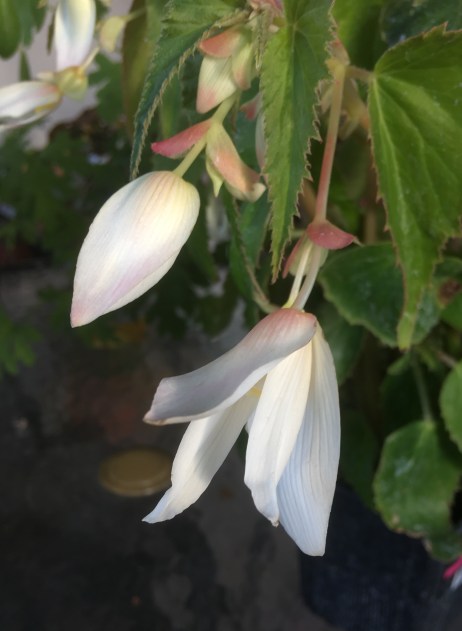
The Monarch caterpillars are thriving on giant leaves of the showy milkweed that I bring to them in their mesh cage almost every day. If they had hatched out on the spindly narrowleaf variety where Mama Monarch had laid the eggs, they’d have run out of food fast. I bought a new tropical milkweed plant when I went shopping for begonias last Sunday, but they don’t seem to care for its leaves. (At the bottom of the page is a milkweed I encountered in the mountains some years ago.)
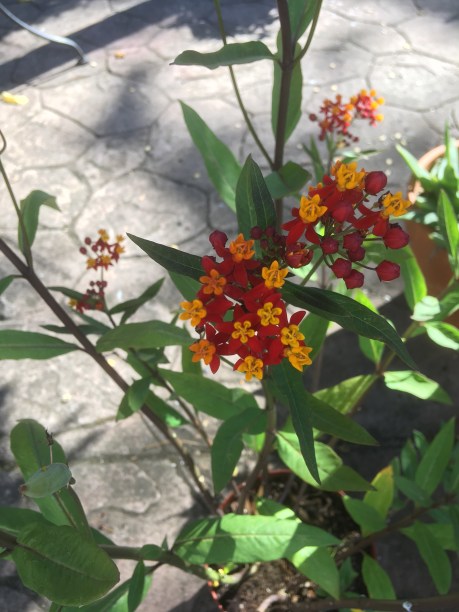
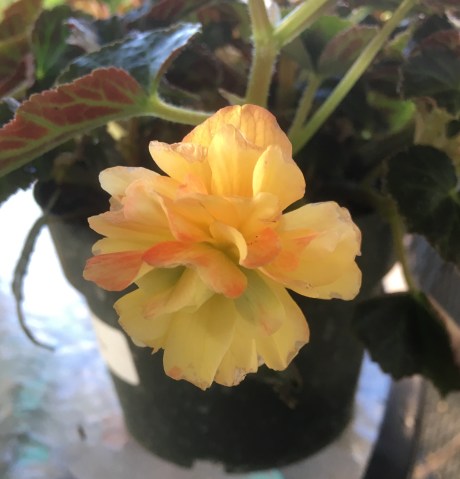
I’ve been too busy to write good sentences about All The Things. I am trying hard to learn to say NO to myself sometimes: “Remember, Dearest Self, you can’t do ALL the things ALL of the time!” Finally after four months, in the middle of which we think the city lost my application, we got the building permit for my remodeling project that I’ve been preparing for over the last year. It’s taking hours and hours to choose paint and cabinets and faucets and mirrors, and more time to watch caterpillars munch, so naturally there have been fewer hours with which to read, write, and cook.

I don’t know how to apply the principle that wise GKC is telling us about in this quote that I thought was simply lovely when I put it in a draft a while back. The word austerity doesn’t seem to fit with the way I behave, though pleasure and gratitude are the world I live in. I’d like to know what you all think about his twist on these qualities of our existence.


Purification and austerity are even more necessary for the appreciation of life and laughter than for anything else. To let no bird fly past unnoticed, to spell patiently the stones and weeds, to have in the mind a storehouse of sunsets, requires a discipline in pleasure, and an education in gratitude.

-G.K. Chesterton — Twelve Types (1903)


Love like the sun.

“Man is worthy of being loved just because he’s in the image of God. It doesn’t matter at all if he’s good or bad, moral or sinful. Man is worthy of being loved for what he is. Christ loved and sacrificed Himself for sinful, corrupt people. ‘I came not to call the righteous, but sinners to repentance’ (Matthew 9:13).

“We should be the same way: we should love everyone without making any distinctions. Just like the sun rises on everyone, intelligent and unintelligent, good and evil, beautiful and ugly, our love should be like the love of God – love that’s like the sun and shines on His whole creation without making distinctions.”

+Saint Paisios

(Quoted in The Gurus, the Young Man, and Elder Paisios by Dionysios Farasiotis.)

Echoes of harmonies and blisse.

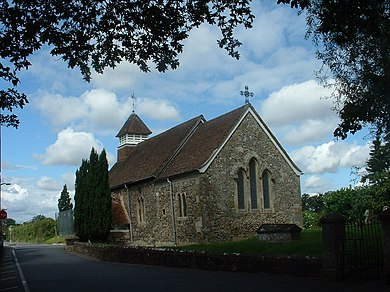
St Andrew’s Church in Bemerton, Wiltshire

This is the church where George Herbert served as rector for a only a few years before his death at the age of 39. He was born in Wales in 1593, into a wealthy and powerful family. The poet John Donne was his godfather, which was surely an important role, as his father Richard died when George was three years old. After his university education he held posts at Cambridge, was briefly a member of parliament, and held the clerical post of prebend.

But it wasn’t until 1629 that he decided to enter the priesthood and was appointed to the parish where “he lived, preached and wrote poetry; he also helped to rebuild the Bemerton church and rectory out of his own funds.”

He knew he was dying (of consumption); it was in that last year of life that he sent all of his poems to his friend Nicholas Ferrar, asking him to publish them if he thought they were good for anything. He said that they held “a picture of the many spiritual conflicts that have passed between God and my soul, before I could subject mine to the will of Jesus, my Master.” Commenting on George Herbert’s religious poetry later in the 17th century, Richard Baxter said that the poet “speaks to God like one that really believeth in God, and whose business in the world is most with God. Heart-work and heaven-work make up his books.”

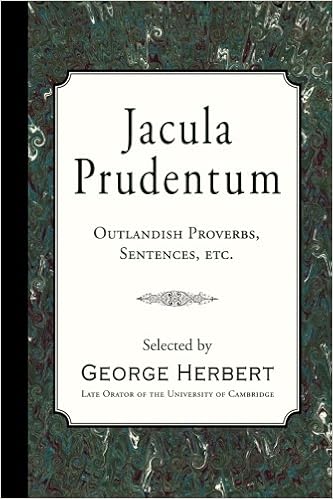
His prose works include a volume of nearly 1200 “outlandish proverbs” that he collected, and which is currently available on Amazon. That’s one that looks interesting to me, too.

Charles Cotton described George Herbert as a “soul composed of harmonies,” and it seems that he was also a skilled lutenist and composed hymns. More than ninety of Herbert’s poems have been set for singing over the centuries by composers like Benjamin Britten, Henry Purcell, and Ralph Vaughan Williams. When I read that the Wesley brothers adapted a few dozen for the Methodist hymnal, I checked out our family’s inheritance of hymnals from Methodist and Presbyterian churches but only found one attribution to Herbert.

But I do have a collection of his poems. I’ve shared other works of this poet; now here is one that I only recently noticed, whose echo-dialogue and themes I like very much. I found online a thorough exploration of the poem by Inge Leimberg, who tells us that “In Herbert the three themes of death, being restored from death, and spiritual vision are closely bound up with music and poetry (which to Herbert are one and the same).” I haven’t finished reading her essay, but I did catch one example of the layers of meaning he was famous for; “holy leaves” likely refer not just to leaves, but also to pages of the Bible.

One friend was of the opinion that Herbert would be singing his melodies with the angels in heaven, and I wouldn’t be surprised if the angels do join in with this harmonious and persevering soul.

HEAVEN

O who will show me those delights on high?
Echo.         I.
Thou Echo, thou art mortall, all men know.
Echo.         No.
Wert thou not born among the trees and leaves?
Echo.         Leaves.
And are there any leaves, that still abide?
Echo.         Bide.
What leaves are they? impart the matter wholly.
Echo.         Holy.
Are holy leaves the Echo then of blisse?
Echo.         Yes.
Then tell me, what is that supreme delight?
Echo.         Light.
Light to the minde : what shall the will enjoy?
Echo.         Joy.
But are there cares and businesse with the pleasure?
Echo.         Leisure.
Light, joy, and leisure ; but shall they persever?
Echo.         Ever.

-George Herbert 1593–1633

A sense of enduring harmony did not abandon him.

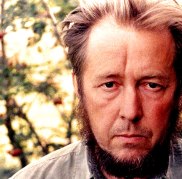
Today we remember the death of Aleksandr Solzhenitsyn (1918-2008). Below are a couple of paragraphs from his comments on the idea that “beauty will save the world,” from the website of the Intercollegiate Studies Institute:

“One artist imagines himself the creator of an autonomous spiritual world; he hoists upon his shoulders the act of creating this world and of populating it, together with the total responsibility for it. But he collapses under the load, for no mortal genius can bear up under it, just as, in general, the man who declares himself the center of existence is unable to create a balanced spiritual system. And if a failure befalls such a man, the blame is promptly laid to the chronic disharmony of the world, to the complexity of modern man’s divided soul, or to the public’s lack of understanding.

“Another artist recognizes above himself a higher power and joyfully works as a humble apprentice under God’s heaven, though graver and more demanding still is his responsibility for all he writes or paints—and for the souls which apprehend it. However, it was not he who created this world, nor does he control it; there can be no doubts about its foundations. It is merely given to the artist to sense more keenly than others the harmony of the world, the beauty and ugliness of man’s role in it—and to vividly communicate this to mankind. Even amid failure and at the lower depths of existence— in poverty, in prison, and in illness—a sense of enduring harmony cannot abandon him.”

-Aleksandr Solzhenitsyn