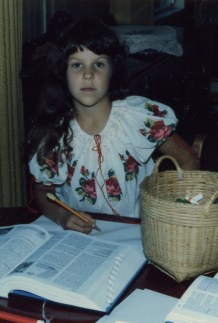
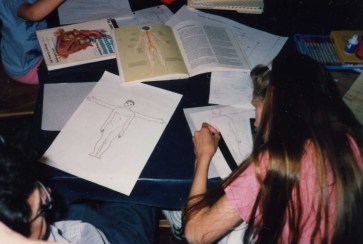
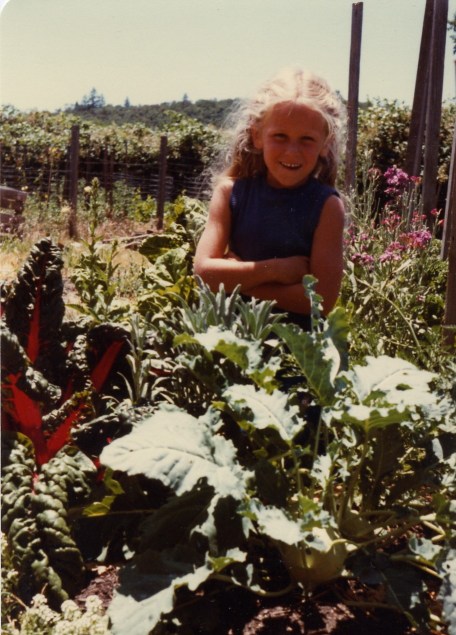
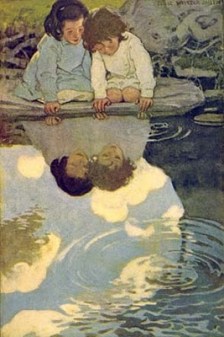
 We’re coming to the end of what is the “school year” for most families, and often thoughts are on what options will be best for the children next year. I offer excerpts from what I found to be a very encouraging article, for all of you loving and diligent parents out there! (And pictorial “excerpts” from the lives of homeschoolers I’ve known. 🙂 )
From “Easy Burden” by Graeme Hunter in Touchstone Magazine, Sept/Oct 2012 issue:
“Homeschooling is only countercultural because our culture is suicidal. Homeschoolers stand for what our culture was when it was serious about living . It affirms our Christian tradition, our Christian morality, and our highest cultural achievements. To affirm such things today is countercultural only because our culture has turned its face to the wall.”
 “…No doubt there are conservative and conscientious redoubts here and there in the bleak landscape of public schooling, but if it seems to you that your child is being transformed for the worse by attending school, you are likely correct.
“Here are some reasons why:
“First, education means struggle and achievement, but schools are egalitarian. Achievement presupposes discipline, but schools shun discipline, and pretend students are high achievers no matter what they do.
“Second, children arrive in the world as bundles of impulses and desires. Part of education is to teach restraint, a process known as civilization. Schools encourage pupils from the earliest years to act upon their impulses and to be, in the jargon of the education industry, ‘spontaneous.’ Schools are therefore the enemies of civilization.
“Third, one of the finest fruits of education is to become a discriminating person, able to tell good from bad, whether it be in art, in political proposals, or in human conduct. Schools treat discrimination as the only mortal sin.

“‘The wrong of unshapely things,’ says the poet W.B. Yeats, ‘is a wrong too great to be told.’ He explains that when we fail to cultivate discrimination in ourselves and others, we  wound the entire human community. Real educators see something beautiful in us, and long to bring it into the light. Yeats calls it an ‘image that blossoms, a rose in the deeps of his heart.'”
“…When we homeschooled, there was a cross to be borne each day, but family life was a delight to us, education was thrilling for pupil and teacher alike, and we had joy in our family that has not diminished even now that our children are grown.
“Furthermore,  none of the dire consequences predicted came to pass. Our children are well-adjusted. They love God, and they love life. And they are doing well enough in life, even as the world measures these things.
“Homeschooling did not bankrupt us. How could it? We invested our talents in the children God gave us, and the investment paid off a hundredfold.”
“….The road, then, is cruciform, but the yoke is easy and the burden is light. Homeschoolers: seize the day!”
–Graeme Hunter


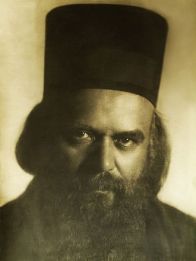 “Turn your cares into prayers and you will change ice to flowing water.”
 Gladsome Lights