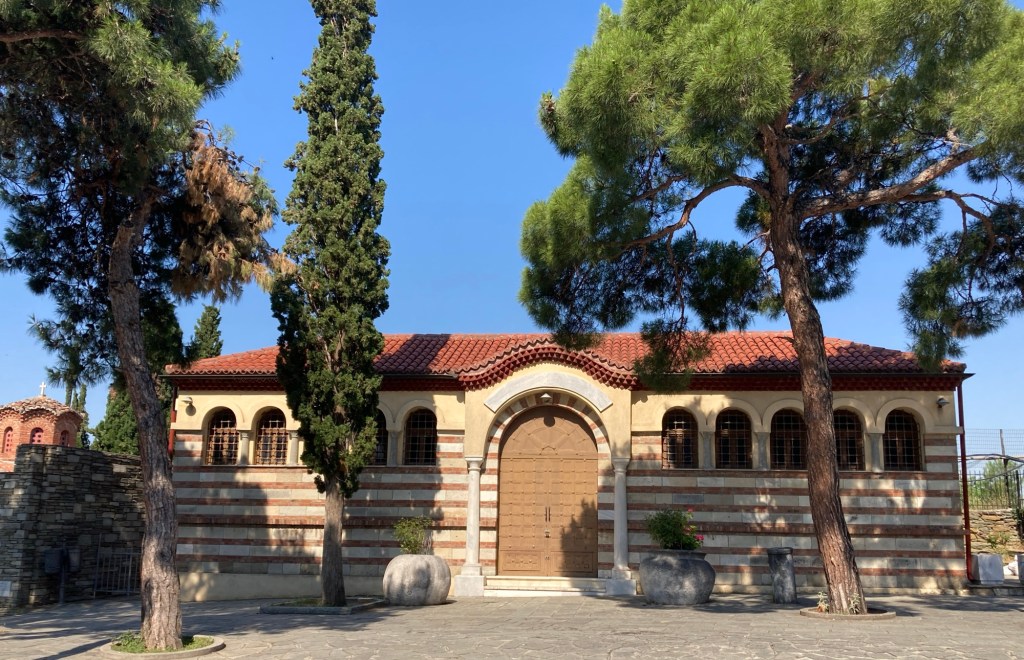
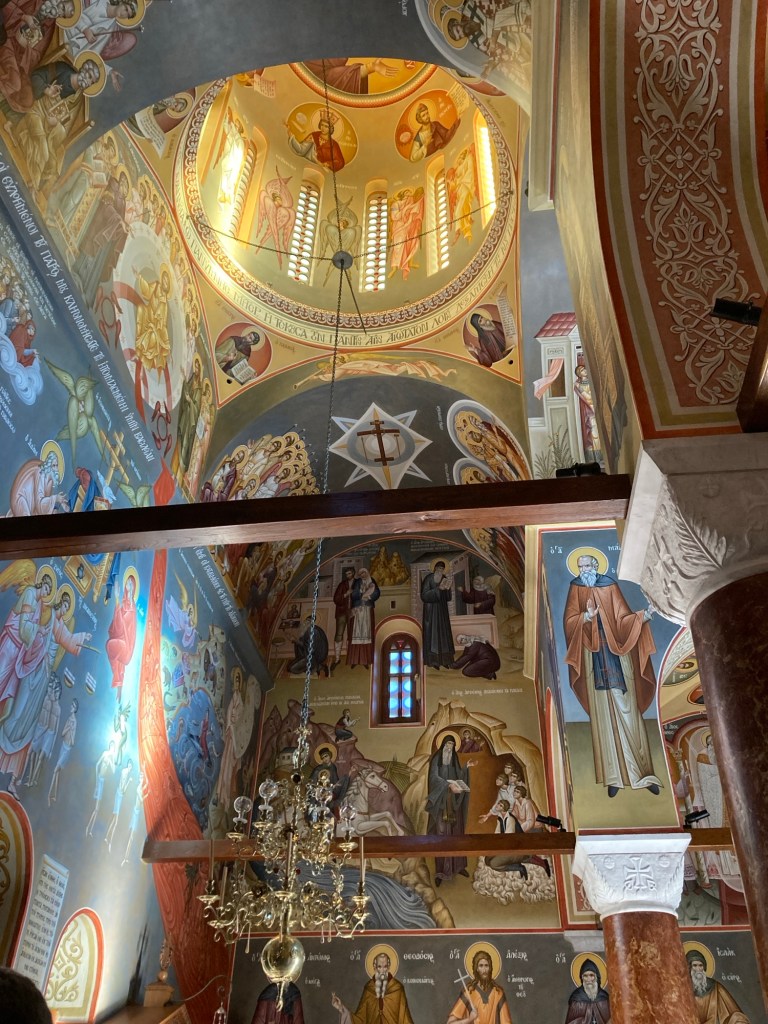
The Metropolitan Church of St. Gregory Palamas is very close to my hotel, and it houses the relics of St. Gregory, who was Archbishop of Thessaloniki from 1350 to 1359 A.D. I really appreciate St. Gregory and for months I’ve been looking forward to visiting his church.
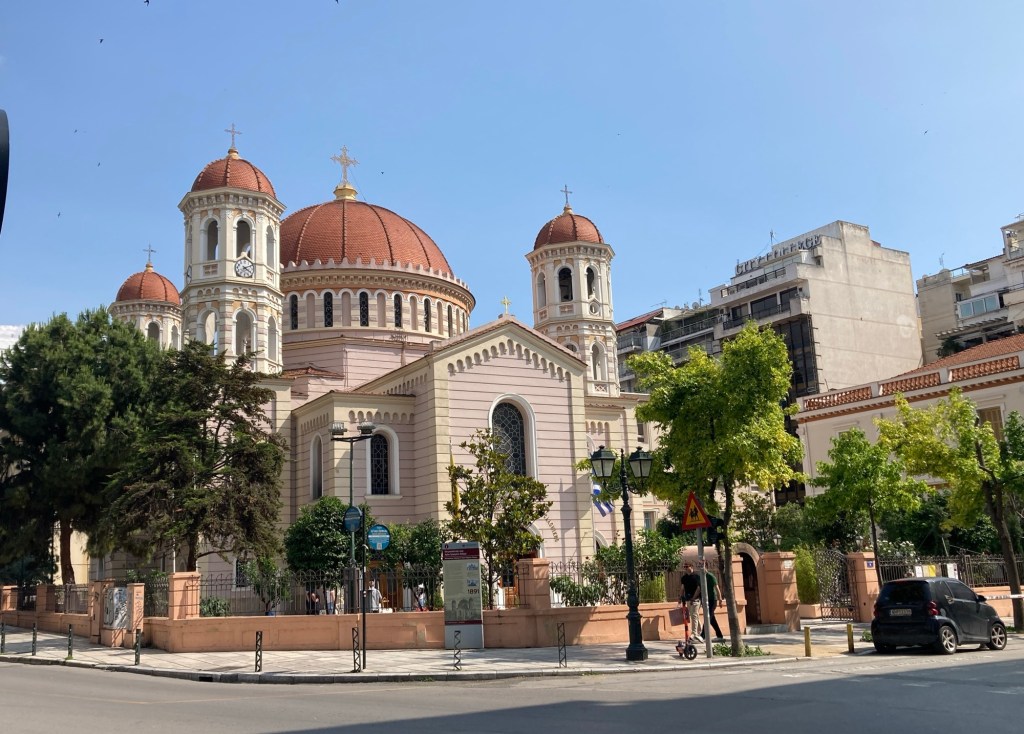
I’m devoting an entire post to the subject because of the relationship of this particular site and temple to other churches in the city, and because of its unique role during the 400 years of Ottoman rule.
It was built in the 13th and 14th centuries and originally was dedicated to the Virgin Mary, but after the Ottoman conquest of the city in 1430, and the conversion of St. Demetrios Cathedral into a mosque in 1491, this church was re-christened after that saint, who is the city’s patron. After the (Rotonda) Cathedral of St. George was also converted into a mosque in 1591, and this temple remained a place of Christian worship, it was designated the cathedral church of Thessaloniki.

The Greeks rose up against Ottoman rule at various times over the centuries; during the revolution of 1821, hundreds of Thessalonians sought refuge in the church, but the Ottomans broke down the doors and massacred them.
The building was entirely destroyed in a fire in 1890, and fully rebuilt by 1909. By the time it was consecrated, the old St. Demetrios church was functioning as a Christian church again, and that’s when the newly rebuilt church was dedicated to St. Gregory Palamas, in 1914. Later in the 20th century it had to be repaired after an earthquake damaged it.
I often think of how buildings have lives. A building that is consecrated for worship has a particular “calling,” if you will, and is often a revered member and bedrock of the community. The Church of St. Gregory Palamas has served for 700 years, and during those centuries has suffered from earthquake, fire, and sword.
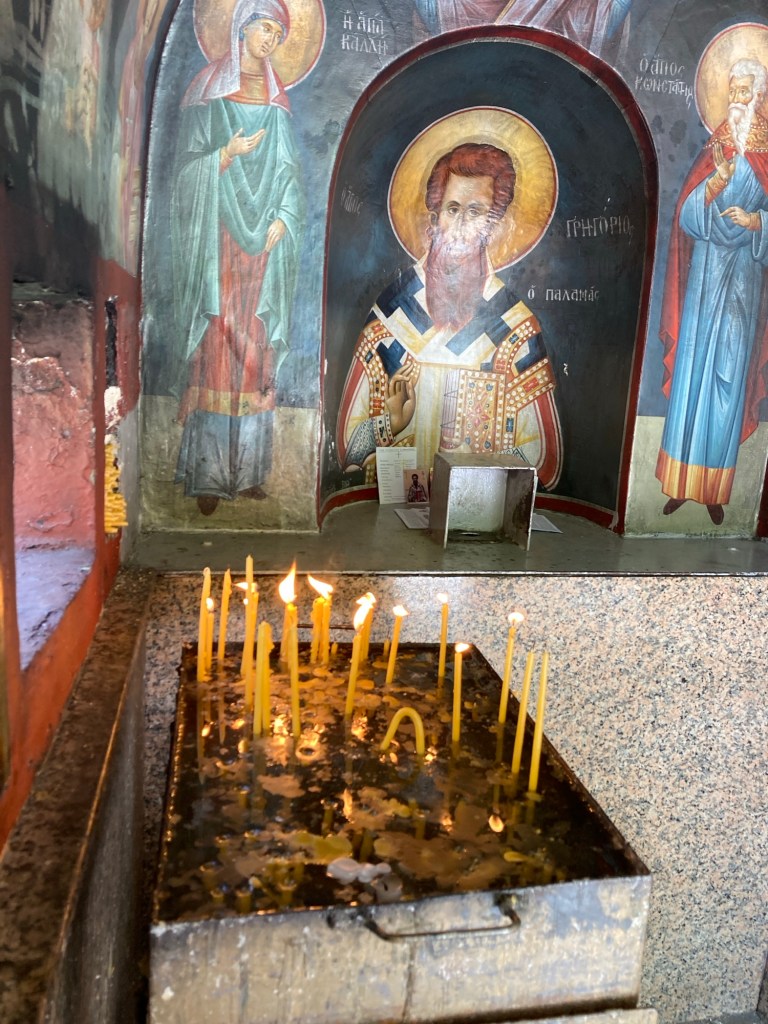
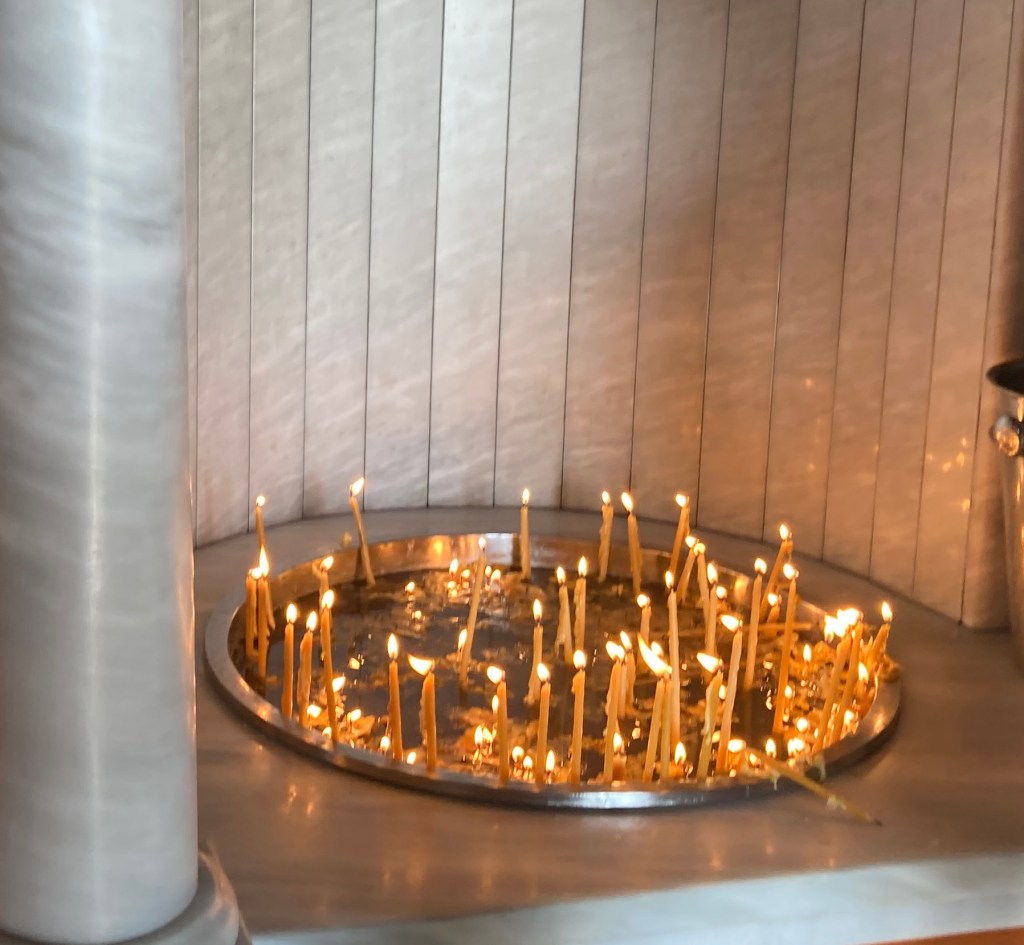
Today when I walked past, I stopped at the little booth shrine outside by the street, where candle fires were symbolizing a whole lake of prayers (sorry about the glare on the face of the icon):
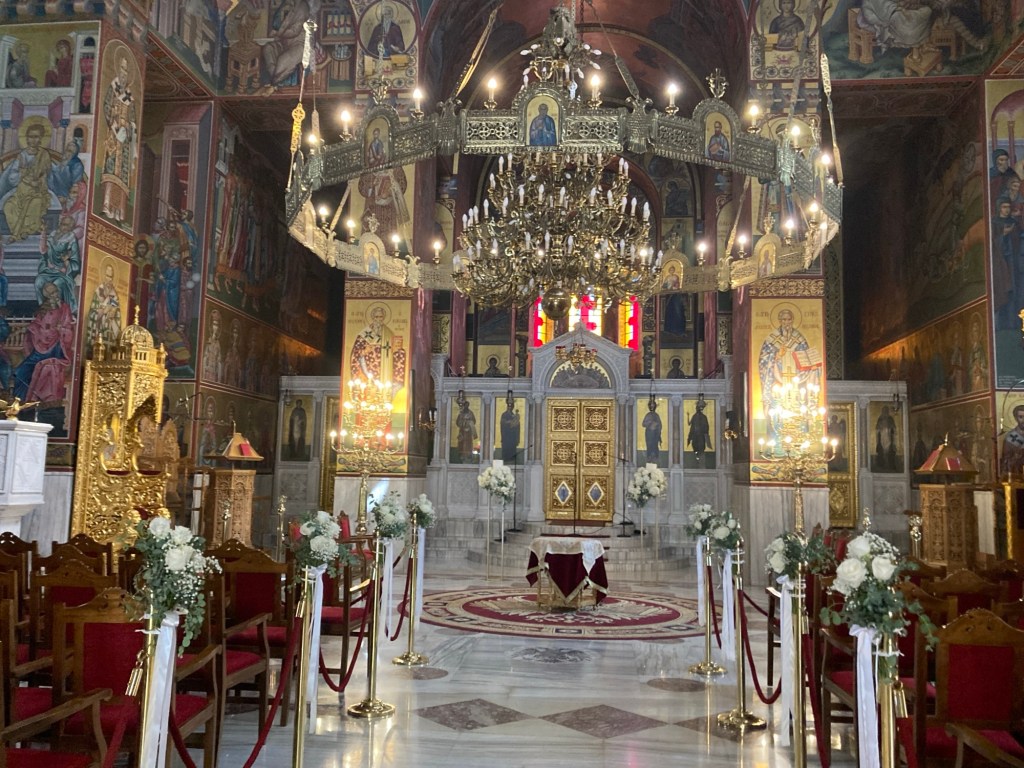
The last fifty years — such a brief span of time in the context of this city — seem to have been peaceful, and if the temple were sentient, it would no doubt be happy that it’s one of the most popular churches in Thessaloniki for weddings. The first day I stopped in, they were getting ready for such an event.
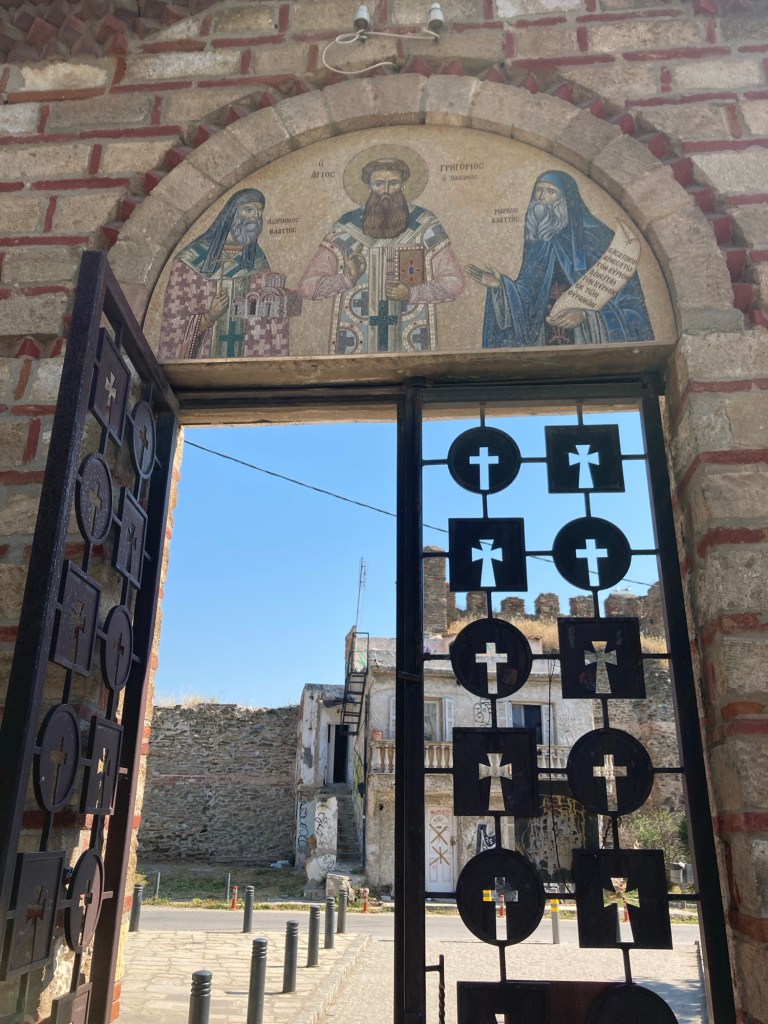
But the presence of the relics of St. Gregory, deposited there in 1914 when the church was dedicated to him, are the greatest blessing to the temple and the people.

May the Lord continue to make His temple a blessing to the city of Thessaloniki.



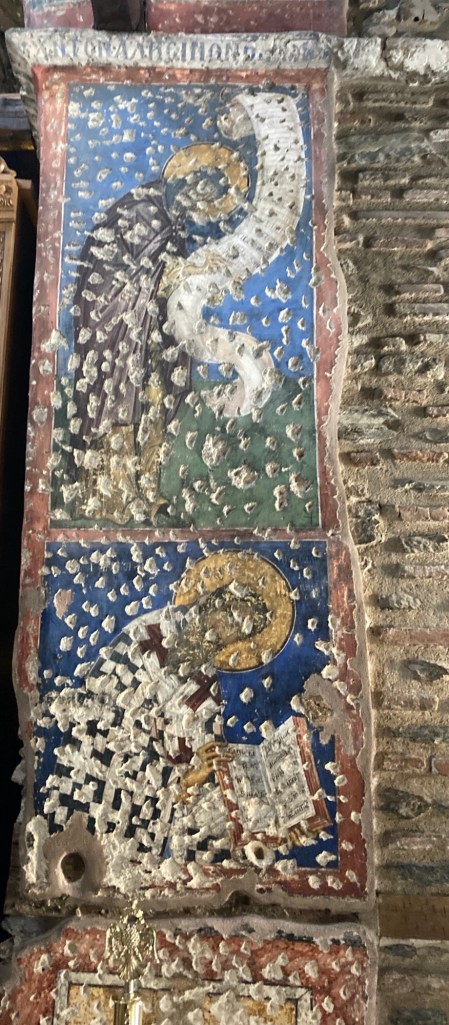

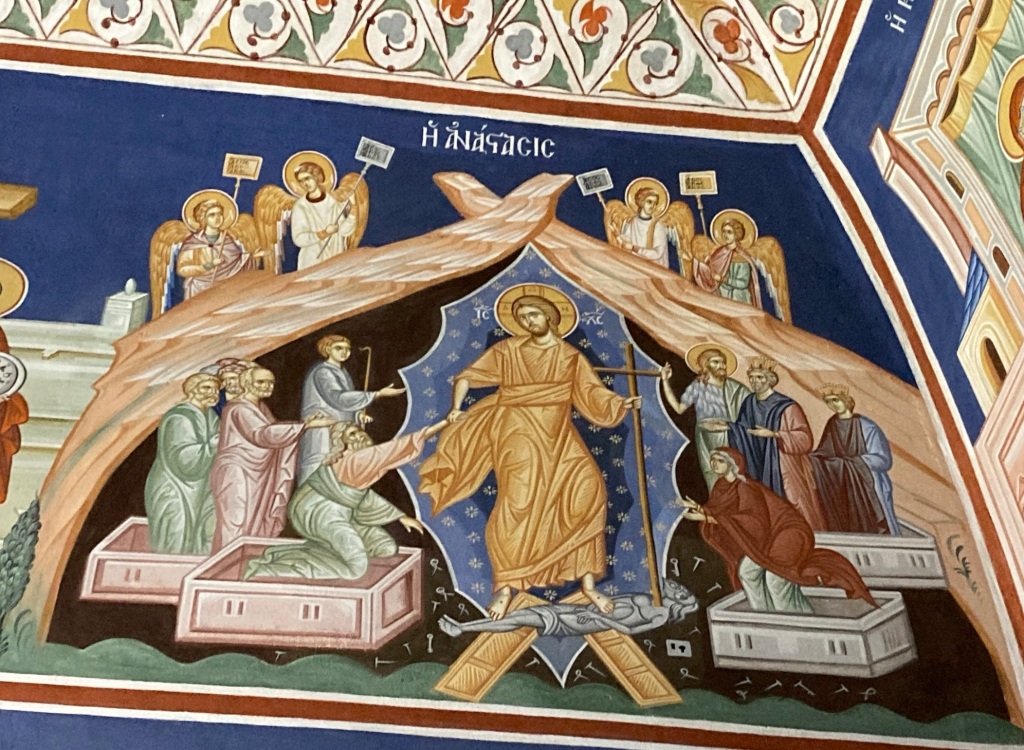
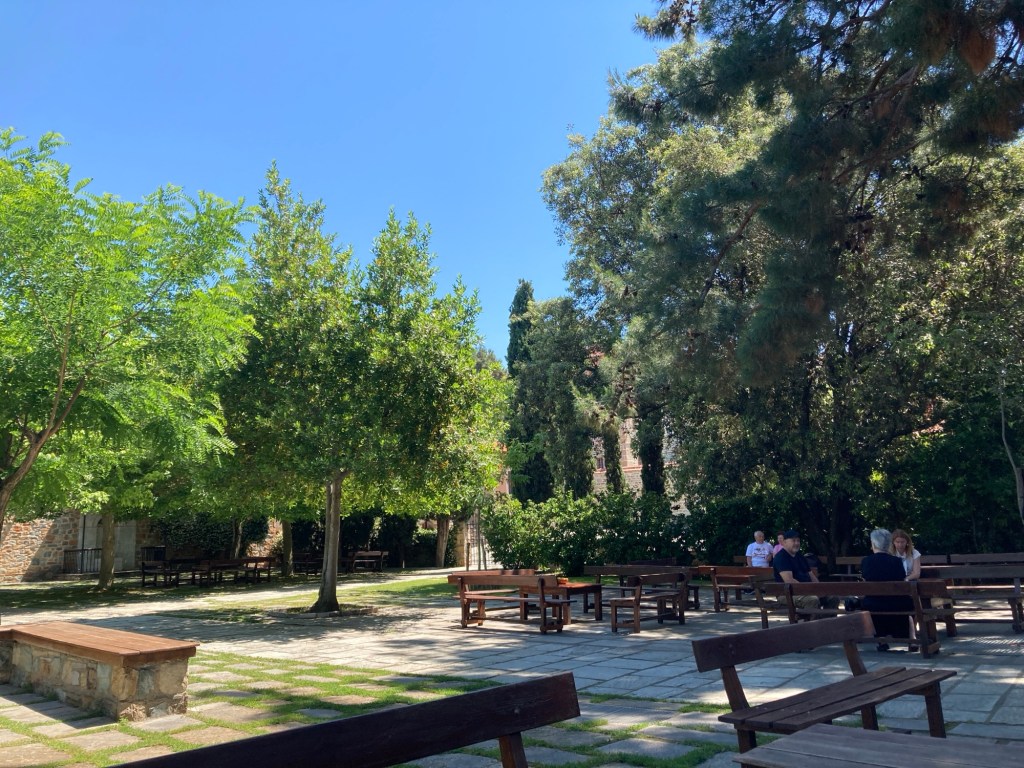


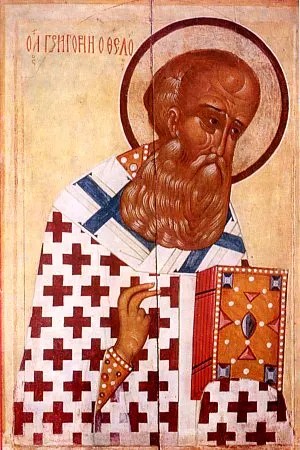 St. Gregory Nazianzus (or Nazianzen), also known as St. Gregory the Theologian, is one of the Three Holy Hierarchs of the Orthodox Church, along with St. Basil the Great and St. John Chrysostom; and one of The Cappadocian Fathers, along with St. Gregory of Nyssa and St. Basil the Great (of Caesarea). He has been called The Trinitarian Theologian, and you can read a snippet of such theology below. I was intrigued by his also being called The Minstrel of the Holy Trinity, evidently because of his poetic style, and spiritual poetry. I will be looking more into that.
 “The result is that though there is numerical distinction, there is no division, there is no division of the substance. For this reason, a one eternally changes into a two and stops at three — meaning the Father, the Son and the Holy Spirit. In a serene, non-temporal, incorporeal way the Father is parent of the ‘offspring’.”

