Category Archives: trees

Delicious autumn recipe.

The air was still cool, but the sun was already drawing the smells out of all the plants along the bike path when I walked along the creeks this morning. We had rain the last couple of days, so the leaves and grasses that have been drying to a crisp got washed and mixed into a good kind of stew.

My first impression, though, was auditory, the sound of ducks, and crows, and Canada geese, all commenting on the morning. Then a flash of silent white against the golden brown background, an egret, not squawking about anything, a quiet fisherman.
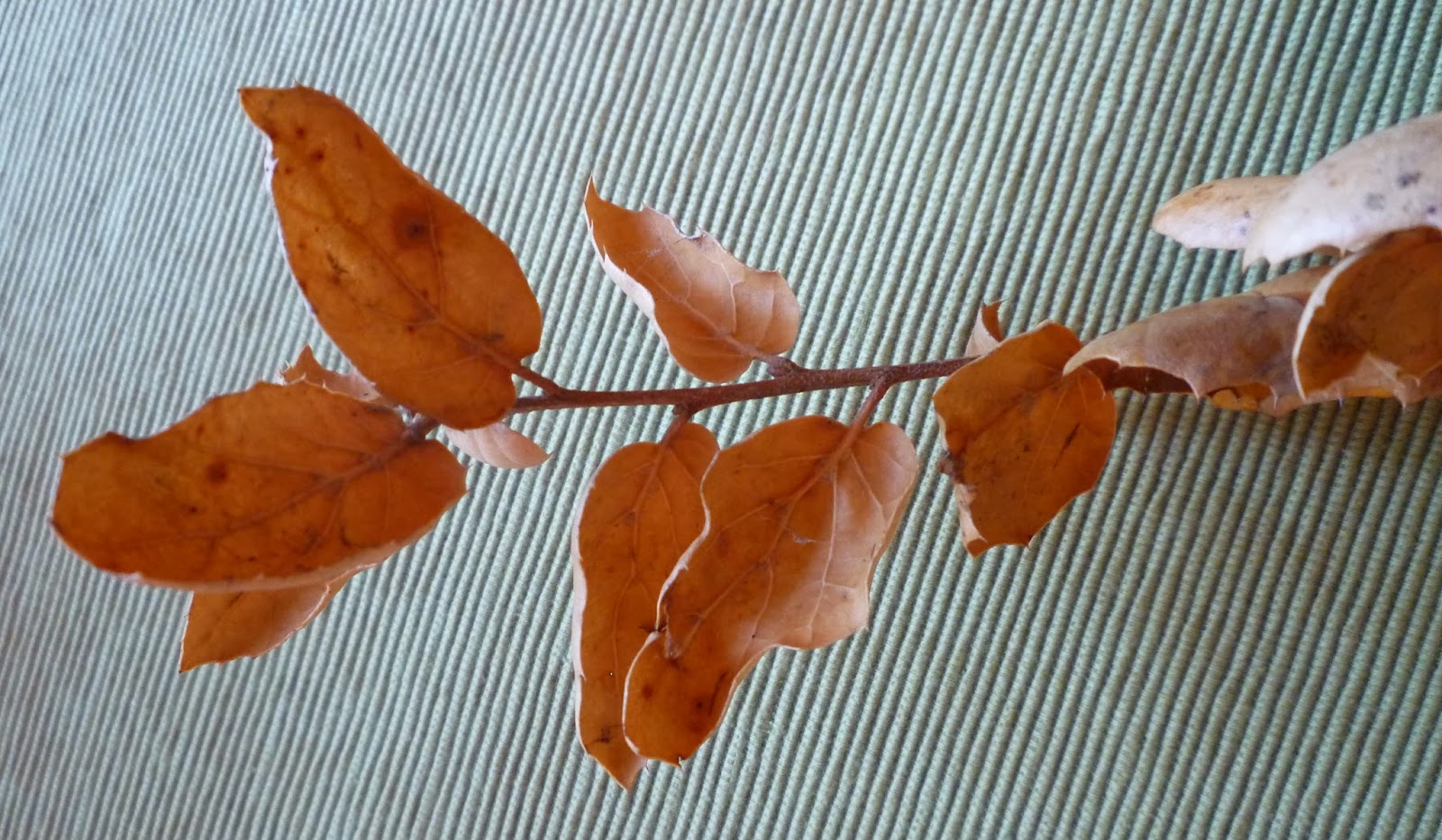
The paths are littered with piles of leaves, mostly brown now, like the live oak, which I was glad not to be sweeping off a patio. Their thorn-rimmed cups turn upside down and hold on to concrete surfaces for dear life. That last phrase will be my mnemonic from now on helping me to remember the name of at least one oak.

Mr. Glad wondered at my bringing home a redwood branch, when the tree behind us is dropping similar ones into our yard and pool every day and making hours of work for him to collect the prickly things. When you know you will have to retrieve each one from the bottom of the pool or the decking, it seems that the rich brown sprays are falling constantly, but the trees remain evergreen.

The little redwood cone is darling, isn’t it? Less than an inch.

I leaned over a bridge and breathed in the essences of a thousand bits of living things, carried in the air still moist from the rains, and stirred together by the breeze. The dominant herb in the mix was the wild fennel, fallen down heavy with water, dried brown and mildewed black, and in a tumbled mess with blackberry brambles and grasses and everything I don’t know the name of. The beauty that used to be visual is now distilled into heady scents.

It was reminiscent of an anisekuchen I have made at Christmastime, but the recipe for this nourishing treat includes a multitude of mysterious and essential ingredients. As I was whiffing my fill it seemed I would never want another bite of white-sugary anise cake or any kind of cake again — can’t I just run down to this creek bed and breathe? Oh, but it’s a seasonal dish, and you never know just how long it will be served. But come back tomorrow and something nice will be on the menu for sure!

Asian pear

We return to the secret Warners.

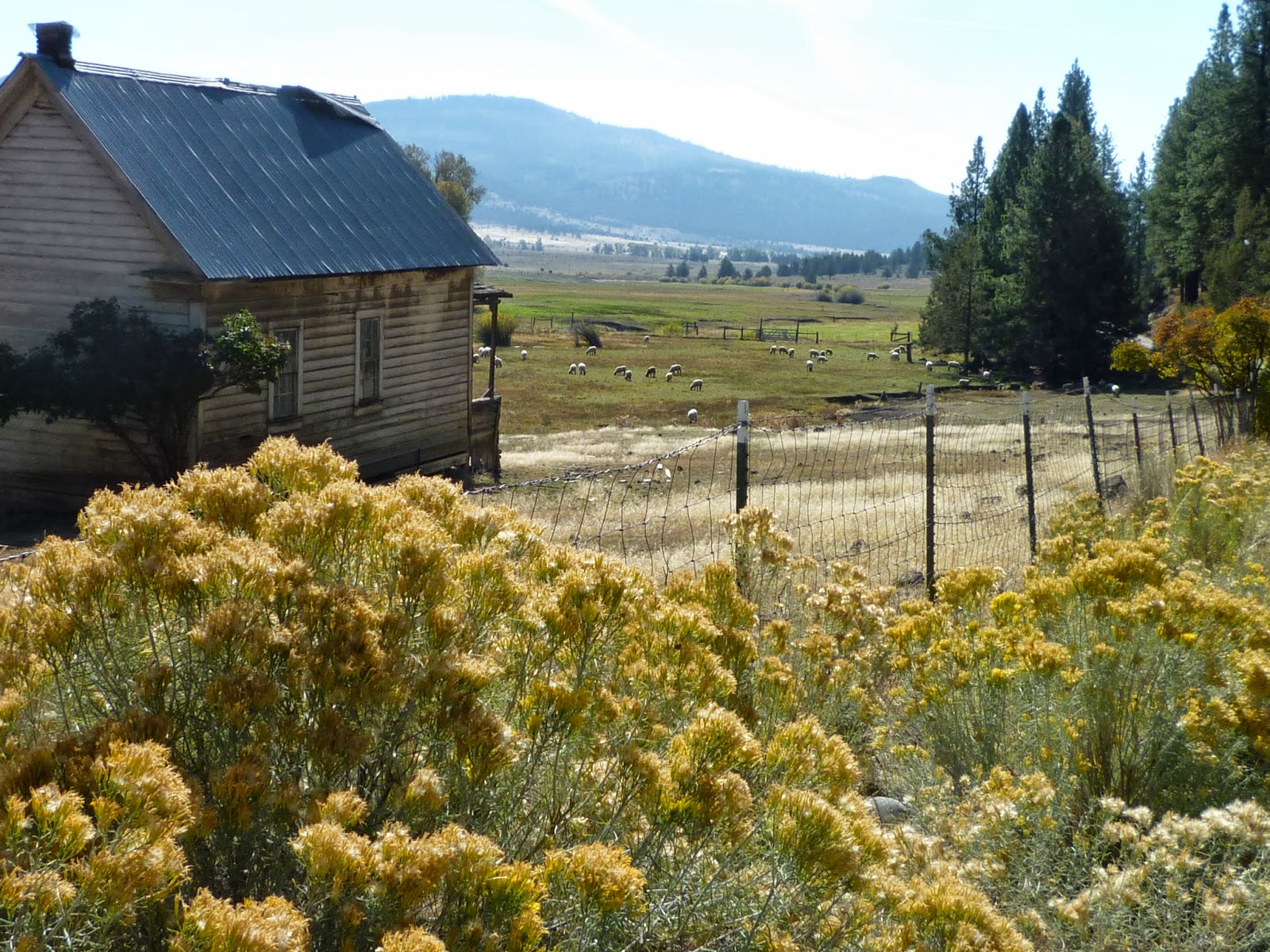
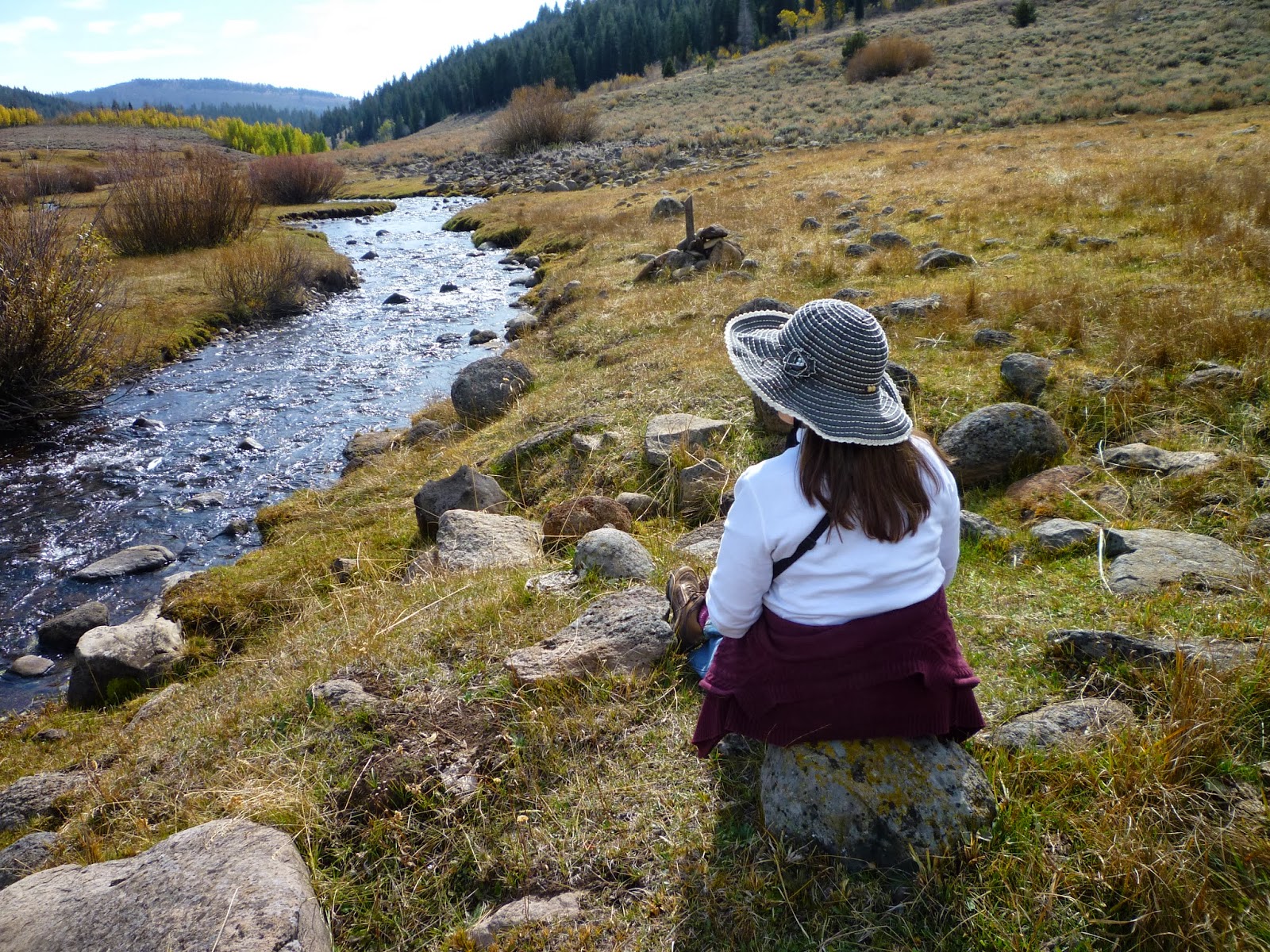
Jess Valley in the Fall

I was sitting on a log with my husband, in the middle of a tall forest. We were on our way back to the trailhead and not in a hurry to leave. “It’s so quiet,” I said. “You can’t hear a clock ticking, or a car on a road…”

“But you can hear pine needles falling on the ground,” said my companion.

That deep quiet is one of the things we love about the Warner Mountains and this whole corner of the state, Modoc County and much of Siskiyou County. You might go for several hours, as we did, and not see another soul.

“The Warner Range is not part of the Sierra Nevada range or the Cascade Range, but part of the Great Basin Ranges,” you will learn if you read the very short Wikipedia article on them. The Warners extend into Oregon, as you can see from the map at right.

This area is like a secret treasure. The forest and blue sky (we were hiking at over 6,000 feet elevation) seemed to belong to us alone. And it is true that few Californians have been here or even know anything about this hinterland.

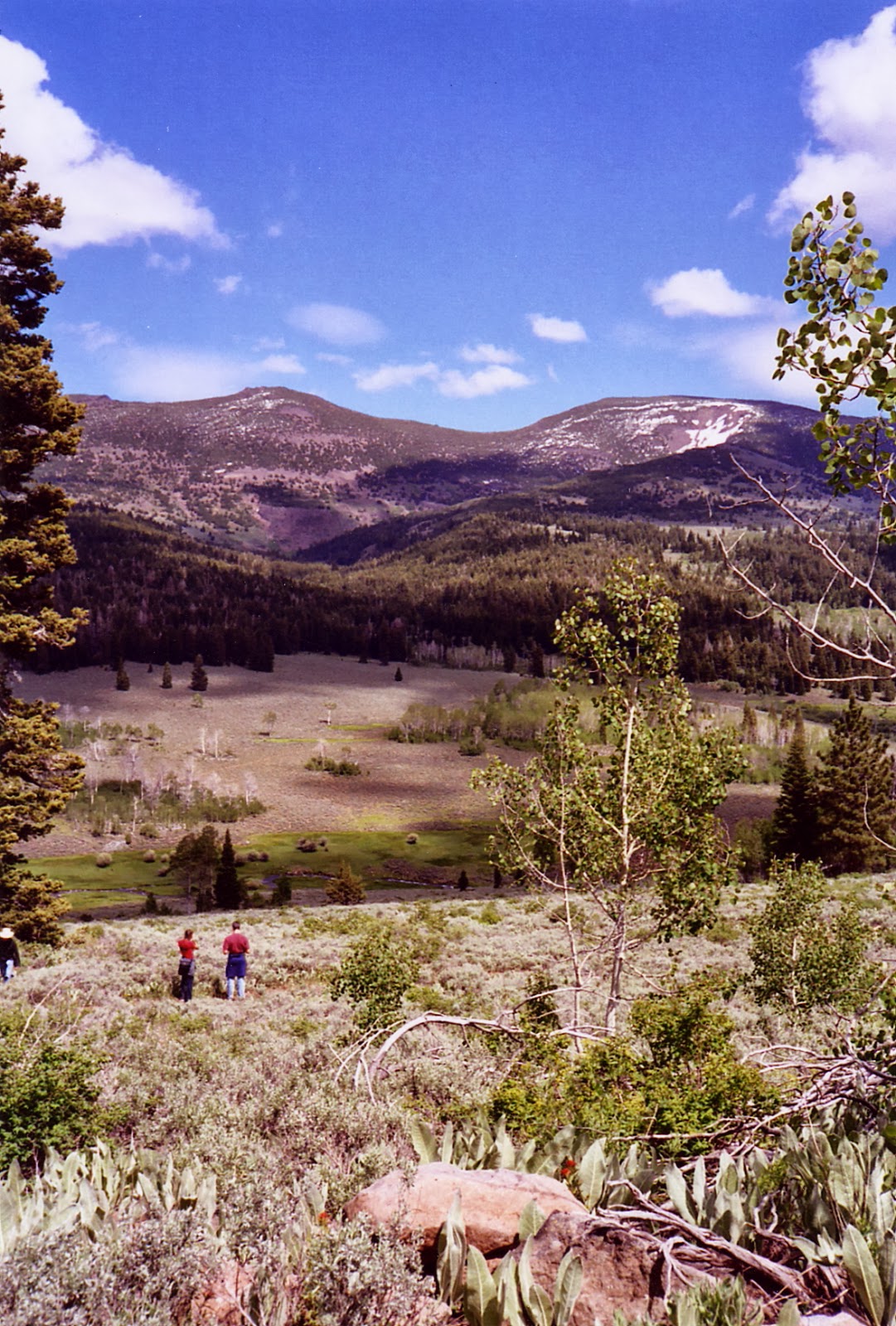
Warner view 2003

Ten years ago we came here for the first time, with some of our children, and camped in the summertime. We hiked on the same Slide Creek Trail, out of Soup Springs Campground. I’m posting some pictures of that visit, when the main difference in the scenery was the source of yellow highlights in the views. Earlier in the year it was fields of mule’s ears (Wyethia) that made the bright splashes, but now it is aspen trees turning color.

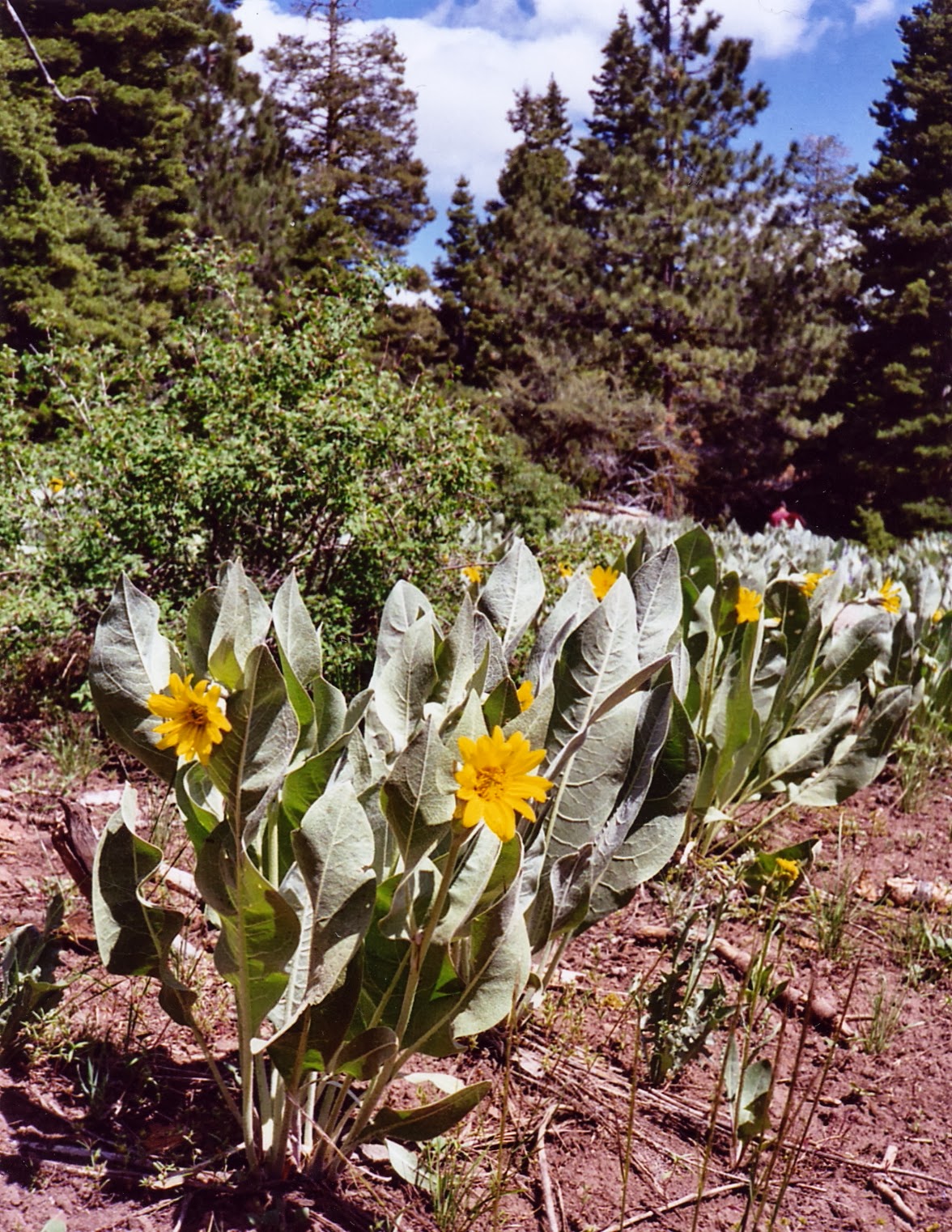
Mule’s Ears Summer 2003

The mule’s ears have thick leaves when they are green, and after they are dried up, before they lie down on the ground, they clatter sharply in the wind. The aspens make a more whispery noise.

Jess Valley 2003

In 2003 we had stopped in Jess Valley at the corner of Road 64, because the setting of the farms between mountain ranges was perfect for taking pictures. I recognized the spot when we went by and we stopped again for more.

The air is so clean up there, it makes you want to breathe deeply and refresh every cell in your body before you have to go down to the valley again.

by Mill Creek
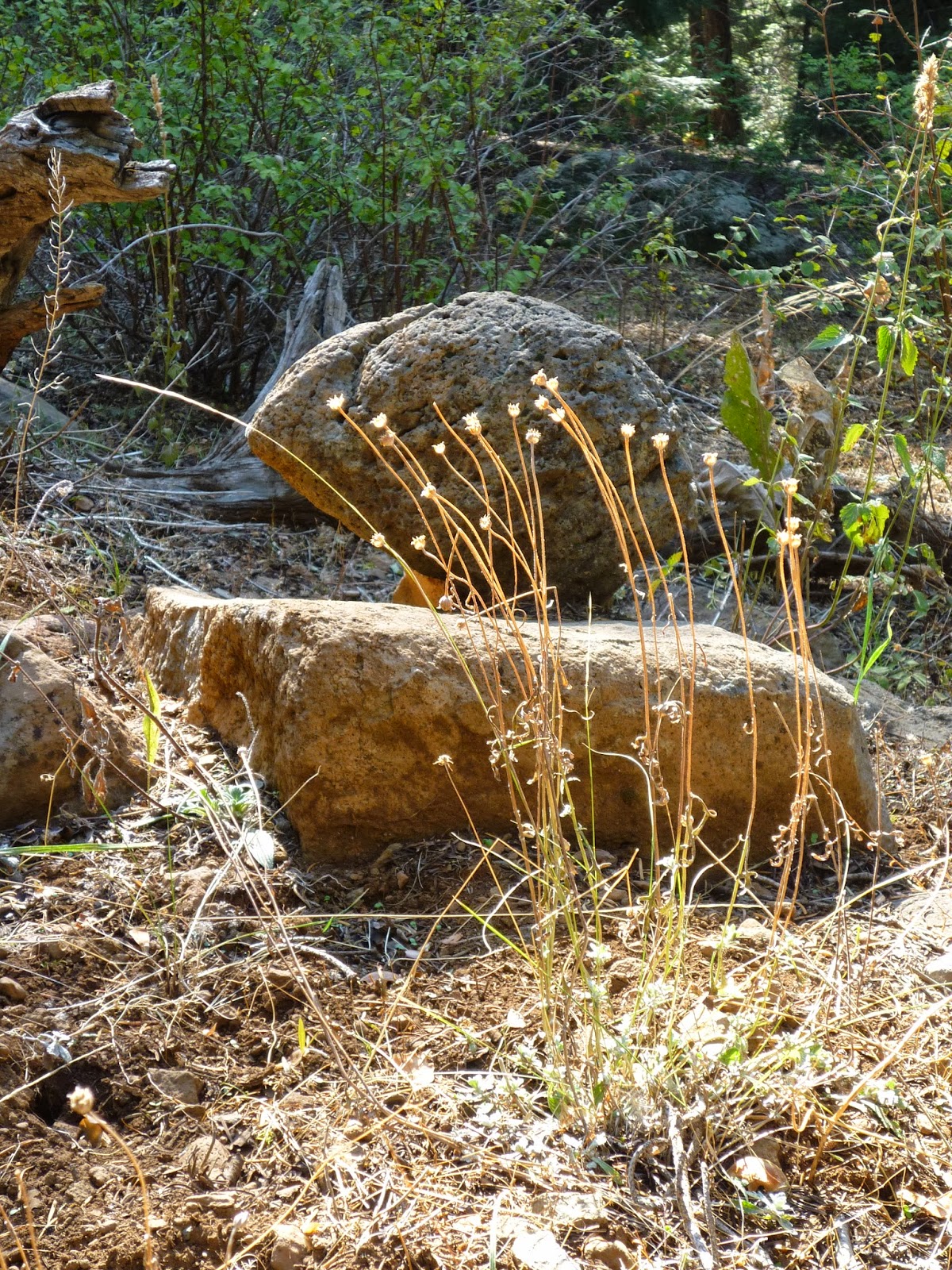
What the mule’s ears look like now

Our hike wasn’t the only thing worth remembering of last week’s trip, so I will try to write again soon on the culture and events of this out-of-the-way part of our fair state.

Two Glad girls by Mill Creek – 2003

I manage my forest.

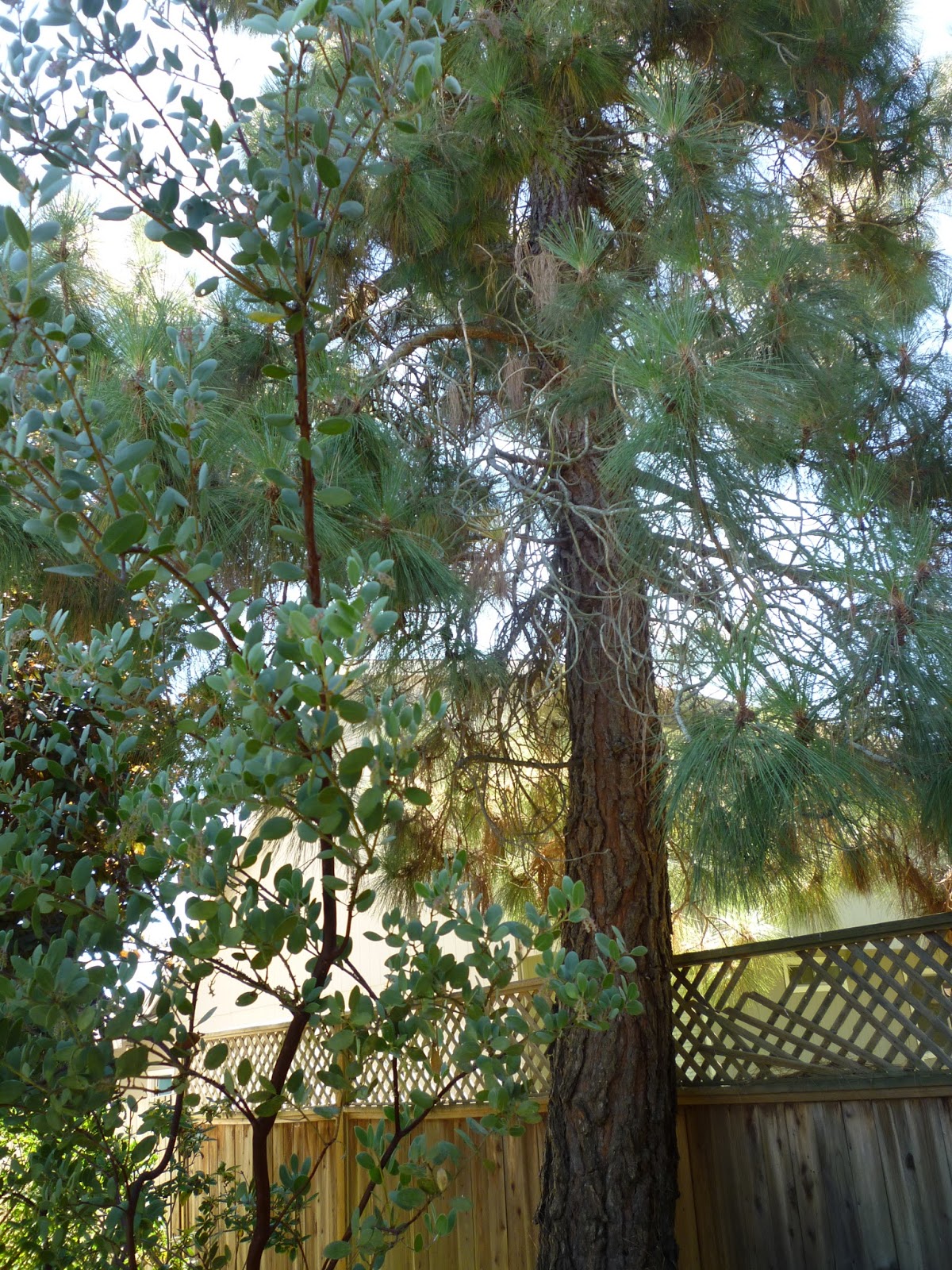
Manzanita in foreground

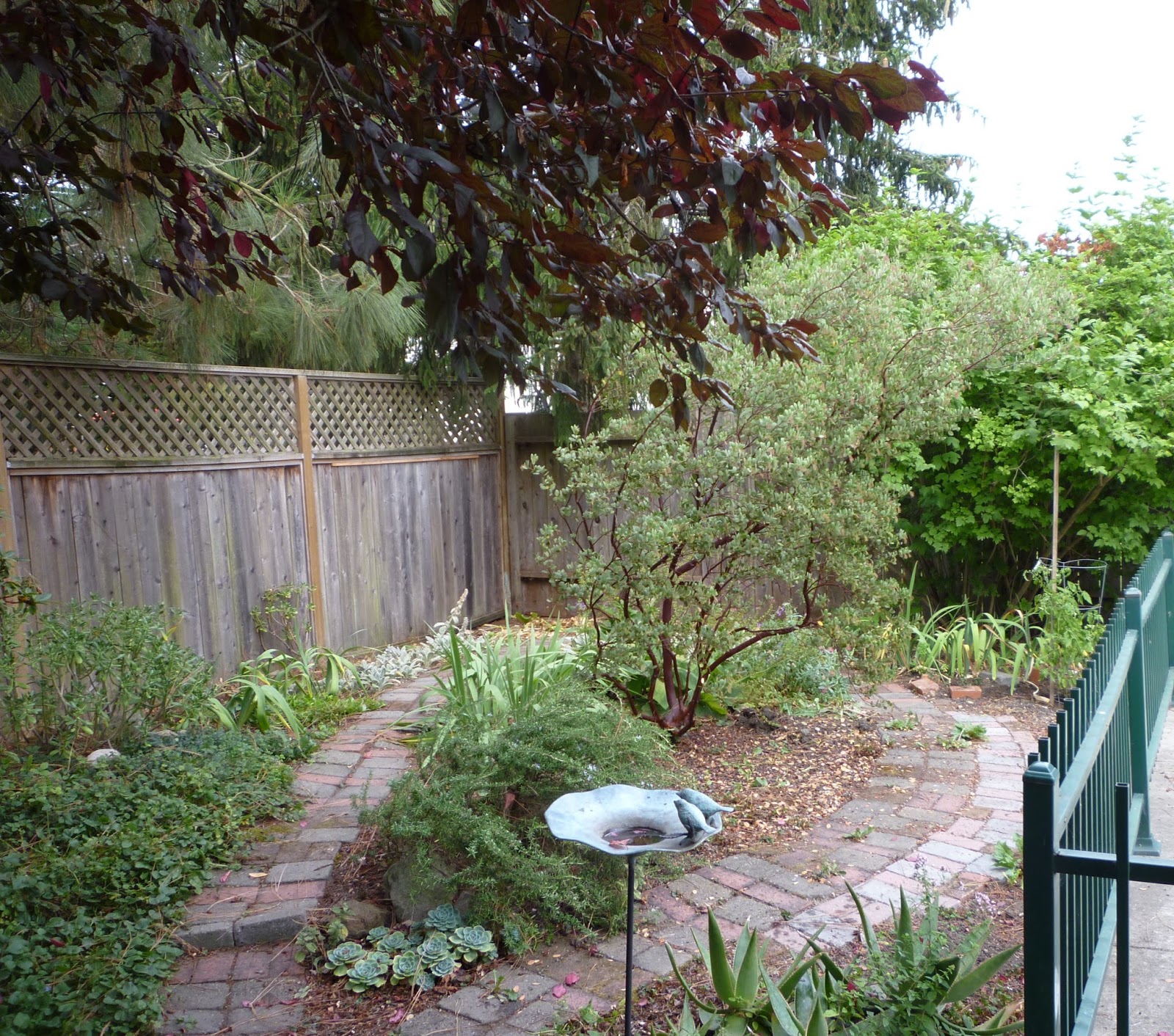
Several trees overshadow one half of our back yard and make it feel forest-y. Only two of the trees are actually on our property, and the taller is a pine tree we are ashamed to say we haven’t identified. I spend a lot of time picking up its needles that fall all year, blowing and drifting over sweet woodruff, rhododendron, rosemary, campanula ground cover, and on to my dear manzanita.

 
If I were a good forester would go out each morning and groom my park, but it’s painstaking work, as the long needles get tangled in the various convoluted branches and sift down underneath the lower canopies.

When I was stretching my back to this task yesterday it turned into a general tidying-up of the “woods.” I pruned the manzanita some more, trying to maintain head clearance above the path it wants to span. We’ve already widened the path as much as possible to accommodate our favorite little tree.

My other goal in trimming it is to keep the natural curves of the shrub, so I try to envision the direction of future growth. Ideally it wouldn’t need pruning at all, but when we planted it we didn’t anticipate its leaning so sharply northward. I removed dead twigs and every needle I could see.

Then it was all ready for a photo session.
That pine tree looks amazingly healthy in the photo at top, but in this one you can see some of the clumps of brown needles just waiting to fall.
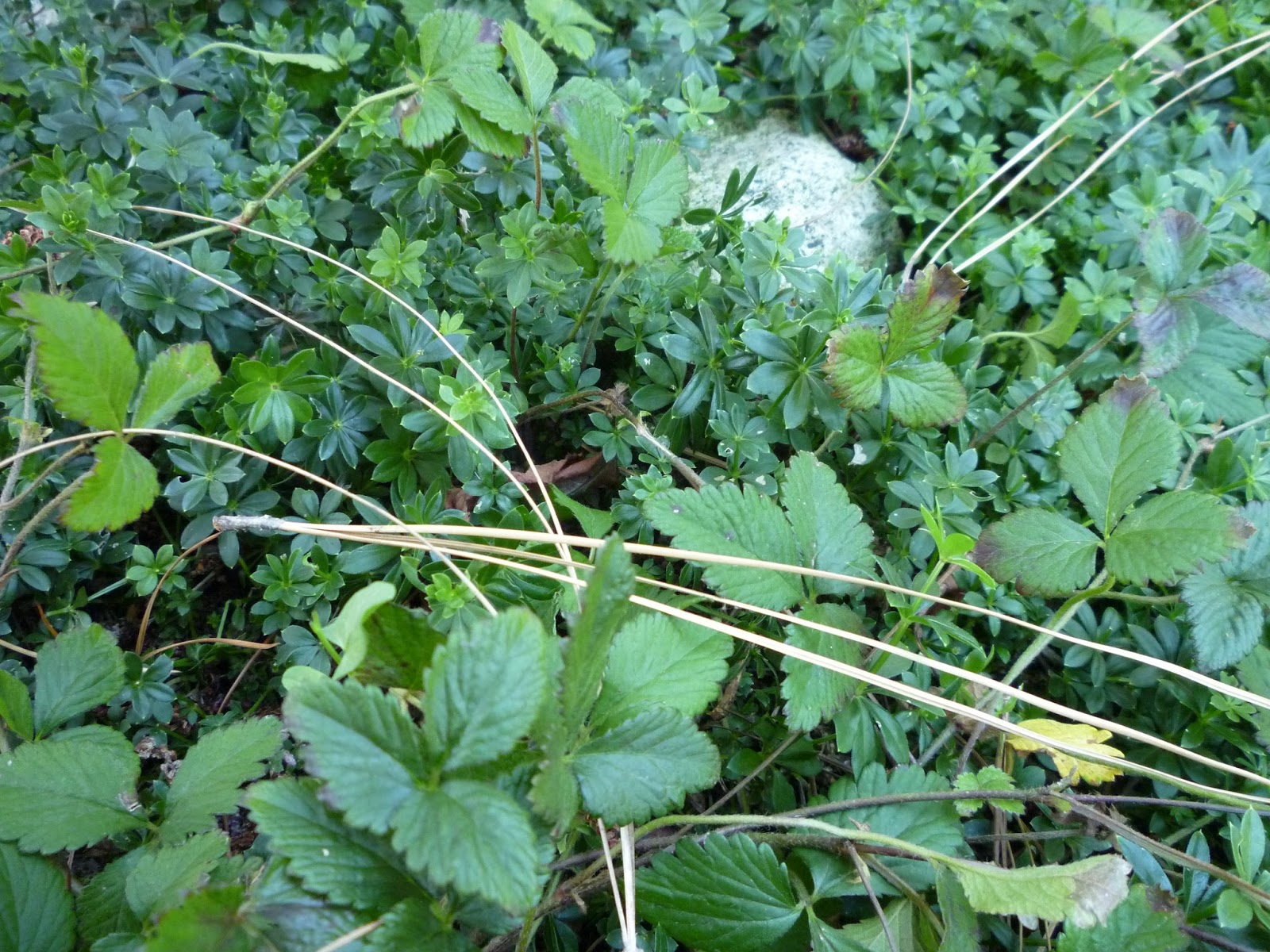
If we just focus in on one or two needles in a small space, they actually look artistically placed and ornamental.
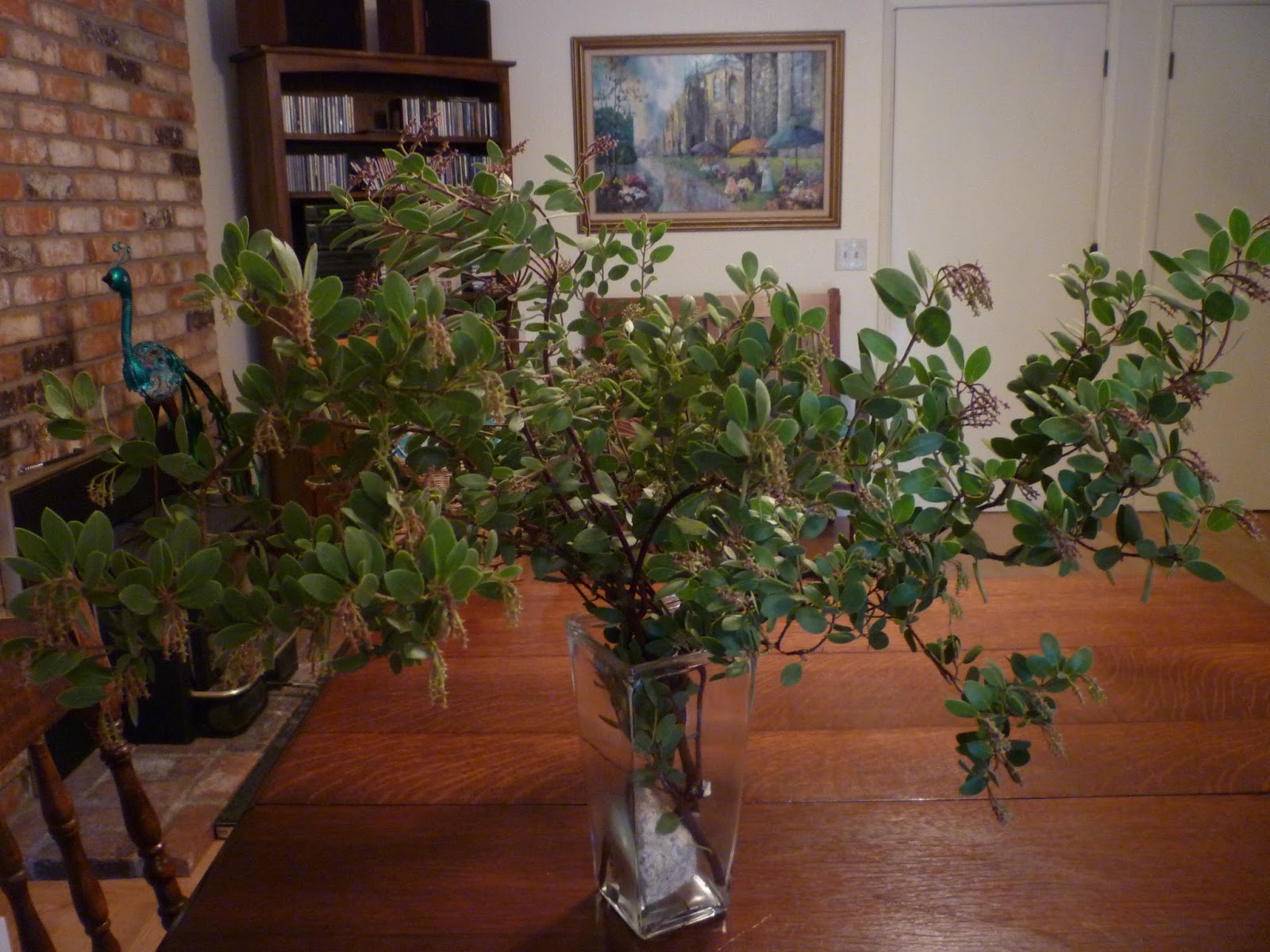
I brought the manzanita prunings indoors to decorate my table.
They make me so happy.

Oregon – Granite Man, Pennyroyal, and Deer Brush


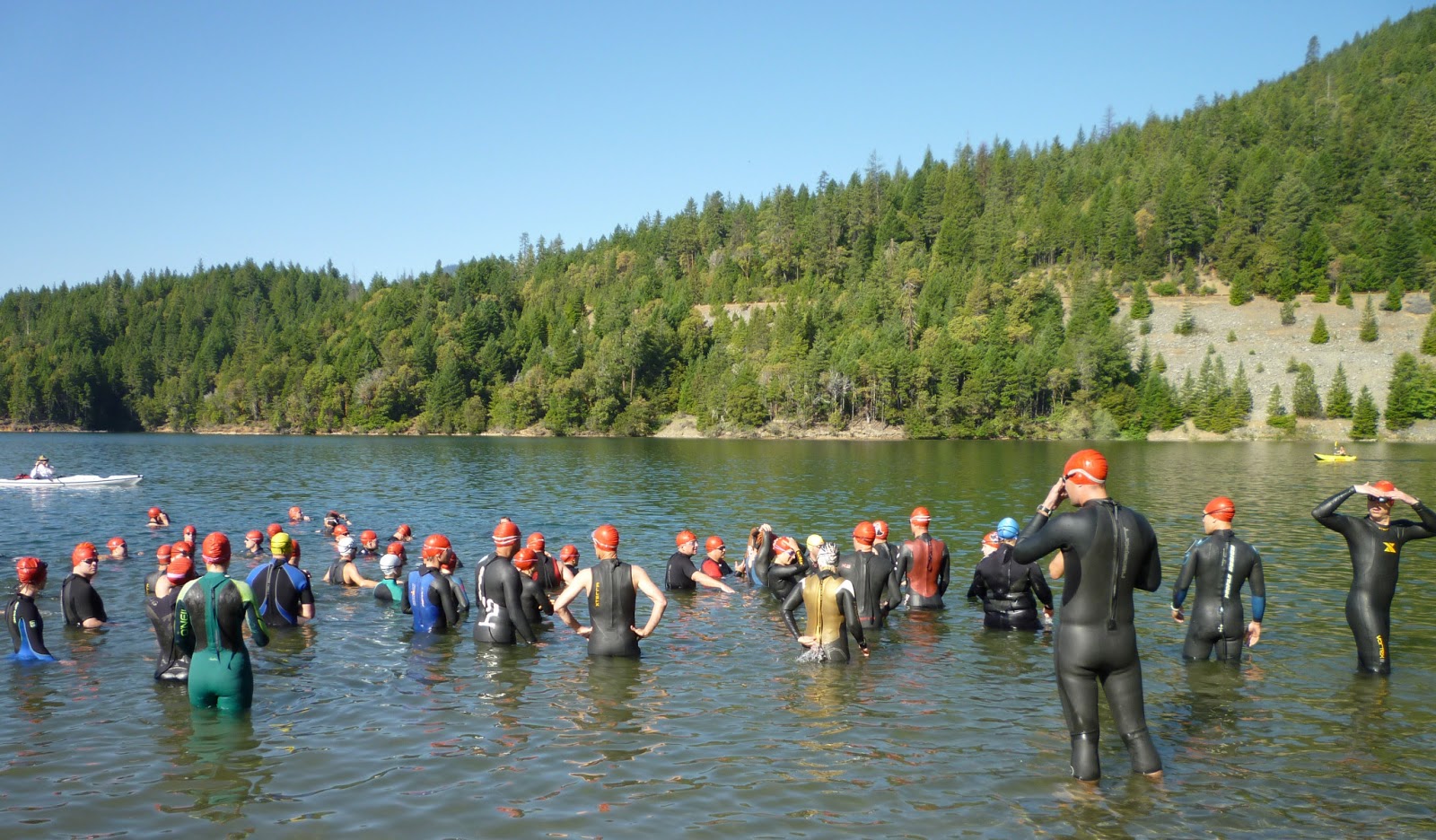
An hour before the race began

On the first of June Mr. Glad competed with other members of the family in the Granite Man Triathlon in southern Oregon. It was one of several events and meetings that formed the outline of a little trip around our neighboring state.

My husband was doing the swimming leg, as was the other grandpa of our Oregon grandchildren, and the two of them were the team captains. Our son and three grandsons made up the remainder of the teams, with the younger athletes compensating somewhat for the slowness of their elders. We womenfolk and some out-of-town kin were the support crew and also played with the baby (cute boy even if he isn’t one of my grandchildren).

My favorite swimmer left of center with his hands on his hips

Perfect weather, and a lovely setting, with trees leafing out, flowers beginning to bloom. As we stood around on the grassy slope of Applegate Lake waiting for the race to start with the swimmers’ portion, I had my first botanical experience of the trip. It started with a smell that only gradually broke into my consciousness enough to make me look down and search out what source my feet were tramping on.

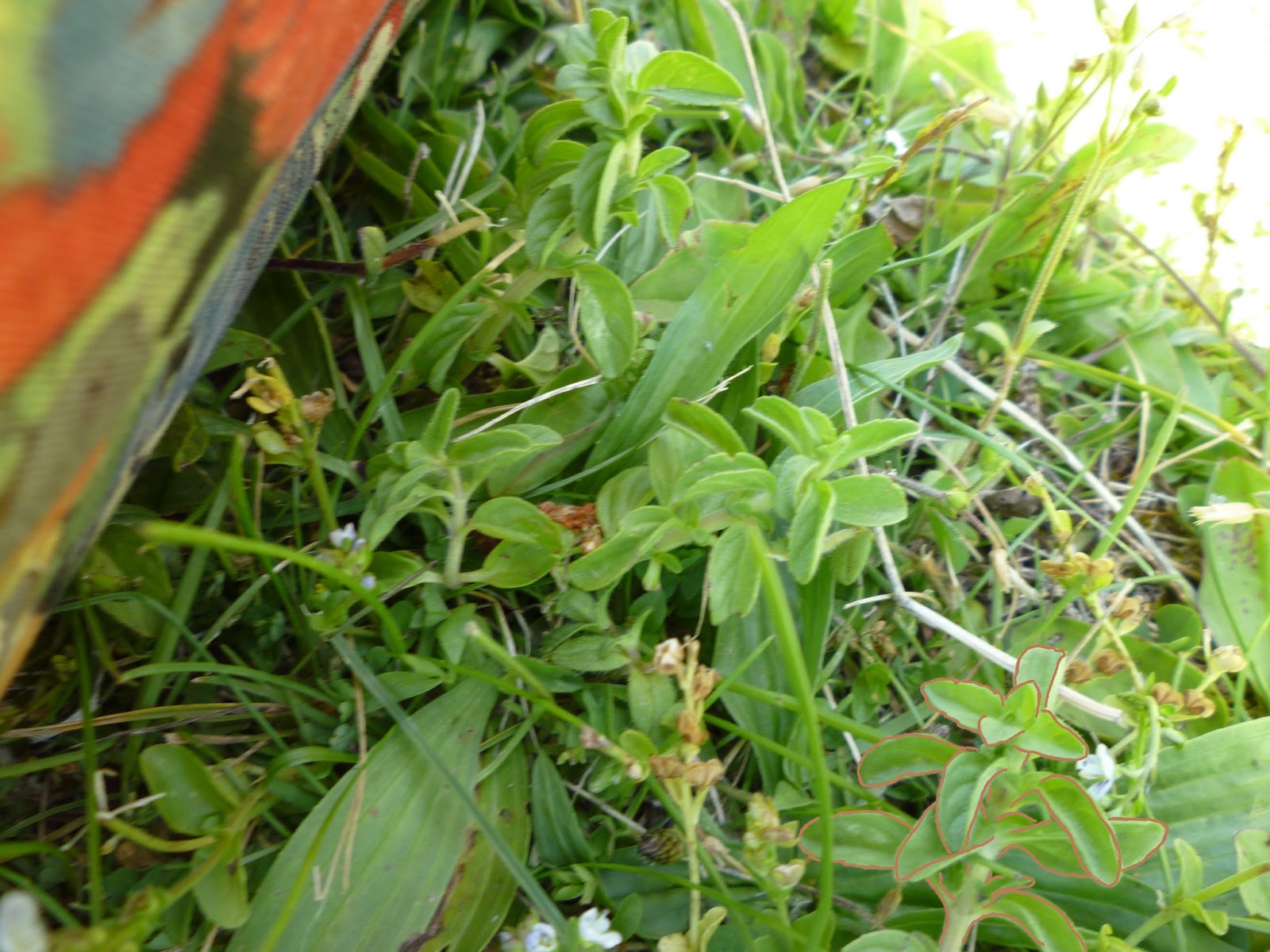
pennyroyal – or not?

Pennyroyal was my first thought, as I picked off some of what was growing in the wild lawn, and in case you aren’t familiar with it, I outlined one cluster faintly in red, in the photo above, in the lower right corner. Even so, you may have to click on the photo to see it.

But it doesn’t exactly look like pictures of Mentha pulegium, though that pennyroyal is considered mildly invasive in California and Oregon. It doesn’t even look like pictures of the Oregon “field mint” Mentha arvensis, which I looked at in case my sniffer is not able to distinguish between members of the mentha family.

Pennyroyal has what I’d call a sharper aroma than most mints, and this one under my feet had that distinctive smell that I have met many times in my life, often in the mountains. Was I mistaken? Its leaves do look in some ways more like Monardella odoratissima, whose common names include “Mountain Pennyroyal” – but not exactly.

This Applegate Lake variety looks like a cross between it and another mint, as I study it further. And that impression might not be too far from reality, because it turns out that pennyroyal has an ability to hybridize with other mint species, adding to its troublesome weediness. It may crowd out native plants and even threaten Oregon’s commercial peppermint and spearmint crops, as I read in this article.

I learned a new word while reading it: allelopathy: a biological phenomenon by which an organism produces one or more biochemicals that influence the growth, survival, and reproduction of other organisms. I am familiar with this kind of influence from my experiences in gardening, but I didn’t know the name for it. The latest instance is the way nothing much grows under my manzanita bush because of its negative allelopathic qualities. The authors of the article experimented by treating seeds of a rare Oregon plant with a weak extract of pennyroyal root, and found that the germination rate dropped.

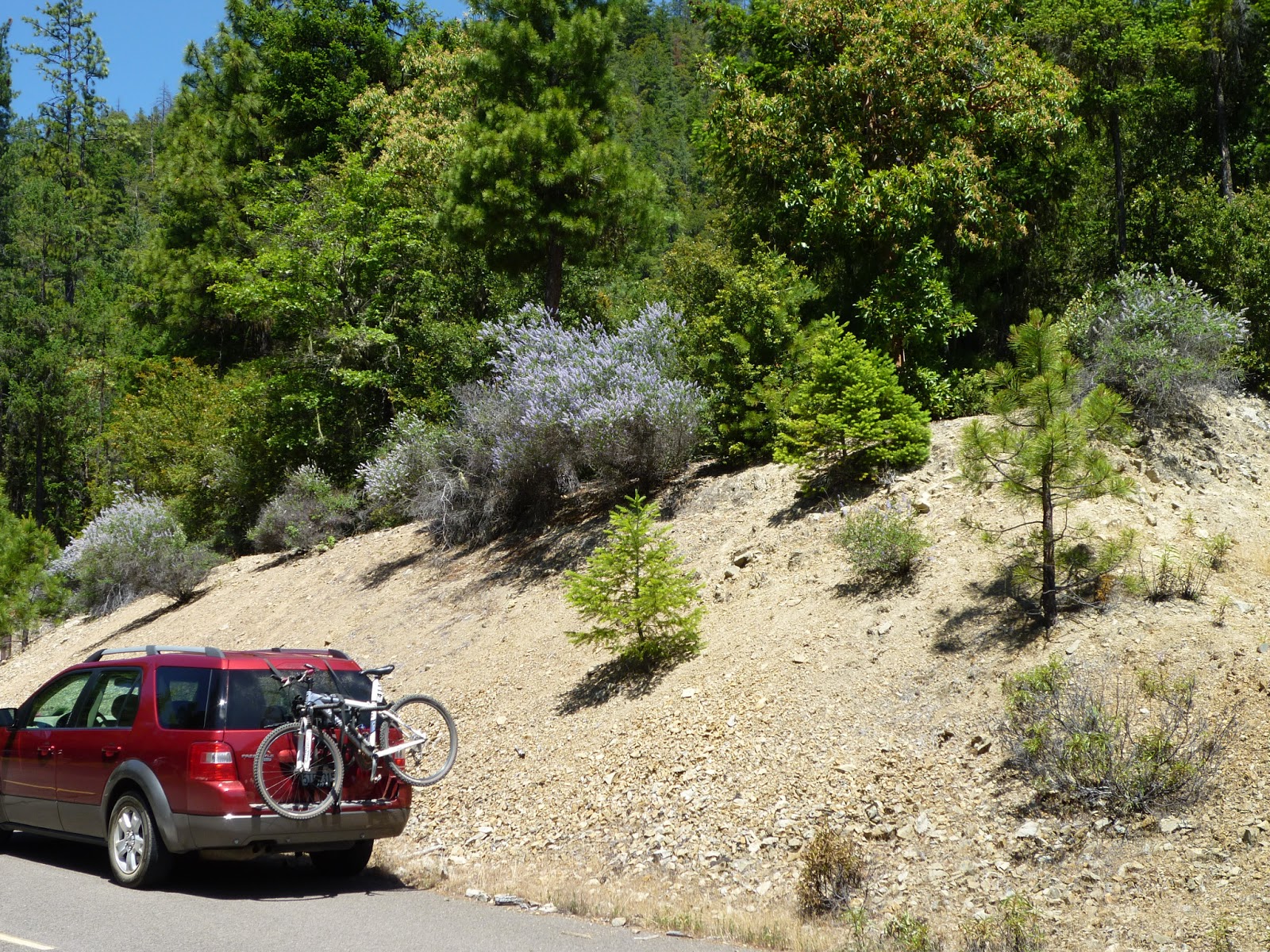
Deer Brush near Applegate Lake, Oregon

I didn’t know all of this bad stuff when I was lolling about in such a bucolic place; I was only pleased to have found a plant to check on as soon as I got home.

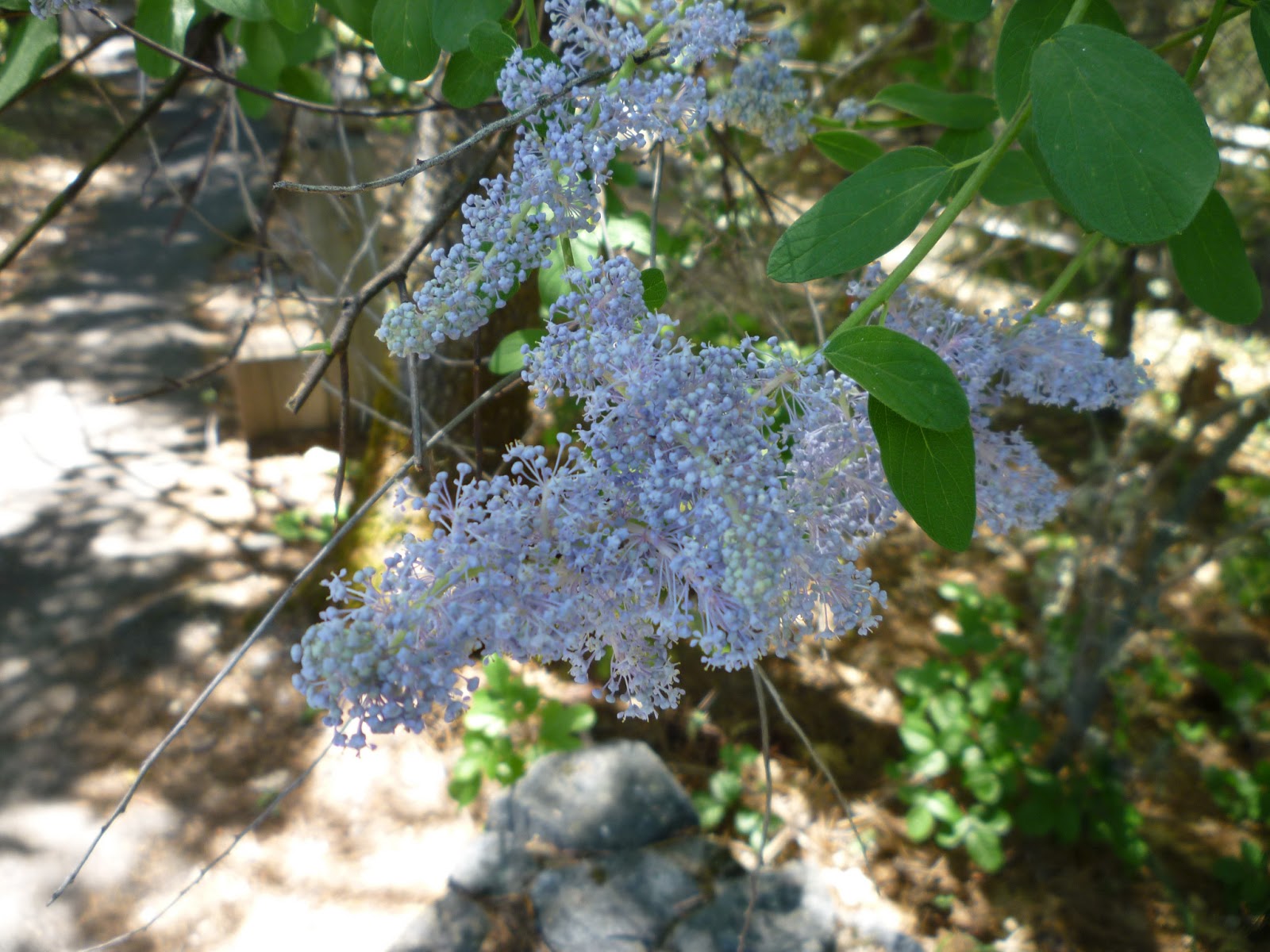
When we went out to the parking lot after all our guys were done (and some were done-in) I found another, a bush covered with honey-scented flowers. I thought it might be a type of Ceanothus, and I was right. But about the common name, I was wrong. I guessed Mountain Lilac, and it is in fact called that by some people, but maybe by mistake…? It’s officially known as Deer Brush.

The flowers come in shades of light blue and white, mostly, and it’s native to the western states. All of its uses are positive: animals eat it, the Indians made baskets from it, and it fixes nitrogen in the soil. Everybody likes this one!

Ceanothus integerrimus