Category Archives: trees

Maui Diary 3 – An Upcountry Garden

King Protea buds

The Kula Botanical Garden is in the part of Maui called Upcountry. It is conveniently located just far enough down the hill from the top of Haleakala Volcano to be warm and out of the wind.

While Mr. Glad dozed on a bench I wandered the paths with my tiny notebook and scribbled the names from whatever markers I could find, of strange plants from all over the world. Gradually I thawed out from the high-elevation freezer experience, and breathed the oxygen-rich air of the thick plantings.


This west side of the volcano is relatively dry, as the rain that blows in from the east stops at the volcano and falls on the other side. This makes the Upcountry an agreeable climate for species from South Africa and Australia, such as the proteas and their relatives the banksias.

This Orange Banksia (above), banksia prionotes, was white and not orange when I took its picture, because the florets on its spike had not fully opened, but I found a close-up on Wikipedia showing the collection of little flowers, called an inflorescence, with not quite all of them opened:

The full opening up of the florets is called anthesis and occurs over several days, spreading from bottom to top.

Some of the plants in the garden were unmarked, and will have to remain anonymous for now, like this red one. [update 2023: it’s Red Ginger Lily] It would have taken me many more hours or days than we had allotted to thoroughly investigate the wealth of God’s creation represented here.

The Paperbark Tree, Melaleuca quinquenervia, is also a native of the Southern Hemisphere, but it has naturalized and can be found all over Hawaii. (In Florida, I read, it is now considered a serious weed.) I found out that there are several types of paperbarks, but they are also called simply melaleucas. Also of this species are the tea trees, from which the tea tree oil that some of us use medicinally is extracted.

Madagascar palm
another banksia


leucospermum catherinae

The proteas were many and varied, and what wild and dramatic plants these are! The one above is Catherine’s Pinwheel.

And the trees — my goodness, I was surprised at all the trees on Maui. Did I think that they only grew coconut palms here? This closeup of an Australian tree trunk in the botanical garden was one of the few more intimate looks I got of a tree, because other than at this place we didn’t spend too much time looking at plants.Still, I will have more to say about trees and flowers in another post about this fascinating Mauian world.(Kula Dwellable – for more info)

banksia aemula

Maui Diary 1 – Enchanted

View from our back door

My first view of Maui was of slender palm trees bending and blowing wildly in the strong wind, as our plane dropped down over the airport. Getting off, we didn’t walk through the usual airtight and musty corridors, but into an open-air terminal with the smell of flowers wafting through.

Field of lava

Almost all the palm trees I saw over the next few hours were nice to look at, lacking the many dead fronds I’m used to seeing on those at home, and a great many of a variety of trees we saw during our stay appeared to have been trimmed carefully and maintained in such a way to highlight the natural and graceful curves of the trunks and branches.


Red Ginger

Mr. Glad and I had come to live in the soft air of Maui for eleven whole days in March, to celebrate our wedding anniversary and God’s love to us and in us. What better place, where the Creation itself seems so gently embracing and kind.

We flew straight from San Francisco to Maui and didn’t wander from that island, and we stayed all but one night in one condo in Kihei, on the South Shore. (The red ginger bloomed a few steps from our patio — or as they say in Hawaii, lanai.) I loved having that home base to return to from our daily adventures. I will be writing a series of posts to scrapbook many of my impressions and our Glad doings on this island holiday.

California Mountains – Tiny Finds and Large Views

My husband called to me as I was lagging behind on the loop trail, “Why do you keep looking at the ground?! Look up at the mountains, and the trees!”

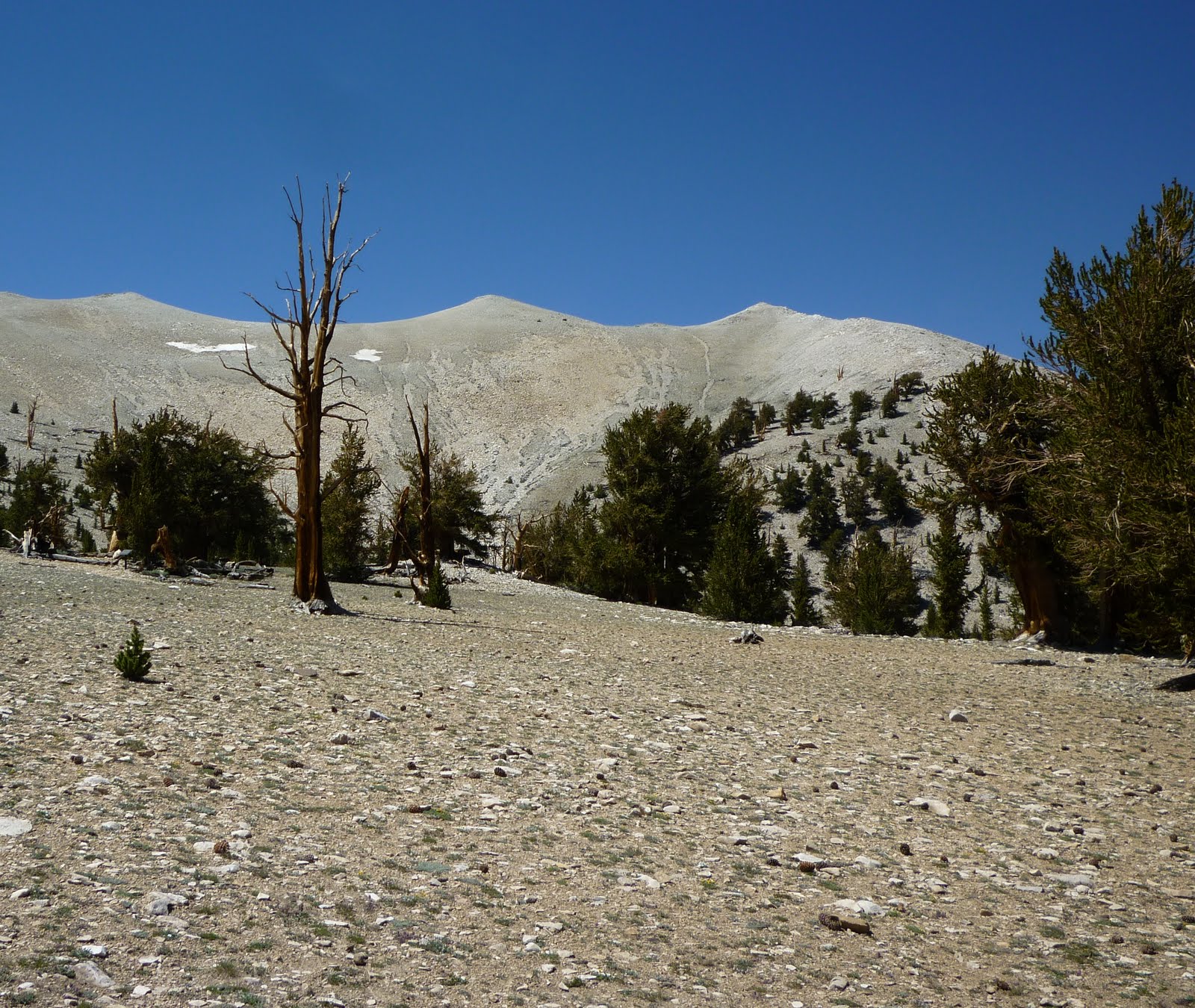
We were in the Patriarch Grove of the Bristlecone Pines, at 11,000 feet, in the White Mountains, with dolomite rock as far as the eye could see, as in the photo above. One might well wonder why I would look down at it.

But if you click on that photo to enlarge it you will see that there are vague greenish splotches all over the place. Those are clumps of wildflowers, hugging the ground in mats barely taller than my living room carpet.

I was finding whole worlds of flower gardens tucked under rocks, where several species of the most diminutive blooms would pack themselves together in a jumble. I noticed them, but the sun was so bright, and they were so little, that I couldn’t actually see them very well, or know if my photo was decent.

And I didn’t want to make us too late for dinner in Lee Vining that night, a few hours’ drive down the mountain and up the highway. But now I wish I had taken more pictures.
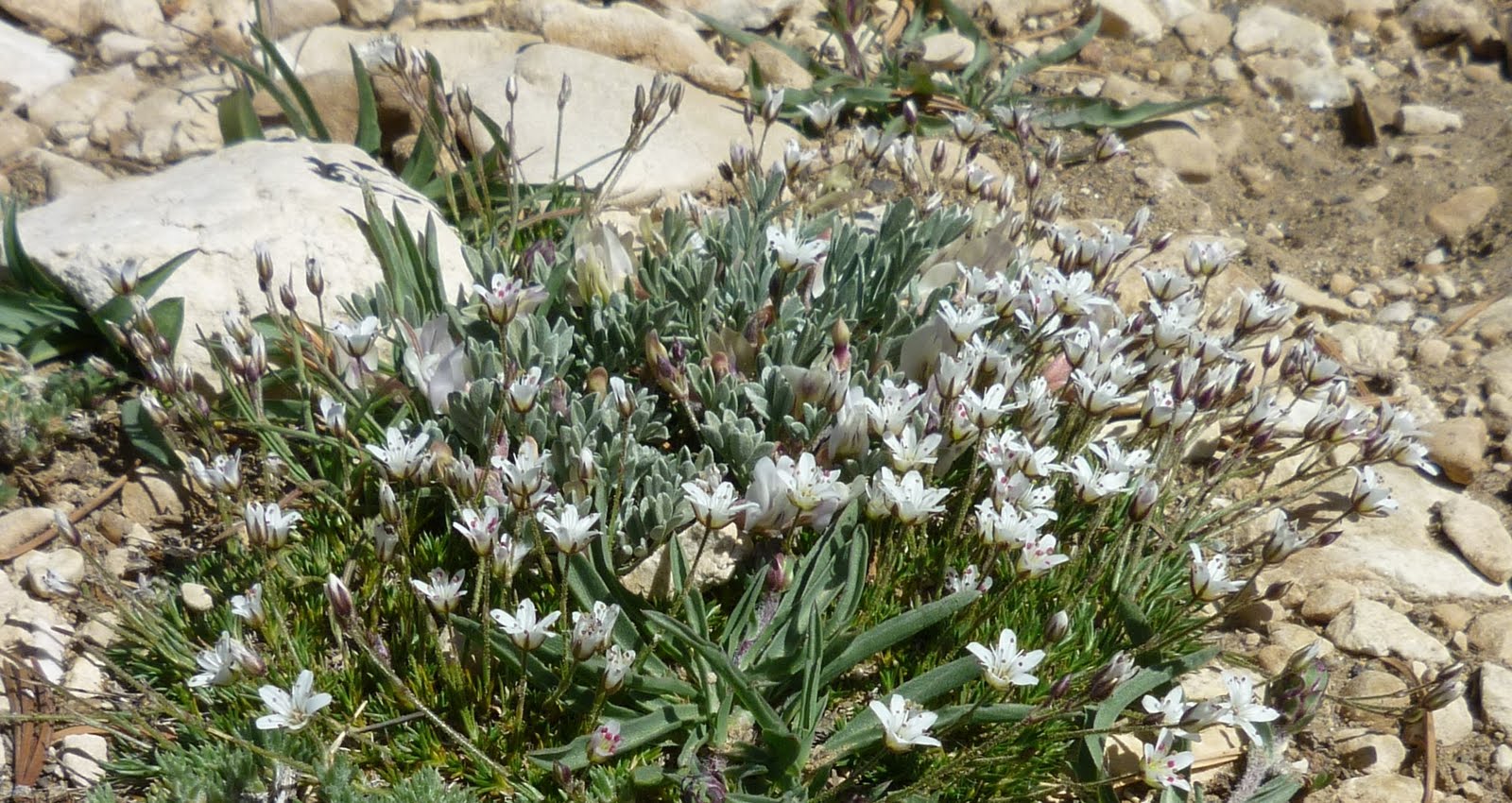
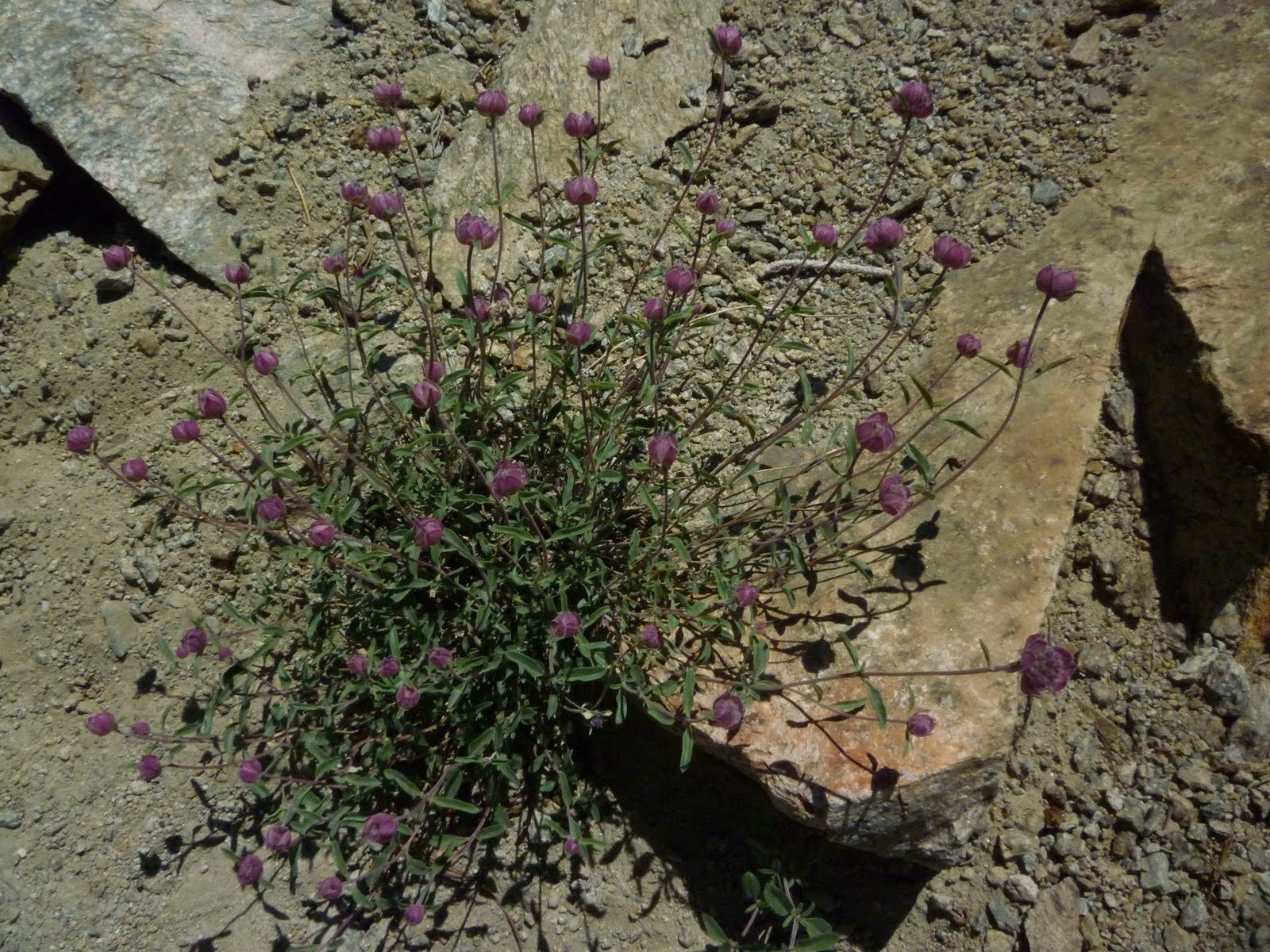
Lewisia, I think…

I’m home, and the photos are uploaded to the computer where I can zoom in on them and reveal more details, but usually I find that they are overexposed and/or a bit blurry from the wind, and identification is hard. The plants seem to be stunted variations of more common forms, likely resulting from living where there is so much sun and wind, but little warmth and moisture. In this high place the temperature rarely gets above 70° even in midsummer, and frost can happen any night of the year.
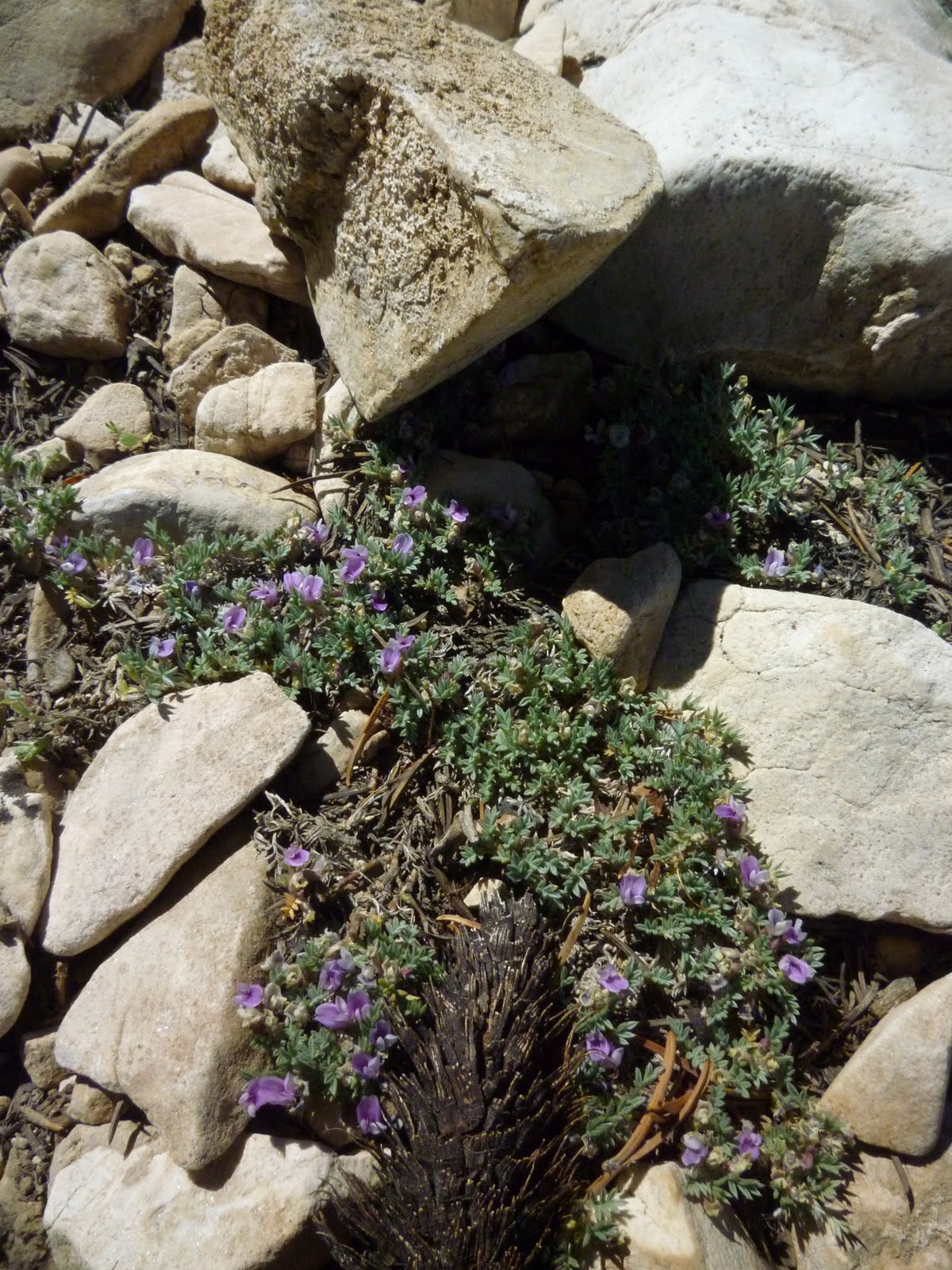
milkvetch and an old cone

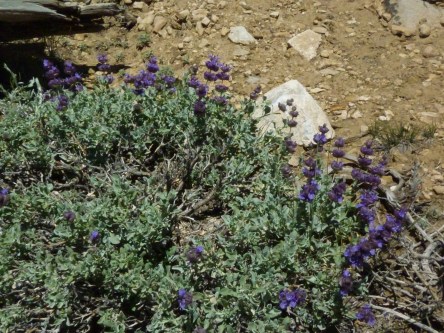
The purple milkvetch pictured (in the Astragalus family), for example, is a shy and minimalist version of other forms that grow above treeline; technically, we are not above treeline or alpine here, because the Bristlecones are of course trees, but all the wildflowers in this area are listed in the Alpine section of my guide, and the conditions are similar to those in the Sierras above 11, 500 feet.

Pippin sent me to a link from an area in Utah where more Bristlecones grow, and to the Table Cliff Milkvetch that looks pretty similar. But from my poor photo, I’m not confident to claim a perfect match.

Maybe it’s even a version of the Whitney’s Locoweed (Astragalus whitneyi) I saw in the lower grove. That one (below) was past flowering and was showing its crazily colorful pods, and this one 1,000 feet higher doesn’t have any pods yet.
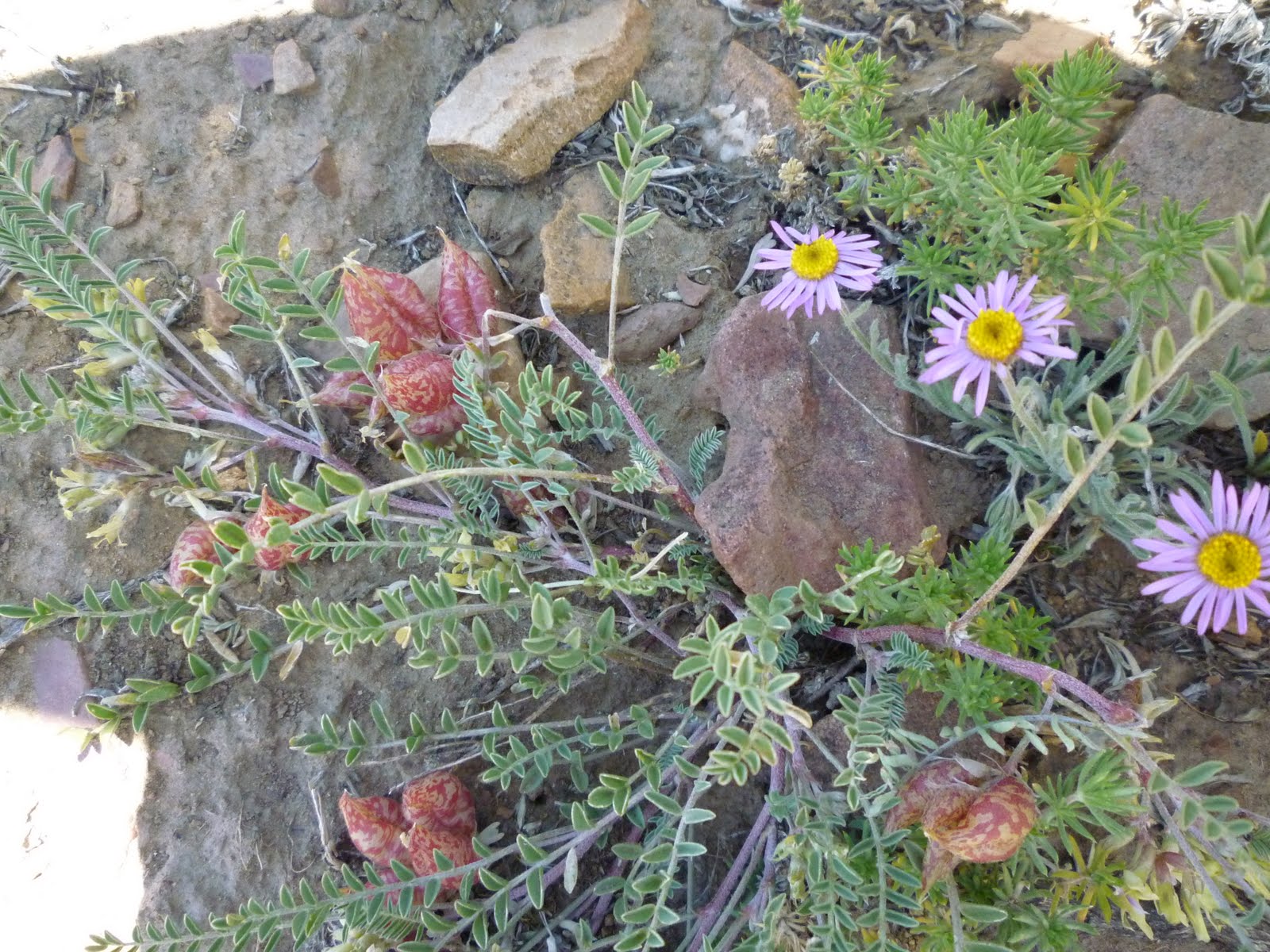
Whitney’s Locoweed and Dwarf Alpine Daisy

Mr. Glad was trying to figure out which White Mountain peaks were which; on the way up to the Bristlecones we’d done a lot of that kind of thing when we stopped at Sierra View Point. Here is a movie I found online, showing what we saw across the Owens Valley: the eastern escarpment of the Sierra Nevada. We had been over there somewhere as little hiker specks just the day before.
The starting image of the movie looks similar to the still shot Mr. G took, but not quite as nice, so I posted his version at the bottom of this post.

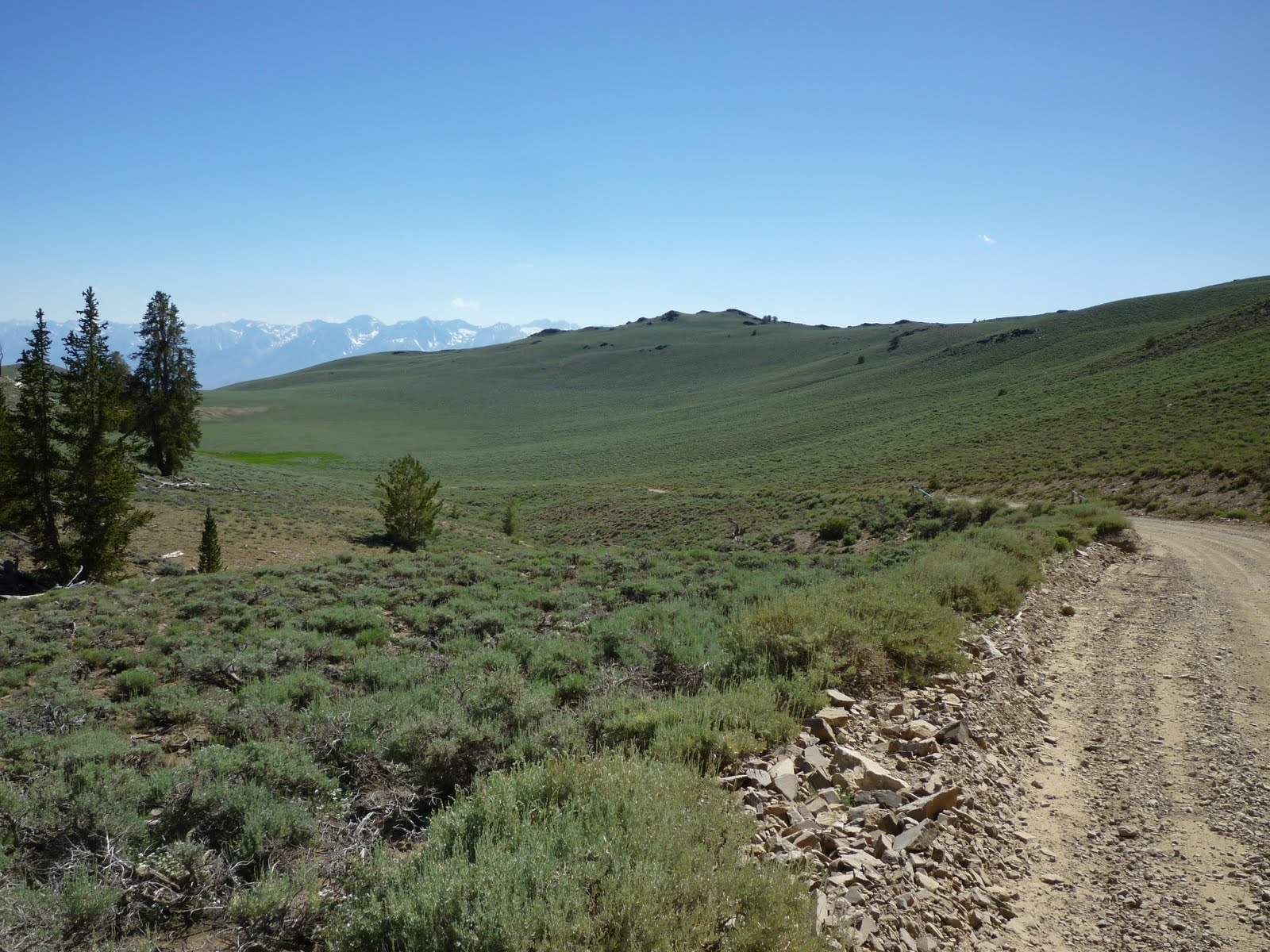
Another view that was a quiet and calming feast for the eyes was of these sagebrush-covered slopes, as we traveled that gravel road. The total effect was so much more green and lively-looking than what we saw going west up from Bishop. Maybe it’s a different species of sagebrush?

After this day with the Bristlecones and their tiny ground-hugging companions, we went back over the mountains and then north for the last hilly adventure of our July vacation.
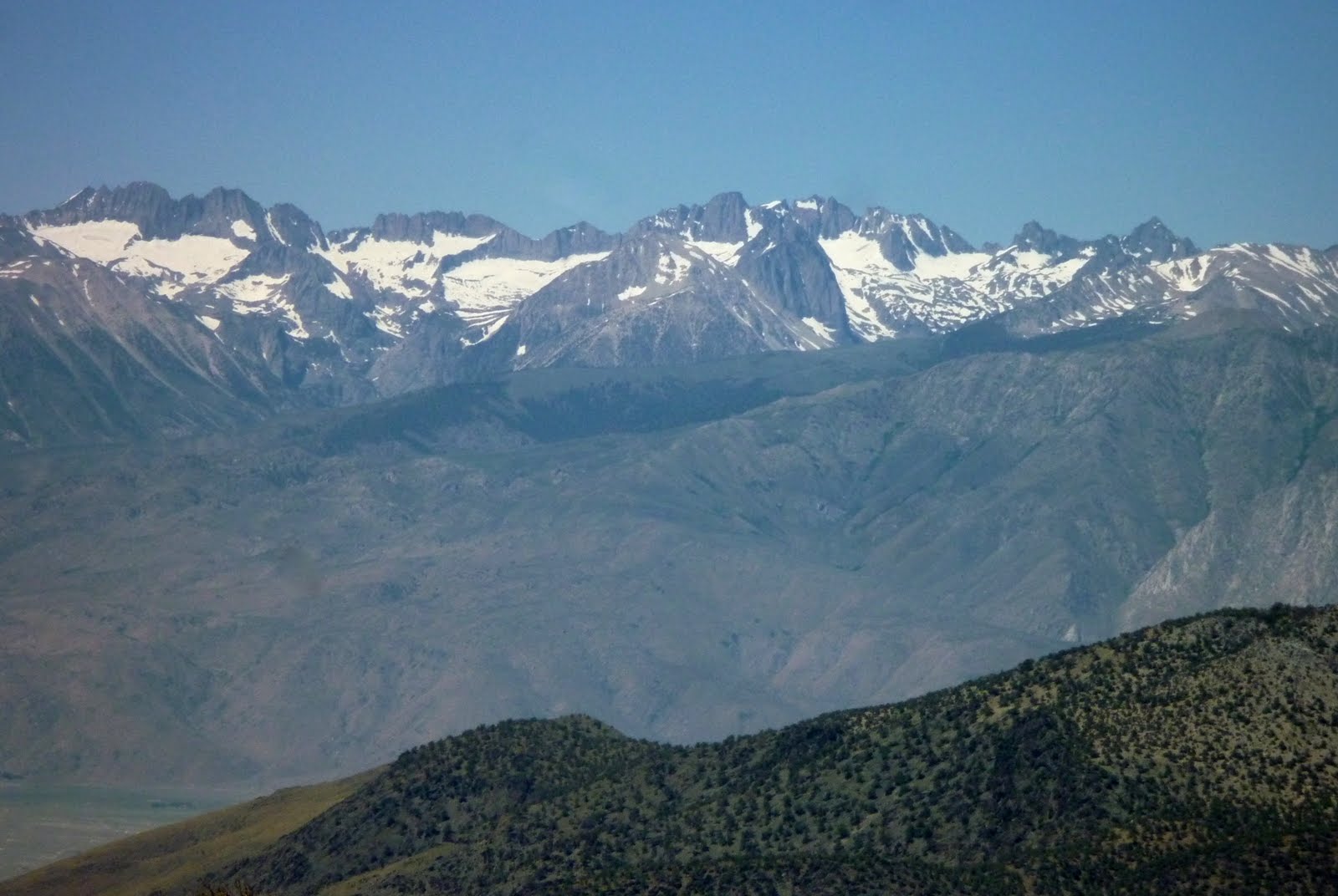
View of Sierras from White Mountains

California Mountains – Gnarly Patriarchs

(6th in the “California Mountains” diary of our July 2011 vacation)
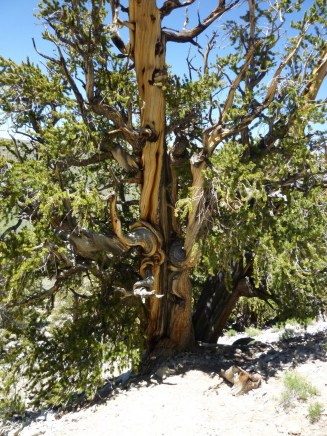
If the Bristlecone Pines were humans, I’m pretty sure they would be ascetic saints like Father Seraphim of Sarov or Mary of Egypt, people who lived in the wilderness and had “meat to eat that we know not of.”

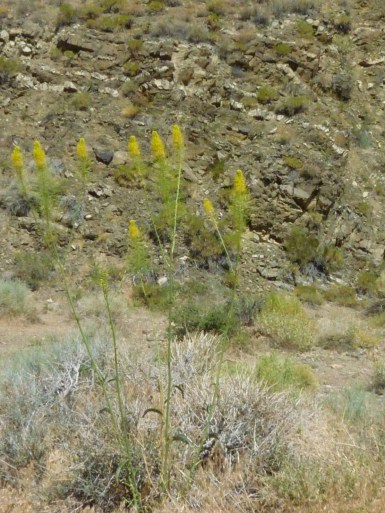
Stanleya pinnata; Desert Plume

It was to visit these inspiring creatures that Mr. Glad and I drove up into the White Mountains that rise up east of the Sierra Nevada on the other side of the Owens Valley. The climbing part was a repeat of the previous day’s experience of a quick uphill, and this time it took just 24 miles for us to traverse zones of desert and sagebrush steppe, and come to a land where alpine wildflowers live stunted lives.

Mormon Tea

On the way up through the forbiddingly dry and rugged desert region, waving yellow plumes were the first vegetation to get my attention. Now I know where Dr. Seuss got the images for some of his crazy drawings.

Purple Sage; Salvia dorri

Another drought-tolerant plant we ran across is called Mormon Tea, though it has other common names that aren’t as folksy. It’s a member of the Ephedra family of plants, perhaps milder — and safer? — than the Chinese herb. I didn’t collect any.

The uglier plants passed from view as we entered the steppe zone, and we began to get our eye-fill of gorgeous purple sage, the very flower referred to in the five movie versions of Zane Grey’s novel Riders of the Purple Sage; I haven’t seen the the movies or read the book, but just now learned that there is a Mormon element to that story. This area is geographically part of the Great Basin Desert that covers much of the state of Nevada, and of which Utah’s Great Salt Lake Desert is a part, so the Mormon connection to the natural history makes sense.

Bristlecone Pines grow in other areas of the Great Basin, too, and maybe on less steep roads. The ones in California aren’t on the way to anywhere, but they are well worth the worry of hearing your car’s engine groan a bit on the sharp inclines.

The longevity of these trees is the primary fact one learns right off. Except for cloning plants, the Bristlecones are the oldest living plants. The current oldest one is known to be 4,788 years old, and as many as 19 of them are over 4,000 years old.

Not only are they of great age, but they keep their vitality. While other trees show changes in their DNA or produce fewer cones, the Bristlecones are just as healthy and fruitful at 4,000 years as they were at 1,000.

They have ways of dealing with the severe climate, and with seasons that are harder than usual. How to determine what is a particularly hard year in their habitat seems to me difficult, seeing how they always have to do with very little water, and with freezing temperatures much of the year, and soil that is poor. Some of the oldest trees grow in “soil” that is a form of limestone called dolomite, shallow and infertile white rock. The sun is relentless in summer, and the winds are often brutal.

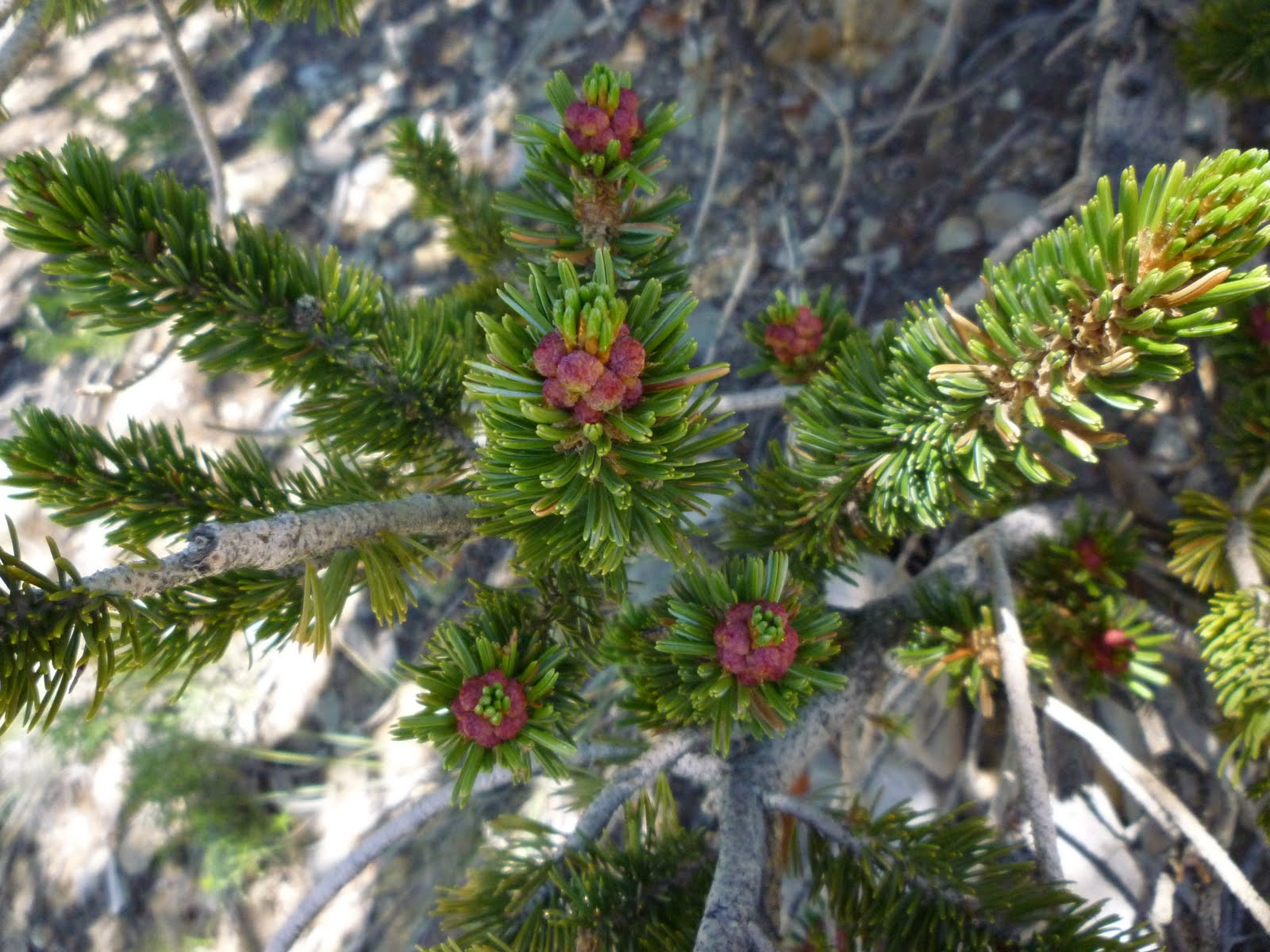
Clearly their youth is renewed not by superfoods and a friendly environment but by a meager diet and suffering — and yes, by their genetic predisposition to “behaviors” that conserve nutrients and strength. For example, instead of dropping needles and replacing them every year or two, they hold their needles for up to 45 years, and it requires less energy to renew the old ones than to grow completely new ones.

If they suffer unusually severe drought or stress, they put some limbs into dormancy so that they can keep producing the maximum number of cones. If we compare them to humans, they are fertile even longer than the biblical patriarchs, or our mother in the faith, Sarah.

The white rock actually reflects some of the sun so that more moisture is retained in the soil, and the trees tend to live relatively far apart from each other in their forests, so they don’t have to compete for light and food. In this way they are the opposite of redwood trees, which need the moisture that collects between trees in the grove if they are going to be their healthiest.

These trees make me think of Bible verses about youth being renewed, but also the ones about hoary heads and the dignity of age. The old and weather-worn patriarchs have a beauty of a sort we don’t see in young upstarts or in overfed and coddled 20-somethings. Even in death the wood is so dense that it remains for centuries and doesn’t decay, much as some saints’ bodies remain incorrupt.

I so love the Bristlecones! I can’t figure out all that they are telling me, but I know it’s something about God and the Christian life. Maybe if I grow really old I will understand more.

The main grove is at 10,000 ft. elevation. After walking the loop trail there we decided to get in the car again and crunch over gravel up another 1,000 feet in a cloud of dust to the Patriarch Grove. It’s only twelve miles, but takes at least 45 minutes. The next installment of this series will tell what I saw there.