When in my last post I shared only two paragraphs from a whole book on prayer, and those two said nothing about prayer, I ought to have given some context! When questions came in, I thought I would open my copy of Beginning to Pray and see what Metropolitan Anthony had said just before or after those puzzling words. But it must be one of those books I have given away; I will have to buy another. But in the meantime, I want to try to make up for a presentation that was confusing by being too truncated.
When I first came into the Orthodox Church and asked my priest confessor a question about prayer — I don’t remember what exactly — he recommended that I read “anything that Anthony Bloom has written on the subject.” Our church bookstore had some titles and I think Beginning to Pray was the first one I read. I’ve also read his Living Prayer and Courage to Pray.
My praying up to that point in my life was mostly not the kind of prayer that Met. Anthony encourages us to explore. The perspective of his teachings was incredibly refreshing. I think the foundation of it all is “Blessed are the poor in spirit….” I found some quotes from the same book online, such as this one, in which he talks about that empty, needy feeling:
“The day when God is absent, when He is silent – that is the beginning of prayer. Not when we have a lot to say, but when we say to God ‘I can’t live without You, why are You so cruel, so silent?’”
It may be that this awareness of one’s need for God evolves out of feeling “boredom” with ourselves. But I am not one to explain prayer; I’m definitely at the beginning to pray stage. Met. Anthony makes it clear that you need to just do it.
Here are a few more excerpts from Beginning to Pray:
“St. John Chrysostom said ‘Find the door of your heart, you will discover it is the door of the 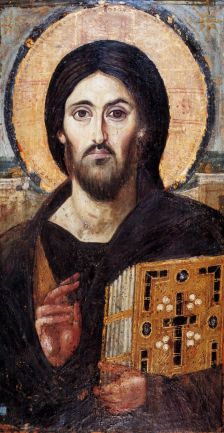 kingdom of God.‘ So it is inward that we must turn, and not outward – but inward in a very special way. I’m not saying that we must become introspective. I don’t mean that we must go inward in the way one does in psychoanalysis or psychology. It is not a journey into my own inwardness, it is a journey through my own self, in order to emerge from the deepest level of self into the place where He is, the point at which God and I meet.”
“I have tried to point out, first of all, that your prayer must be turned inwards, not towards a God of Heaven nor towards a God far off, but towards God who is closer to you than you are aware; and secondly, that the first act of prayer is to choose such words of prayer as are completely true to what you are, words which you are not ashamed of, which express you adequately and are worthy of you – and then offer them to God with all the intelligence of which you are capable.”
“You cannot, having never prayed before, start with eighteen hours of dialogue and prayer with God continuously like this while you do other things. But you can easily single out one or two moments and put all your energy into them. Simply turn your eyes Godwards, smile at Him and go into it. There are moments when you can tell God ‘I simply must have a rest, I have not strength to be with You all the time,’ which is 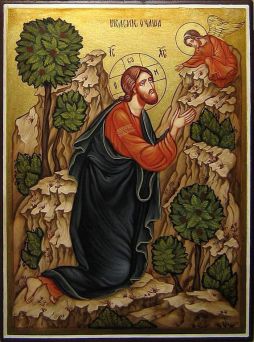 perfectly true. You are still not capable of bearing God’s company all the time. Well, say so. God knows that perfectly well, whatever you do about it. Go apart, say for a moment ‘I’ll just have a rest. For a moment I accept to be less saintly.’”
“One of the dangers in prayer is to try to find words that will be somehow on the level of God. Unfortunately, as none of us are on a level with God, we fall short and waste a great deal of time in trying to find the right words.”
There are several videos of Metropolitan Anthony online, giving the talks from which his books were compiled. Below is a link to a good one that I have listened to before; now I am listening again, and it is fascinating and at times entertaining. Even if you only watch ten minutes, I think it will bring life to his words, to hear him and see his kind face.
This is it: Prayer in the Christian Life
Thank you so much for your comments! I loved the unique experience and viewpoint of each of you, and was glad for the prompt to share more insights of this good teacher.
May God help us to pray!