Baklava is various – here is one recipe.

Ten years ago, when I was reading The Supper of the Lamb by Robert Farrar Capon, and writing multiple blog posts about that delicious book, I promised to share here the recipe for baklava that our parish uses. The idea came to me when reading Capon’s words on butter and pastry, and I warned my readers not to use his recipe for baklava. Since then I’ve learned more about the many and various ways that people prepare that confection in different cultures, and am no longer closed-minded about it at all. If you have a different recipe you like, I hope you will share it in the comments.
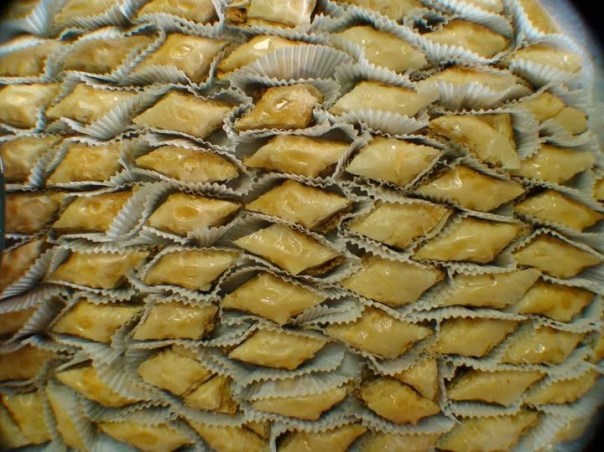
Though I love honey, I prefer baklava without it, because in the examples I have eaten, the honey overpowers the flavors of nuts and butter, and makes a heavy piece of dessert — honey is in fact a heavy and dense food. This version that we learned to make from a long-time member of the parish is somehow “lighter” in flavor, while losing none of the richness that is essential.

BAKLAVA

About 30 pieces

SYRUP:

3/4 cup water
1 1/2 cups sugar
1 tablespoon fresh lemon juice

FILLING:

1 pound walnuts
1/2 cup sugar

PASTRY:

1 pound filo dough, thawed
1 pound unsalted butter, clarified (instructions below).

1. Preheat oven to 350°.

2. Prepare the syrup: Combine water and sugar; bring to a boil and cook over moderately high heat, stirring, until thickened. Stir in lemon juice, cook 3 more minutes and set aside to cool.

2. Grind nuts in a food processor. Transfer to a bowl, add sugar and mix thoroughly.

3. Spread half the filo dough flat on a buttered 9” X 13” jellyroll pan. Cut and piece as necessary. Spread nut-and-sugar mix evenly over dough; then lay the remaining dough over the top.

4. Cut pastry, either into 2” squares, or for traditional diamond-shaped pieces, make lengthwise cuts 1 1/2” apart, and cuts at a 45 degree angle 1 1/2” apart. This will yield diamonds about 4 1/2” long, with sides about 2 1/2” long.

5. Pour 1 cup of the melted butter evenly over the top. Place the pan in the oven and reduce heat to 300°. Bake for 40 minutes, turning the pan after 20 minutes for even browning. Repeat, using remaining butter and baking again for 20 minutes, turning after 10 minutes.

7. Remove pan from oven and immediately pour cooled syrup over the hot pastry. Let stand and cool approximately 24 hours.

Clarified Butter

Melt butter in a heavy saucepan over low heat. After it has melted, some of the milk solids will drop to the bottom of the pan while others will rise as foam. Skim off the foam and pour the clarified butter out of the pan, leaving the milk solids at the bottom, or strain it through a double layer of cheesecloth.

If you are interested in what the book The Supper of the Lamb is about, you can find all the posts in which I wrote anything about it here: Robert Farrar Capon.

(Father) Robert Farrar Capon

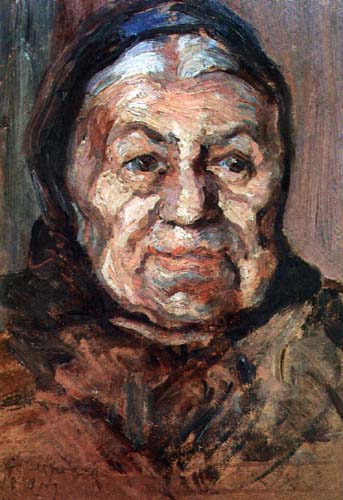
The little old lady laughs.

Portrait of an Old Woman, Nadezda Petrovic, 1909

TABLE TALK

The little old lady laughs like a little girl, going
On with the tale of this and that happy day.
Says the little old lady, “Oh, what times were they
When I fell in love without Grandmother’s knowing!”
The little old lady is a little rogue, showing
A malicious twinkle in the depths of her eyes.
How distinct the silver of her hair one descries
Against the caramel-tinted skin glowing.

The little old lady forgets how dull or shady
Life may be; and the wrinkles laugh over her face.
Sweet tremors through her blessed old body race:
And my dear looks at me and I look at my dear,
And we laugh, and we laugh . . . all the while we hear
The white history of the loves of the little old lady.

-Manuel Magallanes Moure (1878-1924) Chile
Translated by Muna Lee

Her Perfect Face

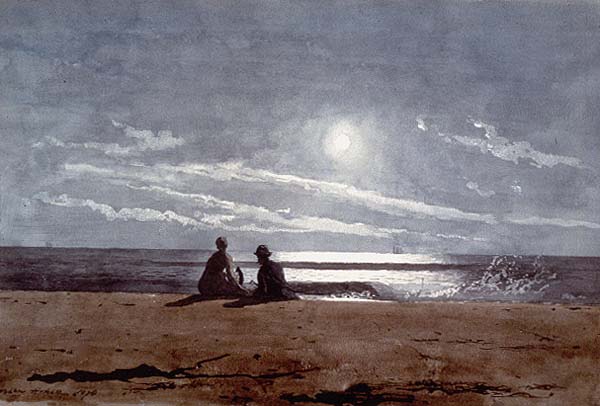
A few weeks ago when I ran across this poem, I scheduled it to publish this evening, when the moon is nearly full. But I didn’t know that I would be driving home from Vespers at 6:30 and along that road where it’s happened before that I found the moon rising huge and golden right in front of me; if only  could lift off at a slight angle from the pavement, I could drive right up and park on it. But instead, I admired her perfect face for a few timeless moments…. and then I was home!

THE MOON

The moon was but a chin of gold
A night or two ago,
And now she turns her perfect face
Upon the world below.
Her forehead is of amplest blond;
Her cheek like beryl stone;
Her eye unto the summer dew
The likest I have known.
Her lips of amber never part;
But what must be the smile
Upon her friend she could bestow
Were such her silver will!
And what a privilege to be
But the remotest star!
For certainly her way might pass
Beside your twinkling door.
Her bonnet is the firmament,
The universe her shoe,
The stars the trinkets at her belt,
Her dimities of blue.

-Emily Dickinson

Winslow Homer, Moonlight


On the vanity of earthly greatness.

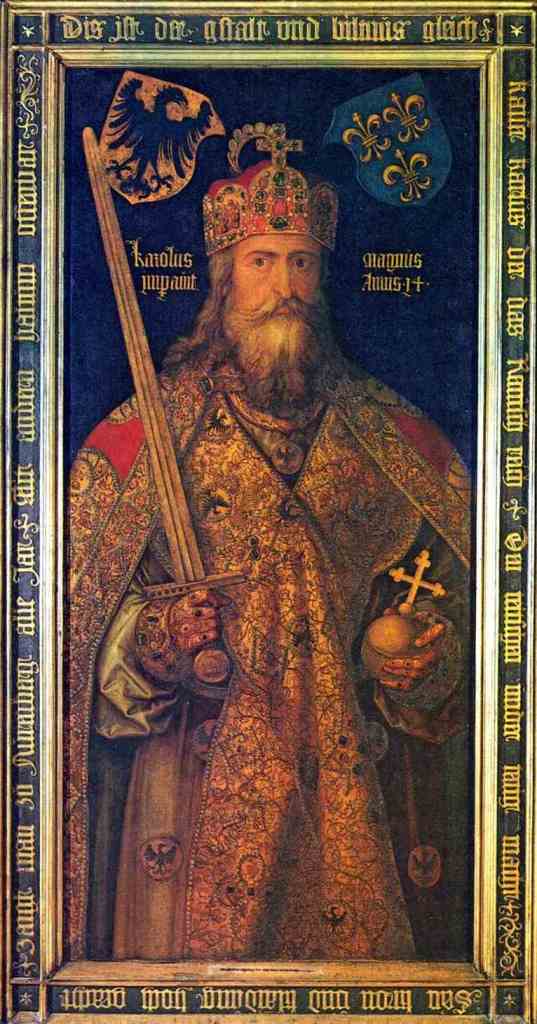
Charlemagne, by Albrecht Dürer

ON THE VANITY OF EARTHLY GREATNESS

The tusks that clashed in mighty brawls
Of mastodons, are billiard balls.

The sword of Charlemagne the Just
Is ferric oxide, known as rust.

The grizzly bear whose potent hug
Was feared by all, is now a rug.

Great Caesar’s bust is on my shelf,
And I don’t feel so well myself.

-Arthur Guiterman

This is a fun poem. The poet joined the theme by embarking on his own transformation to dust some time back. I also like these other lines he wrote, on changes he saw happening around him:

New motor roads are dustless,
The latest steel is rustless,
Our tennis courts are sodless,
Our new religions—godless.

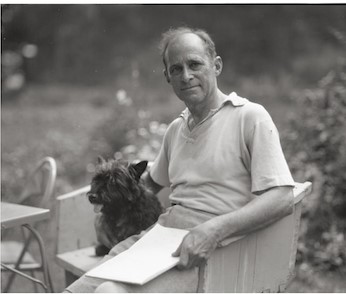
Guiterman in 1932


I’m sure that countless swords that have been swung through the ages are pretty rusty by now, but I happened to see this article about the Frankish king’s most famous sword, “Joyeuse” — and that one is not rust yet, because it has been preserved in the Louvre for many generations. Has any of you seen it?