Tag Archives: recipe

Cakes for her birthday.

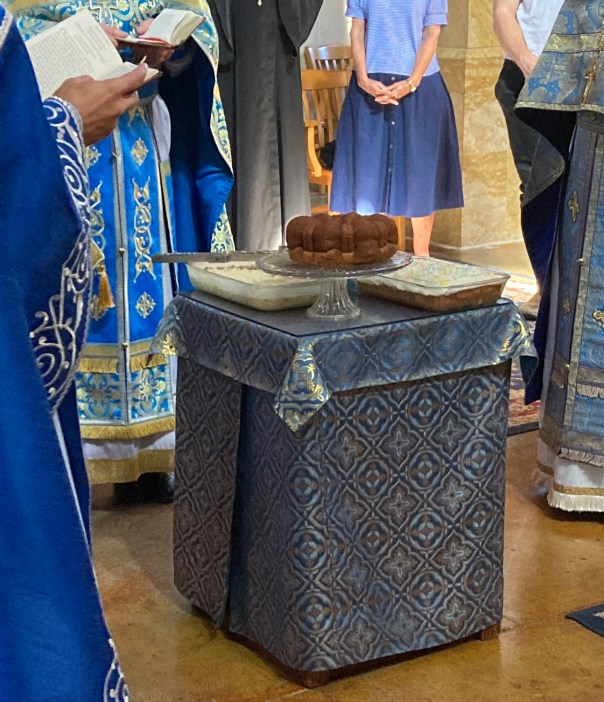
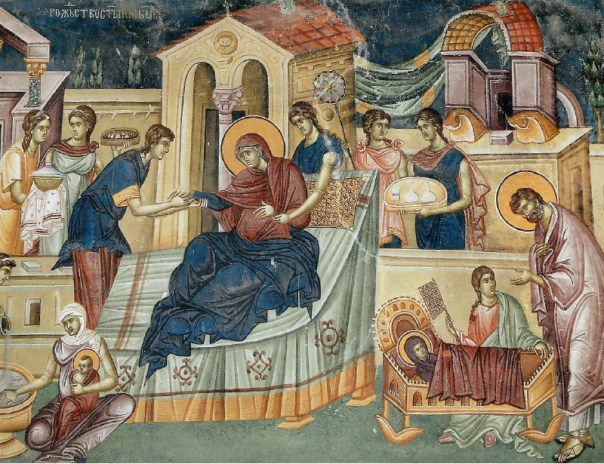
Today at church we celebrated the birth of Christ’s mother, the Theotokos (God-bearer) with Divine Liturgy. I was among those who brought birthday cakes to enjoy after the service. I have made this particular lemon cake four times now, and I like my version better than the one I adapted slightly, which was the America’s Test Kitchen version. I just now typed it up in a tidy form that I could post here. Everyone who tried it loved it; they said it was “fluffy” or “spongy,” and especially praised the crunchy topping. It is oh-so-lemony.
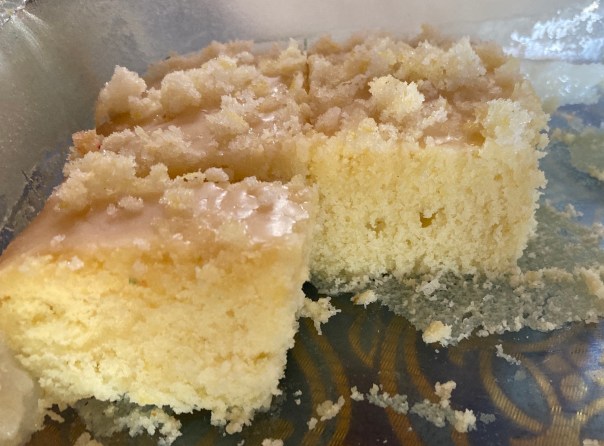
LEMON BUTTERMILK SHEET CAKE

Cake:

  • 2 ½ cups unbleached flour (10 oz.)
  • 1 teaspoon baking powder
  • ½ teaspoon baking soda
  • ½ teaspoon salt
  • ¾ cup buttermilk
  • Zest of 3 lemons or 3 tablespoons, grated
  • ¼ cup freshly squeezed lemon juice
  • 1 teaspoon vanilla extract
  • 1 1/2 cups white sugar (11 oz.)
  • 12 tablespoons butter, softened
  • 3 large eggs
  • 1 large egg yolk

Glaze:

  • 1 1/2 cups powdered sugar (6 oz.)
  • 2 tablespoons lemon juice
  • 1 tablespoons buttermilk

Instructions:

  1. Have oven rack in the middle, and heat oven to 325 degrees. Grease and flour a 9×13″ baking dish and set aside.
  2. Whisk together the flour, baking powder, baking soda, and salt in a medium bowl. Set aside. In a measuring cup, combine buttermilk, lemon juice, and vanilla. Set aside.
  3. Using a stand mixer fitted with the paddle attachment, beat the white sugar and lemon zest on medium speed until moist and fragrant (about 1 minute). Remove 1/4 cup of the sugar mixture and place it in a small bowl. Cover and set aside.
  4. Add the butter to the remaining sugar mixture and beat until fluffy (about 2 minutes). Beat in the eggs and yolk, one at a time, until incorporated. Reduce speed to low. Add the flour mixture in 3 additions, alternating with the buttermilk mixture in 2 additions. Mix until smooth (about 30 seconds)
  5. Scrape the batter into the reserved baking pan and smooth out the top. Bake until the cake is golden and a toothpick inserted into the center comes out clean (about 30-40 minutes). Be careful not to over bake. Transfer the pan to a wire rack and allow to cool for 10 minutes.
  6. While the cake is cooling, whisk the glaze ingredients together until smooth. Spread the glaze over the cake and sprinkle evenly with the reserved sugar mixture.
  7. Allow to cool completely, at least 2 hours.

Happy Feast to All,
and Happy Birthday to the Mother of our LORD!
The Julian Christmas cookies are my favorite.

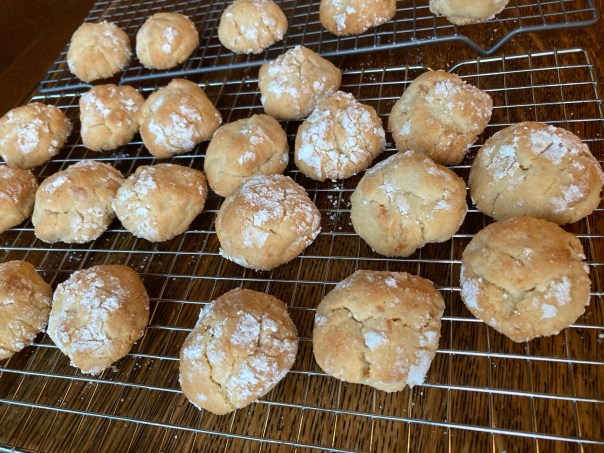
Many of us have completed the Twelve Days of Christmas, but I haven’t finished telling about all my activities connected to the Nativity Feast. My fellow Orthodox Christians who are on the traditional Julian calendar have just begun to count the days, however, so if we keep them in mind it won’t seem strange to muse a while longer on Christmas cookies. Plus, they are only Christmas cookies because I bake them at Christmas; you could enjoy them at any season of the year.

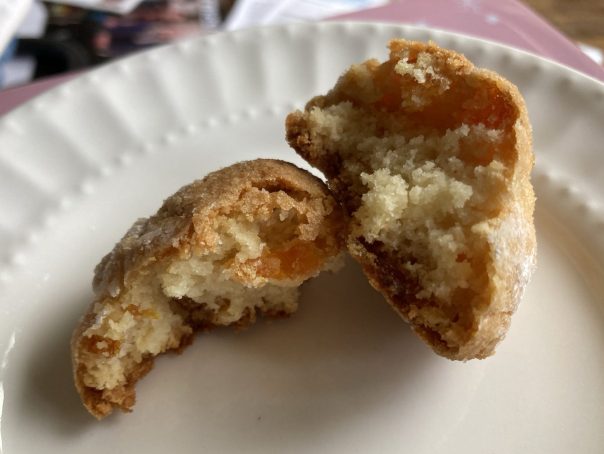
These are my favorite because of their chewy texture, the flavors of citrus and almond, and because my friends and family who are gluten-intolerant can fully enjoy them.

Last year I made two batches of this invention, but I wasn’t completely settled on the amounts of a couple of the ingredients. This time I made only one batch (so far), but after my latest tweaks I’m confident that if you try them, you are likely to be happy with the result. There are no grain flours in the recipe, so they are gluten-free.

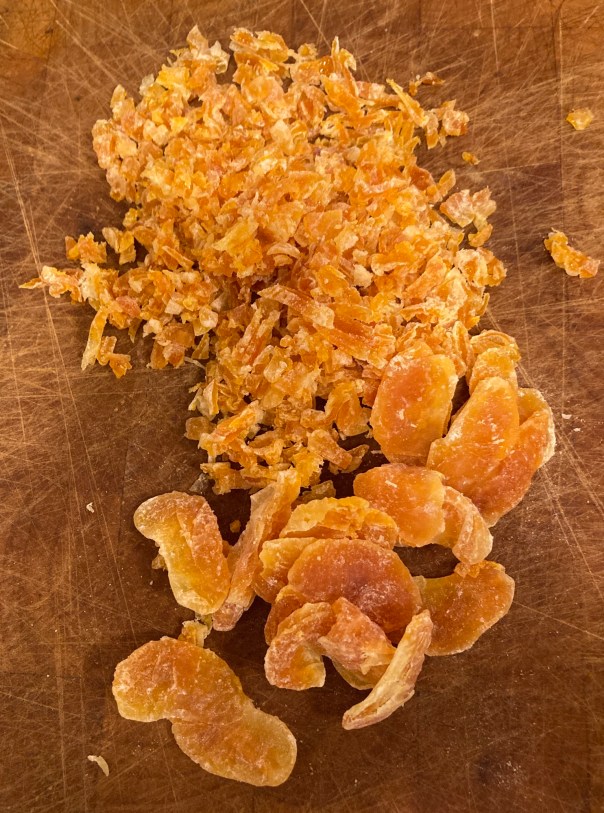
Dried (sweetened) mandarin oranges

MANDARIN ALMOND COOKIES

7 oz. almond paste, in pieces
4 oz. cold butter, salted or not
1/3 cup sugar
1/3 cup powdered sugar
scant 1/4 teaspoon salt

Combine the above ingredients in a food processor until evenly mixed. Add and process:

4 large egg whites, one at a time.

Remove from processor to a bowl and add:

2 3/4 cups finely ground almond flour
6 oz. package of dried mandarin oranges (found at Trader Joe’s), finely chopped

Put the dough in the refrigerator for an hour.

Put 1/2 cup granulated sugar in one bowl, and
1/2 cup powdered sugar in another bowl.

Drop heaping tablespoonsful of dough into the sugar; gently coat and shape into 1 1/2″ balls. Repeat in powdered sugar.

Set 1 inch apart on parchment-lined baking sheets. Bake until golden or golden brown, at 325 degrees, 22-25 minutes. Remove to racks to cool. Cookies will be crumbly until thoroughly cool. They keep well in the refrigerator or freezer.

The amount of sugar here is a reduction from my original experiment, and I might try cutting back a little more next time, hoping that the chewiness of the cookie won’t be affected too much. The recipe that inspired me was an Italian Orange Fig Cookie that my son had made in 2022. I tried that last year with disappointing results, and created this one instead because I had the mandarin oranges on hand. I hope Trader Joe’s continues to carry that item!

Remembering rescues, planning for success.

This morning my daughters and I were chatting online about cookies, and sharing pictures or files of recipes, for the sake of one daughter who asked for one with simple ingredients, to fill out a cookie platter. It was a lot of fun to stir up memories together of Cookies We Have Loved, without having to mess up the kitchen.

I may yet make a mess with cookie dough in there. One key to getting cookies made is to put the sticks of butter out to soften overnight; then there’s a gentle pressure to use it as soon as possible the next day — or at least, to mix up the dough, which might be baked a different day. What I shouldn’t do is try to cook the whole day long, and be on my feet doing it.

Many of you know how I often try to rescue failed kitchen projects, sometimes making unique treats from cookie disasters. This story I wrote about that more than ten years ago is a funny example. But it’s also kind of sad, because of not being able to repeat the successful rescues. But with cookies, one has to enjoy memories in any case, because we can’t just go on eating a new one, can we??

From twelve years ago:

At the beginning of November I had a cookie craving, and it occurred to me that I might as well make one of our favorite kinds of Christmas cookies; I could eat a few and freeze most of them, and be ahead of the to-do list. Our family’s holiday traditions include platters piled with various kinds of cookies, most of which won’t be seen again until the next Christmas. For this first session of baking I chose the soft Ginger Spice Cookies that feature an intoxicating combination of spices and diced candied ginger as well.

 Something went wrong, or maybe a few things. I had made a note on the recipe card suggesting that I cut the sugar back another 1/4 cup from the previous alteration, because, “they are plenty sweet.” I am reminded of the story about the farmer who discovered he could add some sawdust to his horse’s feed and save money that way. He kept adding more and more sawdust and the horse seemed to do fine with it, until one day it died.

The recipe must have been just about perfect before I changed it just a little, and then the cookies came out terrible. Was it only the lack of sweetness that made them taste strongly of baking soda with pockets of overwhelming clove flavor? Or perhaps I hadn’t mixed the dough enough? I thought I would have to throw them out.

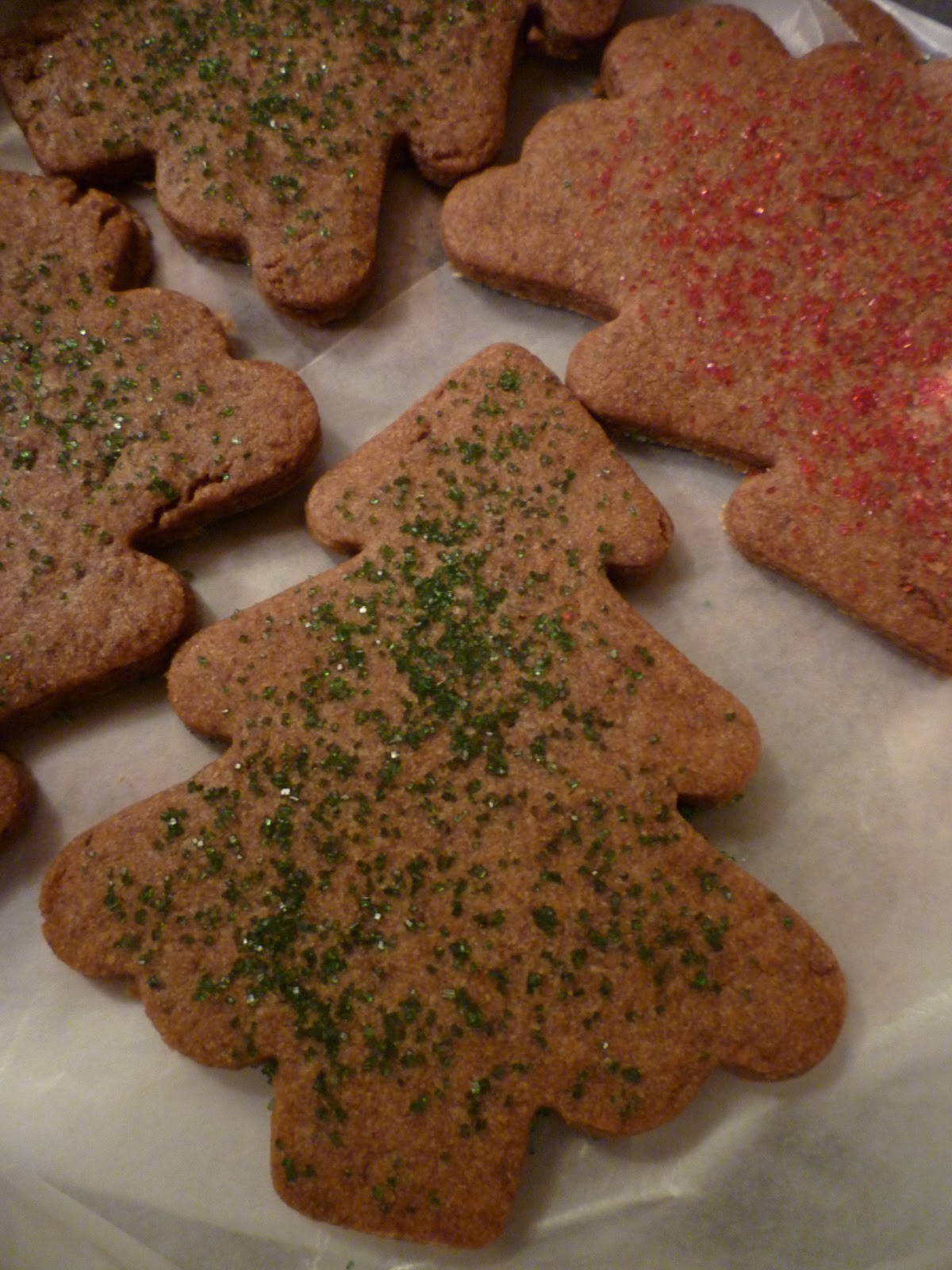
But wait – couldn’t they be used for something? If I dried them in the oven, and ground them finely in the food processor, I could use them as the basis for different cookies….so I tried just that. To the fine crumbs I added a cube of butter, an egg, and extra sugar and flour. A little more ground ginger and a tiny bit of cardamom. Then instead of dropping the dough by teaspoonfuls I chilled and rolled it, into trees. Now we have crisp gingerbread cookies that surprise the eater with an occasional tiny piece of candied ginger, and that warm your mouth with an even more complex and winning flavor. Alas, never to be duplicated.

This made me brave enough to tackle the other failed cookie product that had been sitting in the freezer for awhile, since the time I made some Russian Tea Cakes but only put in half as much flour as they needed. The buttery, pecan-studded cookie crumbs I had stuck in a jar in the freezer, being unwilling at the time to give up on them.

Now I dug them out and experimented in a similar way, adding an egg, sugar, flour, baking powder and lemon zest. I tried to roll this dough, too, but it would not hold together, so I shaped disks and stuck a pecan half on each one. Behold! Another new and non-repeatable Glad Christmas cookie, which the man of the house has tasted and approved. I do hope nonetheless that I can avoid making a yearly tradition of the Cookie Rescue.

– – – – – – – – – – – – – – – – – – – – – – – – – – – –

Back to December of 2024… Here (pictured above) is a cookie from the New York Times cooks that I’d like to try making this year: Ginger Cheesecake Cookies

If this one were to flop somehow, I think I would save the pieces to use in a trifle — Haha! Don’t believe it. I have done that before, and have I ever made a trifle of those tidbits? No, I just snack on them until they are gone… So, let’s hope they work out as intact cookies. I promise not to cut back on the sugar very much.

I could have got halfway through a cookie recipe in the time I’ve spent thinking about cookies this afternoon. But no, my butter wasn’t soft. So I’ll take a couple of sticks out of the refrigerator right now, and who knows… maybe tonight….


Hoping your Christmas preparations are peaceful.
I love seeing everyone’s plans and decorations.

O Come, O Come, Emmanuel!

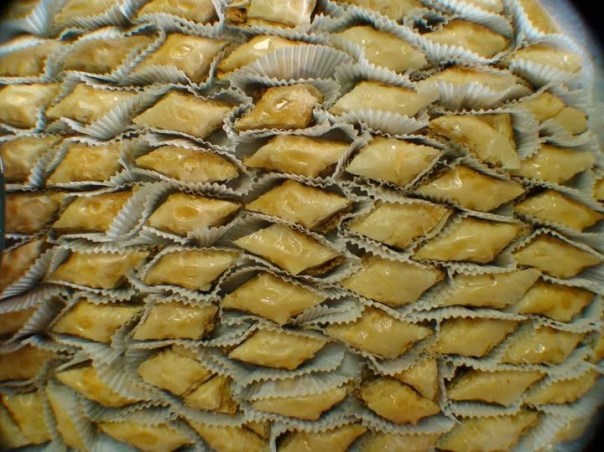
Baklava is various – here is one recipe.

Ten years ago, when I was reading The Supper of the Lamb by Robert Farrar Capon, and writing multiple blog posts about that delicious book, I promised to share here the recipe for baklava that our parish uses. The idea came to me when reading Capon’s words on butter and pastry, and I warned my readers not to use his recipe for baklava. Since then I’ve learned more about the many and various ways that people prepare that confection in different cultures, and am no longer closed-minded about it at all. If you have a different recipe you like, I hope you will share it in the comments.

Though I love honey, I prefer baklava without it, because in the examples I have eaten, the honey overpowers the flavors of nuts and butter, and makes a heavy piece of dessert — honey is in fact a heavy and dense food. This version that we learned to make from a long-time member of the parish is somehow “lighter” in flavor, while losing none of the richness that is essential.

BAKLAVA

About 30 pieces

SYRUP:

3/4 cup water
1 1/2 cups sugar
1 tablespoon fresh lemon juice

FILLING:

1 pound walnuts
1/2 cup sugar

PASTRY:

1 pound filo dough, thawed
1 pound unsalted butter, clarified (instructions below).

1. Preheat oven to 350°.

2. Prepare the syrup: Combine water and sugar; bring to a boil and cook over moderately high heat, stirring, until thickened. Stir in lemon juice, cook 3 more minutes and set aside to cool.

2. Grind nuts in a food processor. Transfer to a bowl, add sugar and mix thoroughly.

3. Spread half the filo dough flat on a buttered 9” X 13” jellyroll pan. Cut and piece as necessary. Spread nut-and-sugar mix evenly over dough; then lay the remaining dough over the top.

4. Cut pastry, either into 2” squares, or for traditional diamond-shaped pieces, make lengthwise cuts 1 1/2” apart, and cuts at a 45 degree angle 1 1/2” apart. This will yield diamonds about 4 1/2” long, with sides about 2 1/2” long.

5. Pour 1 cup of the melted butter evenly over the top. Place the pan in the oven and reduce heat to 300°. Bake for 40 minutes, turning the pan after 20 minutes for even browning. Repeat, using remaining butter and baking again for 20 minutes, turning after 10 minutes.

7. Remove pan from oven and immediately pour cooled syrup over the hot pastry. Let stand and cool approximately 24 hours.

Clarified Butter

Melt butter in a heavy saucepan over low heat. After it has melted, some of the milk solids will drop to the bottom of the pan while others will rise as foam. Skim off the foam and pour the clarified butter out of the pan, leaving the milk solids at the bottom, or strain it through a double layer of cheesecloth.

If you are interested in what the book The Supper of the Lamb is about, you can find all the posts in which I wrote anything about it here: Robert Farrar Capon.

(Father) Robert Farrar Capon