Tag Archives: baklava

Olive oil: the body.

“If the dish you are cooking doesn’t have meat, olive oil is especially needed to give body to it. Today we are making chicken with potatoes so we only need a little olive oil.”

So our teacher explained as she poured a few more generous glugs from the bottle over the raw ingredients in the pan.

We were attending a cooking class taught by a Greek woman named Stella, and in the company of eight or so other visitors to Paros, in this case all Americans. We were to learn quite a lot, not only about olive oil but about feta cheese, baklava, the mastic tree and the local farmers. It was more enjoyable than I could have imagined, because our host and instructor was so real, and obviously liked people.

She only uses oil from olives grown on Paros Island — and she used one whole liter bottle and half of a second bottle for that one meal’s dishes. Also, according to Stella, the creamiest, tastiest feta is made on Paros — and that I can believe.
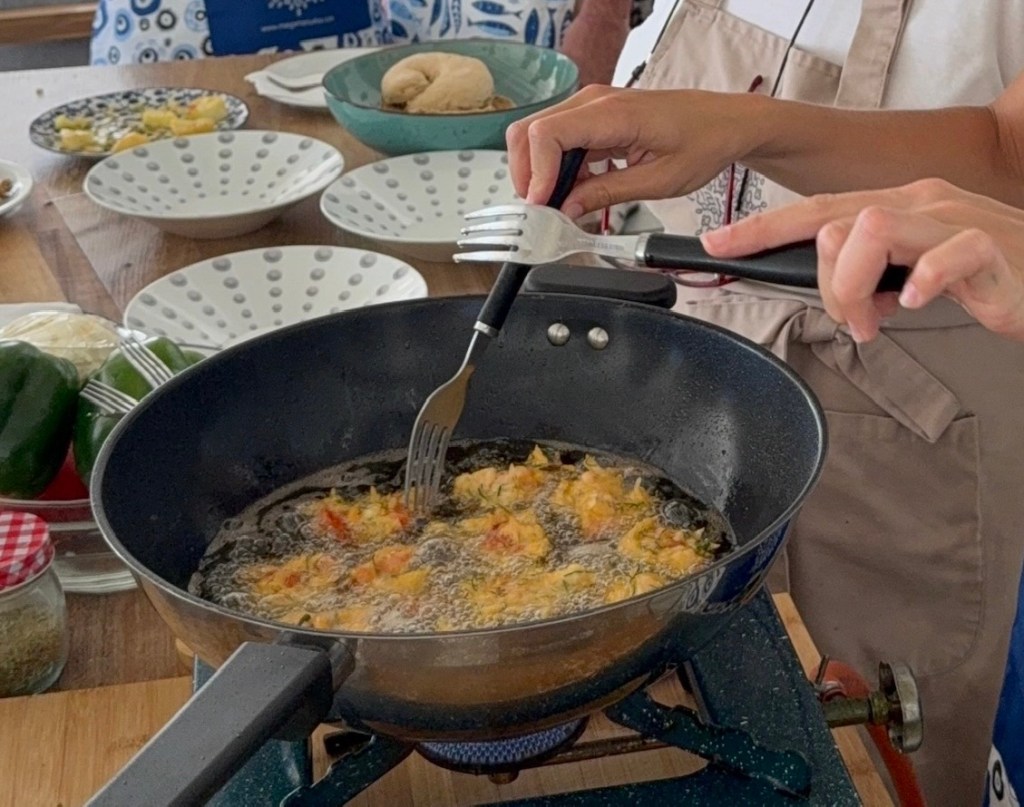
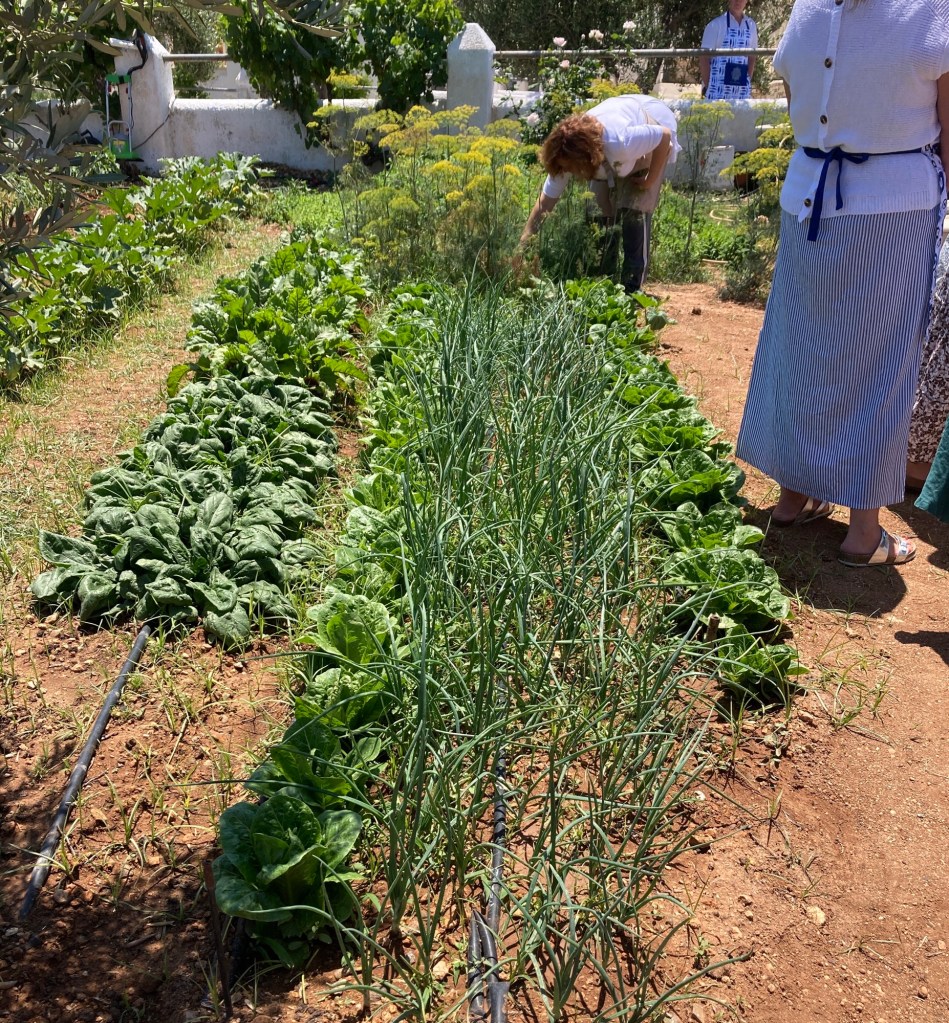
We stood around a big table wearing our blue-and-white aprons, and took turns chopping, stirring, frying and tasting. We got a tour of her garden, and at last, though all that tasting had blunted our appetites, we sat down to a feast.

At some point as we were cooking Stella mentioned the herb mastic, and later while we were enjoying the food we’d prepared, I was pleased to tell our teacher that Pippin and I had seen mastic bushes on the Byzantine Road the day before. At least, that’s what our Seek app said it was, Pistacia lentiscus, and our research online seemed to agree…
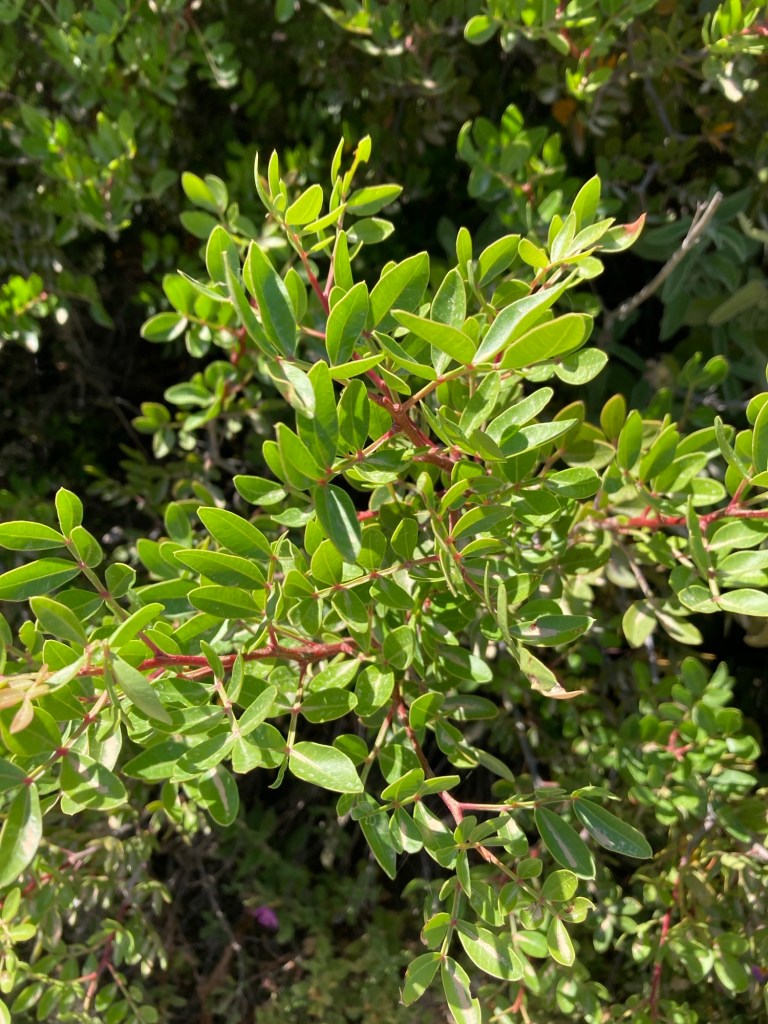
Maybe it’s not mastic.

But Stella assured us that in Greece mastika (Μαστίχα) only grows on the island of Chios, though farmers are always trying to cultivate it elsewhere. We could tell she was a bit defensive at my proposing a conflicting story.
One thing Stella did confirm for me is that the best baklava is made mostly with sugar for sweetening, though she includes a very small amount honey in her recipe.
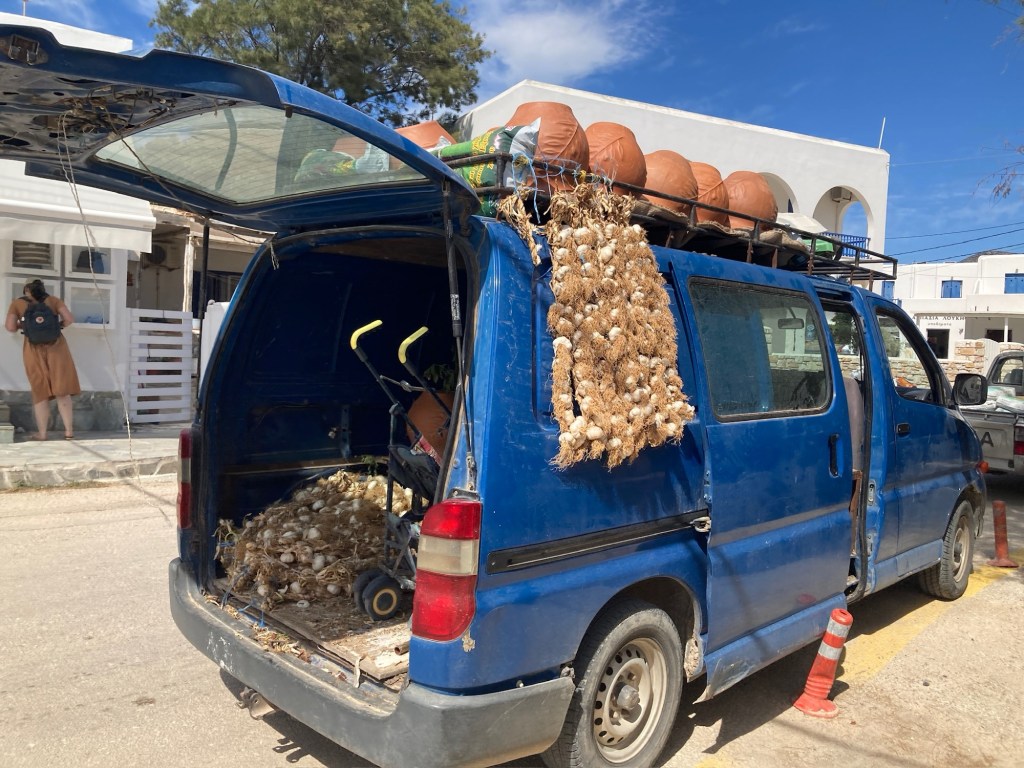
Garlic truck

In addition to the taste experiences of our class, my girls and I sampled in restaurants lots of different foods, or new presentations of familiar ones. The Greeks want very much for their guests not to miss out on any of the dishes they are proud of.
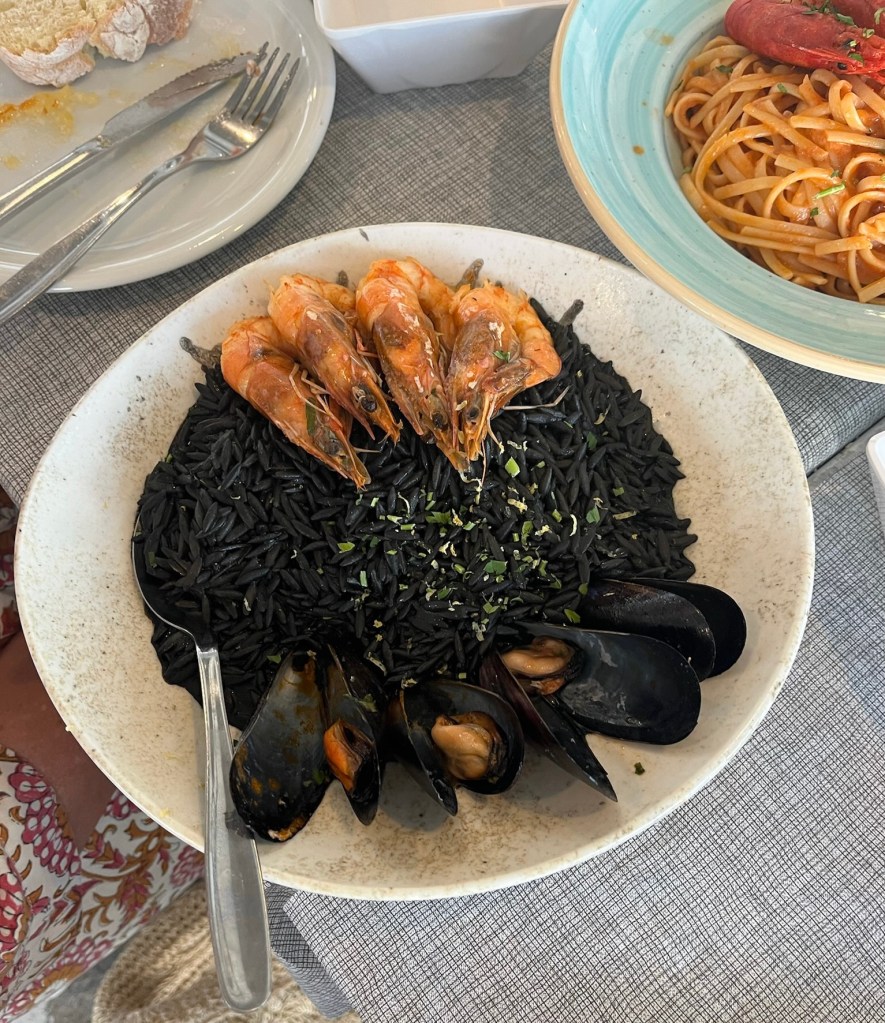
Orzo with cuttlefish ink.

Today I met up with a Greek friend I knew from my parish in California, when she lived there for several years, and she was typically eager to feed me something I might not have tried in the last two weeks. So she took me to a Cretan restaurant.
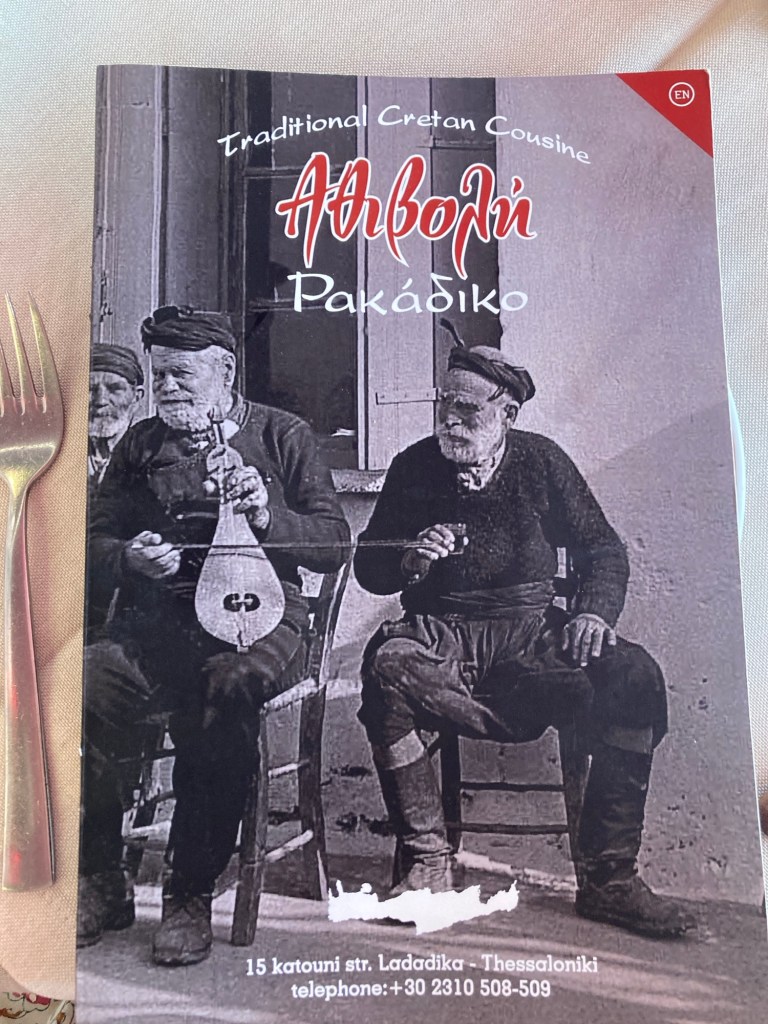
I guess I shouldn’t have been surprised that the people of Crete have their special ways with the typical ingredients of the Mediterranean.

Some of the dishes I tried were: Potatoes With Goat Butter; Fennel Pie; and Rooster Baked in Wine, Served on Cretan Pasta.
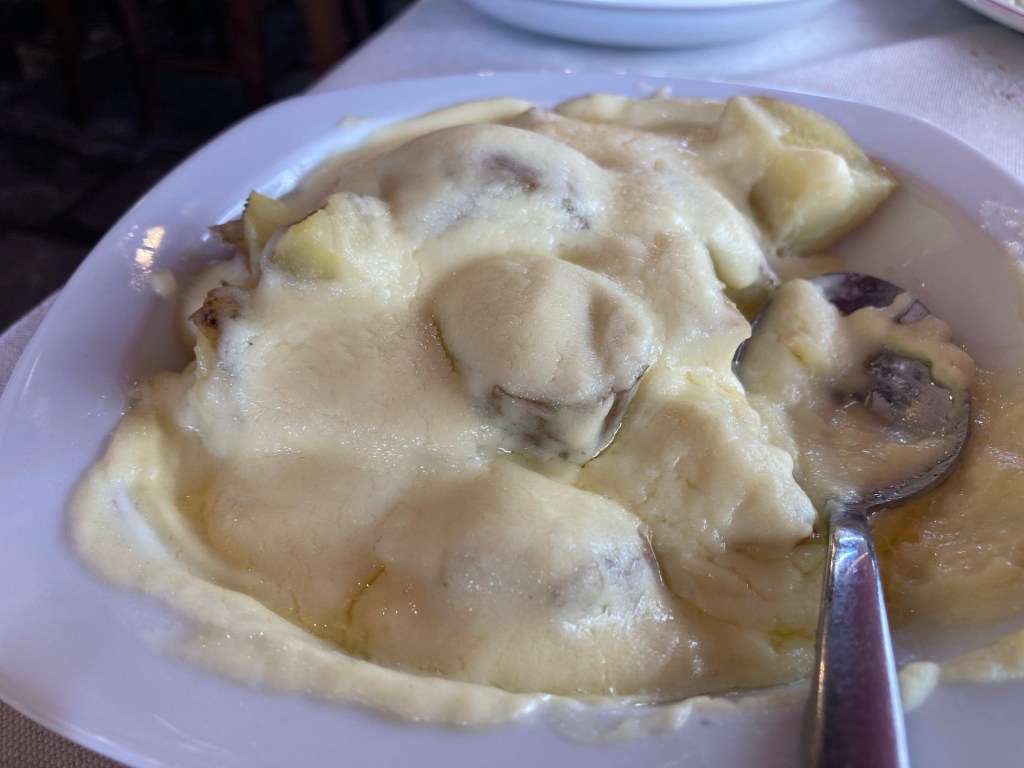
Potatoes with Goat Butter

Almost always the platters of each dish are enough to serve 2-4 people, so it’s wise to agree with one’s friends on what you all like, so you can share. But so far, my dining companions are absolutely unconcerned about there being too much food on the table. Being a proper host almost requires it.

It’s a good thing I’m doing so much walking 😀

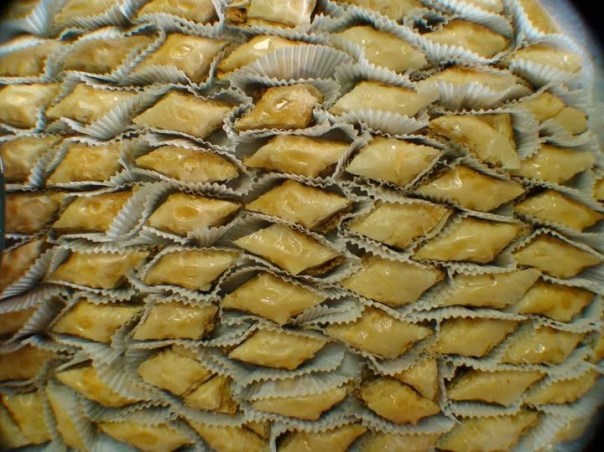
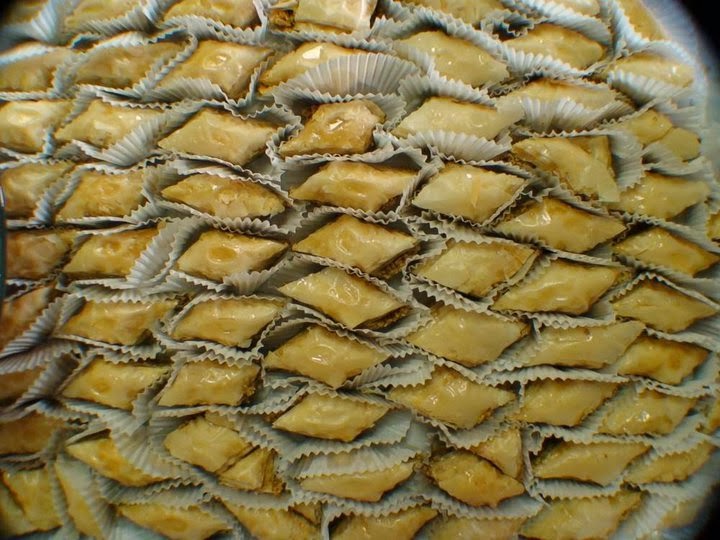
Baklava is various – here is one recipe.

Ten years ago, when I was reading The Supper of the Lamb by Robert Farrar Capon, and writing multiple blog posts about that delicious book, I promised to share here the recipe for baklava that our parish uses. The idea came to me when reading Capon’s words on butter and pastry, and I warned my readers not to use his recipe for baklava. Since then I’ve learned more about the many and various ways that people prepare that confection in different cultures, and am no longer closed-minded about it at all. If you have a different recipe you like, I hope you will share it in the comments.

Though I love honey, I prefer baklava without it, because in the examples I have eaten, the honey overpowers the flavors of nuts and butter, and makes a heavy piece of dessert — honey is in fact a heavy and dense food. This version that we learned to make from a long-time member of the parish is somehow “lighter” in flavor, while losing none of the richness that is essential.

BAKLAVA

About 30 pieces

SYRUP:

3/4 cup water
1 1/2 cups sugar
1 tablespoon fresh lemon juice

FILLING:

1 pound walnuts
1/2 cup sugar

PASTRY:

1 pound filo dough, thawed
1 pound unsalted butter, clarified (instructions below).

1. Preheat oven to 350°.

2. Prepare the syrup: Combine water and sugar; bring to a boil and cook over moderately high heat, stirring, until thickened. Stir in lemon juice, cook 3 more minutes and set aside to cool.

2. Grind nuts in a food processor. Transfer to a bowl, add sugar and mix thoroughly.

3. Spread half the filo dough flat on a buttered 9” X 13” jellyroll pan. Cut and piece as necessary. Spread nut-and-sugar mix evenly over dough; then lay the remaining dough over the top.

4. Cut pastry, either into 2” squares, or for traditional diamond-shaped pieces, make lengthwise cuts 1 1/2” apart, and cuts at a 45 degree angle 1 1/2” apart. This will yield diamonds about 4 1/2” long, with sides about 2 1/2” long.

5. Pour 1 cup of the melted butter evenly over the top. Place the pan in the oven and reduce heat to 300°. Bake for 40 minutes, turning the pan after 20 minutes for even browning. Repeat, using remaining butter and baking again for 20 minutes, turning after 10 minutes.

7. Remove pan from oven and immediately pour cooled syrup over the hot pastry. Let stand and cool approximately 24 hours.
Clarified Butter

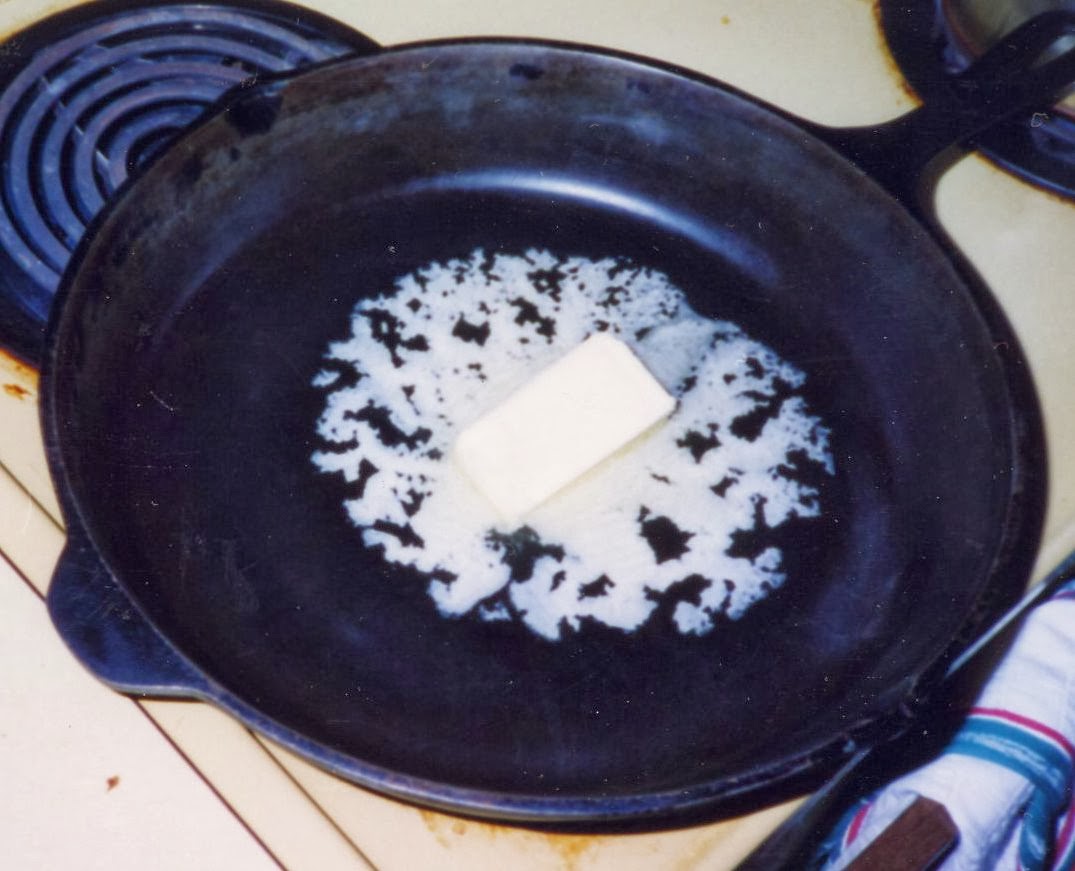
Melt butter in a heavy saucepan over low heat. After it has melted, some of the milk solids will drop to the bottom of the pan while others will rise as foam. Skim off the foam and pour the clarified butter out of the pan, leaving the milk solids at the bottom, or strain it through a double layer of cheesecloth.

If you are interested in what the book The Supper of the Lamb is about, you can find all the posts in which I wrote anything about it here: Robert Farrar Capon.

(Father) Robert Farrar Capon

RFC for Butter Week

Please don’t try Roger Farrar Capon’s baklava recipe. He describes it as “french-fried,” and yes, it does involved a large quantity of oil ! which I declare a horrid perversion of the spirit of baklava. This is the first thing I have found in The Supper of the Lamb that has so disappointed and surprised me. I guess no one can be perfect.

But the perfect baklava recipe does exist, simplicity itself for method; and for taste, the divine melding of flavors, of which that of Butter is central. It is the one used in my parish to make umpteen sheet pans of baklava every year for festivals and celebratory meals, and I will eventually make it at home and share the recipe here.

As I write, we Orthodox Christians are in the midst of what is sometimes called Butter Week, the week before Lent properly begins, and the last in which we eat dairy products (but start fasting from meat). The perfect time to tell about Capon’s attitude toward butter, which I am very sympathetic to. For example, at the end of a section on sauces he shares:

One last secret. There is almost no sauce that will not be improved by having a lump of butter whisked into it the moment before it is served. In addition to what it does for the flavor, it provides the sauce itself with a patina, a sheen which delights the eye even before the palate begins to judge. It is an embellishment not lightly to be forgone. Dishes should come to the table vested, robed. Don Giovanni is marvelous any way you can get to hear it. But given a choice between seeing it performed full dress, or on a bare stage with the cast in T shirts and sneakers, no rational man would hesitate. A great sauce deserves a great finish. Whatever you do, therefore, don’t omit the final grace — the loving pat of butter.

Those last words remind me of my grandmother, who showed this kind of love in her kitchen and to those she fed, including herself, and she lived healthily and on her own past the age of 100. I can still picture her standing by the stove and tucking fat pats of butter into the slits she had made in our baked potatoes just before taking them to the dining table.

Capon considers bread and butter, or cheese, to be basic ferial (everyday) food for those meals that one is keeping simple and light, for the sake of being able to enjoy real feasting less often. I’ll write more on that principle later. In contrast to bread and butter, we have what RFC calls “the epitome of baking”: pastry. He gives a lot of time and great detail to teaching us how to make puff pastry and Danish pastry, which must be made with butter, of course. I personally am not interested in this kind of cooking at my stage of life, and am happy to eat my butter in a hundred places other than pastry. Capon explains further that butter

…is not, in any except the merely technical sense of the word, grease. It melts at the temperature of the tongue, and consequently goes down as easily as cream. (You do not like to drink cream? I am sorry. Let us agree to disagree and get on with it.) Any man who cannot tell the difference between butter and margarine has callouses on the inside of his mouth…Butter is a substance in its own right, justified by its own delectability, not by its contributory services. It is a unique and solid sauce; it is apt to more dishes than anything in the world, and it is, like all the greatest sauces, worthy of being eaten plain.

Besides pastry, there are many recipes at the back of the book that feature this blessed food, including what look to be very nice cakes and cookies. I think all of us have plenty of that kind of recipe already, and if you don’t, just look on my own Recipes and Vague Instructions page on this blog. I wholeheartedly agree with RFC that butter “glorifies almost everything it touches.”

Other posts in this series are:
RFC is the man we need.
RFC begins with the meat.
RFC considers blood and sacrifice.
RFC makes one of nature’s marvels.