 |
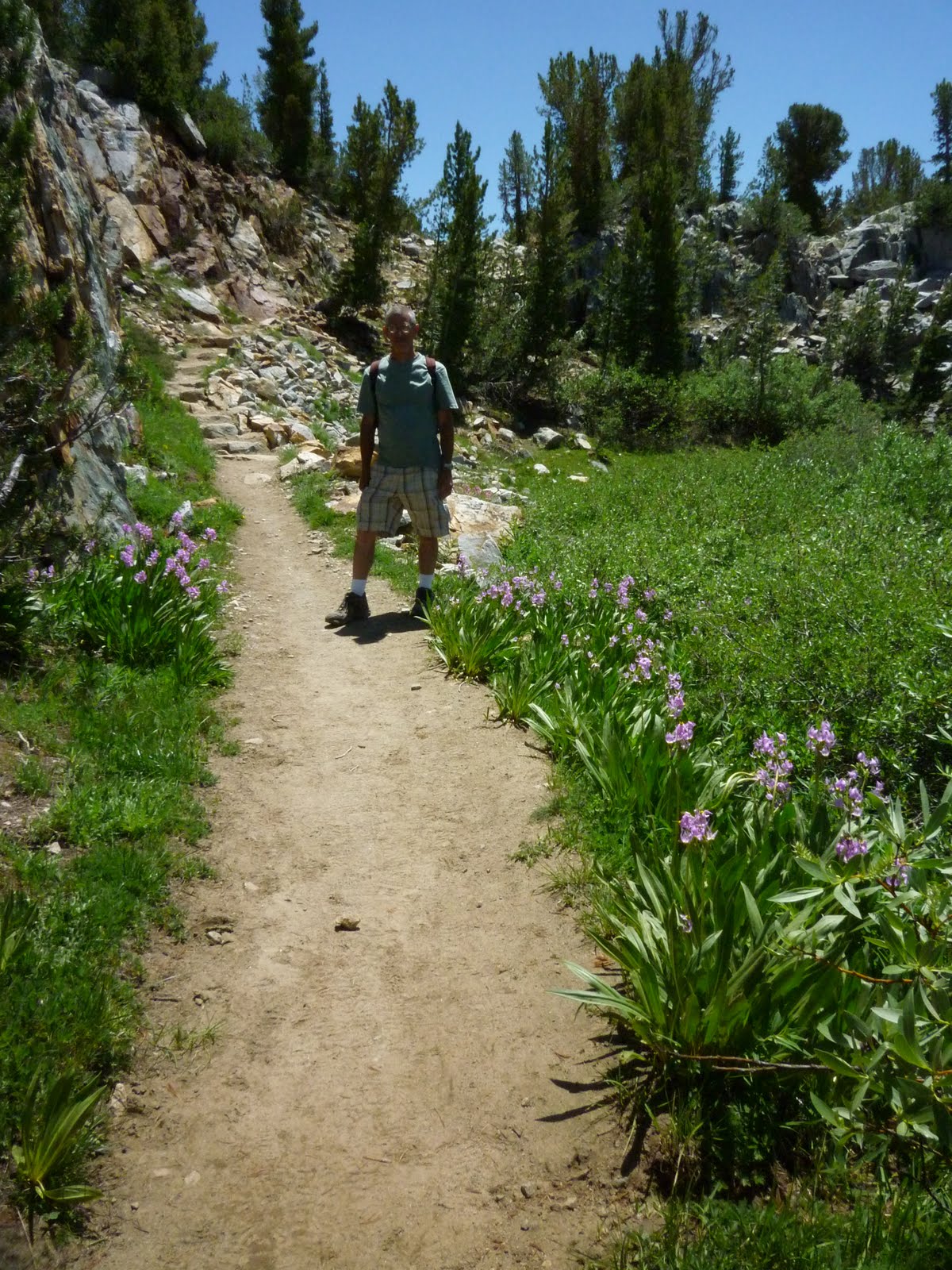
| Mr G. with shooting stars |
The point of going to the eastern slopes of the Sierra Nevada was to take a hike out of South Lake, above the town of Bishop. When my husband first proposed this trip, I liked the idea of driving to a trailhead that is already high up there; I knew that our day hike would likely not be too strenuous.
After spending the day driving down from Tahoe, mostly on Hwy. 395, we stayed at a nice motel that made luxuriating possible. Making the most of our relaxed schedule, we didn’t get to the trailhead until what was to us an embarrassingly late hour, and I’m not going to publicize it here. When we left Bishop, though, it was already 80°.
 |
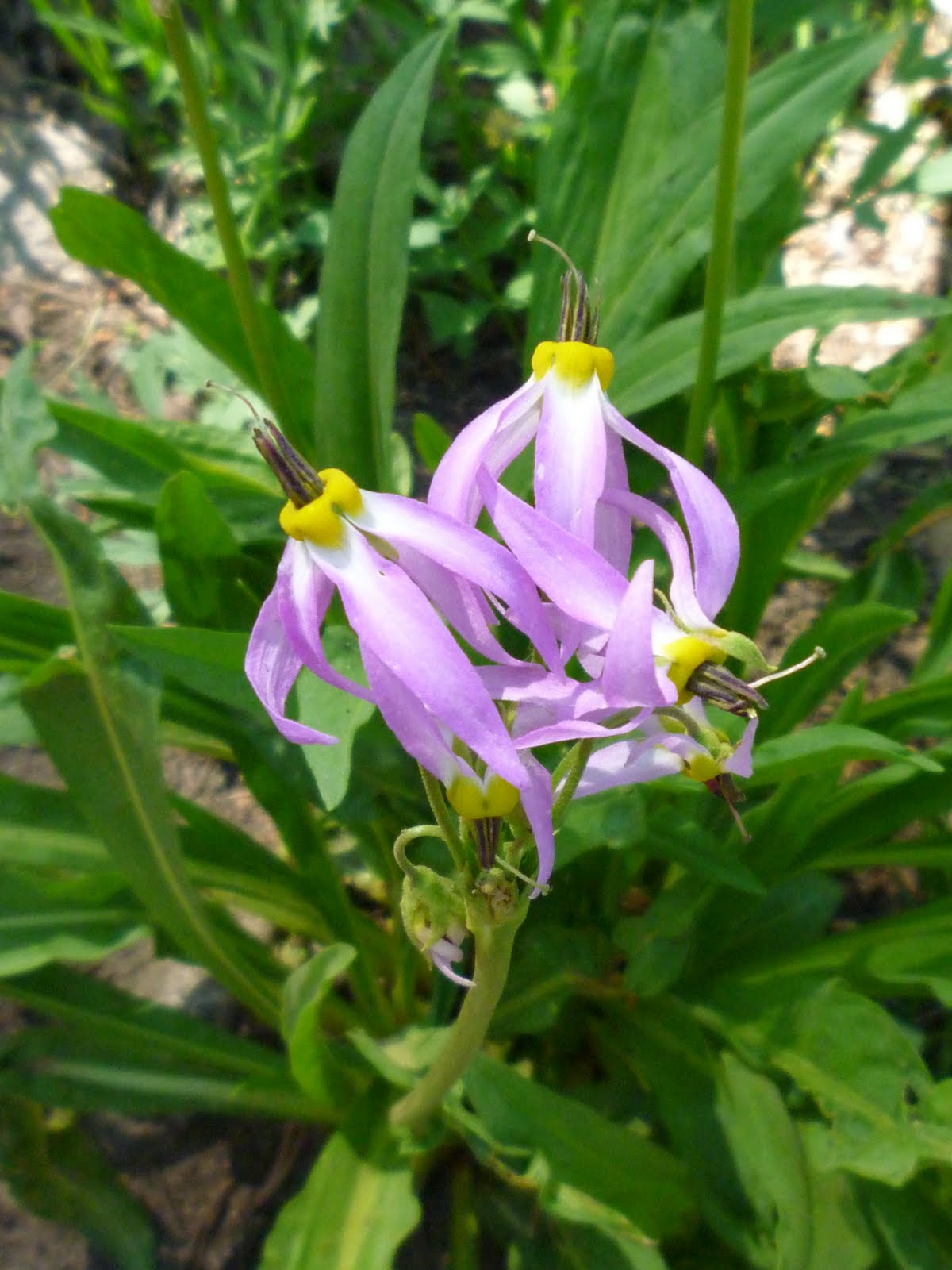
| shooting star |
A mere 22 miles up the road, the temperature had dropped to 60° — because we had gone in the upward direction 5,760 feet. We got nice and warm, hiking for six hours close to the sun, but the thermometer never rose above 75°. When we stopped to cool off or take a drink, we could quickly do that in the shade of a boulder — but the mosquitoes liked the shade, too.
I couldn’t begin to photograph all the flowers and many of my pictures came out too bright owing to that midday sun. Anyway, Mr. Glad and I had made a deal that I would leave some space on the memory card for his shots of larger landscapes and peaks, so for ten whole minutes at a time I would try hard to pretend that I didn’t have a camera with me.
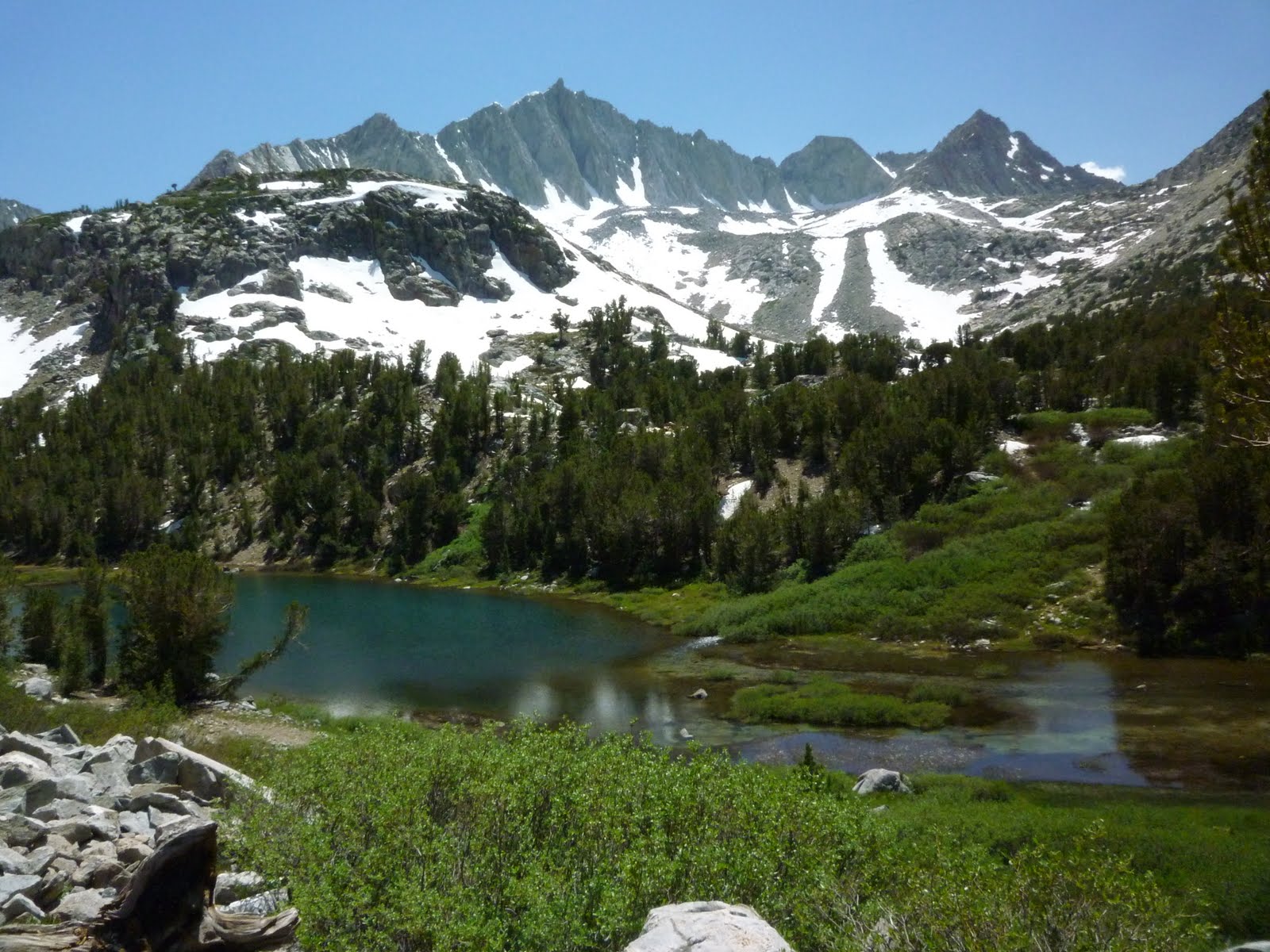
 I did think many of my readers would appreciate the one mountain picture I took myself, of this brown peak (at right). Now ladies, does it remind you of anything? How about…a heap of cocoa powder, maybe? It’s called Chocolate Peak.
It was odd that I didn’t feel a need for the boost a dark chocolate bar might give me, hiking along a trail that continued to ascend in the direction of Bishop Pass for our first few hours, up where the air is thin.
I did need to stop pretty frequently to catch my breath, but all in all I was exhilarated, and my mind was composing about 20 different blog posts in an effort to process all the beauty and excitement of the dramatic topography.
 When we got back to the car I quickly wrote a few notes to work from when back home in front of the computer. Sadly, when that time came a few days later, I found that without the context that stimulated such a fervent response in me, I couldn’t even recall all the main points that were to flow from the title of this installment.
Since he was a young boy my husband has liked to hike up to mountain tops or mountain passes where he could get a view, and know that he had reached a specific goal. I, of course, would be happy to sit by a field of flowers and work on taking close-ups while getting whiffs of pine needles on the breeze.
That’s partly because I long ago found that orienteering is not my thing, as was well demonstrated on this hike. During the outward bound portion I felt, without thinking much about it, that we were hiking in an easterly direction, but looking at the map later, I learned that our path led pretty much due south.
And every few minutes the mountains change position relative to one another, as it seems when you are getting closer to one and seeing the other side of its neighbor, so I never learn to recognize them. This is one reason to hike particular trails until they become familiar.
 |
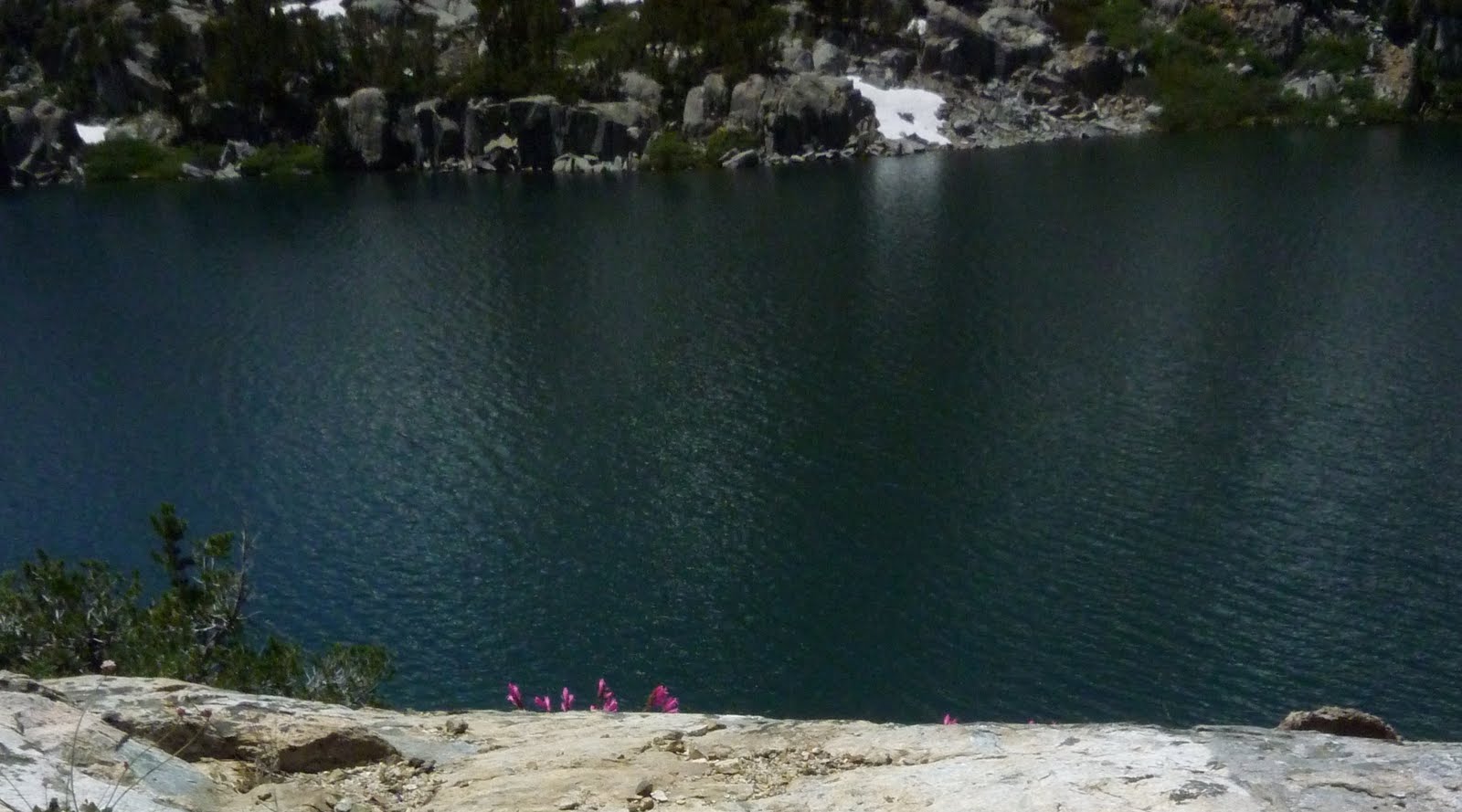
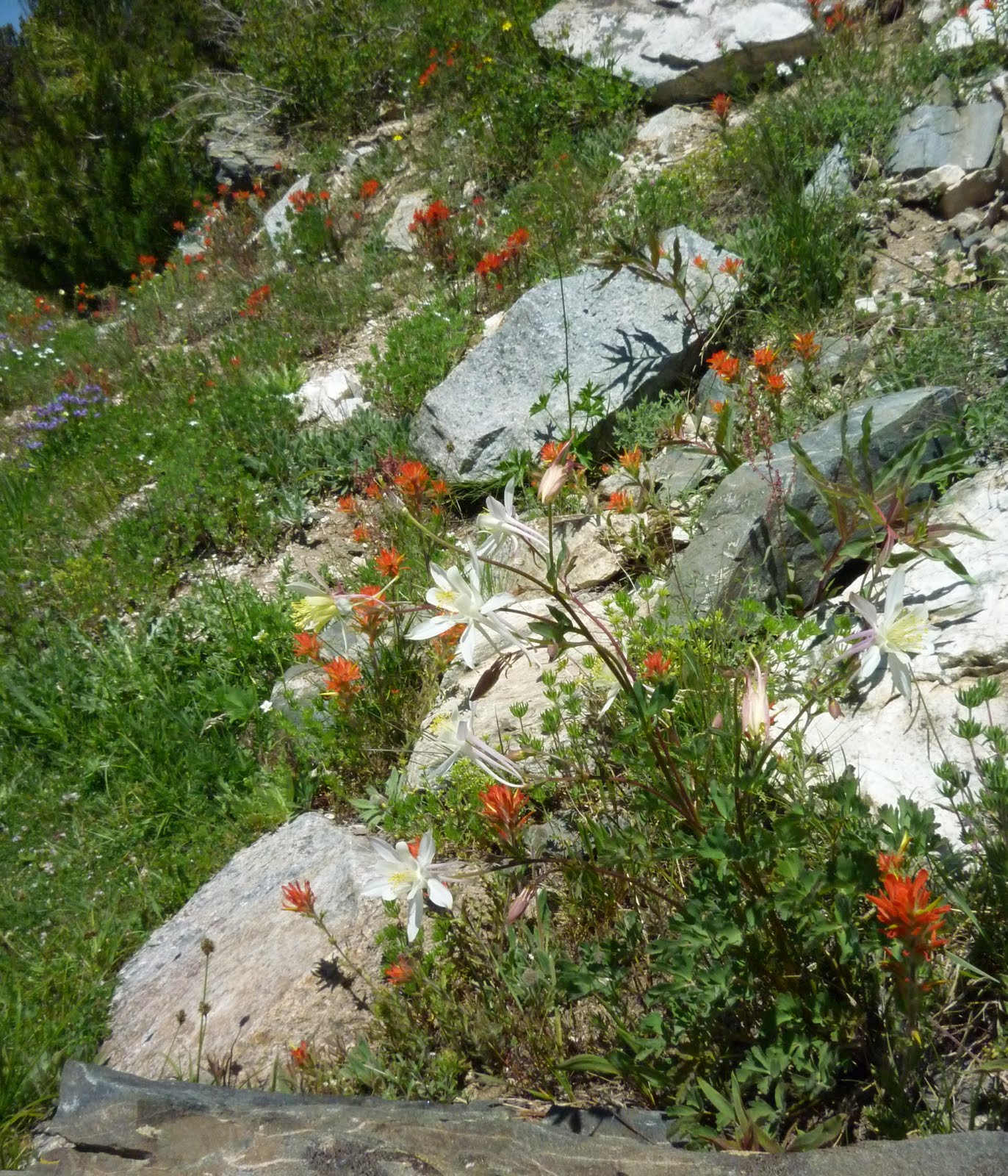
| paintbrush and columbine with granite |
That is probably not going to happen, considering how our hikes are less frequent these days. As for reaching a panoramic viewpoint or summit of anything, on this hike we didn’t try to accomplish that goal. At an unremarkable spot along the trail, Mr. G. merely said, “I think we should turn around now and go back.”
Of course, he knew that the next day he’d get fantastic views of many of the particular mountains he’s come to love during his life. And that is a hint as to the upcoming posts on California Mountains.
(Previous posts in the series: Getting Over,
Tahoe, Rivers and a Song )











 Gladsome Lights