
I use “we” in the title to show solidarity with my beloved garden. Several times a year, a complaint is lodged against Gardener Gretchen for failing to live up to her vision. I guess it’s just the reality of Life Right Now. Tomorrow will be a big gardening day, a day of improvement, but today is when I had a few minutes to stroll about taking stock, taking pictures. All the plants are calling me to come out and admire them, and to notice how they thrive; they don’t want me to feel bad about how much I ignore them.
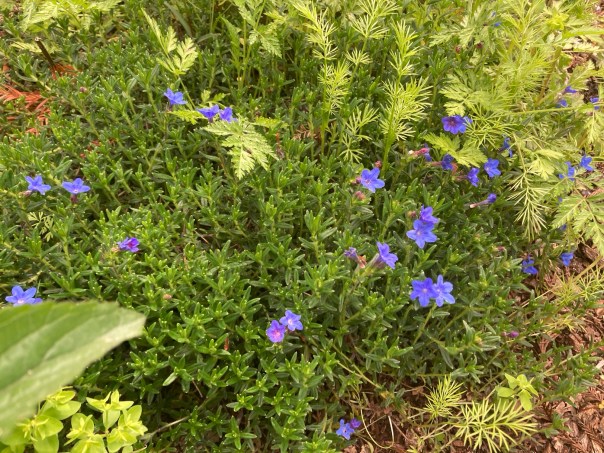
Lithodora is one of my favorites. This week I’m going to pull out all the Love-in-a-Mist sprouts that are growing through and around it and under the fruit trees. In the front I already did as Gardener Dan advised me: I “edited” (thinned) the nigella, which he says will help them produce larger blooms. I think I reduced the number of plants in that bed from roughly 1,000 to 100.
Let me get the rather sad picture below out of the way now, the planter boxes where I typically grow squash and tomatoes. I’m at a loss as to what to do there, as my travels will take me away at just the wrong time for summer vegetables. Maybe the earth will have to lie fallow until August, when I can plant winter greens.

The native Pacific Coast Iris is now blooming in my very own garden (below). I am completely thrilled. This plant is so popular on the West Coast — not just near the ocean but up into the mountains — that it has its own fan club, the Society for Pacific Coast Native Iris.
In native plant nurseries one can find many colors and species of this type, Iris subsect. Californicae, which is in the same family as the Siberian irises. The Flora of North America site says, “Series Californicae presents some of the most complex taxonomic problems in all of our American irises.” In the wild a specimen can be difficult to identify as to which of the three main groups it is in because of “their willingness to cross pollinate whenever their ranges overlap.”
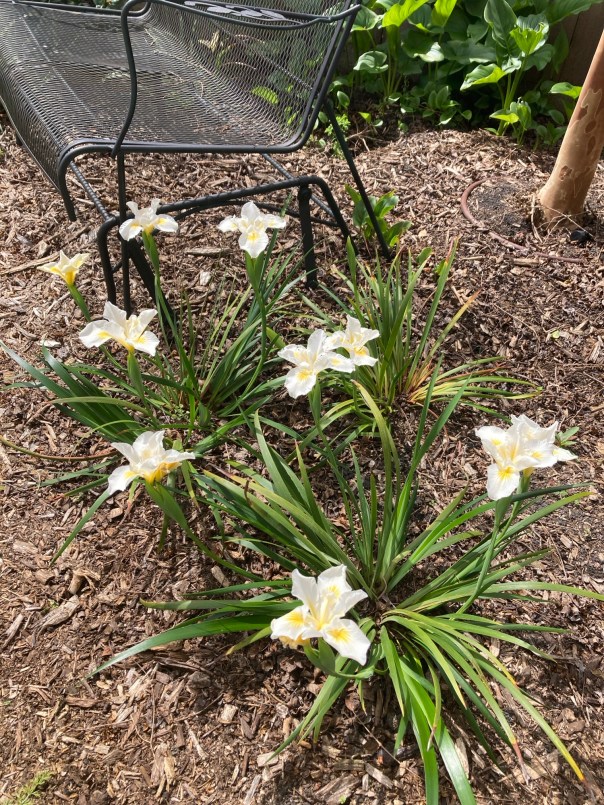
When I was offered a choice by Dan, I knew I wanted the white. But maybe I will find a place to plant other colors in the future. One plant site explained, “If the tall bearded iris is the queen of the garden, the natives are the pixies.” My queens are nearby, in the front garden, rising up tall and elegant, with the pale yellow California poppies (and lots of weeds) for contrast.

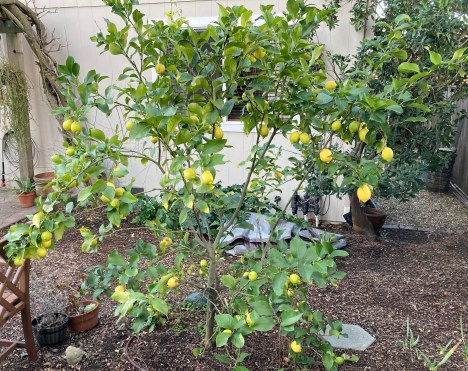
Back by the lemon tree, I had a sort of iris dumping ground for a few years, where I planted whatever extra corms came my way, usually gifted by iris sellers who threw a few odd ones into the shipment. The colors or the quantities didn’t fit in with the others, so I saved them in that corner, where they never did well. Last fall I put them in a double row behind a plum tree, where they are surprisingly starting to bloom. Yes, I saw that milk thistle — I just need gloves before I will tackle it!

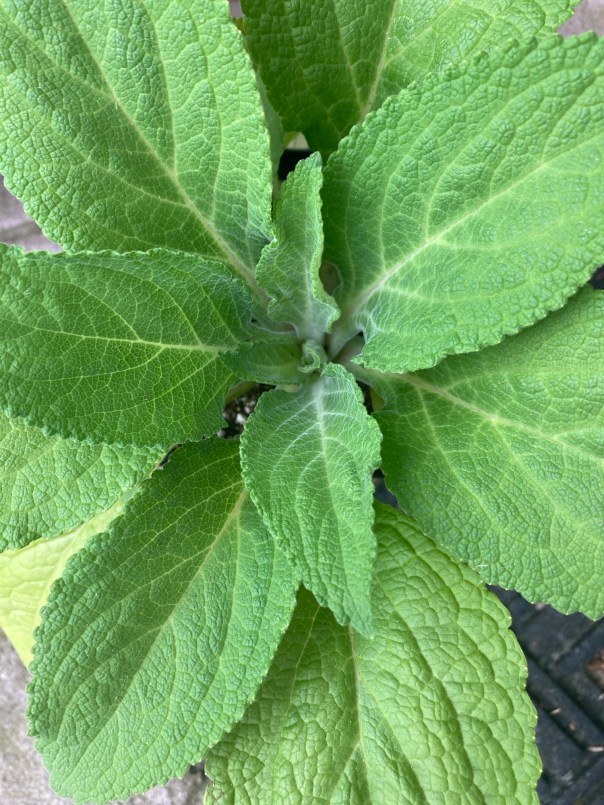
This spring, I bought exactly one plant on my own, without any idea of where I might install it. I will wander tomorrow and find a setting for a foxglove plant.
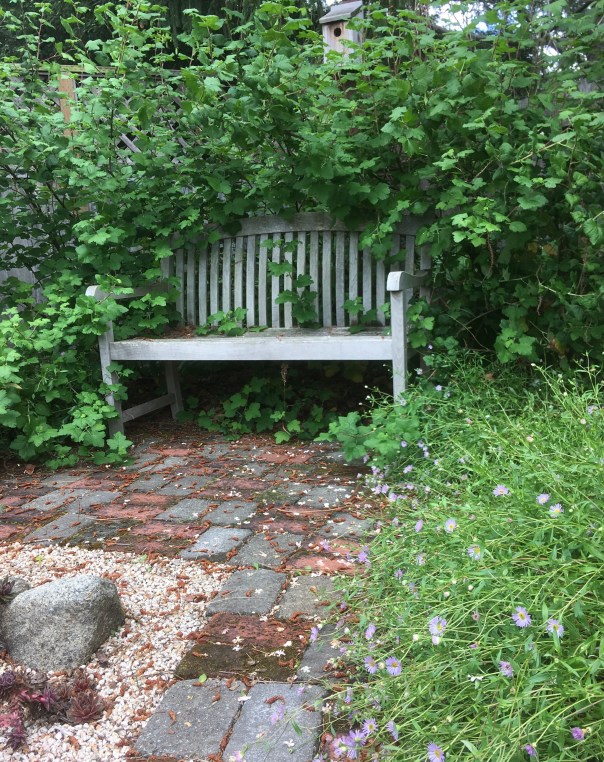
For a few years, back when my garden was newly landscaped, I had three native currant bushes (ribes) with their showy flowers and intoxicating scented leaves.
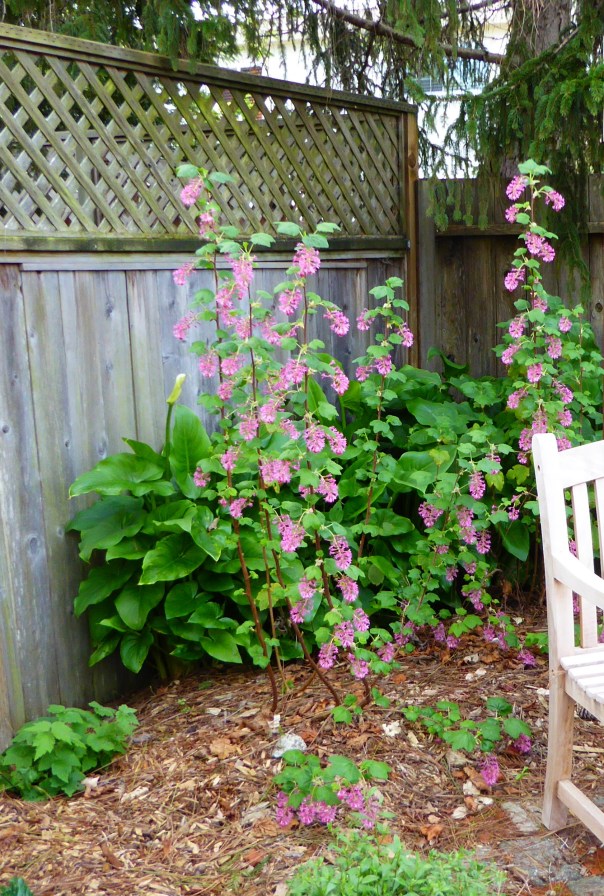
They grew so large that they engulfed the bench in front of them, making it impossible to sit there:
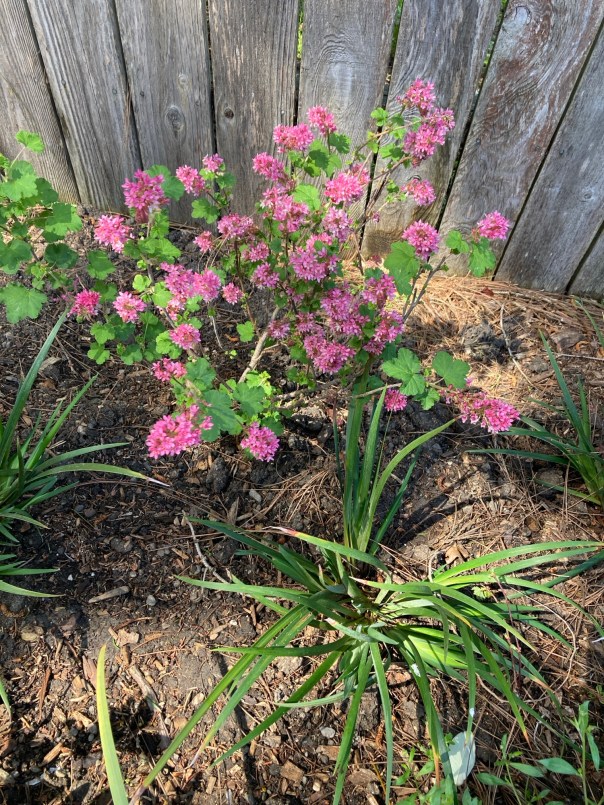
After I pruned them, they bloomed again …. and then one by one they died. No one could figure out why. Now we are trying some new ones, which don’t look like the same plant exactly, but they are blooming very prettily right now:
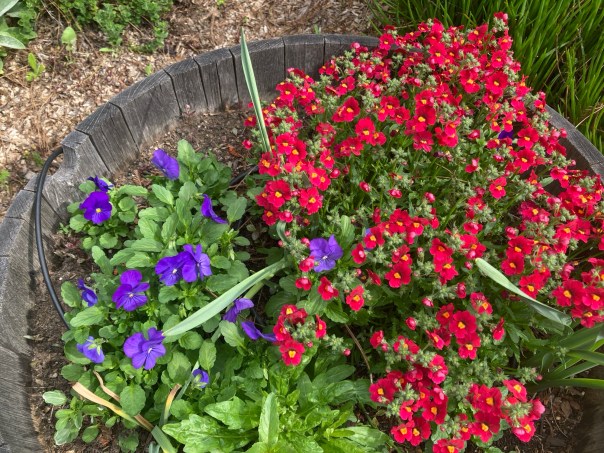
Last fall I made it to the hardware store after most of the bulbs were already bought up. All they had of muscari were these “special” ones below. I bought a big bag, and then regretted it, thinking they might turn out to be just weird. So instead of planting them near the front door, I put them in various places in the back garden, where they are blooming late… and I do think they are odd.

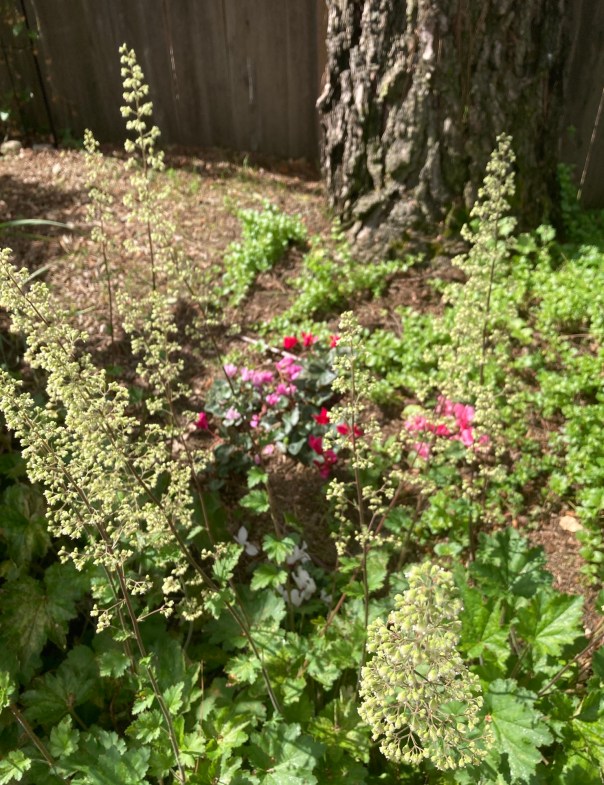
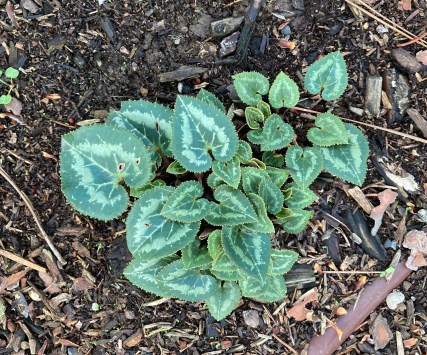
The heuchera are covered with their bells already, and you can see my little cyclamen plantation behind. The soil is very shallow because of tree roots, but they come back year after year; recently I added two more to their family.
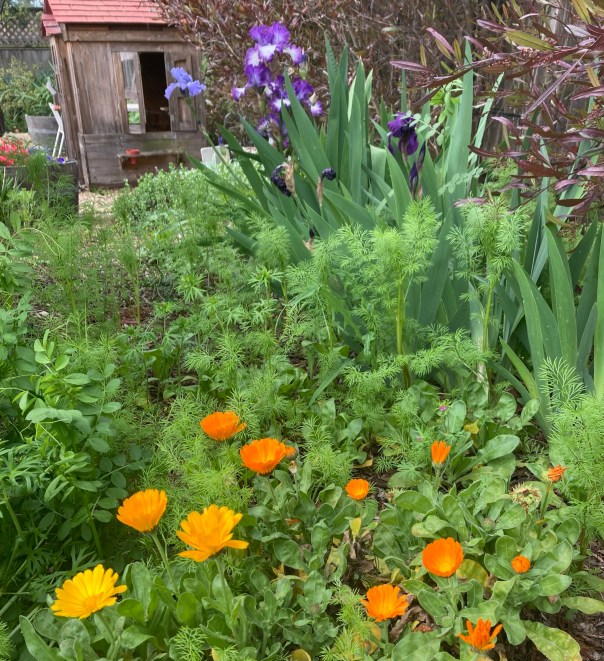
I will close with a cheery calendula group. They are brighter than ever because of all the rain they got, and will never look this good again until next winter or spring, if they get a good winter watering. It’s just too dry in my garden for them to thrive, but they are like many of us that way, right? Rarely are all the conditions optimal for our looking and feeling our best. The calendulas are surrounded by tall, pushy, more drought-tolerant “tares” that don’t seem to bother them at all. I hope to follow their example and cultivate more hardiness, and cheeriness too. Or — merriment.
Because this morning I was reading a Psalm not in my usual translation, and it went like this:
And let the righteous be glad;
Let them greatly rejoice before God;
Let them be glad with merriment.







 Gladsome Lights