Tag Archives: desserts

A May afternoon with friends.

cistus

After church on Sunday I had twelve friends over for a little party. Half of them were children under ten, and all of those had been in my house before; they fell to right away playing with my dress-up clothes, dolls, and matchbox cars. At one point the squirming baby let me remove her to the armchair in the play area where we read a couple of stories together, so that in the other room her mother might drink tea with both hands.

dwarf pomegranate and helianthemum

The weather had warmed up just enough between Saturday and Sunday to make it pleasant for eating outside, and for the children to enjoy organizing the playhouse. I had spent more time cleaning that little hut in preparation than I did the real house — but I still have not sewn new curtains for its window, in these ten years since it became mine.

May is in many ways the perfect month for a garden party, because of the variety of blooms — and what a joy to have other people soaking up the beauty with me. This spring, since I “lifted the skirt” on the pomegranates, the orange helianthemums are bursting with more flowers than ever before; the wisteria is in its prime, and the bees are buzzing all over it. The snowballs on the viburnum are at their best. And we have the possibility of temperate and sunny afternoons. I always think it should be easy to host more such gatherings, but just finding a date that works for everyone takes a lot of effort; in this case I’d begun that process seven weeks ahead.
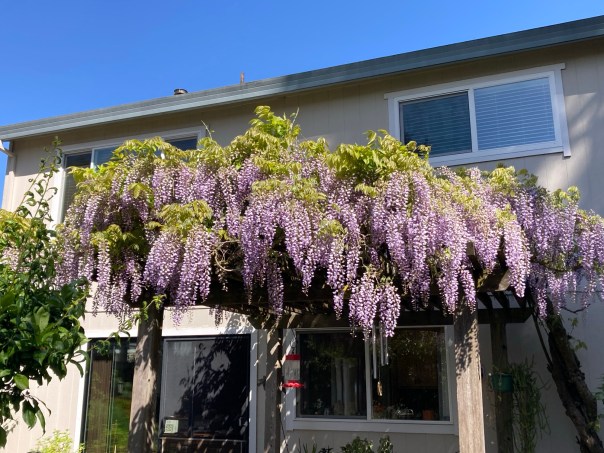
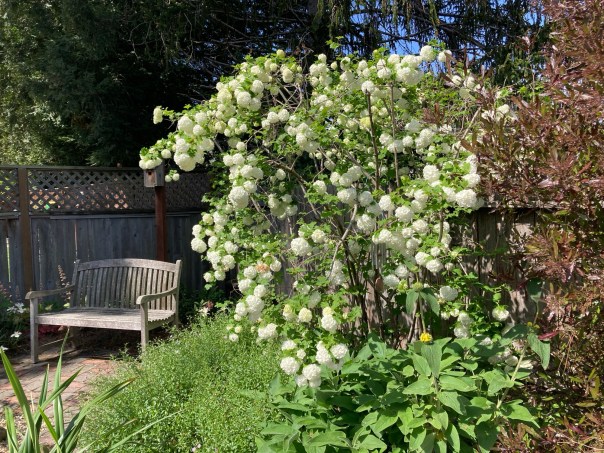
snowball bush

I’d started planning the menu, too — it needed to be items that wouldn’t need fussing over that day. One thing I made the evening before was this favorite quinoa salad that is tweakable to what one has on hand, which I found on the New York Times cooking site. I am unlocking the recipe for you, and you can access it through the link: Quinoa and Broccoli Spoon Salad.
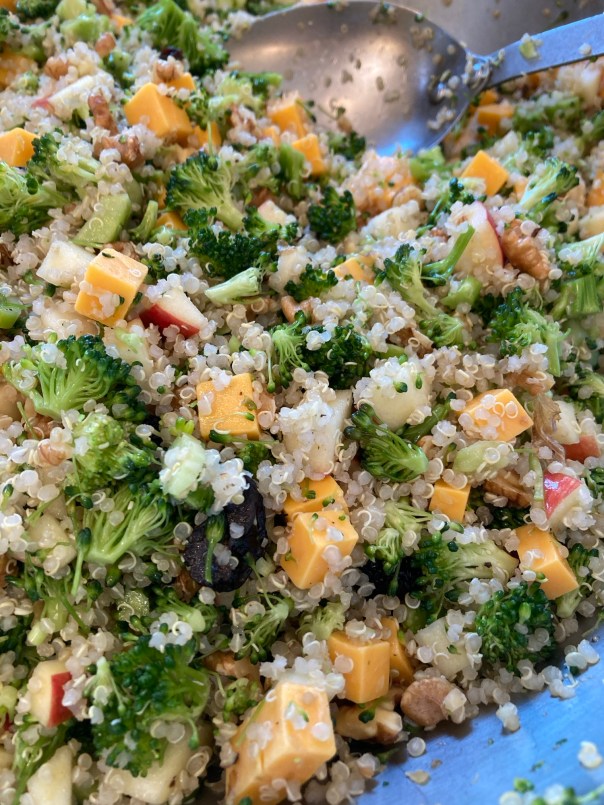
A warning about the quantity of salad that came from one of the cooks who joked about it supposedly serving 4-6: “…it serves 4 to 6 distance swimmers during an Olympic training camp.” I used two cups of quinoa and ended up with plenty left over for my guests to take home plus more than I can eat staying here. I don’t like mustard so I left that out, and I used dried California cherries instead of cranberries, toasted walnuts instead of pecans. I like these NYT recipes because the cooks who try them share things they learned when making them according to the original instructions, or after they alter various ingredients or procedures.

figs in the fall

Few people like raw broccoli, but as I have learned and other cooks testified, the dressing in this dish quickly marinates the small pieces of broccoli and removes the unpleasant rawness, while retaining a little crispness.

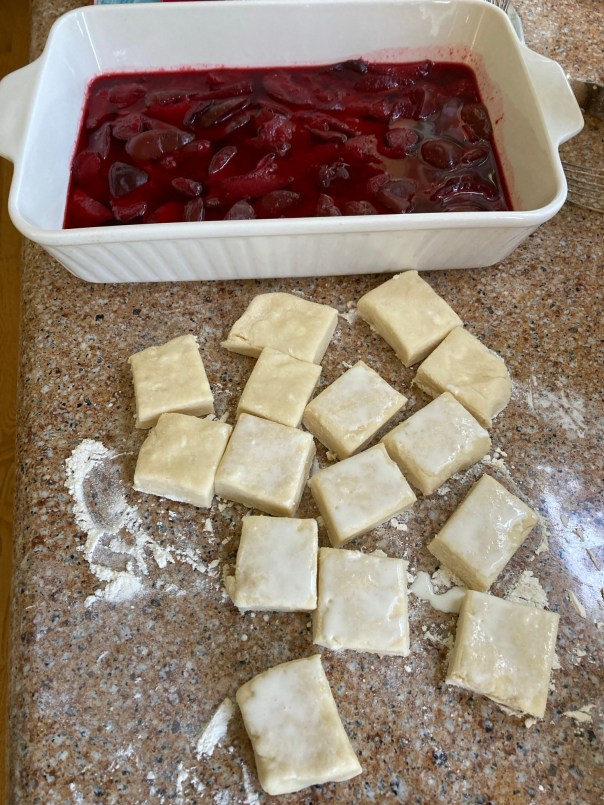
In an effort to use up foods from my freezer and pantry, I made one dessert using plums from my trees that I’d put by last summer, and another dessert using figs that I had tried freezing raw for the first time. Both worked well and were heartily eaten. Plum and Cream Scone Cobbler from Smitten Kitchen I’ve made before with peaches, but this time I had enough plums to use them.

It was delicious, but I will change some things if I make it again. The scones that make the cobbler topping are just too rich, with a whole stick of butter and a cup of cream in the dough. At least, they are too rich combined with the amount of fruit called for. Maybe I would decrease the butter by half next time, and use at least 50% more fruit. (Ha! I see that last time I made it I told myself to make those very changes next time, and forgot.) I also seem to have cut my scones too large…
My guests and I didn’t only talk about books over the course of our leisurely afternoon, but many book titles popped up in our conversation, more than I even know about. A few that I can recall just from our last hour together were: The Ethics of Beauty; St. Ephrem the Syrian: Hymns On Paradise; The Hidden Rainbow; Christ the Conqueror of Hell; The Little Liar; and Orthodoxy and the Religion of the Future.

At one point I ran upstairs to get this book to show the others, my latest deep read. They all had a good laugh with me. It’s not just goofy, but is actually a very thought-provoking book! Maybe I will tell about here it sometime: How to Talk About Books You Haven’t Read. I do a lot of that already, but I’m sure there’s room for improving my skills.

Usually when children play in the playhouse, they like to prepare salads or other halfway-pretend dishes made of all the edibles I give them permission to pick from the garden, including flowers as well as vegetables.

collard flowers

I meant to point my younger guests to my exuberantly flowering kale, parsley and who-knows-what in the planter boxes I am not cultivating right now, but I never got around to it. After everyone had gone home I checked out the back garden to see if there was the sort of happy mess I’m used to in and around the playhouse. There was no evidence that anyone had done any “cooking,” but rather a lot of setting in order, with the dish soap by the sink and a lavish bouquet completing the scene. It was symbolic of all that I had received from my guests who gave me an afternoon in spring.

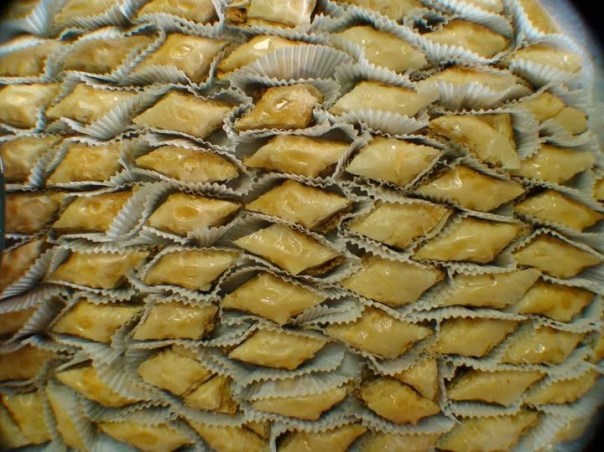
Baklava is various – here is one recipe.

Ten years ago, when I was reading The Supper of the Lamb by Robert Farrar Capon, and writing multiple blog posts about that delicious book, I promised to share here the recipe for baklava that our parish uses. The idea came to me when reading Capon’s words on butter and pastry, and I warned my readers not to use his recipe for baklava. Since then I’ve learned more about the many and various ways that people prepare that confection in different cultures, and am no longer closed-minded about it at all. If you have a different recipe you like, I hope you will share it in the comments.

Though I love honey, I prefer baklava without it, because in the examples I have eaten, the honey overpowers the flavors of nuts and butter, and makes a heavy piece of dessert — honey is in fact a heavy and dense food. This version that we learned to make from a long-time member of the parish is somehow “lighter” in flavor, while losing none of the richness that is essential.

BAKLAVA

About 30 pieces

SYRUP:

3/4 cup water
1 1/2 cups sugar
1 tablespoon fresh lemon juice

FILLING:

1 pound walnuts
1/2 cup sugar

PASTRY:

1 pound filo dough, thawed
1 pound unsalted butter, clarified (instructions below).

1. Preheat oven to 350°.

2. Prepare the syrup: Combine water and sugar; bring to a boil and cook over moderately high heat, stirring, until thickened. Stir in lemon juice, cook 3 more minutes and set aside to cool.

2. Grind nuts in a food processor. Transfer to a bowl, add sugar and mix thoroughly.

3. Spread half the filo dough flat on a buttered 9” X 13” jellyroll pan. Cut and piece as necessary. Spread nut-and-sugar mix evenly over dough; then lay the remaining dough over the top.

4. Cut pastry, either into 2” squares, or for traditional diamond-shaped pieces, make lengthwise cuts 1 1/2” apart, and cuts at a 45 degree angle 1 1/2” apart. This will yield diamonds about 4 1/2” long, with sides about 2 1/2” long.

5. Pour 1 cup of the melted butter evenly over the top. Place the pan in the oven and reduce heat to 300°. Bake for 40 minutes, turning the pan after 20 minutes for even browning. Repeat, using remaining butter and baking again for 20 minutes, turning after 10 minutes.

7. Remove pan from oven and immediately pour cooled syrup over the hot pastry. Let stand and cool approximately 24 hours.

Clarified Butter

Melt butter in a heavy saucepan over low heat. After it has melted, some of the milk solids will drop to the bottom of the pan while others will rise as foam. Skim off the foam and pour the clarified butter out of the pan, leaving the milk solids at the bottom, or strain it through a double layer of cheesecloth.

If you are interested in what the book The Supper of the Lamb is about, you can find all the posts in which I wrote anything about it here: Robert Farrar Capon.

(Father) Robert Farrar Capon

The Zephyr brought joys.

Liam’s papercrafting

While my son “Soldier” was away for a few weeks, his wife whom I call Joy brought all four children to California to see the grandparents. They came by train, the California Zephyr line, which gave me an excuse to tell them stories about my yearly summer train trips as a child to see my grandmother. The images that my mind retains through the decades related to those journeys are vivid. Many railway experiences of the current Amtrak era are worlds apart from what I knew, but I’m happy that the children had a new adventure, and even slept overnight on the train, which I never did.

Their lively group stayed with me five nights, and visited Joy’s family nearby as well. We were so busy all those days, I barely remembered to take any pictures, much less write about our fun.

braiding seagrass

Liam’s side of our Bananagrams game, using all his tiles.

We went to church, to the beach, to the cemetery — bringing along yarrow, zinnias, snapdragons and sunflowers for the children to lay on their grandpa’s grave. They are too young to remember him, so when we got home I showed them a photo slide show on the computer.

We took walks along the creek and to the neighborhood school’s playground. I read from Eleanor Farjeon’s The Little Bookroom as I had read to their cousins last month, and laughed hilariously over “The King’s Daughter Who Cried for the Moon.”

The children combed my garden to find everything I would confirm as edible. They gathered hundreds of manzanita berries from under that little tree and chewed on them, spitting out the several rock-hard seeds in each. The strawberry tree fruits are ripening now, but the tree has grown so tall that they needed a ladder and a broom to knock them down.

These children are, as we say, “good eaters.” No matter what strange concoction Grandma has made, they want to try it — even my ultra-spicy pudding that I make with the pulp left over from making ginger broth. When oatmeal or buckwheat porridge was on the breakfast menu, they loved having a smorgasbord of toppings, everything from peanut butter and milk to chopped dried apricots and this seed mix.
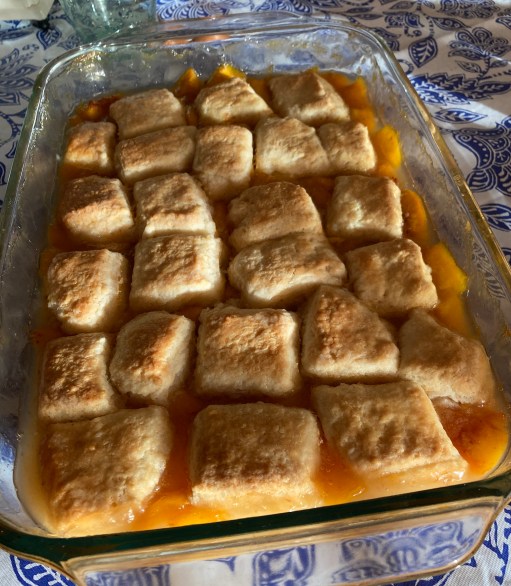
I was given a dozen homegrown peaches recently and I used a recipe from Smitten Kitchen to make a cobbler, half of which we ate for dessert one night, and the remainder next morning for the third course of our breakfast, after grapefruit and scrambled eggs.

It was delectable. Where the recipe called for vanilla or almond extract I used almond. I think if I make it again I will increase the amount of fruit, and use a little less cream or butter in the scone topping, with confidence of still being able to call it Plenty Rich. And I would like to try it with plums — or any fruit!

My dear people are headed back home to Colorado now, and the cobbler is gone…. The taste of scones and peaches is already fading, but Joy and her young joys made a big deposit of sweetness in my heart, to flavor many days to come.

Perfect Cheesecake Bars

It wasn’t my idea to make cheesecake bars, but once I accepted the assignment I took ownership with my usual under-deadline obsessiveness. Lucky it was that I only had a week to fill up with the project, as it turned out to be one of those tasks that swell up to take as much time as you give them.

If you want to see how and why a recipe might evolve, devolve, and eventually get tuned up into its final and praiseworthy rendition, keep reading. This is where I play the professional baker (I know, that’s tooo funny.) If you just want the recipe, please skip over all of the tedious and painful story and go straight to the bottom of the page.

At church the Sisterhood was giving a dinner to celebrate the 60th anniversary of our priest’s ordination, and the 85th birthdays of him and his wife. We threw in a celebration of their 61 years of marriage. We love them so much, we wanted it to be a Very Special dinner, and many people put in many hours and days of planning. I came late to that part, when the final plans for the end of the meal settled on a dessert sampler, and I was asked to make cheesecake bars.

The other four choices on the dessert table were to be Chocolate Peanut Butter Bars, Greek kourabiedes, baklava, and orange chiffon pie. The pie and the cheesecake bars would be baked in bun pans, which are 18x26x1″, so that we could cut them into approximately 2″ pieces and end up with close to 100. I was offered a recipe that called for a commercial cookie mix, but I decided immediately to find a recipe that I could be proud to serve to honored guests. For this kind of occasion I didn’t want to include anything like that.

The things I wanted or needed in a recipe were cottage cheese as well as cream cheese (because I remembered liking what the cottage cheese did to the texture), a streusel topping, and a balanced relation between crust, filling, and topping. It couldn’t be much taller than one inch, if I were going to bake it in a bun pan. I wanted a bar that would present well on a tray, and that could be moved from the pan to a serving platter to a dessert plate without its layers mushing together or becoming a crumbly mess.

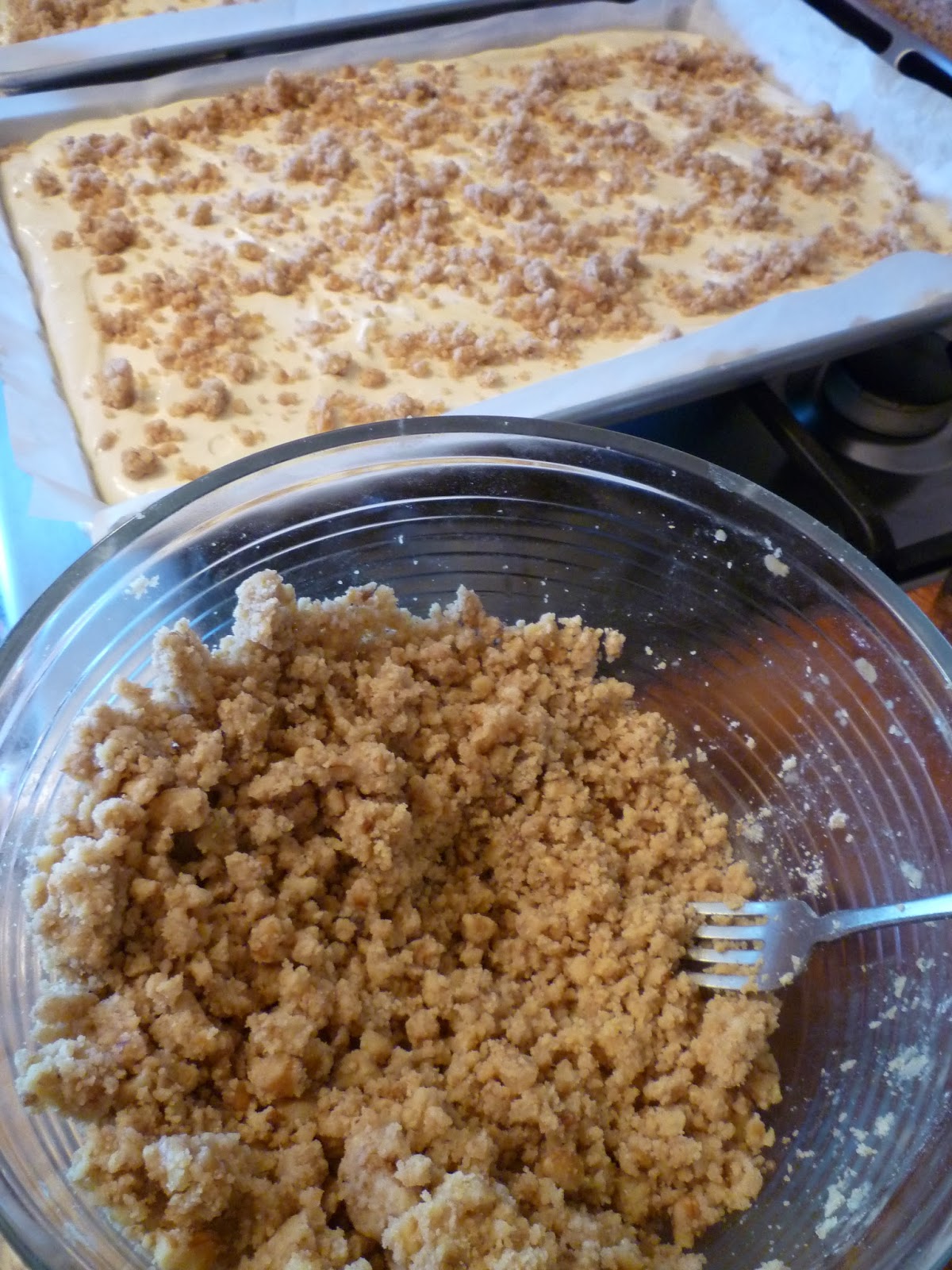
for the streusel

Pinterest and other sites are replete with pictures and recipes for cheesecake bars, but very few of them met my requirements. Some looked tall and ready to topple. Many were too gooey, or had base layers that seemed too thin to support the cheesecake. And few had cottage cheese as an ingredient. Eventually I went to my old recipe binders and discovered that I myself had made two different versions of this dessert many years ago, and I’d written notes about them. One of them contained cottage cheese.

So I started with that one, and built on it. After several hours (I kid you not) of this creative culinary plagarism, I had a plan, and I put together a 9×13 test pan of the goodies. A bun pan’s horizontal space is four times that of a 9×13 pan, so if I kept the height to 1″ I could easily adjust the recipe for the larger pan.

The kitchen table was covered with old recipes from my files, and new printouts from the computer, from which I’d cobbled together my own possible versions that I scribbled on a legal pad. First lesson I learned from the test: I should carefully write out, or better yet, print the recipe off the computer in a large font, and double-check that I haven’t left out an ingredient or transcribed something wrong.


Test batch #1 was a failure, mostly because I goofed up the streusel and it was way too crumbly. I made a couple of other boo-boos also. After that I studied up on streusels with the goal of producing a topping that would decorate the smooth cheesecake layer and hide any little imperfections or bumps. It would not spill crumbs too readily and mess up the sides of the bars when they were cut. And it wouldn’t be too thick, because I wanted to be sure that the cheesecake layer was prominent. I planned for mine to feature walnuts and not cinnamon.

test batch #2 after setting up overnight

Those messy bars were not a complete failure, and the boys next door enjoyed them very much. But I wanted to make a second small batch that was good for my purposes in every way, so the next day I produced Test Batch #2. I remembered to put in the parchment paper before I pressed in the crumbly crust, and the next morning it was very easy to remove the whole cake by lifting up on the sides of the paper.

I set it on the cutting board and began to trim away the unattractive edges. The streusel was just the way I wanted it, but the crust was too crumbly and uneven. There was more crust and less filling than desirable. And maybe the whole thing had been in the oven too long, because the edges of the filling were dry and cracked.

Test batch #2 had several problems.
Layers of the unacceptable Test #2

There wasn’t time enough for me to make a third test batch, or even to shop for more ingredients to make it, so I just took care to adjust the amounts and change a couple of things in preparation for making the final huge panful — though I’d decided by that time to make them in two half-size bun pans.

The next morning was the real thing. I tried not to be my usual loosey-goosey self. I moved slowly and methodically and stopped to clean up several times during the assembly, so that I wouldn’t get stressed and confused by all the mess. If I ever play professional baker again, I’ll have to bring in a sous chef and/or a dishwasher. But I hope my experience has taught me not to do this kind of thing a second time.

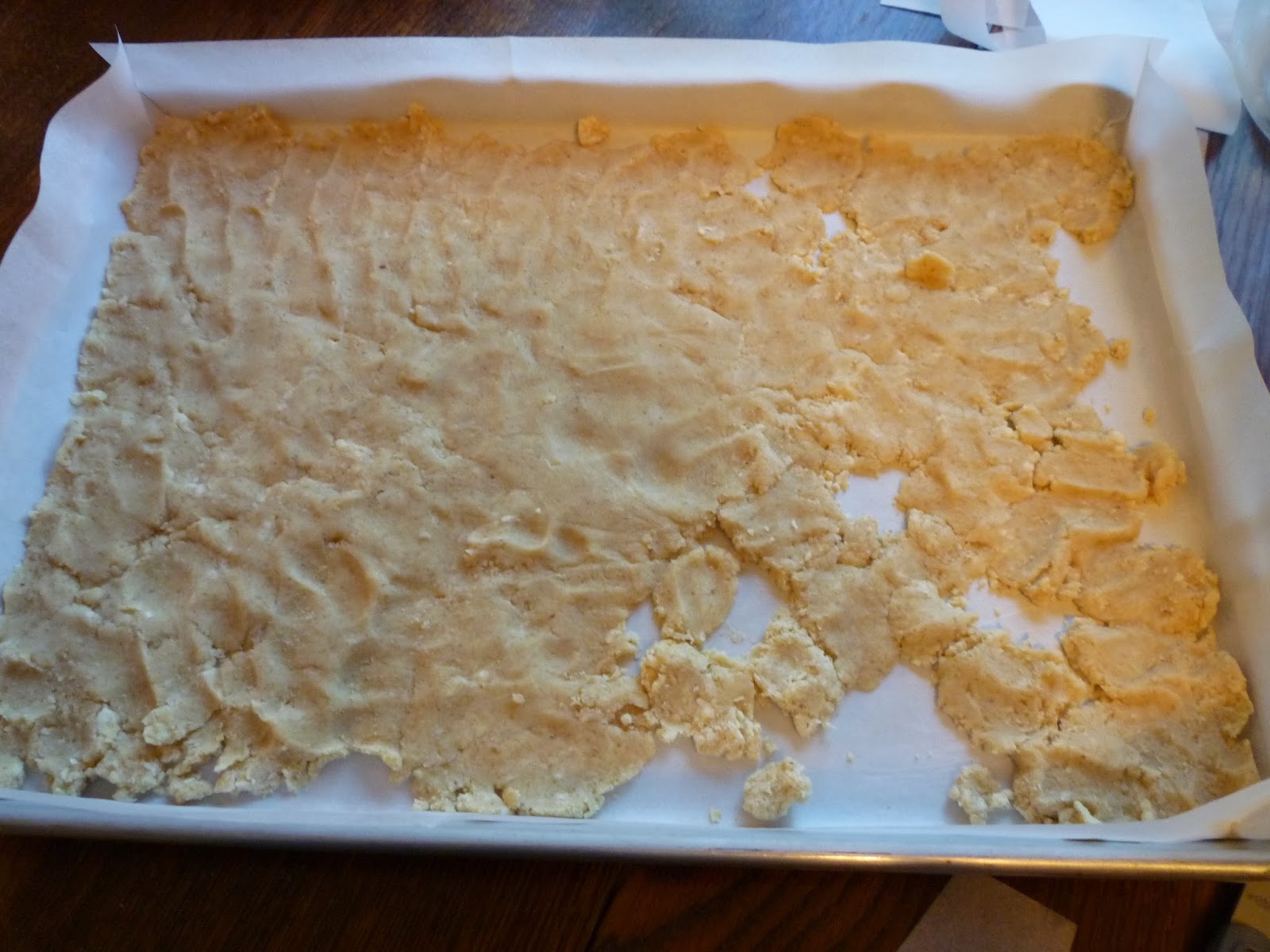
I mixed the base in the food processor this time, after grinding the walnuts finer. I cut down on the amounts, and then I had a really hard time making the dough cover the bottom. Oh well, it’s too late to change now, I thought. After it rose in the oven, though, I was surprised to see that the base layer had puffed up a bit. Maybe it wouldn’t be too thin after all.

I also increased the amount of the filling, which I had reduced in the second test batch in an effort to achieve that elusive 1″ height. I hoped that the shorter crust layer would make room for more filling, which was, after all, my favorite part.

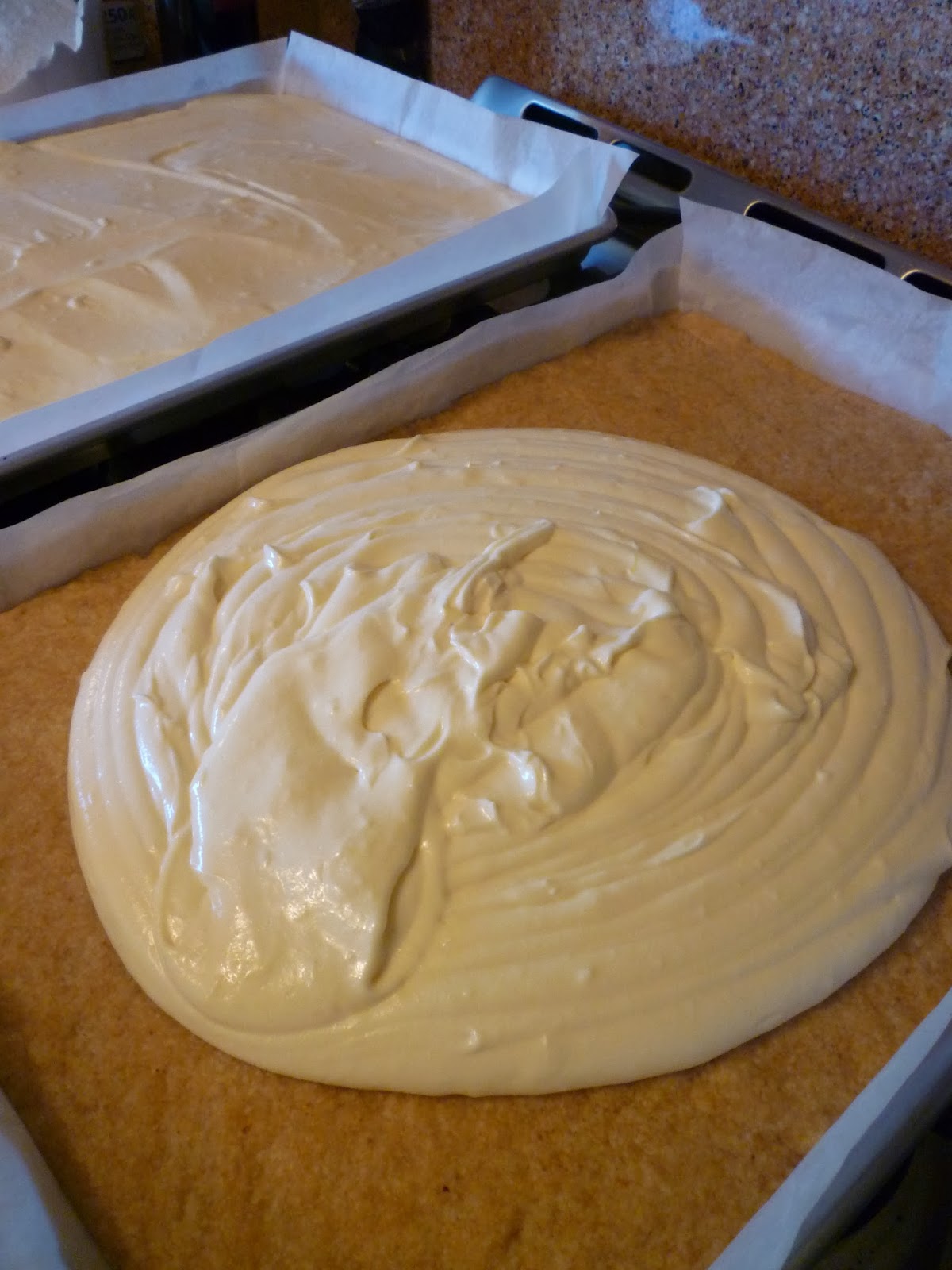
The most fun was spreading all that creamy cheesy lemony filling on to the crust…

…though sprinkling buttery streusel on top was a close second.

I baked the two big pans in my oven, being careful not to overbake, and when they had cooled I took them to church to store overnight, because we have an extra-large refrigerator there. In the morning all of us dessert-bakers got together in the church kitchen and prepared our sweets for serving.

I didn’t try to remove the huge cheesecake from the pan in one piece, but I cut the bars right in the pan. They were just as I wanted them to be. The scraps from the edges — not dry, but a little raggedy — were passed around to all the people setting up tables and decorating, and they were declared scrumptious.

Some other things I want to remember about this consuming experiment: In the end we served all of the dessert samples in paper muffin cups, so there wasn’t as much opportunity for squishing. I decided that it would have been much easier to make four 9×13 batches than to go to all the trouble to adjust for big shallow pans. And after all the cheesecake bars had been cut and made ready in the cups, I heard how a local expert in a sister church makes cheesecakes for a crowd. She bakes individual servings right in the muffin cup!

For a smaller batch to be served at home, I might try this recipe without the streusel and top the bars with something that is less like the base. But for a while, these will be my standard, gorgeous, addictively creamy — ta da! Cheesecake Bars!!

Perfect Cheesecake Bar
Lemony Walnut Cheesecake Bars

Base/Crust:

Line a 13×9 pan with parchment paper, overlapping sides a little.

¼ cup already chopped walnuts

½ cup cold salted butter, in chunks

3 tablespoons brown sugar

¾ cup white flour

Using the steel blade, chop the walnuts further in food processor until fine. Add the other ingredients and mix until they clump together.

Press evenly into bottom of lined pan, and bake at 350° for 15 minutes. Remove from oven.

Filling:

1 ½ cups full-fat cottage cheese

8 oz. cream cheese, softened

2 large eggs

1 teaspoon vanilla

1 teaspoon lemon zest

2 tablespoon lemon juice

½ cup sugar

Blend cottage cheese in food processor until smooth; add all other ingredients and mix until blended. Spread on baked crust.

Topping:

½ cup flour

4 tablespoons brown sugar

2 tablespoons powdered sugar

½ cup walnuts chopped

¼ cup butter, melted

Mix all with pastry blender until the crumbs are the size you like.

Sprinkle topping evenly over filling. Bake for 35-40 minutes or until a table knife inserted in the middle comes clean. Cool in the pan on a rack. Refrigerate overnight, then use the parchment paper to lift out carefully onto a cutting board. While the loaf is still on the parchment paper, use a sharp knife to cut the bars, dipping into hot water and/or wiping on a wet towel as needed. Trim edges as necessary and cut into 24 bars. Keep refrigerated.