In the course of telling about various pies over the years, I’ve mentioned this versatile pie crust recipe which can easily be made vegan, and is mixed up right in the pie plate.
I thought I had never given the recipe for it, but just today I saw that it was featured in the second post I ever wrote, in which I report on my experiment with sweet potato pie. I’ve now put it conveniently where it ought to have been all along, on the page titled “Recipes and Vague Instructions.”
In the Orthodox Church we have a good many days all throughout the year when we fast from dairy and eggs, those go-to ingredients for many desserts, so I’ve made use of this recipe on special occasions that also happen to be fast days.
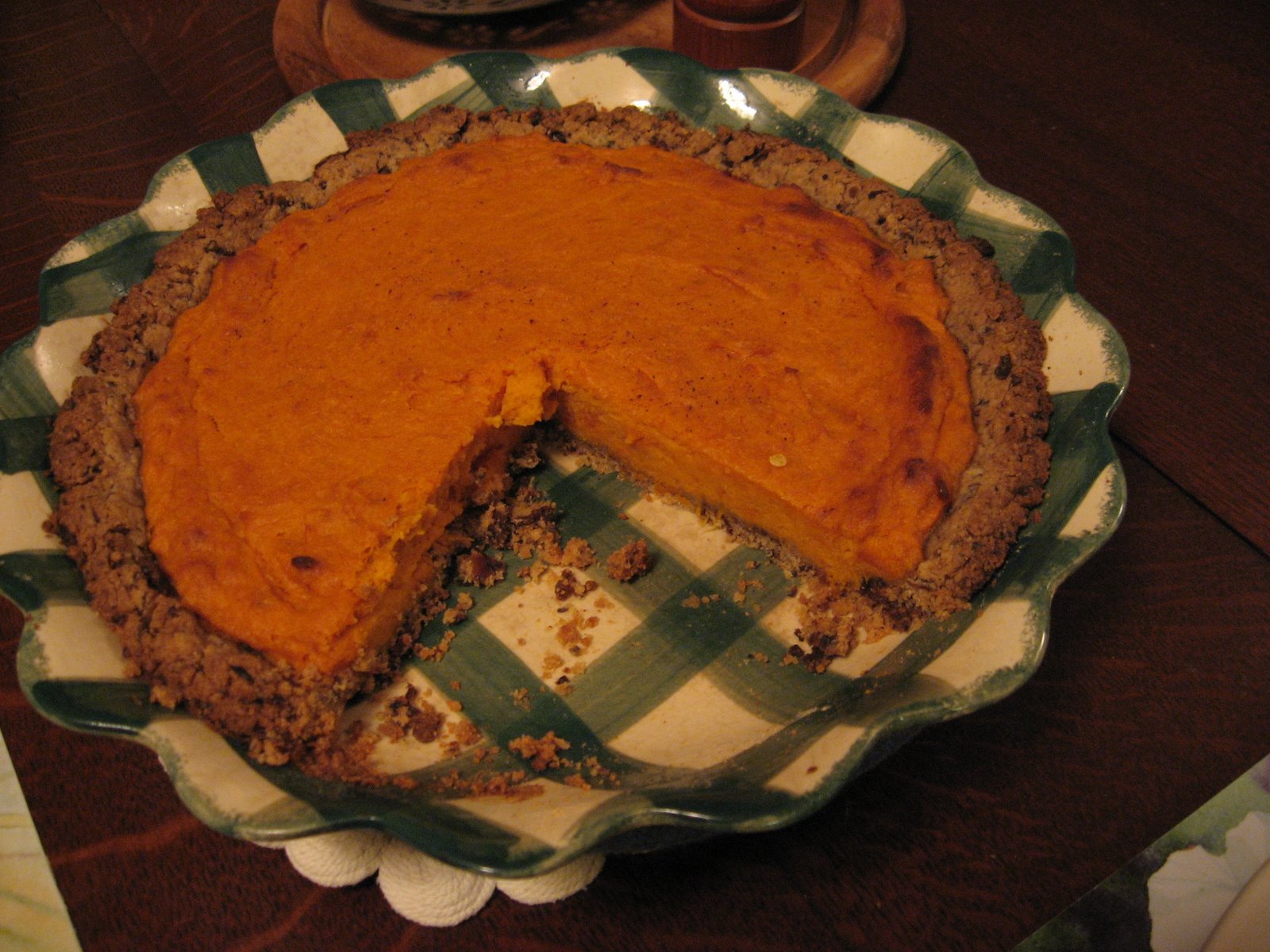
Sweet Potato Pie with Black Bean Crust
An example is the pineapple-coconut pie which I mention on a rambling post that offers vague instructions indeed. But the crust recipe comes originally from the Amish, who aren’t known for fasting or eating vegan, and it’s a wonderfully quick shell to throw together even for a rich pie, like the colorful first one I ever blogged upon.
Since my last detailed pie recipe here, I have acquired a convection oven, and I want you to know that I no longer have to do the foil collar thing to keep my crusts from over-browning. Now it is easier (what?) than ever to whip up a pie, any day of the year.
As the Nativity Fast is soon upon us, any pie I make will likely be a vegan one using this recipe, which I am giving in the original Amish version with my notes. Finally, what you’ve all been waiting for… back for a second appearance… TA DA!
Pat-in-Pan Pie Crust Single-crust 8-9” pie
Quick, crisp, but tender
(can’t be rolled)
1 ½ cups plus 3 tablespoons flour (does not have to be wheat)
1 ½ teaspoons sugar
¼ teaspoon salt
½ cup vegetable oil (you might even try a little butter!)
3 tablespoons cold milk (dairy, soy, nut, etc.)
Place the flour, sugar, and salt in a pie pan and mix with your fingers until blended. In a measuring cup beat the oil and milk with a fork until creamy. Pour liquid all at once over the flour mixture. Mix with the fork until completely moistened. Pat the dough with your fingers, first up the sides of the plate, then across the bottom. Flute the edges.
Shell is now ready to be filled. If you are preparing a shell to fill later, or your recipe requires a pre-baked crust, preheat oven to 425°. Prick the surface of the pastry with a fork and bake 15 minutes, checking often, and pricking more if needed.
For a 10” shell I used:
2 cups flour
2 teaspoons sugar
1/2 teaspoon salt
2/3 cup oil
3 tablespoons milk
Lately I’ve been in discussion with some people about the purpose of Lent. It can be a sort of springtime New Years Resolutions Revisited. Probably that’s part of the reason I get anxious during the several-weeks run-up to the fast that we have in the Orthodox Church: Experience has shown me how unresolved and weak I am, and I can only imagine certain failure.
But so many homilies and Scriptures and hymns have comforted me in the last few days, I really do feel that joy they speak of as we set out on our journey. And yes, blog posts and e-mail greetings on the subject have been greatly encouraging. It seems that lenten grace is like all grace, in that you can’t get it ahead of time; it’s God with us in the moment. Even a balanced perspective on the meaning of Lent is only an intellectual understanding until I implement it and participate in it.
Prayer and almsgiving are just as important during Lent, but in this post I’m sticking to the fasting aspect. And as an example of helpful reading, I offer a truncated outline of a few points from a longer article, “The True Nature of Fasting,” by Bishop Kallistos Ware and Mother Mary. The passage is part of the Lenten Triodion in the section “The Meaning of the Great Fast.” I commend the whole to your reading; it seems to me the most thorough and well-articulated statement on the subject, and I’ve found it worthwhile reading every year. (Italics are in the original.)
1) The Lenten fast is not intended only for monks and nuns, but is enjoined on the whole Christian people….By virtue of their Baptism, all Christians – whether married or under monastic vows – are Cross-bearers, following the same spiritual path.
2) It should not be misconstrued in a Pelagian sense.Whatever we achieve in the Lenten fast is to be regarded as a free gift of grace from God.
3) Our fasting should not be self-willed but obedient. When we fast, we should not try to invent special rules for ourselves, but we should follow as faithfully as possible the accepted pattern set before us by Holy Tradition.
4) Lent is a time not of gloom but of joyfulness….It is true that fasting brings us to repentance and to grief for sin, but this penitent grief, in the vivid phrase of St. John Climacus, is a ‘joy-creating sorrow.’….Lent signifies not winter but spring, not darkness but light, not death but renewed vitality
5) Our Lenten abstinence does not imply a rejection of God’s creation….When we fast, this is not because we regard the act of eating as shameful, but in order to make an our eating spiritual, sacramental and eucharistic – no longer a concession to greed but a means of communion with God the giver.
The greatest pleasure and thrill of Christmas can’t be had without a little waiting, something like children of yore had to do, when their Christmas trees weren’t even ready for viewing until Christmas Day.
That thought is on my mind as I say Hello! to all the friends I see here at Pom Pom’s Childlike Christmas (blog) Party, a party for which we can show up four times over the next month! I had barely noticed the open invitation, with no time even to lay a finger aside of my nose, when she added me to the published guest list — I was signed up! I am happy to attend, Lord willing, by posting a blog each Wednesday.
It seems to me that the way we Eastern Orthodox Christians get into the Christmas spirit can be combined with the theme of children and simple pleasures that Pom Pom describes:
“Yesterday I asked my students, ‘Why the big greed festival over the holidays? Aren’t we fine right now? Don’t we have enough?’ …Here at Pom Pom’s Ponderings, we are going to think about the simple pleasures of the holidays, the childlike wonder that doesn’t involve the ka-ching ka-ching of the cash register….four holiday Wednesdays of posts that attend to the simple childlike thrills of Christmas. ….that babe in a manger and the children He loves and cherishes.”
The modern world likes to jump into Christmas immediately after Halloween or Thanksgiving, but the more traditional way to celebrate involves some Anticipation and Preparation. Children might think of it as Waiting and Getting Ready. Some of us have been in Advent, which we call the Nativity Fast, since November 15th.
I’m not experienced in helping children to forgo the treats that are pressed upon them in every shop and neighbor’s house at this time of year, but even before I found the Church and its traditions I tried to keep the family thinking ahead to a special Holy Day, and not just because of the presents.
We need some weeks to sing “O Come, O Come, Emmanuel!” and for it to register in our minds that God’s people had to wait many generations and thousands of years for the coming of the Savior. A little bit of suffering in the form of doing without the usual quantity of food, or rich foods, (in the Orthodox Church we eat less, and almost vegan, when fasting) can make it more real for us that the world before Christ was suffering under the curse of sin. We feel our own weakness, too, when eating less, and that can soften our hearts.
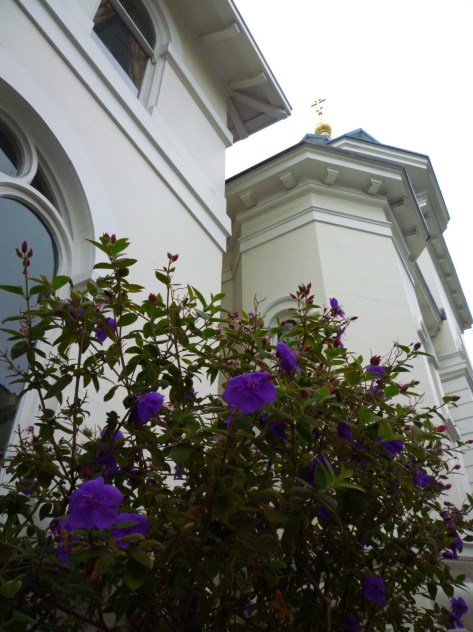
Why the photo of Holy Trinity Cathedral above? My church and sister churches sponsor Advent retreats every year, usually a day or half a day when we can hear a lecture and attend services together to help us focus on the coming feast in a fruitful way. Last year I went to one at Holy Trinity and took the picture. (By the way, I saw the same flowering plant at a winery last week and still don’t know what it is.)
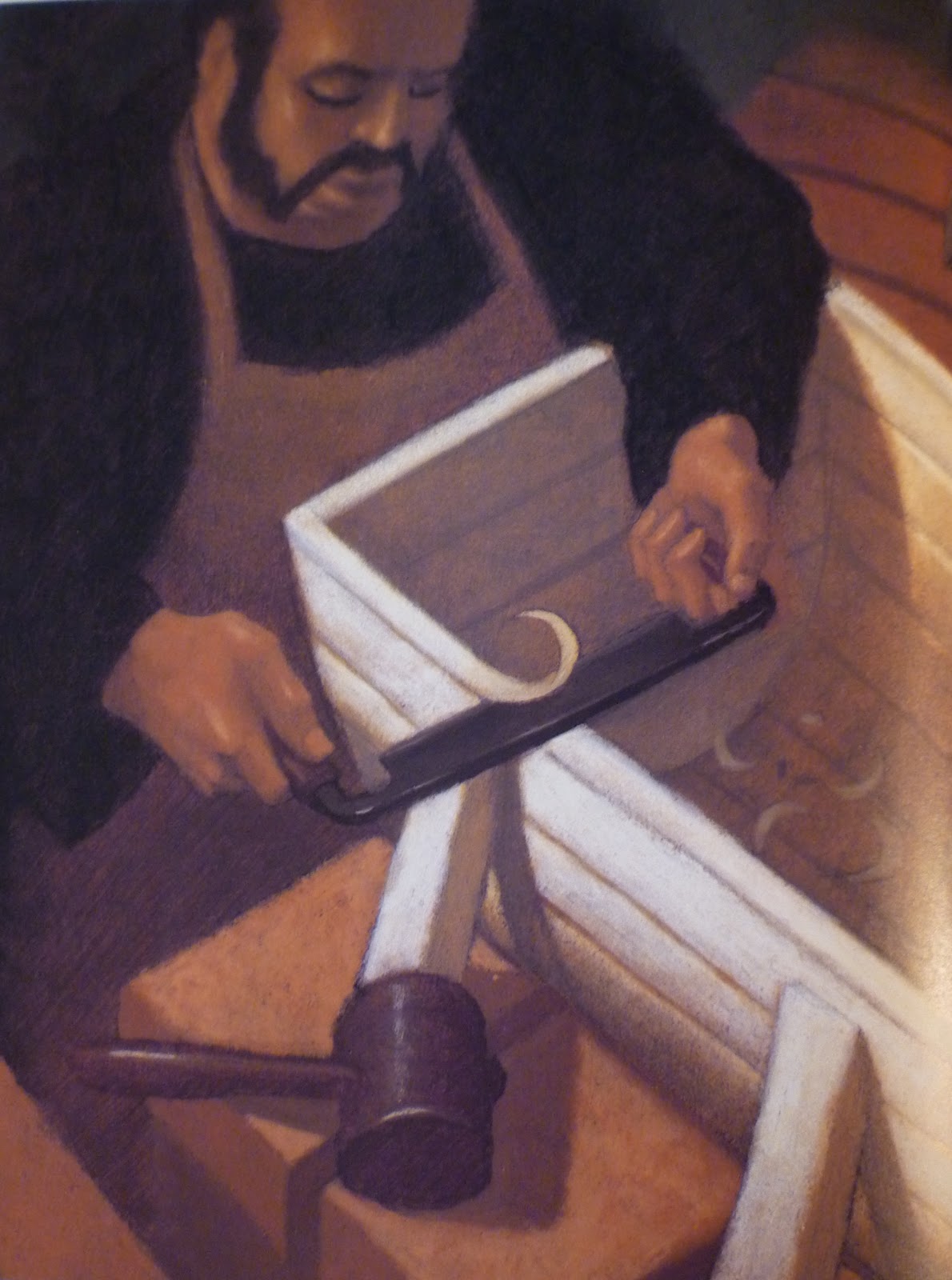
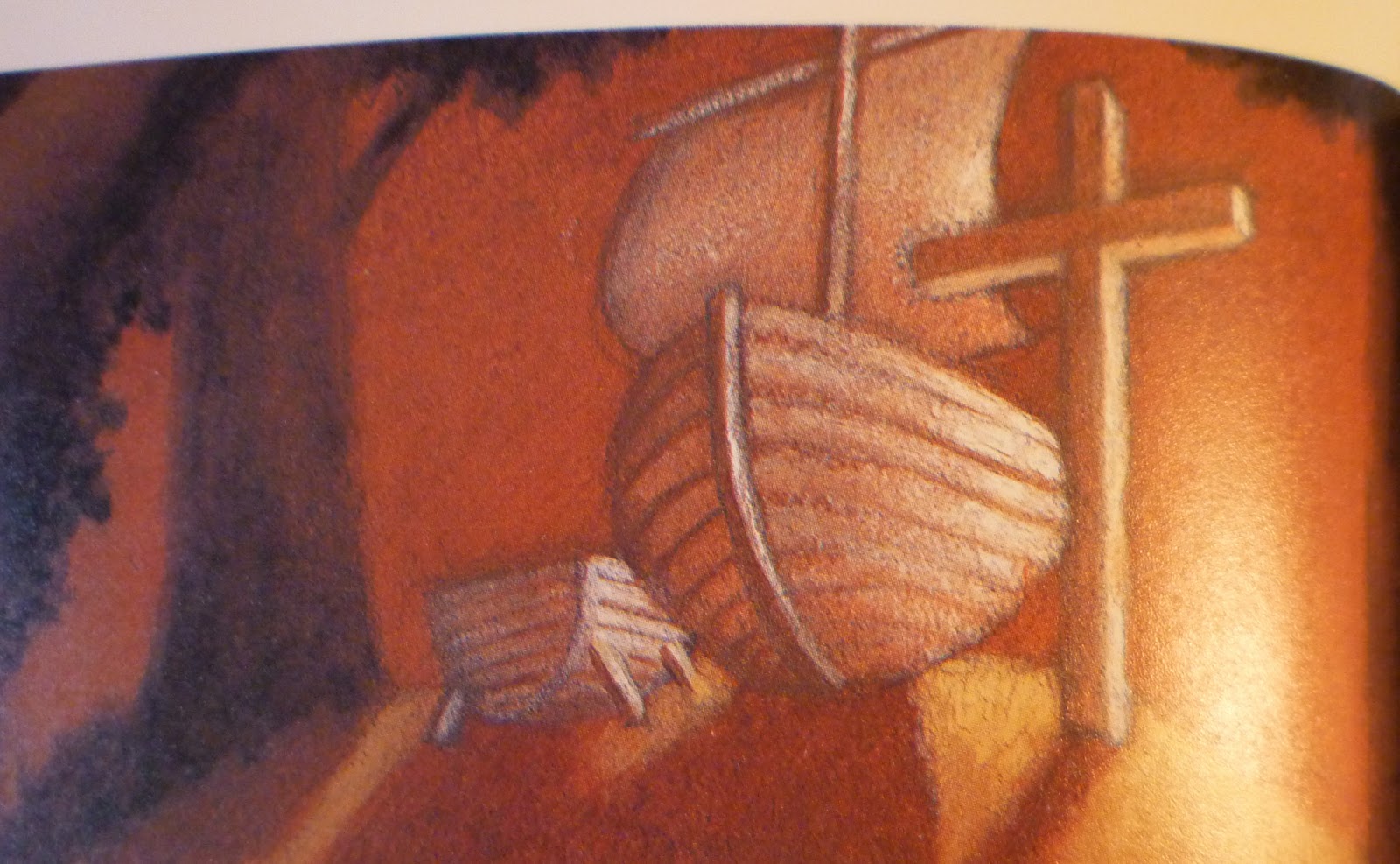
One children’s book that might contribute to a child’s understanding of time and the processes that are necessary preliminaries to accomplishing a goal, in particular a few points on the timeline of our salvation history, is The Tale of Three Trees, “a traditional folktale retold by Angela Elwell Hunt with illustrations by Tim Jonke.”
Three small trees stand on a hilltop and dream about what they might do when they are grown. One wants to be a treasure chest, one a sailing ship that carries kings, and one just wants to stay where it is and point to God.
It takes many years for them to get big enough to be cut for lumber and fashioned into items that play a part in the earthly life of our Lord. The first tree is made into a manger — and this first creation of wood that the Christ Child came in contact with establishes the story as one for Christmas.
All the trees feel initial disappointment and humiliation, none more so than the one that is made into a rude cross and used for violent purposes: “She felt ugly and harsh and cruel.” But in the end all of the trees realize the blessedness of being used for the glory of God, and the young reader is reminded of the reason a Baby was born at Bethlehem.
Even our Lord Jesus went through a period of preparation, growing up as a man for 30 years before He began His ministry, but He surely wasn’t idle during that time. As we wait for Christmas we can prepare our hearts by prayer and fasting and acts of love.
Those of us with families are blessed to have many possibilities under what might be the Acts of Love category. (They might even include some noise of cash registers, but I won’t say any more about that at this party.) I know I have cookie-baking, doll-clothes-sewing, decorating and menu-planning and making up beds on my list.
The truth is, I’m not very good at being child-like before Christmas. I feel so many responsibilities that children don’t have to concern themselves with, and I get pretty busy with all the fun type of preparations.
Somehow, though, all of that, when combined with participation in the church traditions and services, adds up to make me feel some of the longing and the weakness that are appropriate right now.
I’ll post on Wednesdays more about some of the simple pleasures that our family has enjoyed over the years, even while remembering that the fullness of joy, the acting like a child, will start on December 25th. And won’t it be wonderful!
The fasting periods that the Church gives us are hard to write about on a personal level, so I appreciate it greatly when someone does a good job of it, like Svetlana on her blog My Sears Catalog Life. A blog name like that always makes me want to know more about the host, which is how I came upon her site.

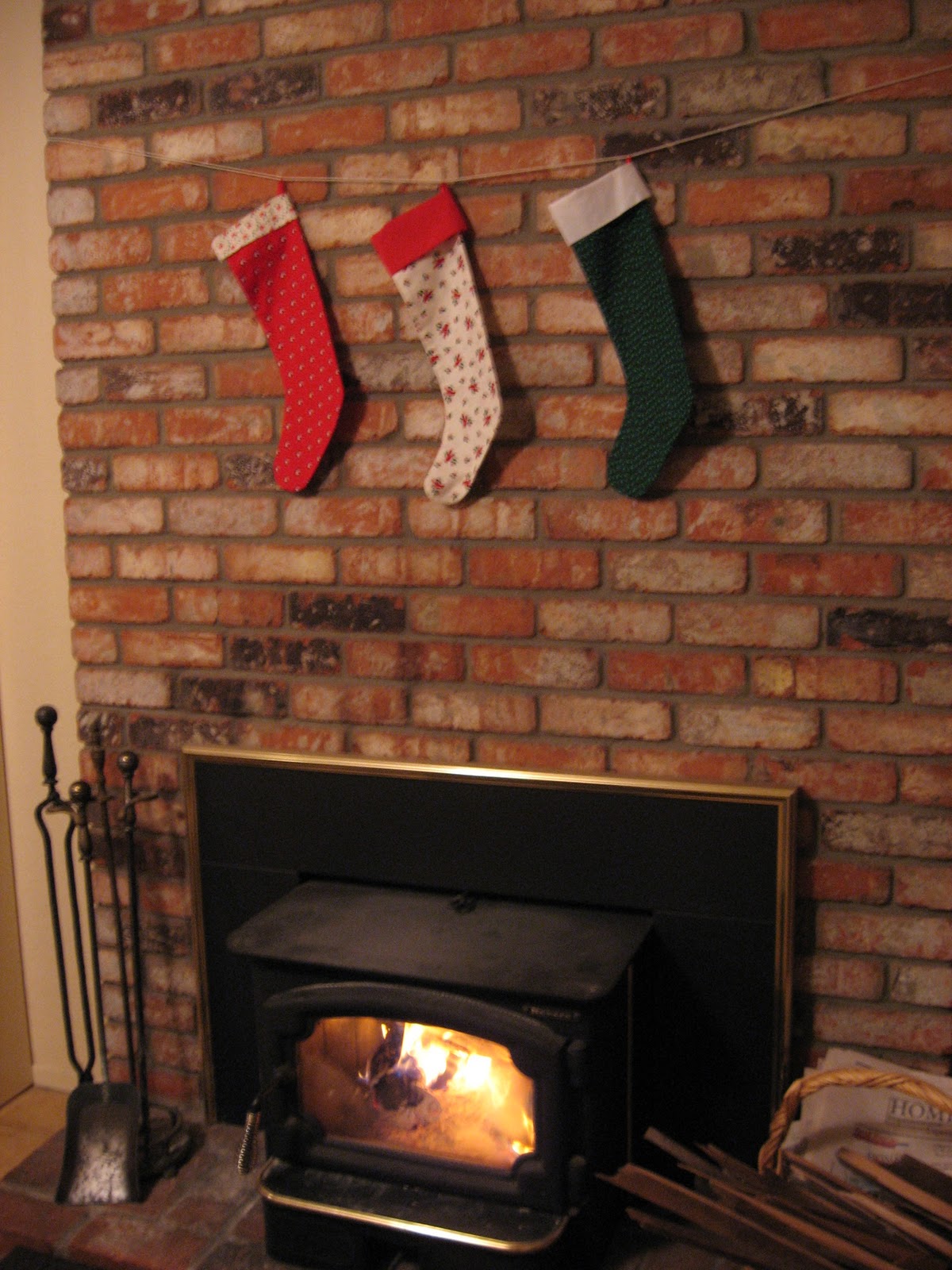
 Gladsome Lights