It is assumed that the skeptic has no bias; whereas he has an obvious bias in favor of skepticism.
That is the one eternal education:
to be sure enough that something is true
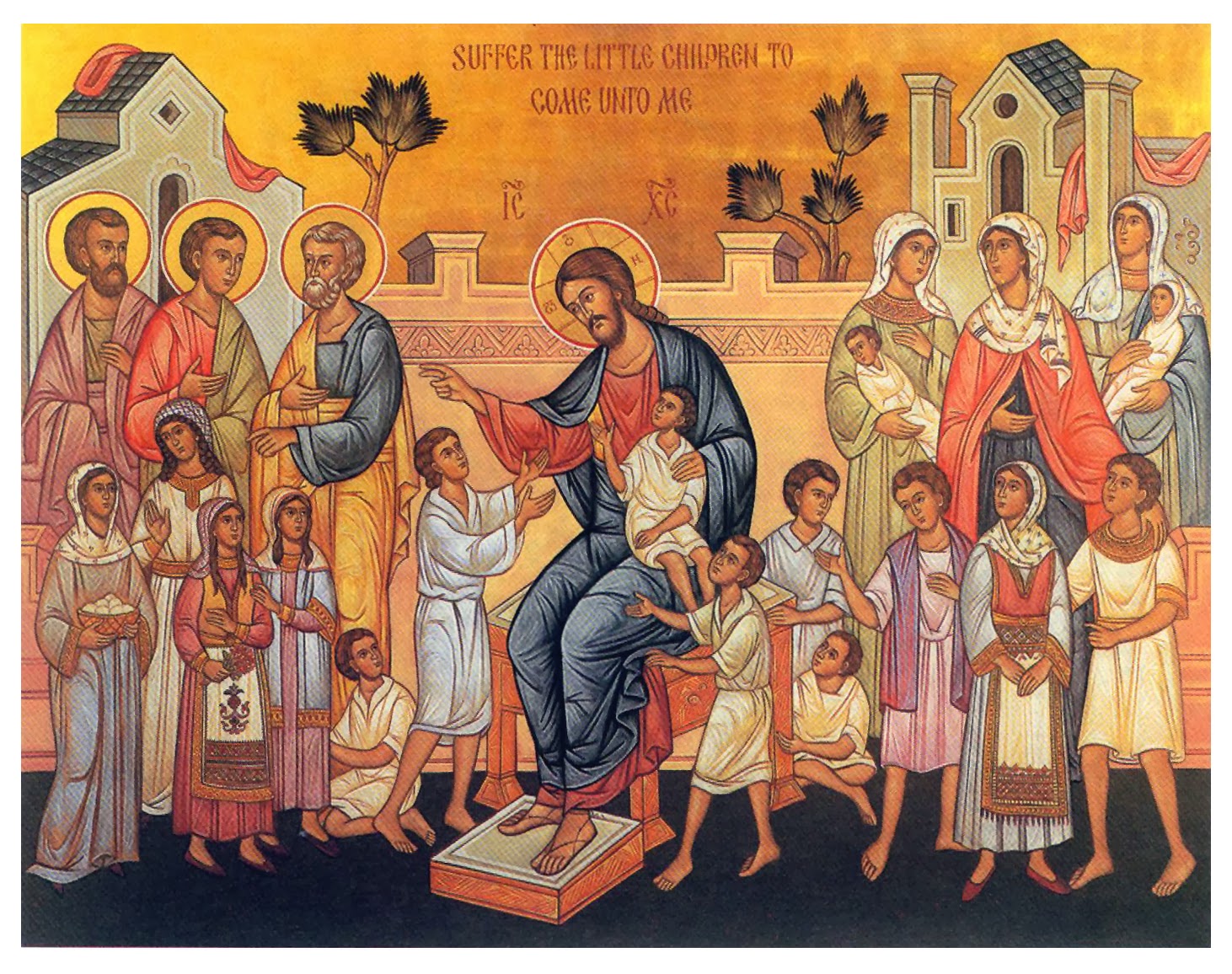
that you dare to tell it to a child.
— G.K. Chesterton
These quotes having to do with teaching and learning remind me of something I read years ago when we were in the middle of our 25 years of homeschooling. It was in John Senior’s book The Restoration of Christian Culture, which I had borrowed and still don’t own, so it may be that I am not remembering it exactly right. I’d love it if any of you know enough to correct me or just articulate more clearly what I am trying to get at.
Dr. Senior warned parents against teaching children what modern educators call “critical thinking,” because it would turn them into skeptics and take away the simplicity of their childhood. They need to be taught to believe, rather than to doubt, and to have their joy and love for the world nurtured. If we teach them to be skeptics we are guilty of stunting their souls.
I thought about these things when I read an article by Ken Myers that was published last summer in Touchstone, titled “Trinity & Modernity” (unfortunately not available online). In it he introduces us to the book The One, the Three and the Many: God, Creation and the Culture of Modernity by Colin Gunton, and Myers discusses the fragmentation of current culture and thought, and the necessity of Trinitarian faith and the Body of Christ if we are to be saved from “modernity’s fatal confusion.”
His introductory paragraphs are what I want to share here, about our universal Christian story:
“We have been told that to be postmodern is to approach metanarratives — the Big Stories that explain Life, the Universe, and Everything — with incredulity. Of course, this raises the question of whether or not this definition of the postmodern temperament is itself a metanarrative…”
“…I do detect among most younger people a yawning indifference to efforts to explain history or theology or ethics or art in terms of grand and arching chronologies or chronicles. I suspect their minds and hearts have been colonized by thousands of what [Jean-François] Lyotard called petit récits, small amounts of highly particular and often idiosyncratic episodes, all blithely disconnected from any framework, all resistant to organization in any structure of meaning. Perpetual exposure to a numbing torrent of bewildering bursts of narrativish fragments — increasingly in fewer than 140 characters — leaves little time or mental space for attending to connections and causality.
“I remain unrepentantly pre-modern in my love of metanarratives. If the gospel has any power, it is only because it tells a great story that explains all things. It is a very particular story and it makes universal claims, which make both card-carrying moderns and postmoderns nervous. It was foolishness to the Greeks as well.
“This fragmentation and lack of understanding was a problem even in Chesterton’s day, but certainly it’s worse in more recent decades, with the giving over of education to a woefully pragmatic vision (Perhaps we do have a metanarrative: Do Whatever You Have To, To Get a Good Job.) and the gazillion bits of information and “communication” of the computer age.”
In my case, I always had Truth to tell to my children, because I knew at heart that Christ was the “yea and amen to all the promises of God,” and God was the Creator and upholder of everything. But in my experience the Protestant Evangelical world lacked cohesion, and certainly the continuity with the historic faith that would make it a true metanarrative.
It was incomplete, fragments that could not explain Everything, and I am sorry that I couldn’t tell my young children the Big Story that I am learning now, now that I am coming to know Christ and His Church. In The Church we have Christ the Head of the body. They go together, and can’t really convey the faith any other way. Christ comes to us in His Church, “the fullness of Him that filleth all in all.”
The intellectual focus of the West — which even we in the Eastern Orthodox Church breathe in the air of the modern world — seems to make it hard for me to avoid skepticism in myself. I can’t see that anything but prayer and sacrament can keep my heart tender and trusting. Let’s pray for the children, too, that they might be saved from the spirit of the age.
Linking up to Weekends with Chesterton
 Gladsome Lights