Tag Archives: goats

Last day in Paros.

Yesterday morning Pippin went out early to explore up the hill from our house, and discovered a carob tree.
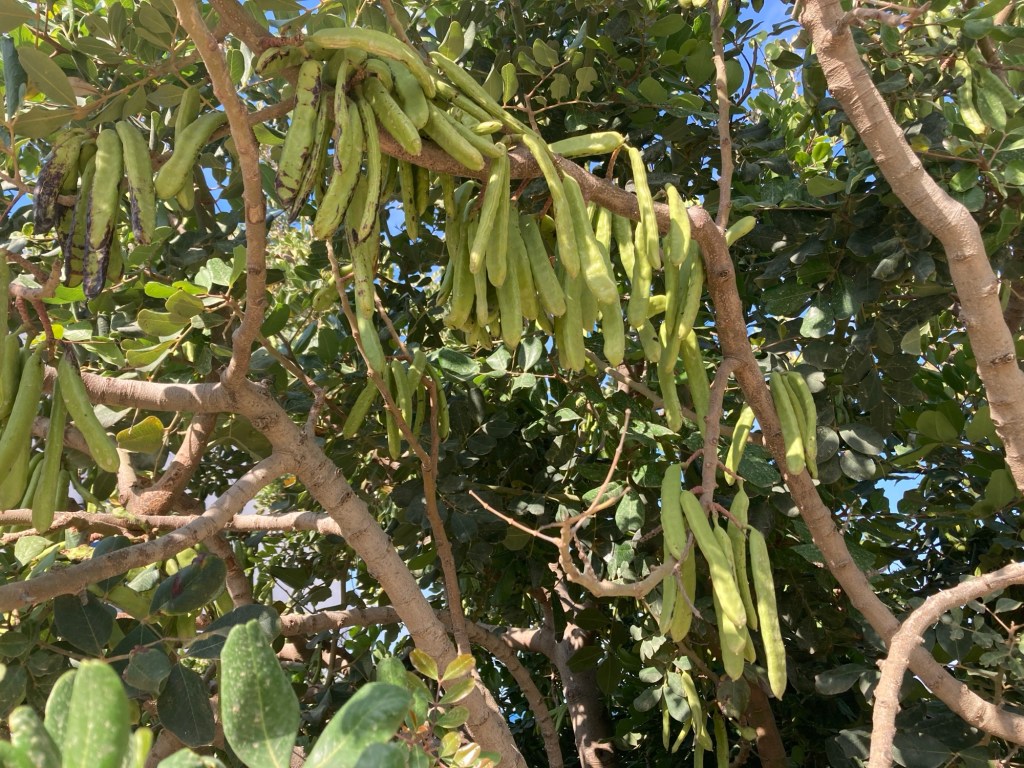
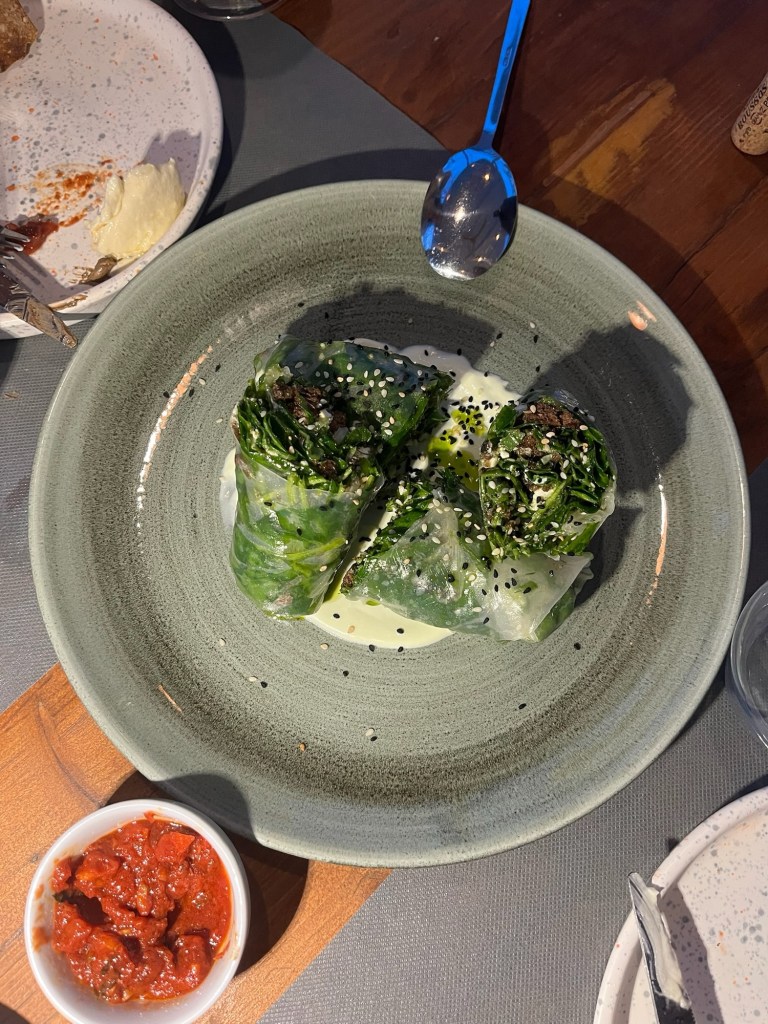
She took me back to see it, and later when everyone was up and sipping coffee on the terrace, she read to us about the uses of carob throughout history. Just the night before we had eaten spring rolls that incorporated “carob rusks” for a little crispiness in the wrap of greens and feta.
But the carob pods the tree produces have traditionally been used primarily for feeding livestock — Until the 1960’s, when some of us started using carob flour in bread and candy, and for medicinal uses. I still have carob powder in my pantry, though it’s been a while since I opened the jar. My daughters vaguely remembered the Captain Carob Bread I baked, that was featured in the Laurel’s Kitchen Bread Book.
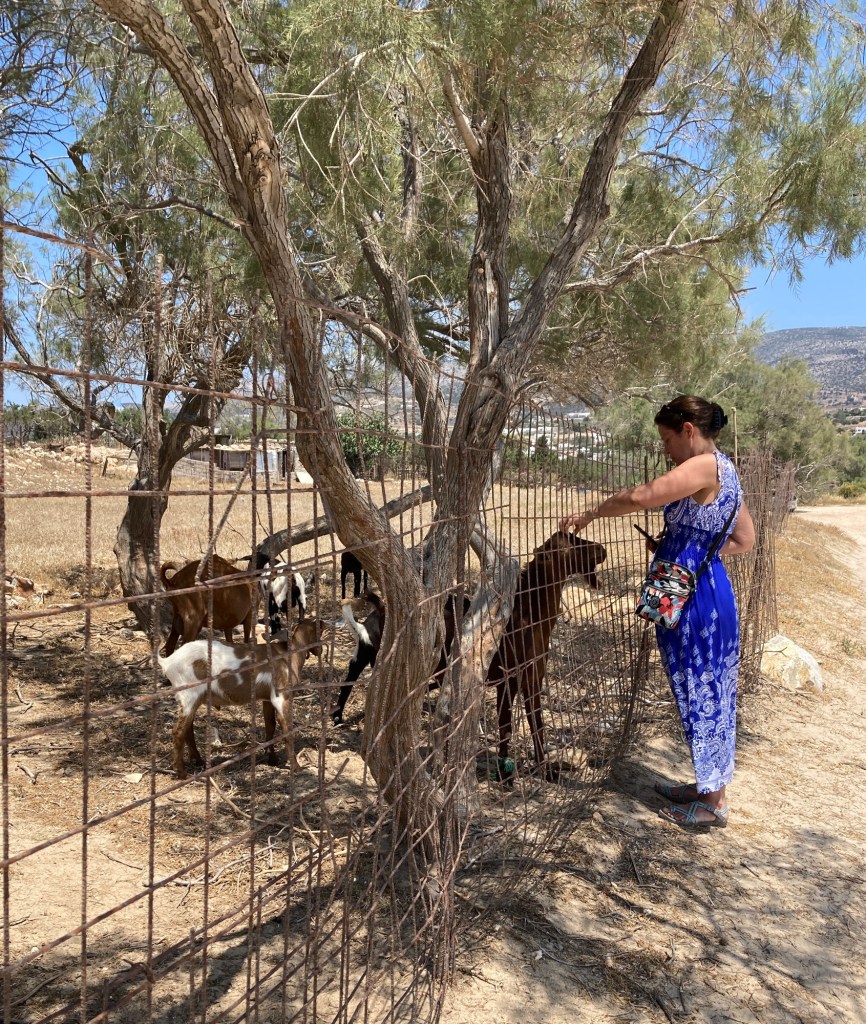
We walked to the Aliki beach for a last swim and bask in the sun. The goats that live in a dry corral came close to the fence this time and let Maggie and Pippin pet them and take their pictures.
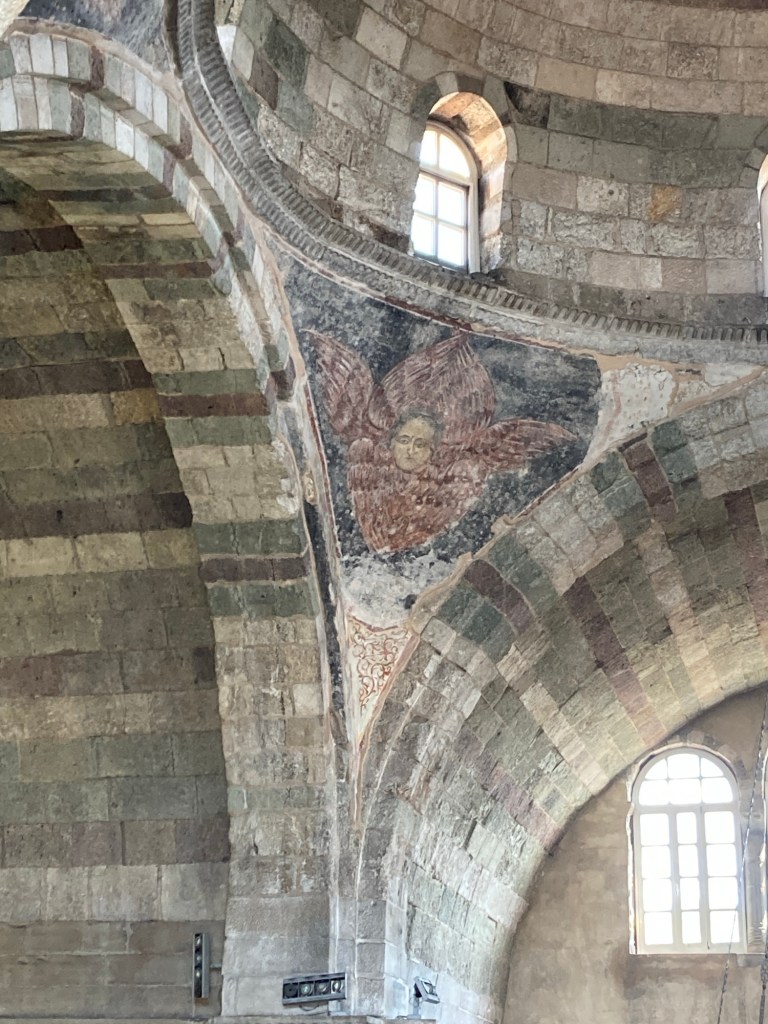
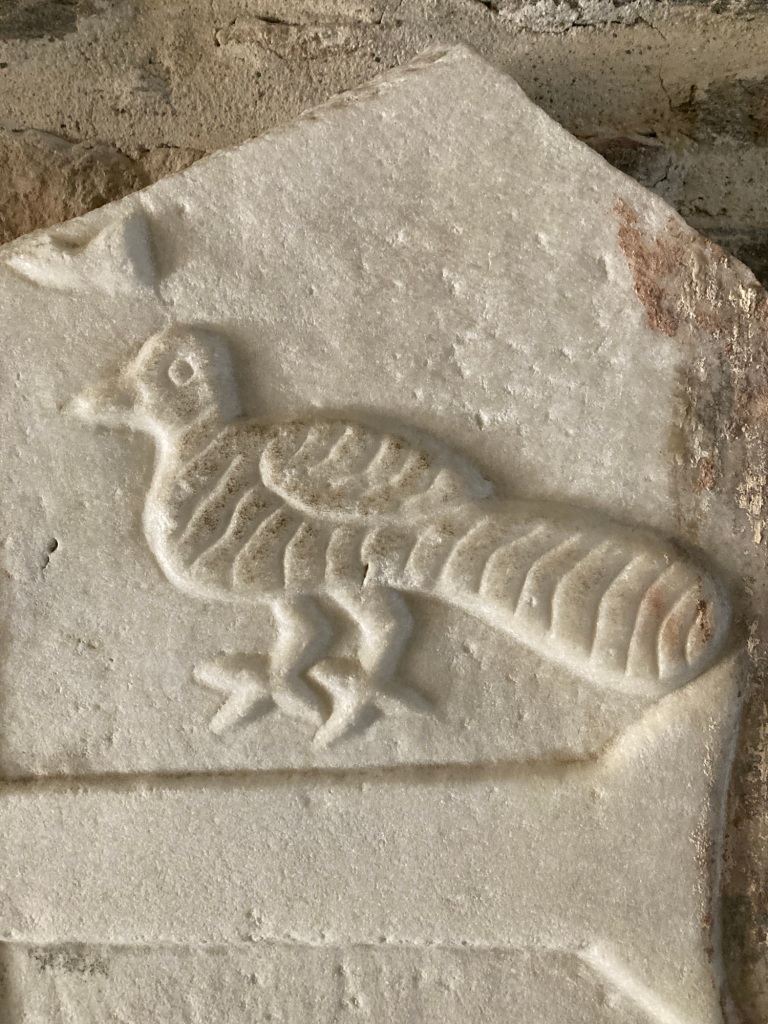
In the afternoon we drove to Parikia to see the Byzantine church of the Panagia Ekatontapiliani, where we spent an hour in wonder and wondering over the ancient architecture and marble carvings, and the way later renovations incorporated broken slabs and pieces into their also tasteful structures.
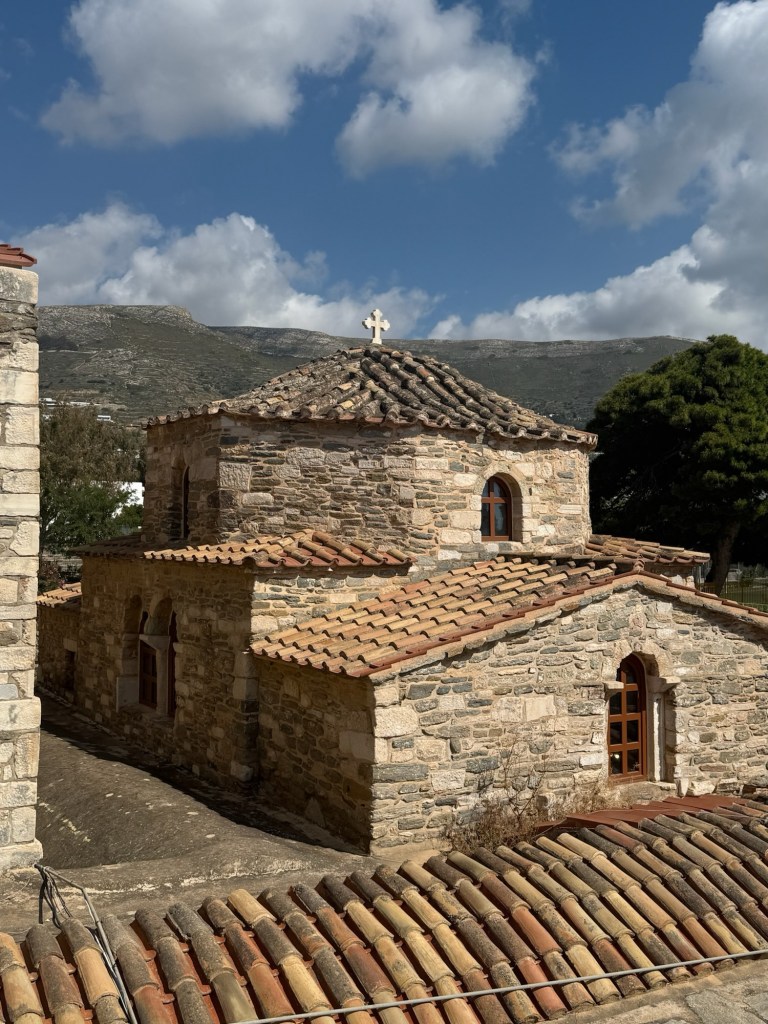
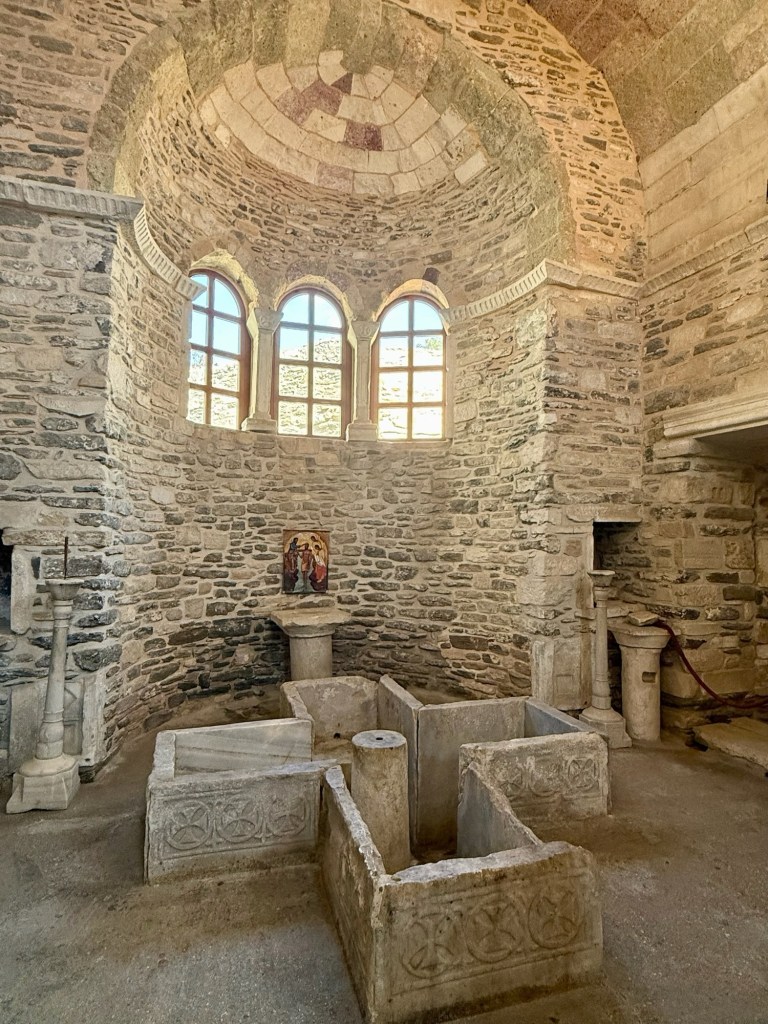
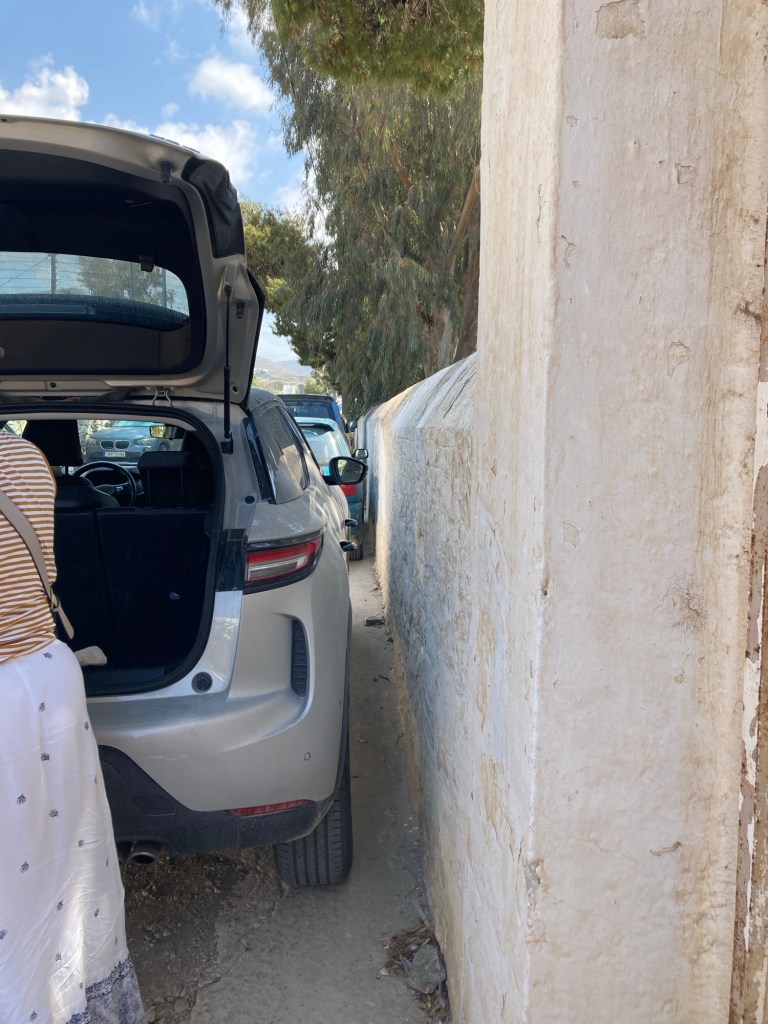
This last day provided the most challenging parking situations for Kate. In Parikia our maps app directed us to a narrow street near the church, along which she nervously and skillfully, with the aid of several more eyes among us, snugged the car against a stone wall.
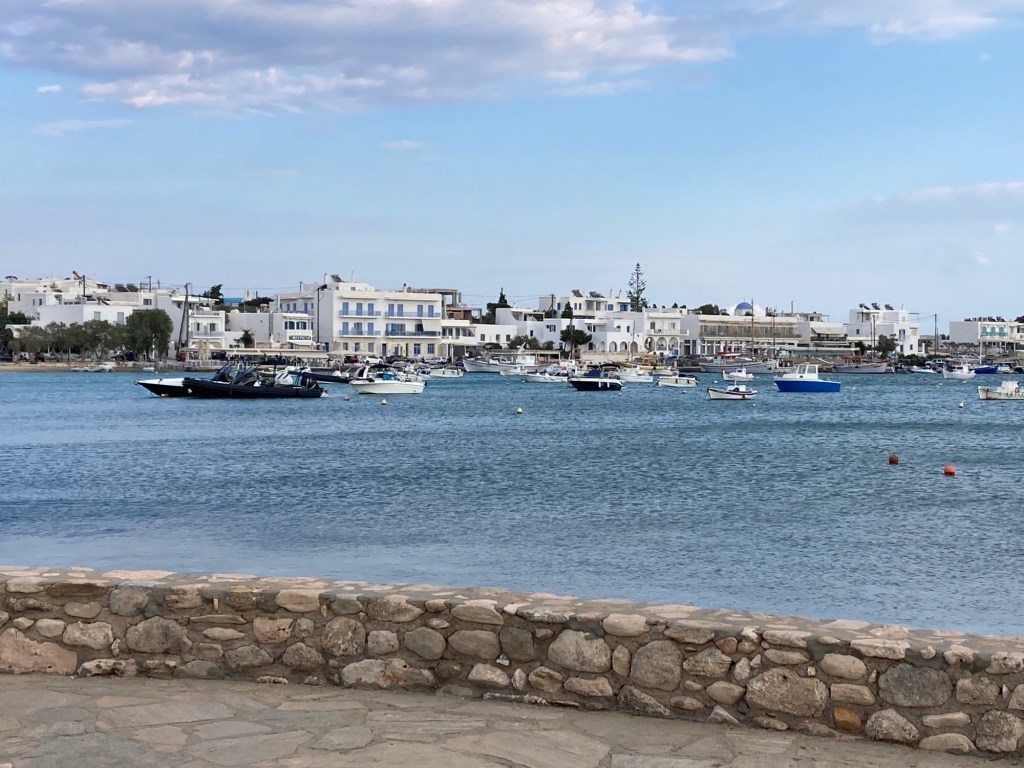
And when we returned to Aliki for dinner, we ended up parked on the other side of the bay, and walked across the stony path, which gave us new views of the neighborhood we’ve spent so much time in this week.

It was another sweet and companionable meal together, and our last for this trip.
I’m standing at the tiny Paros airport right now, the next morning, typing on my tiny phone. My daughters dropped me off before taking the ferry to Athens; they will all return home soon, but my stay in Greece is not half done.

Good-bye, Beautiful Paros!

Drinking the meadow with Heidi.

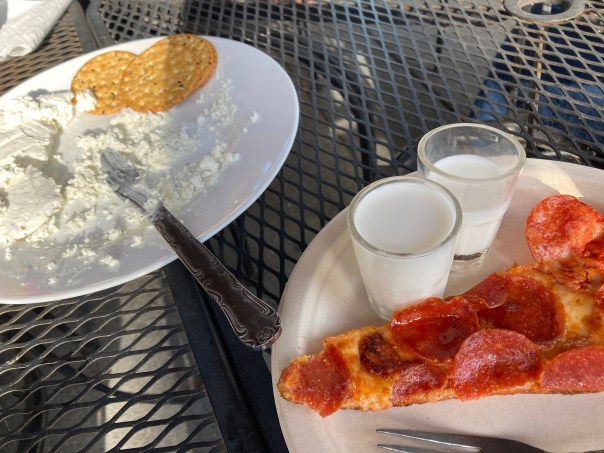
Our women’s book group read Heidi recently, and then met on the patio at church one evening to talk about the book. There were ten or twelve of us, and we ate pizza and drank wine together, too. But before any of that, we were served fresh goat cheese made nearby, to connect us via our taste buds to our beloved protagonist; it put us in the right mood. And then — goat milk fresh from that morning! Some of our party didn’t want even a taste, so I drank a couple extra shot glasses myself. It tasted like a Swiss mountain meadow.

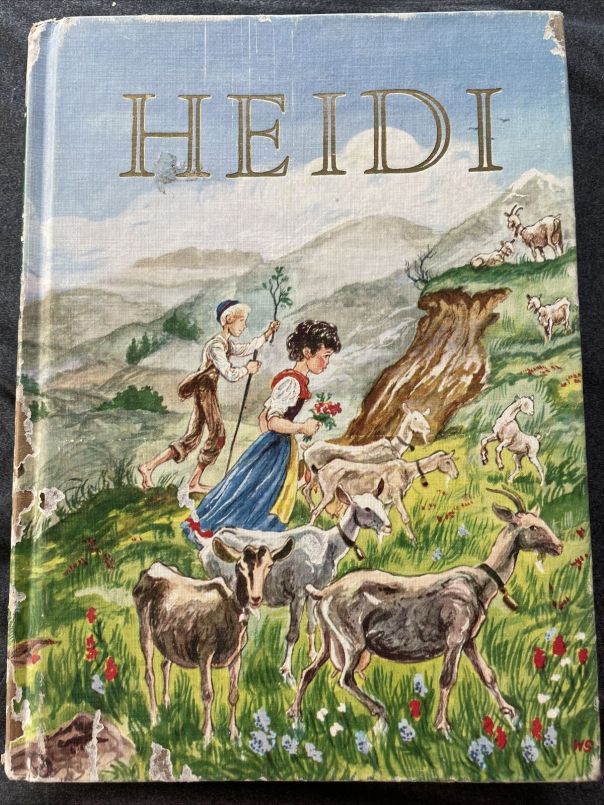
This reading of the book was for me by means of an audio recording, and I can’t remember the picture on the cover of the book we gave our daughter long ago, which she keeps. When I searched for a picture, I noticed the lack of depictions of Heidi as she is described in the story, with black hair. I guess illustrators (and movie directors, too) tend to think Swiss = blond.



I read that “thirteen English translations were done between 1882 and 1959” from the German of the original, and “about about 25 film or television productions of the original story have been made.” We talked a little in our gathering about the movies we have seen and how they aren’t faithful to the book, and typically leave out any reference to prayer.

In Switzerland tourists can visit Heidiland, where one of the associated villages was renamed “Heididorf.” I wonder if visitors there can drink fresh goat’s milk, from the morning’s milking? I bet at least one of my readers has that experience at your own kitchen table. Cheers!

Bishop Latour meets the elegant goats.

I’ve read Death Comes for the Archbishop by Willa Cather three times, including an audio recording narrated by David Ackroyd which I only recently completed. These three readings were so far apart that each time seemed a fresh introduction to the characters and the setting. And yet, I do think that the first two readings helped to form a love in my soul for the Southwest territories of the United States, so that this third time I found it there waiting for me, like the warm sand beneath a red rock butte, a place where I might bed down for the night under the stars and feel whole.

Ackroyd’s voice and narrative style seem perfect for the story. There is a steadiness and a lack of hurry that aligns with the faithful dailiness of the lives of the two missionary priests as they try to meet the spiritual needs of a vast diocese that had just enlarged by nearly 30,000 square miles with the Gadsden Purchase.

They are based in Santa Fe, New Mexico, but make frequent trips by horse or mule of hundreds and thousands of miles, even into Old Mexico, to take care of ecclesiastical affairs, to baptize babies and perform marriages, and to serve Mass. Their characters are sympathetic and rich; the story of their friendship over the decades is a thread woven through the novel, made up of small stories scattered through the years.

I’m using this audio book now the way I have two or three others in the last years since I sleep alone, for the times when I don’t sleep. I put a well-known story to play on my phone, set the timer for 30 minutes, and let David or another nice person read me to sleep. This only works with voices that do not draw attention to themselves in various ways, usually by being overly dramatic.
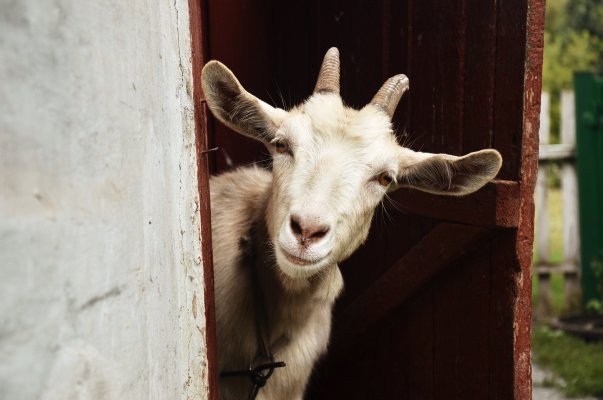
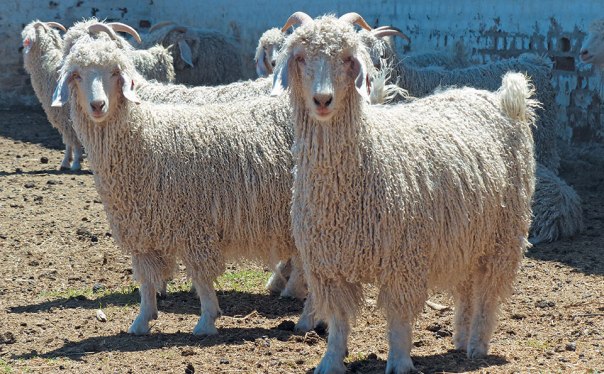
That means I am reading/listening to the book, based on a true story by the way, a fourth time. Because every anecdote and scene seems more luminous and meaningful than ever when it is told or described by a warm human voice, I may post here some passages that appear plain and dry to you poor people who may never have breathed the air of New Mexico or seen the Arizona desert in bloom. But today, it’s only goats we will consider, and I imagine that they are goat-ish the world over.

“After the feast the sleepy children were taken home, the men gathered in the plaza to smoke under the great cottonwood trees. The Bishop, feeling a need of solitude, had gone forth to walk, firmly refusing an escort. On his way he passed the earthen threshing-floor, where these people beat out their grain and winnowed it in the wind, like the Children of Israel.

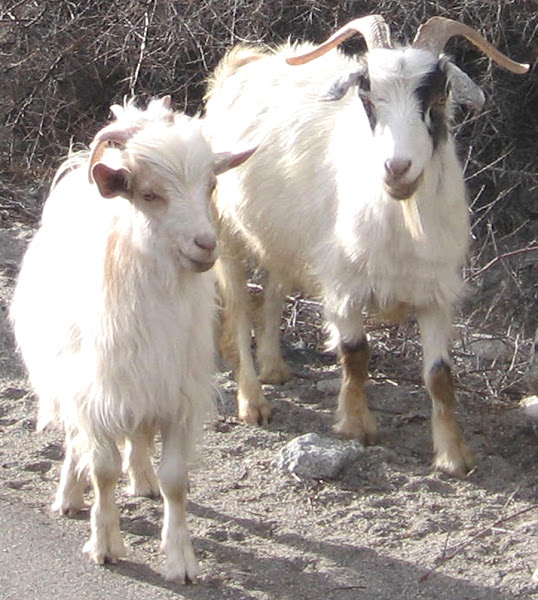
“He heard a frantic bleating behind him, and was overtaken by Pedro with the great flock of goats, indignant at their day’s confinement, and wild to be in the fringe of pasture along the hills. They leaped the stream like arrows speeding from the bow, and regarded the Bishop as they passed him with their mocking, humanly intelligent smile. The young bucks were light and elegant in figure, with their pointed chins and polished tilted horns. There was great variety in their faces, but in nearly all something supercilious and sardonic. The angoras had long silky hair of a dazzling whiteness.

“As they leaped through the sunlight they brought to mind the chapter in the Apocalypse, about the whiteness of them that were washed in the blood of the Lamb. The young Bishop smiled at his mixed theology. But though the goat had always been the symbol of pagan lewdness, he told himself that their fleece had warmed many a good Christian, and their rich milk nourished sickly children.”

-Willa Cather in Death Comes for the Archbishop