Tag Archives: granite domes

From the mountains to the bay.

Our last day together at the cabin, Kate’s family and I took a walk to “Gumdrop Dome” in the morning. This is the walk I do every time I visit, not trying to climb to the top anymore, but picking my way around on its “shoulders” and feeling exhilarated from a combination of the exercise, sun, pine-scented air, and expansive views.

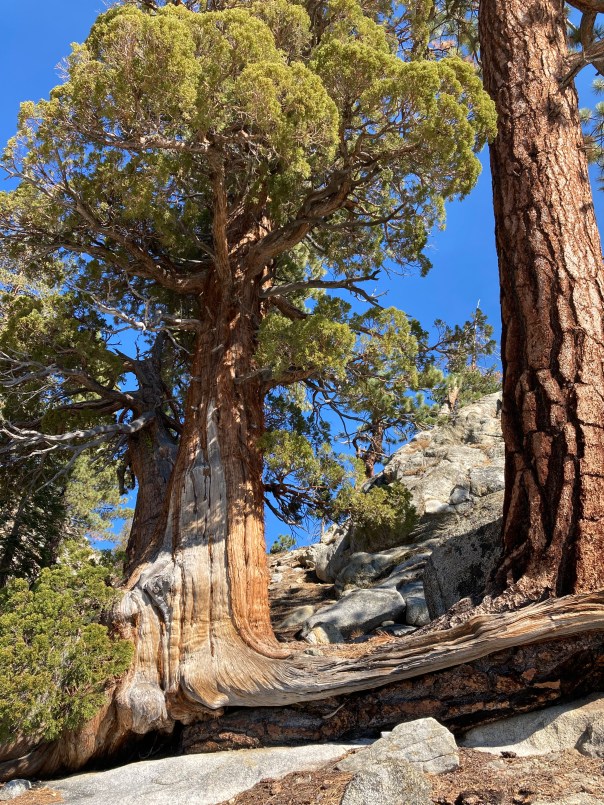
I very much  wanted to introduce my grandsons to my favorite tree. When I mentioned my tree “friend” to them beforehand they asked what its name was — of course a friend would have a name, right? But I hadn’t thought to name it. So I said they could help me choose a name after they were introduced.

Prickly Hawkweed

It took longer than expected for the whole expedition, because as we walked through an empty campground on the way, we met the campground host who loved to talk, and then his two “surprise rescue,” exuberant pups. That was fun, but eventually we started our ascent, which was slow and deliberate going as we adults cautioned the children about the gravel and the steep slopes. I avoided the trickiest gravel-strewn expanses of granite, and led our group into the manzanita ground cover higher up on the back of that hunk of rock, where we admired the lichens and flowers as we headed for the small dome to the side, which is easy to climb.

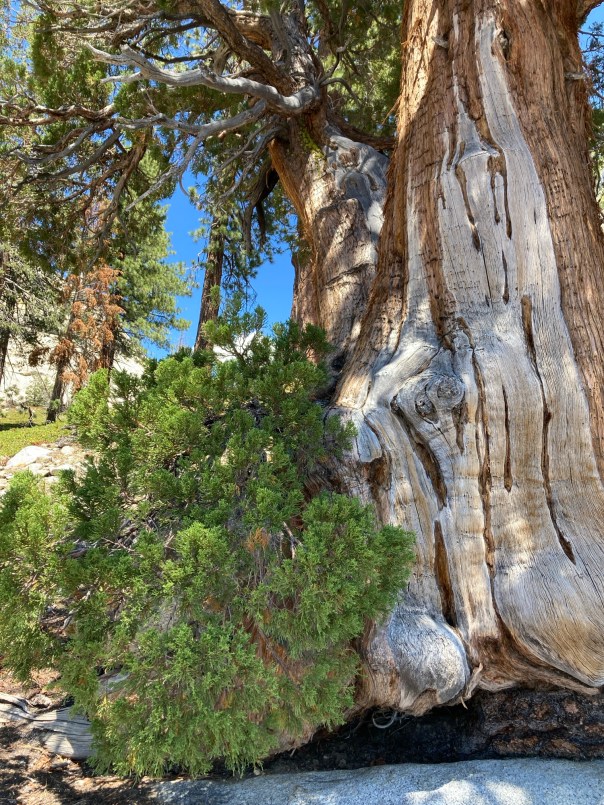
Then I found my friend, which is actually two trees intertwined, a Sierra Juniper and a pine. It/they were christened “Double Hug,” seeing as the two are in a forever embrace by means of large roots lying next to each other, and even their branches tangled together. We hugged the trees, and posed on the bench formed by those hugging arms.

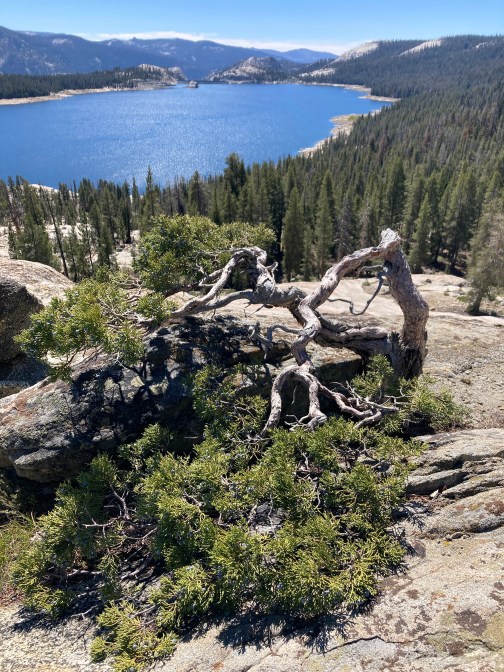
Below, I am exclaiming over a little tree that, having been bent down by snow as a sapling, is growing sideways along the rock.

I don’t remember the last time I was with other humans on The Dome — it was a nice change, to have them along  to “ooh” and “aah” with me. Tom also had never been up at the lake at all, and Kate not since she was a teen, so they were truly thrilled to be there.
In the afternoon we went to the lake for a canoe outing. The previous day, a neighbor had helped Tom and Kate get the very heavy boat out from under the cabin deck and on to his truck, to haul it down for the season. This day I rode down with the four of their family in their car to help them clean out the canoe, and I took pictures as they pushed off and paddled away.

Then I began walking up the hill back to the cabin, a hike that can be done in ten minutes, but this time it took me one and a half hours, because I meandered and wandered and explored the woods and ditches along the way looking at the many beautiful plants, and also watching a mated pair of birds hopping back and forth on the road in front of me. They were Pine Grosbeaks. This is what the male looks like, from an internet photo, because mine were from too far away. That was definitely a new sighting for me, and combined with the junco nest, very encouraging, because other than Steller’s Jays, I rarely see birds up there. Maybe in my usual visiting month of September the birds are already gone to lower elevations.

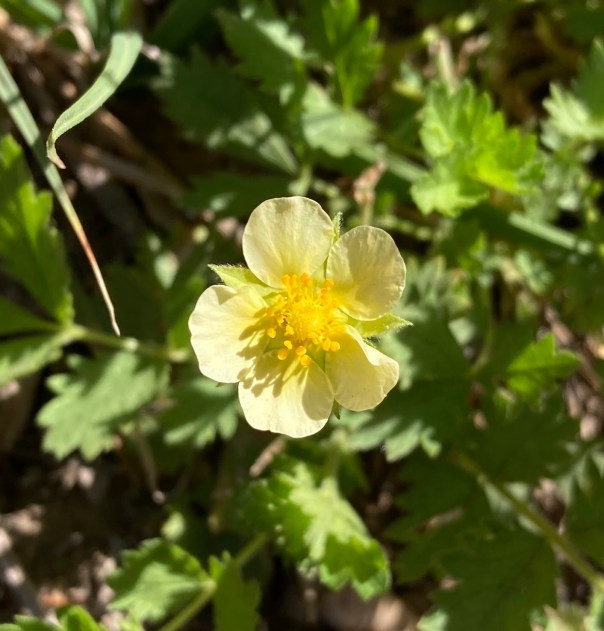
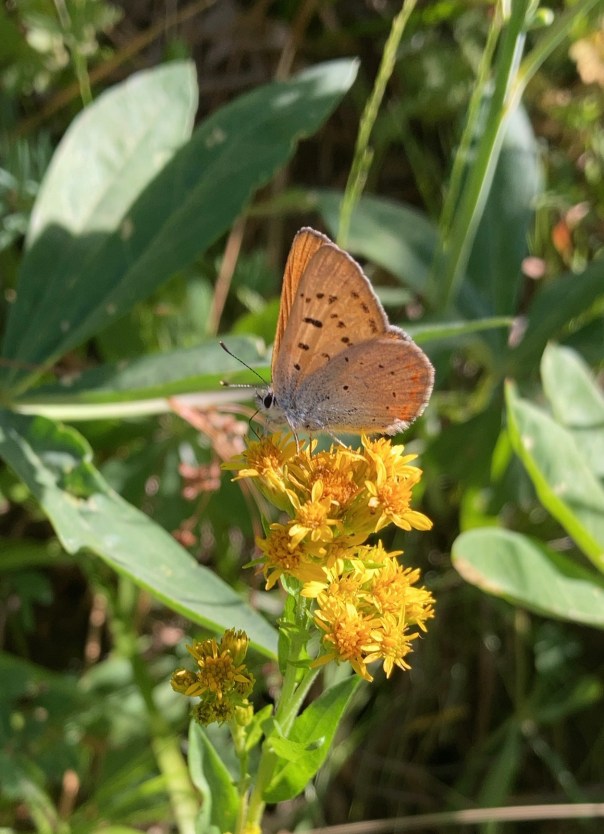
Some of the (mostly yellow) plants and insects I admired and/or identified by the roadside are below:
Pretty Face or Golden Brodiaea
Yellow Velvet Beetle on Ranger’s Buttons
Woodbeauty

I met on the road a mother and daughter whose cabin is not far from ours, and the daughter told me that one of our hugging trees on the dome is a Sierra Juniper, Juniperus occidentalis. I had thought it was some kind of cedar tree, but when I researched it later I realized that it is indeed a Sierra Juniper. True cedars are not native to the Sierra Nevada, though one conifer typically called “cedar” does grow there, the Incense Cedar (Calocedrus decurrens).
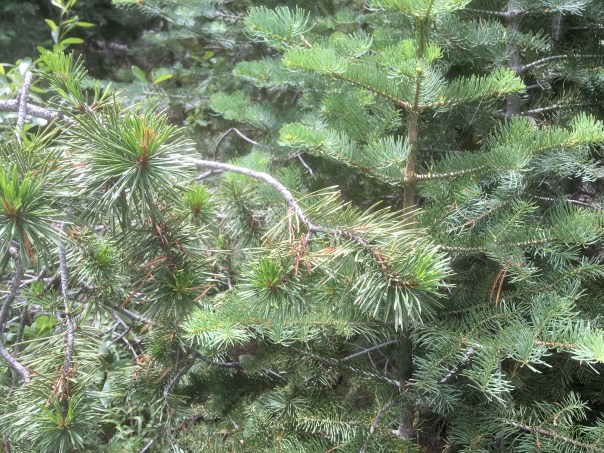
Lodgepole and Red Fir

The sad, sad day arrived, when we must pack up, clean up, and load up our cars, to caravan down to the valley and back to my house — but our vacation had not ended, only changed locations…

Soon Uncle “Pathfinder” had arrived to spend a day and a night, and we all headed out to the coast, to Tomales Bay, for a short walk through the entirely different biome. The sky was mostly cloudy and overcast, which is common in the summer.

In many places the paths were narrow tunnels through thickets of live oak and coyote brush, tall grass, fennel — and the dreaded poison oak reaching out threateningly. The boys’ uncle was a wise counselor who gently reminded them again and again to keep an eye out for those clusters of three leaves, often red and often shiny, so that they could squeeze by without their bare arms touching.
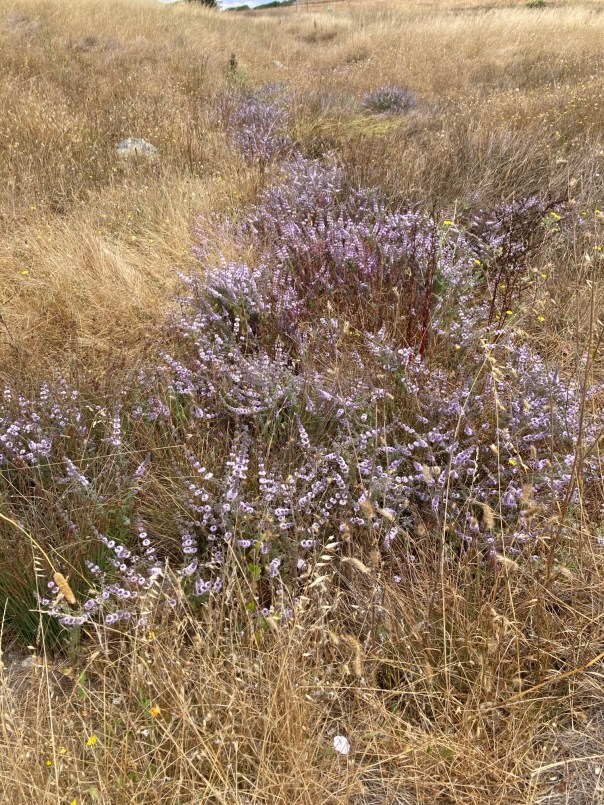
Pennyroyal marks where winter streams ran.

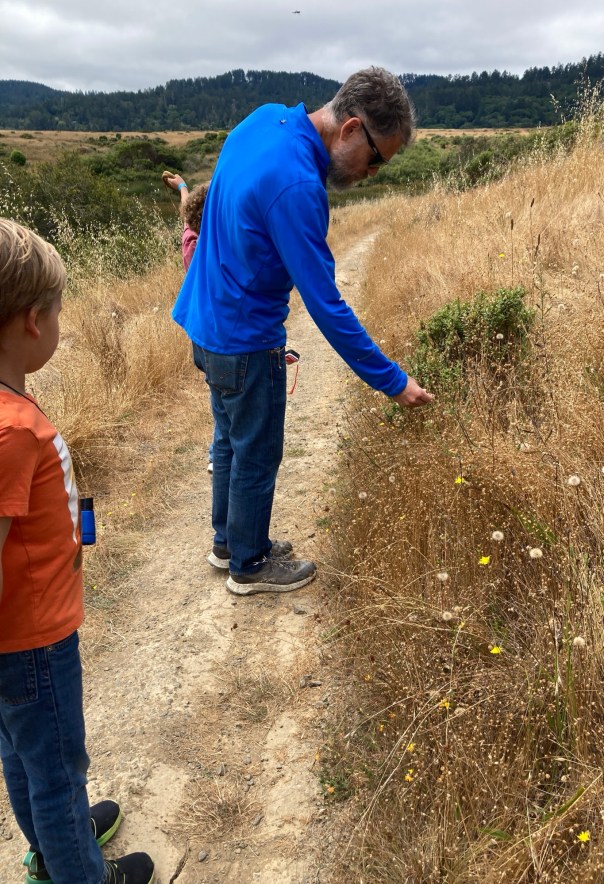
But mostly we walked through more open places with dry grass spreading away from the trail and far into the distance. I am actually on a path in this picture below. Kate had read a tick warning and no one wanted to venture into the foliage very much.

Pathfinder joined me in noticing various plants and talking about what they might be. He demonstrated to the nephews how the fennel fronds are pretty tasty for munching on, and he knew this flower that I didn’t, the Twinberry Honeysuckle:
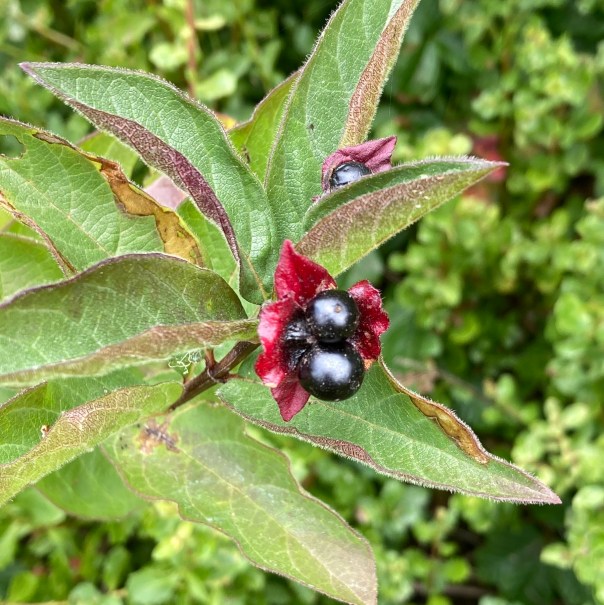
Twinberry Honeysuckle

Raj and Rigo were hopeful of reaching the shore of Tomales Bay and getting their hands at least into the water, but every time we drew near, the ground turned out to be too boggy, and no one, including them, wanted them to sink into the mud, and who knew how far one might sink and stick into it.

So we continued looping around on the paths, going on faith that they would eventually lead us back to the parking lot…

At left Pathfinder is looking at the Rattlesnake Grass, Briza maxima, which is not native here but has certainly naturalized and grows “everywhere.” It is native to areas of Africa, Asia and Europe. Do you have it where you live? I didn’t get a good picture this time, partly because it was not a good stand of the stuff, and most of the “rattles” were very short. You can click on the link to see the Wikipedia photo.

Related to the Golden Brodiaea I had seen at the lake, is the Elegant Brodiaea in its much drier habitat near the sea:
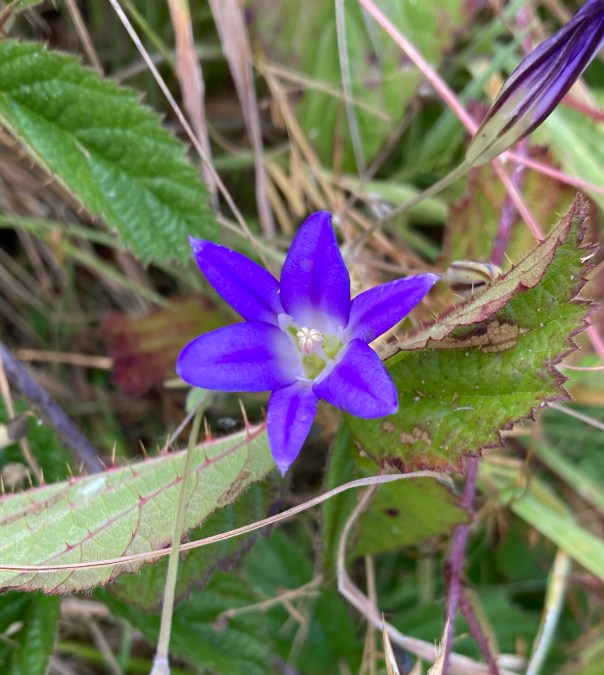
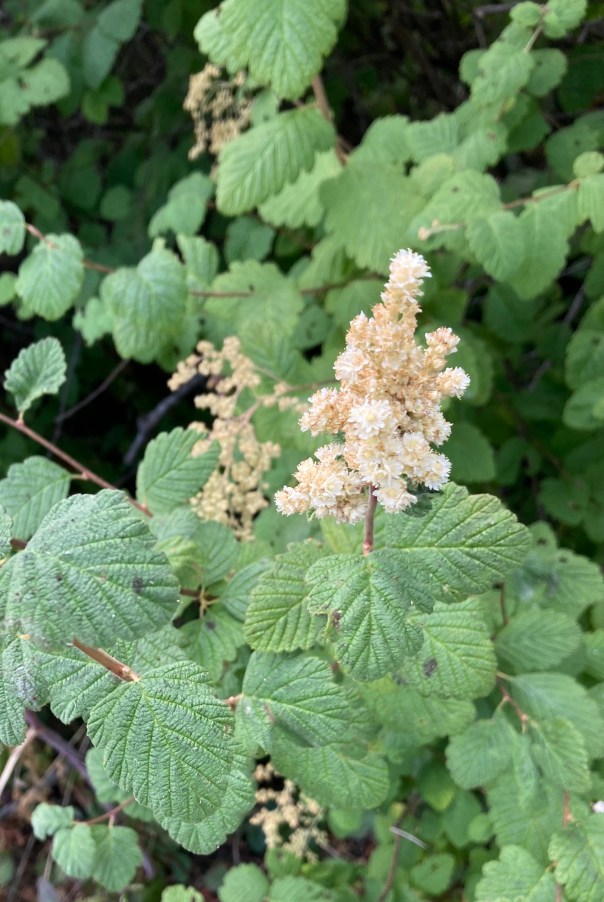
Ocean Spray
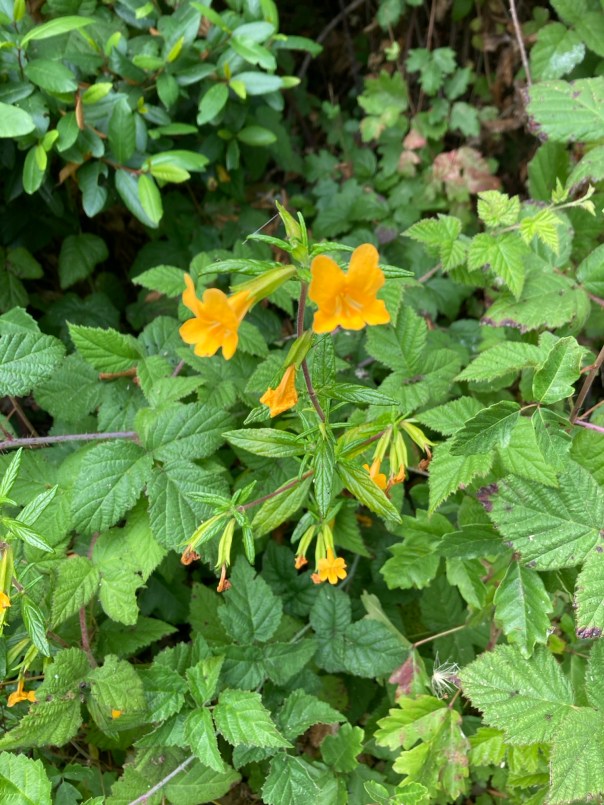
Orange Bush Monkeyflower

This forbidding plant has the agreeable name of Coastal Button Celery:
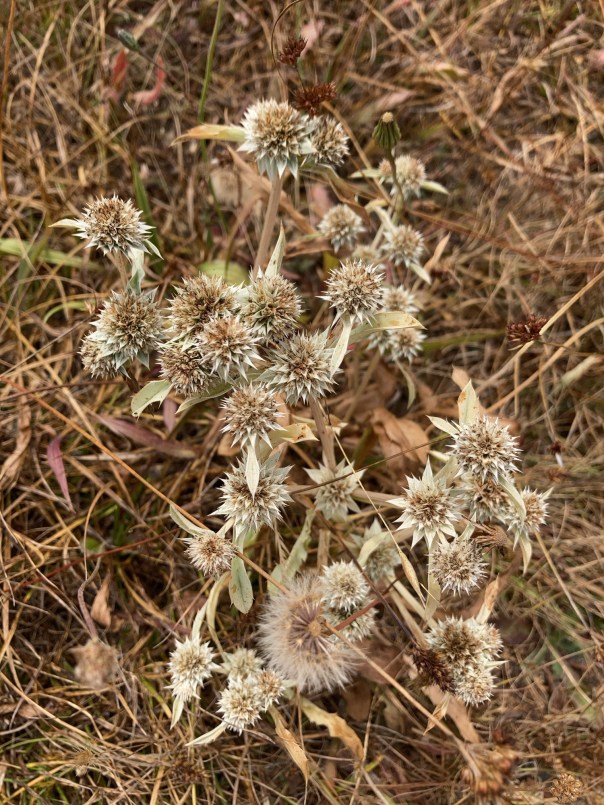
Coastal Onion


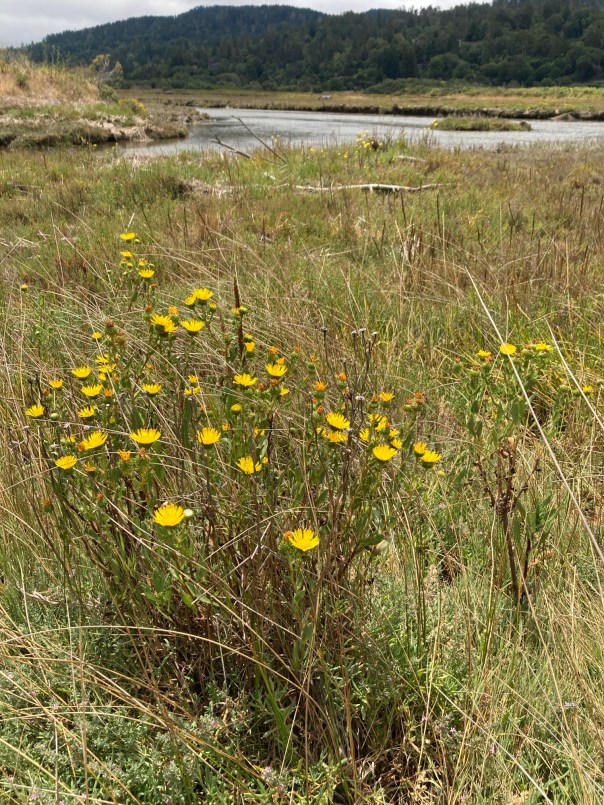
Oregon Gumplant
The pennyroyal was extravagant.

Oh, it smelled so good out there, among all that dry grass with the fennel and pennyroyal and other species continuing to dry up under our noses, where their essential oil droplets could be breathed into our lungs. I wished there were a bench to sit on… but there wasn’t, and anyway, we had places to go, things to do.

When we got back in the car we drove up the Coast Highway, Highway 1, and found the oysters Tom was longing for at Nick’s Cove. We didn’t order any of their special fries, but we noted on the menu that they came with a sprinkling of — chopped wild fennel!

It had been a most wonderful outing, and the final one of this visit with my dear children. This morning they will all have departed to their homes, and we’ll continue our adventures separately. It has been a very special couple of weeks, filling my gladness cup to overflowing. Thank you, Lord.
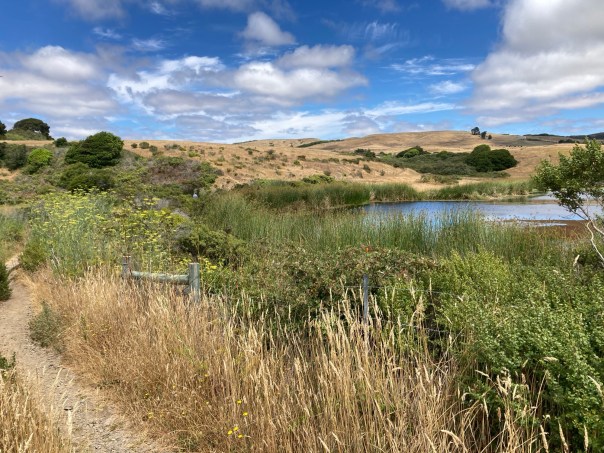
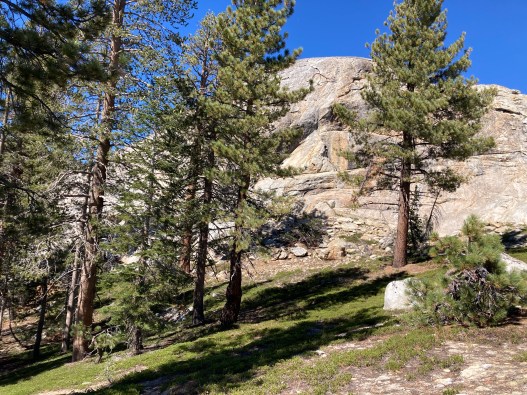
Gumdrop cannot be denied.

The granite dome behind our cabin, which we  fondly call “Gumdrop” — Mrs. Bread coined its name — was calling me to make a visit this morning, and I wanted to set out early and eat my break-fast on its slopes overlooking the lake. But because it was such a chilly morning (I know it got down to at least 27 in the night), I waited to venture forth until the sun rose well above the trees.

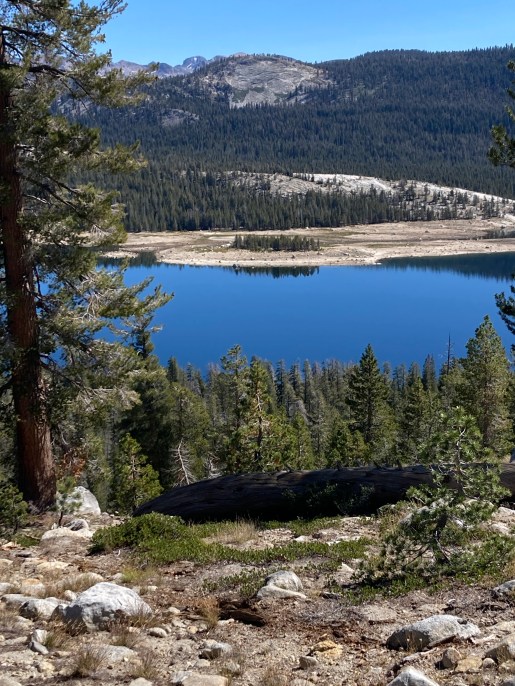
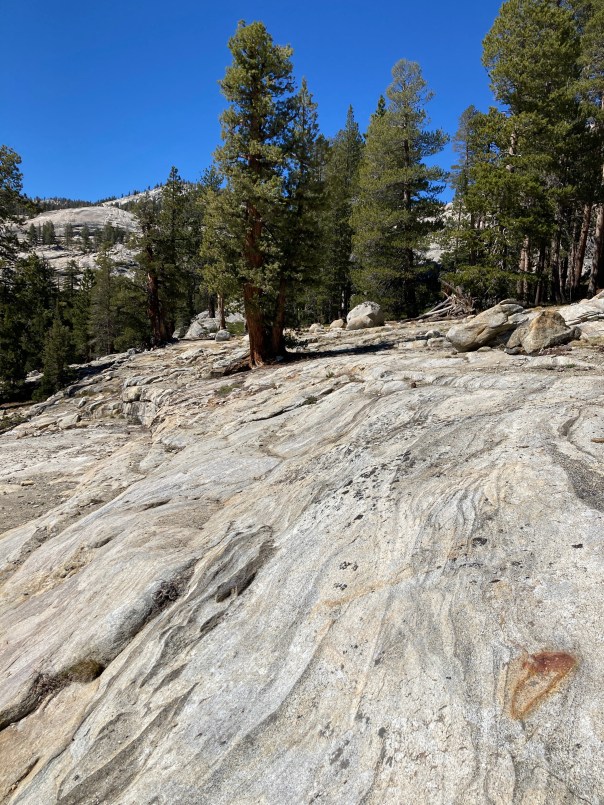
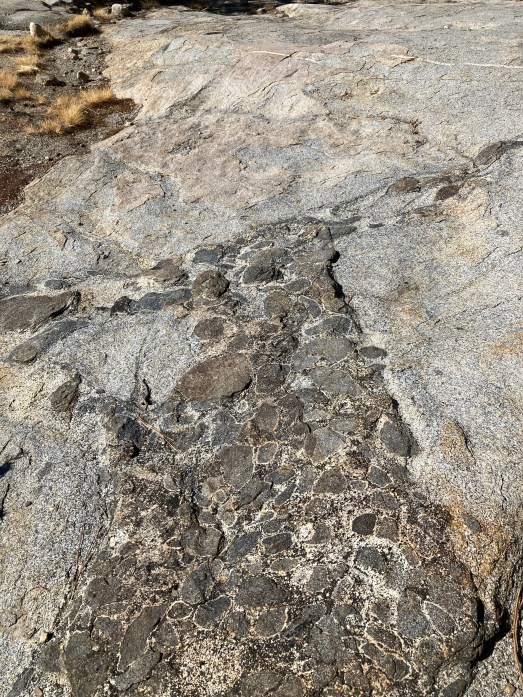
I’ve written about my dome excursions more than once here, and I debated whether even to mention today’s outing, but I’m doing it for my own memory’s sake. And maybe a few other people also enjoy multiple pictures of boulders and scree and rock in the shape of a river. Visits to Gumdrop always feature treats other than the granitic type: sublime views that make you feel you are on the top of the world.

This time I reversed the direction of my loop around the base and shoulders of this exfoliating hunk of rock, and headed east when I got near, then south, counterclockwise. Every few steps I took, the view changed, and the pointy domes across the lake would be hidden behind trees, and then come back into sight.

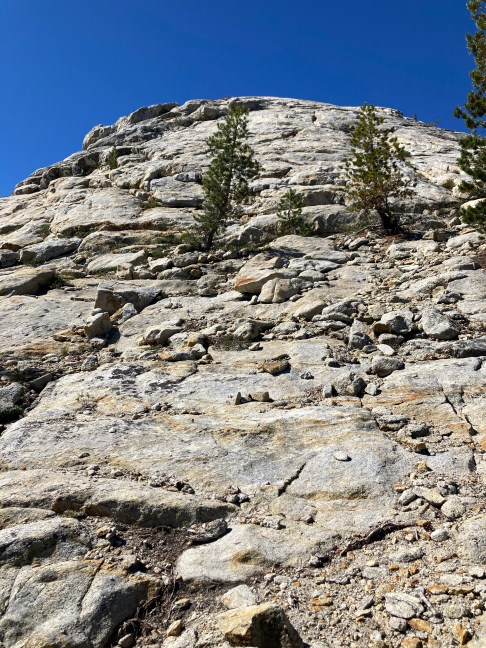
I would never try climbing to the top of Gumdrop by myself; once my late husband did that, and he fell coming down and got a big gash on his arm. When you fall on a dome, you fall on rock — that’s all there is, and you could easily be knocked unconscious, or worse. But when I walk around the sides of it, I can’t help climbing upward, because it doesn’t have a flat bottom like a gumdrop candy, and around Gumdrop Dome some of its rocky slopes are covered with soil and trees. Today on the side where I first approached, I reached the limit of what felt safe. This next picture I took from that spot.

Majesty is the word that came to mind as I was thrilling over the grand scenes before me, whichever way I looked. As I braced myself on the slant, and looked out across the still lake, I could not even hear rustling of trees, or any hammering from cabins down below. For two seconds, a fly buzzed, and was silent.

Many features of the landscape are physically large, and majestic that way. But the smallest succulent or infant pine tree is huge in its brave clinging to life, on a rock.

I sat with my back against one slab, and ate a protein bar, drank a little water. I was the only human on Gumdrop; a few ants passed by near my boots. The lake glittered down below. All was quiet.

When I got back to the cabin after a couple of hours, I was looking for that Annie Dillard quote about why she likes mountains better than creeks. But I found this one first, which is particularly about the kind of mountain I like:

No matter how sophisticated you may be,
a large granite mountain cannot be denied —
it speaks in silence to the very core of your being.

-Ansel Adams


A dome without deciding.

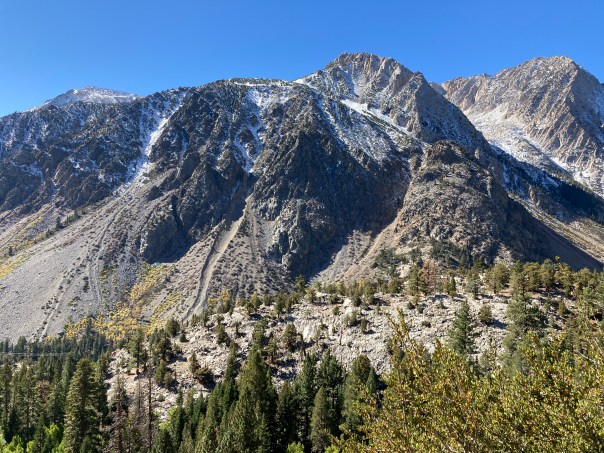
When we departed Mammoth Lakes on our last morning together, my family kept going north toward their home while I soon must cross the mountains westward. I was glad that while I was still on Highway 395 the road passed through forests of Ponderosa and Jeffrey Pine with sagebrush underneath. That is one of my favorite sights, the huge trees somehow adding a depth to the quiet, and standing in relief to the dry and scrubby desert. I also took extra time to drive off of the highway on a dirt road, trying to get closer to the mountain pictured above. I still needed to zoom in to see the beautiful geology streaked with snow.

That snowstorm our first morning had been a blessing in two ways. It cleared the air of the smoke that had masked the mountains when we approached the evening of our arrival back in California; and it added contrast to all the colors, highlighting the lines and textures of the rocks.

The decision about which mountain pass I would use that morning had remained a point of discussion for most of the trip. Google maps wanted me to go via Hwy 50 by Lake Tahoe; I suppose the program chose what would normally be the fastest route. But as a result of wildfire damage in that area the highway had been closed, and while the date of its reopening remained unknown, I leaned toward one of the other passes to the south, either Sonora or Tioga, and I booked a lodging in a little town that would be convenient either way. As the day drew near, Tioga Pass closed because of snow.

But it was opened again, and meanwhile it had become my first choice. The picture just above is from that road, Highway 120, which passes through Tuolumne Meadows in Yosemite National Park. I had finally decided on this road because of all the memories associated with it, especially Tuolumne Meadows, starting with the day when 50 years ago last month my husband and I became engaged to be married.

This picture is just a closer view of the one above; you can see the aspens turning….

I stopped many times at turnouts, to get a look at Wright’s Buckwheat and a surprising number of other botanical roadside attractions:

But soon enough, around noon, I arrived at Tuolumne Meadows, and thought I would at least investigate the trail that leads up the back of Lembert Dome, which I mentioned just last month in connection to another granite dome. All my memories of this hike were foggy, it had been so long ago that we accomplished it.

I was curious, and entered into the process of continuing on the trail without quite deciding to do it. If there ever was doubt about my being a process- and not a goal-oriented personality, it has vanished, as I observe my rambling and meandering behavior that has created some problems for me, in this era when I have no goal-oriented husband around to keep me in check.

If you like maps (and domes) you might be interested in this one. I parked my car near the bridge over the river, so my trek started lower left at the doubled purple line.

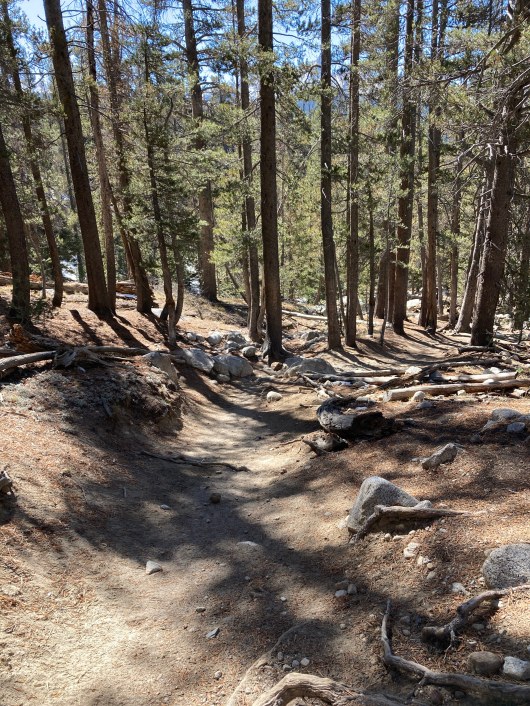
I began to walk around the northwest side. At first the way was fairly flat and easy…

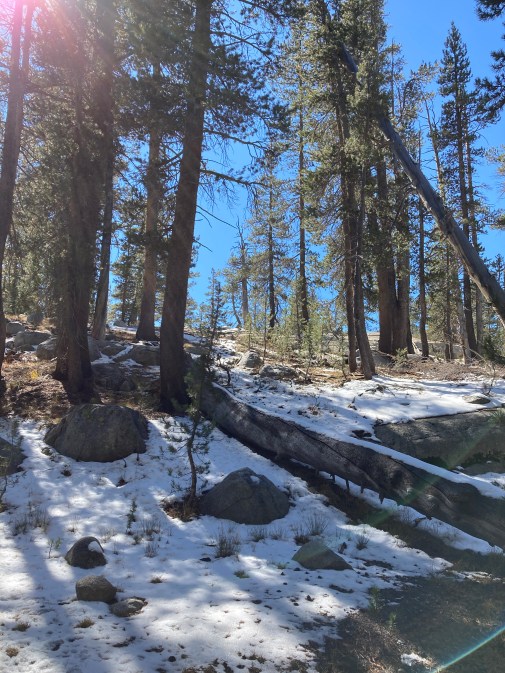
…but it quickly steepened, and ascended through the forest, where patches of snow still lay on the path and I could occasionally see the dome through the trees. It was lonely and lovely. In the first hour I saw only one couple, and listened to the sort of quiet that is full of small bird songs, the wind murmuring through the pines, and chipmunks chirping.

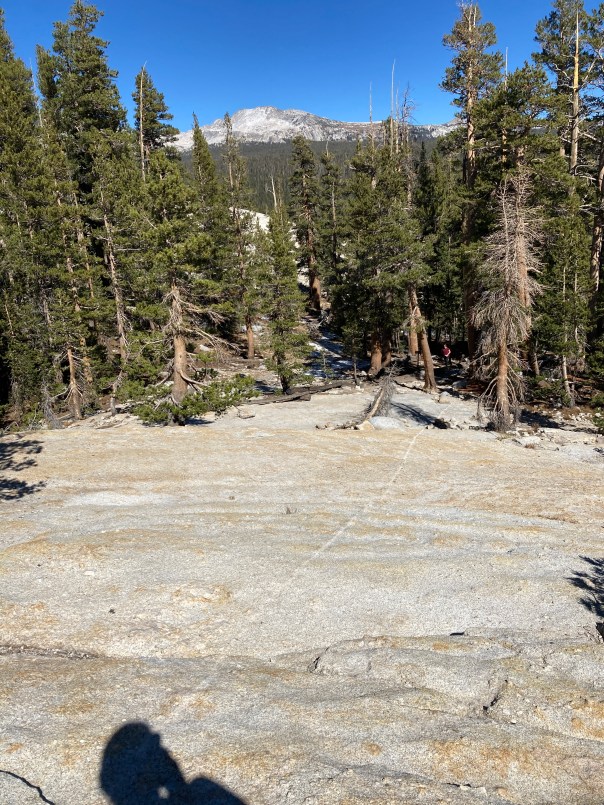
Looking back the way I’d come:

I heard groaning as of a door swinging on its hinges, and looked up to see a slender tree trunk that had fallen into to the branches of a larger tree, and was sliding back and forth the slightest bit when the wind blew.

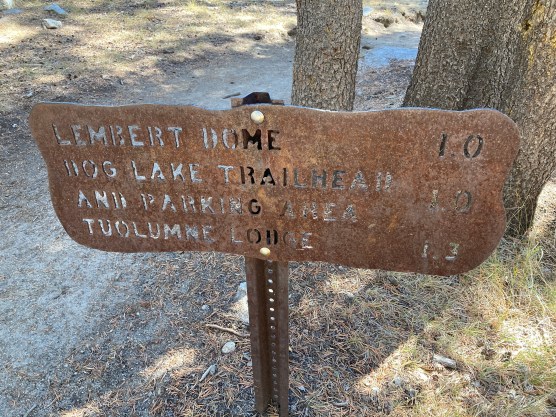
Tramp tramp tramp, swish swish crunch, tramp tramp splish splish…. My boots were adding the only not-quiet sound, as I pushed on through snow and mud and plain dry dirt. I was glad that I hadn’t come too early, or I might have lost the trail in the snow, but tread marks showed me the way. After nearly an hour I saw this sign:

Really?? Still that far to go…? I realized that I hadn’t looked at the map beforehand to see how many total miles I was in for — because “it was an easy hike a toddler could do,” after all. Well, I was not going to give up at that point! Then it was, I suppose, that I knew I had a goal.

That next  mile was pretty easy, and only took 40 minutes. When you get behind the dome and the trail bends around to the approach, soon you start to see blue between the trees and down to the ground, and you know that you are high.

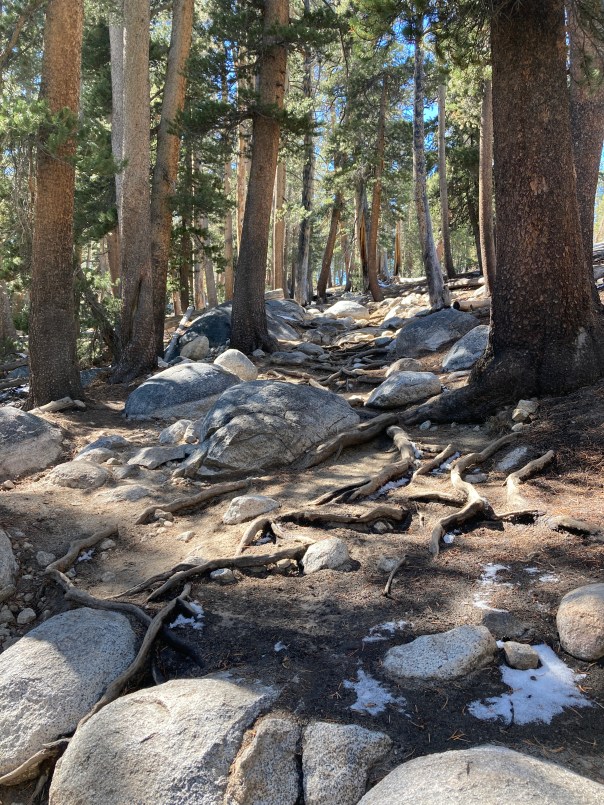
The last part is very root-y and rocky… and then, the bare granite is in front of you…


Lembert Dome sits on the meadow, which is 8500 feet above sea level. In less than two miles of climbing you gain 900 feet to the top of the rock, so the trail would naturally have to be steep. The grade, the length, the time it took, the difficulty — none of it was as I remembered. Nor had I remembered how old Pippin was — she was three, not two years old — and now that I have been up there again I can hardly believe that she walked the whole way, but that is the story that we’ve all been telling, and it’s true that she was a child who climbed everything from the start.

Looking down to the bottom, from where I’d come:

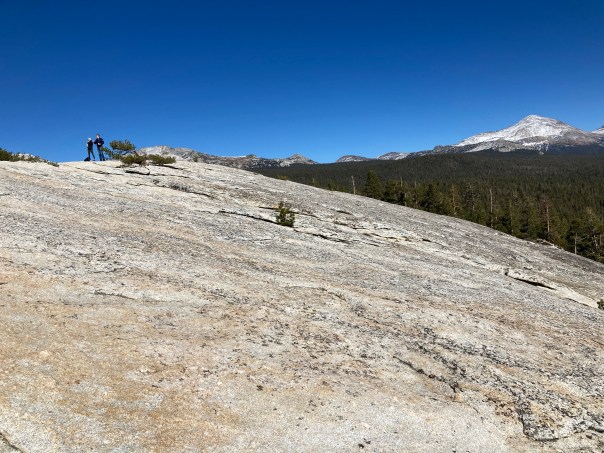
It’s such a wide space, you want to walk all around, and talk to the other rare people one finds in such a spot. I met three pairs of folks: First, a couple who mentioned several times that they were both afraid of heights!  They stayed in the middle of the expanse, and we took each other’s pictures. If you squint you can see them on the left below, eating gluten-free peanut butter pretzels which they also shared with me.

I met two 20-something boys, one of whom was ultra friendly and reminded me of the Jesus People of my own youth; I kept expecting him to ask if I knew Jesus. I liked him a lot, even though he asked my name as soon as I said “Hi.” I guess it’s okay to be forward with a grandma. And there was a father with his teenage son; we also took each other’s pictures, and told stories about Yosemite.

It was odd not to be talking about the names of the peaks. I don’t remember any of them, though their locations and the hikes linking one to another have been a realm of study and exploration for many people in my family, including my father and my husband.

In the picture above, we are looking around the west side of the dome to see Tuolumne Meadows as a tan strip in the distance, approximately in the middle of the frame. And below, Tioga Road is snaking through the forest. It’s a big expanse, but it is not exactly flat anywhere, so just standing around you have to brace yourself more or less.

I was up there more than an hour, but the time flew. I did not go around the side of the “knob,” as I call it, to the front of the dome, but I did feel confident to walk up on the broad and slanted slope just below. If I had not been alone I would have explored that last little area; when I told my fellow dome acquaintances why I was not going “all the way,” several of them offered to have me go with them. I was warmed by the camaraderie they were feeling, but was not at their level. I was content with my own solo feat.

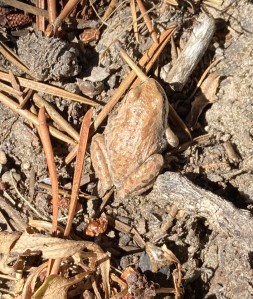
And I had many miles to drive that afternoon, before I would get to my Airbnb home in the foothills down below, so I did not even sit down for a minute. I had a goal of getting to my resting place before dark, and it would take at least an hour to get back to my car. But I stopped on the way to chase after a tree frog for a snapshot. I think he was cold, and wanted nothing more than to sit in that patch of sunshine.
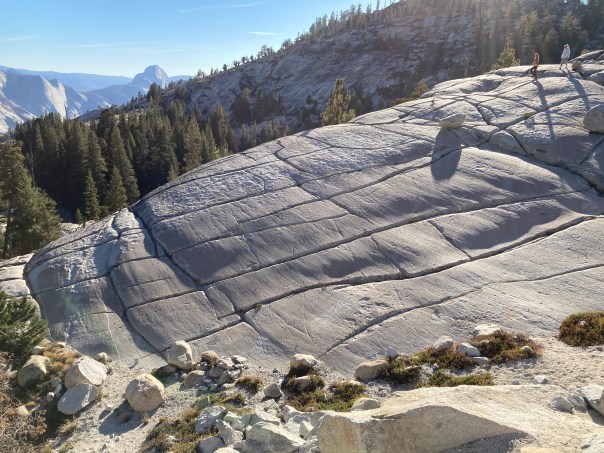
I also was looking forward to resting my aching body, and hoped there would be a tub in which I could soak, where I was headed. But it was extremely uncomfortable, psychologically, to be so driven in my driving, to keep pushing on toward my goal, with only a fleeting glance as I passed swaths of wildflowers and compelling rock views.

I allowed myself a brief stop at Olmsted Point, which was always a favorite place when we had children with us, and we would walk among the slabs and boulders of granite that we loved to explore. That spot might be more fun than a dome, because you can be freer to run and play. People who like can gaze up at the peaks and name them one by one.

I didn’t make it to my Airbnb before dark, but it was all okay. There was a tub to soak in, and a good bed, and my pictures to start sorting through. My last day’s drive was short and to the point, and I came home surprisingly energized and rejuvenated, having received in eleven days a thousand gifts.

This completes my October road trip story.

As large as alone.

Mountains are giant, restful, absorbent. You can heave your spirit into a mountain, and the mountain will keep it, folded, and not throw it back as creeks will. The creeks are all the world with all its stimulus and beauty; I live there. But the mountains are home.

– Annie Dillard

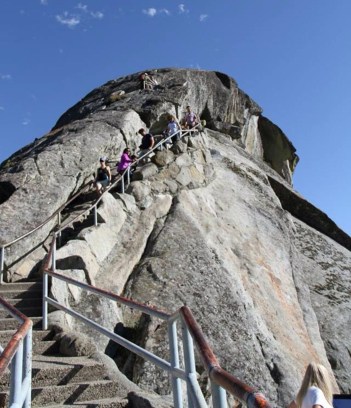
Moro Rock in Sequoia National Park – web photo

A granite dome was the focus of my mother’s most memorable hiking experience. She told me many times the story of how, at the urging of my father, she climbed Moro Rock when she was great with child (me). That is, so far, my only experience of it.

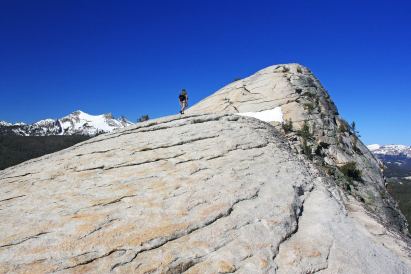
On our yearly camping trips decades later, my own children’s father would hike to the summits of other domes of rock with them, and a few of those times I was along. Lembert Dome was long my favorite, looming over Tuolumne Meadows on the Tioga Pass, in Yosemite National Park. Even at three years old Pippin could get to the top of it, with someone to hold her hand on the gradual ascent up the back slope.

Lembert Dome in Yosemite – web photo

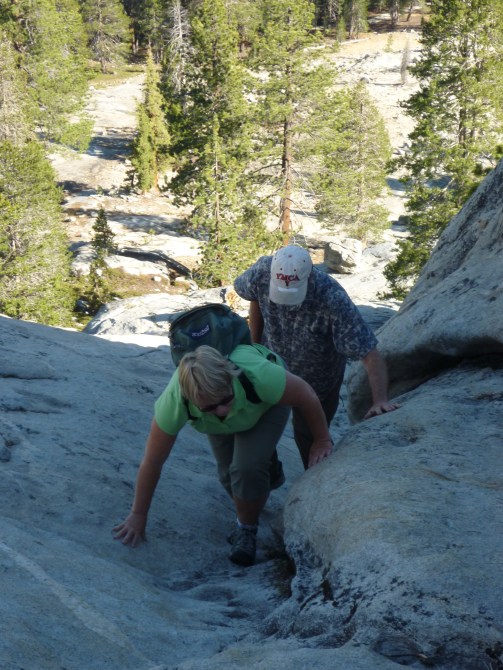
In the latter half of my life, my favorite dome is the one behind our mountain cabin. Several features of it make it accessible to me, the most important one being that I can walk to its base in a few minutes. I read recently that one summer, a small group of us climbed to the summit of this dome in the morning and again in the evening of the same day. My late husband took the picture below of our companions coming up behind him, about eight years ago. You can see why I wouldn’t want to try it alone.

During my recent mountain retreat, I set out one morning before breakfast, thinking that I would just walk over that way to get a view of the lake from the other side of what we have nicknamed Gumdrop Dome. Within ten minutes I had changed course and decided to approach from a different direction and to do a new thing: walk all the way around the base. I came through the trees to the north side, and headed to my right, around the west side of the rock. That side is a steep wall, decorated by veins of different colored minerals, and by lichens.

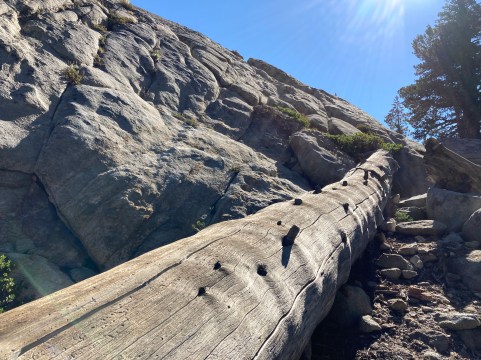
I refreshed my memory just now about different types of clast, or broken rock. I think what lies there at the bottom of the wall would not be classified talus or scree, but is just plain clast. On this side you can clearly make out where the base of the dome is.

I walked along in the clast, it moved under me, and then — whoopsie! Down I went on my behind. While I sat, I thought I should take advantage of the camera angle:

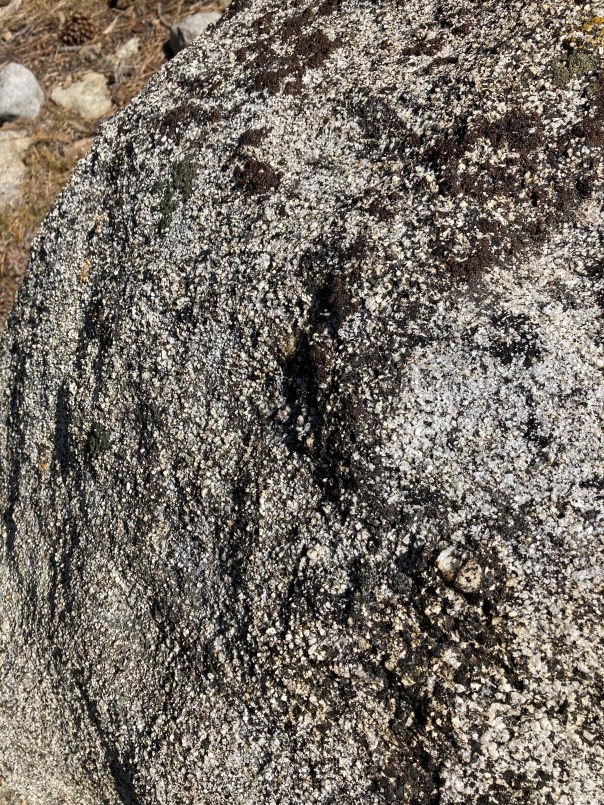
It wasn’t the only time I fell. A few minutes later I stumbled forward, and scraped my hand on some of that sharp granite. My euphoria was untouched; it was such incredible good fortune, that I should find myself completely alone, yet in rich company: God, and a friendly monster of a rock. Still, I navigated more carefully after that. The boulder to the right of the pine cones in the picture below is an example of the coarsest grit of granite imaginable; and the one below it, also.

I began to search for stones, keepsakes of my solitary walk around “Gumdrop.”

On the back side, the line between dome and not-dome is vague, as that granite face stretches away in an ever flattening  grade, down into the trees. There is still lots of rock there, but giant conifers grow out of cracks in it, and their duff lies thickly on top. Granite domes like this are called bornhardts; there are several theories about how they form.

For a long time I gazed at the wide views from my high perch, a flattish boulder-bench, and felt the cool breeze growing warmer as the sun rose to my left.

“O, Lord, how manifold are Thy works! In wisdom hast Thou made them all.”

From here you can see other domes in the distance, but of course you can’t get a good idea of what the dome you are standing on looks like. The best vantage point I’ve ever had is from the lake, as in this picture that was taken some years ago:

This area below I call the amphitheater. It’s a good place from which to watch the show!

If I had brought a snack, I might have stayed hours longer. It was all delicious and satisfying as a feast for the soul, but pure bliss was not going to prevent me getting shaky (elevation about 8500′) if I kept putting off nourishment such as was waiting for me back at the cabin; so I stood up and continued my explorations.

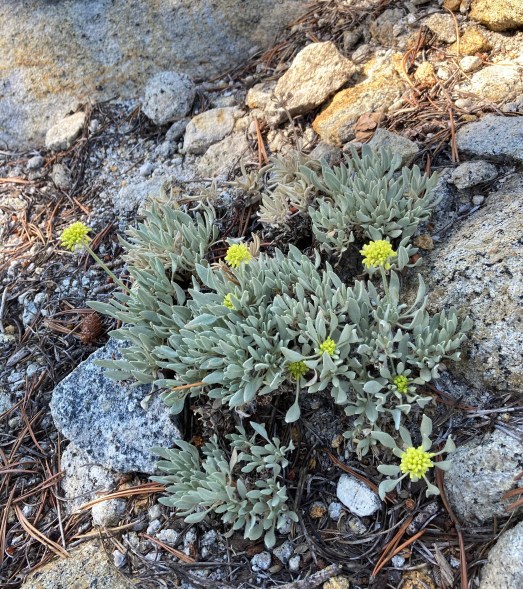
Frosted Buckwheat

This couplet below does not at all fit with the stones that I collected on the dome, as far as their smoothness, or the number of them. But the poet’s metaphor echoes somehow that of Annie Dillard at the top of this post, and they both understand what I left behind on that mountain dome, and what I brought home.

“may came home with a smooth round stone
as small as a world and as large as alone.”
-E.E. Cummings

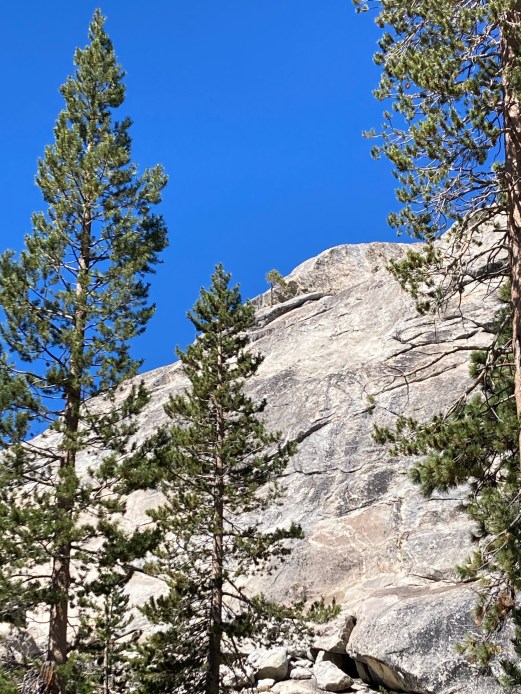
Here is my last look at Gumdrop, when I had circled around to my starting place. From this angle it seems that it might not be impossible to climb that particular slope. I wonder…. Well, next time I have a companion, I’ll have to bring him or her to this place and give it a try! But for now, Good-bye Gumdrop! Good-bye mountains! Thank you for inviting me. I had a good time!