Tag Archives: Greece

Serving and suffering for 700 years.

The Metropolitan Church of St. Gregory Palamas is very close to my hotel, and it houses the relics of St. Gregory, who was Archbishop of Thessaloniki from 1350 to 1359 A.D. I really appreciate St. Gregory and for months I’ve been looking forward to visiting his church.
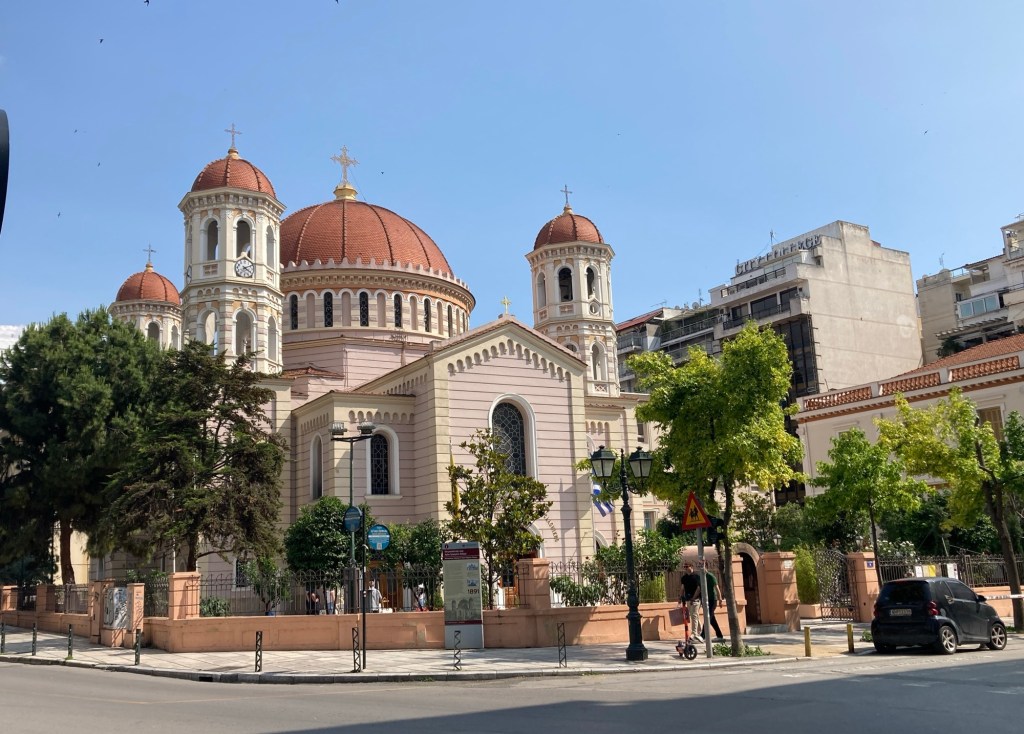
I’m devoting an entire post to the subject because of the relationship of this particular site and temple to other churches in the city, and because of its unique role during the 400 years of Ottoman rule.

It was built in the 13th and 14th centuries and originally was dedicated to the Virgin Mary, but after the Ottoman conquest of the city in 1430, and the conversion of St. Demetrios Cathedral into a mosque in 1491, this church was re-christened after that saint, who is the city’s patron. After the (Rotonda) Cathedral of St. George was also converted into a mosque in 1591, and this temple remained a place of Christian worship, it was designated the cathedral church of Thessaloniki.

The Greeks rose up against Ottoman rule at various times over the centuries; during the revolution of 1821, hundreds of Thessalonians sought refuge in the church, but the Ottomans broke down the doors and massacred them.

The building was entirely destroyed in a fire in 1890, and fully rebuilt by 1909. By the time it was consecrated, the old St. Demetrios church was functioning as a Christian church again, and that’s when the newly rebuilt church was dedicated to St. Gregory Palamas, in 1914. Later in the 20th century it had to be repaired after an earthquake damaged it.

I often think of how buildings have lives. A building that is consecrated for worship has a particular “calling,” if you will, and is often a revered member and bedrock of the community. The Church of St. Gregory Palamas has served for 700 years, and during those centuries has suffered from earthquake, fire, and sword.

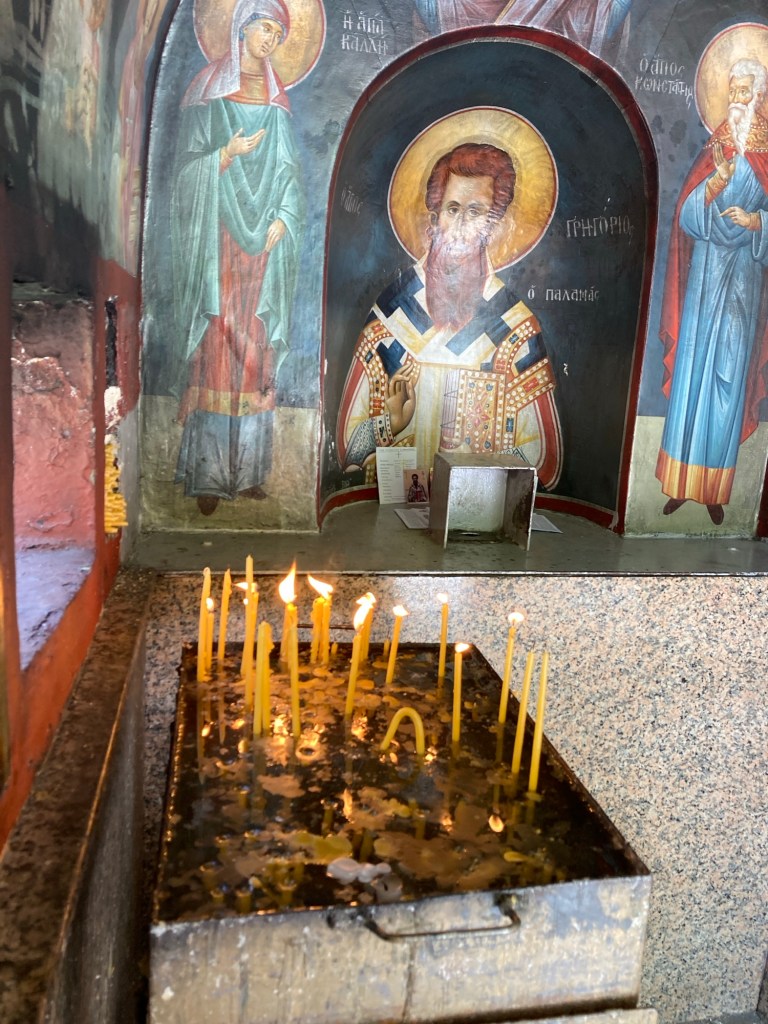
Today when I walked past, I stopped at the little booth shrine outside by the street, where candle fires were symbolizing a whole lake of prayers (sorry about the glare on the face of the icon):
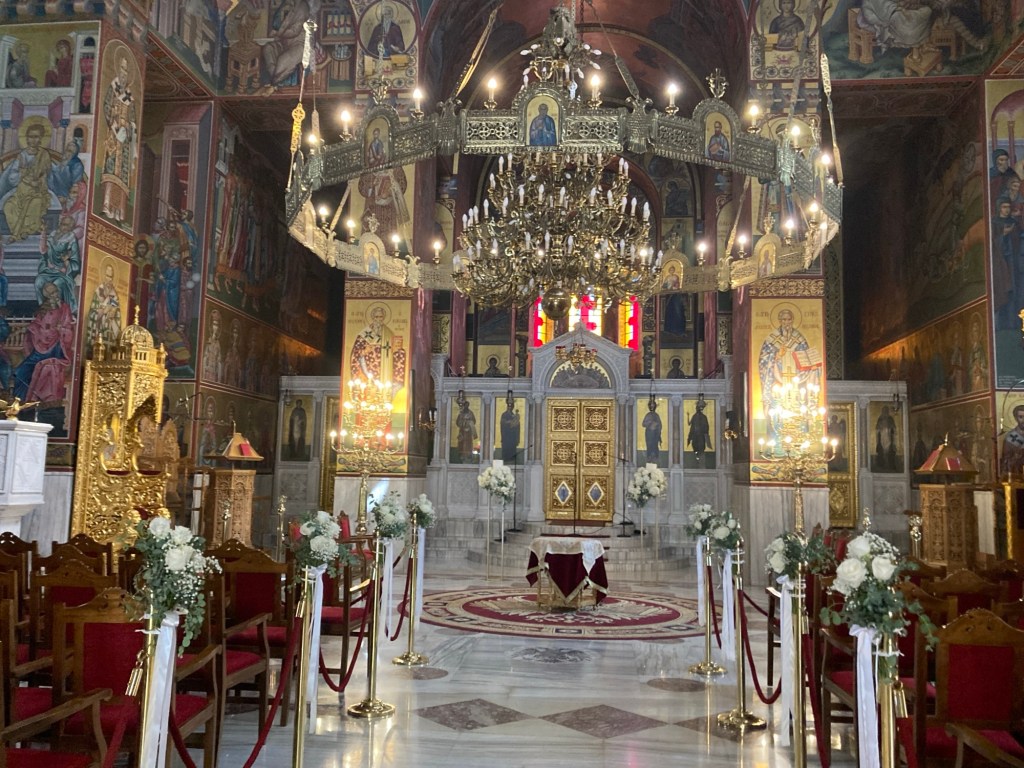
The last fifty years — such a brief span of time in the context of this city — seem to have been peaceful, and if the temple were sentient, it would no doubt be happy that it’s one of the most popular churches in Thessaloniki for weddings. The first day I stopped in, they were getting ready for such an event.
But the presence of the relics of St. Gregory, deposited there in 1914 when the church was dedicated to him, are the greatest blessing to the temple and the people.

May the Lord continue to make His temple a blessing to the city of Thessaloniki.

Olive oil: the body.

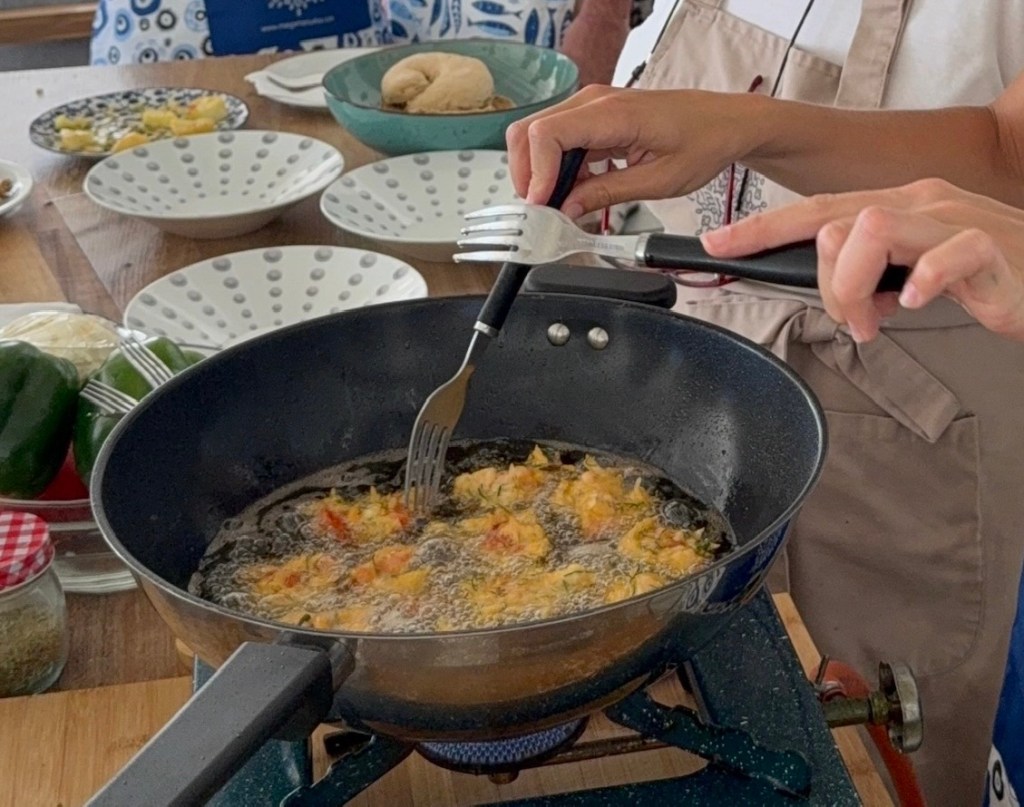
“If the dish you are cooking doesn’t have meat, olive oil is especially needed to give body to it. Today we are making chicken with potatoes so we only need a little olive oil.”

So our teacher explained as she poured a few more generous glugs from the bottle over the raw ingredients in the pan.

We were attending a cooking class taught by a Greek woman named Stella, and in the company of eight or so other visitors to Paros, in this case all Americans. We were to learn quite a lot, not only about olive oil but about feta cheese, baklava, the mastic tree and the local farmers. It was more enjoyable than I could have imagined, because our host and instructor was so real, and obviously liked people.

She only uses oil from olives grown on Paros Island — and she used one whole liter bottle and half of a second bottle for that one meal’s dishes. Also, according to Stella, the creamiest, tastiest feta is made on Paros — and that I can believe.

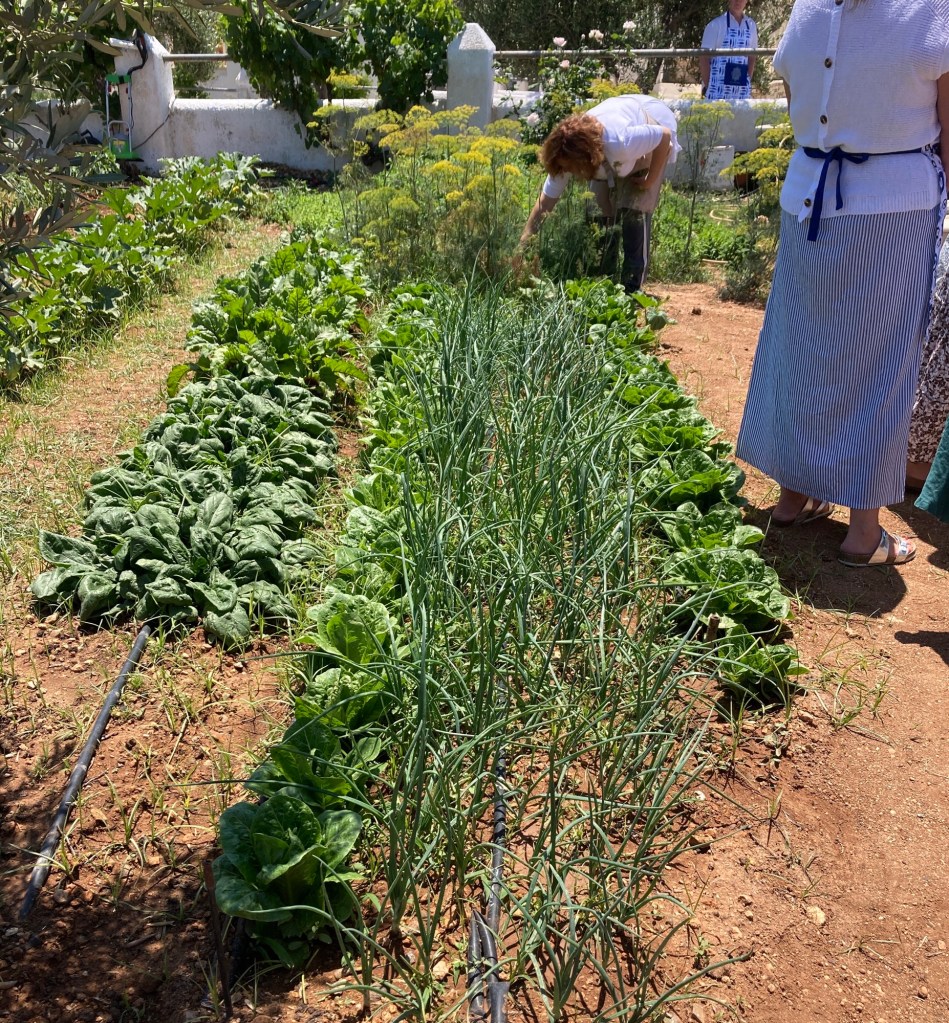
We stood around a big table wearing our blue-and-white aprons, and took turns chopping, stirring, frying and tasting. We got a tour of her garden, and at last, though all that tasting had blunted our appetites, we sat down to a feast.

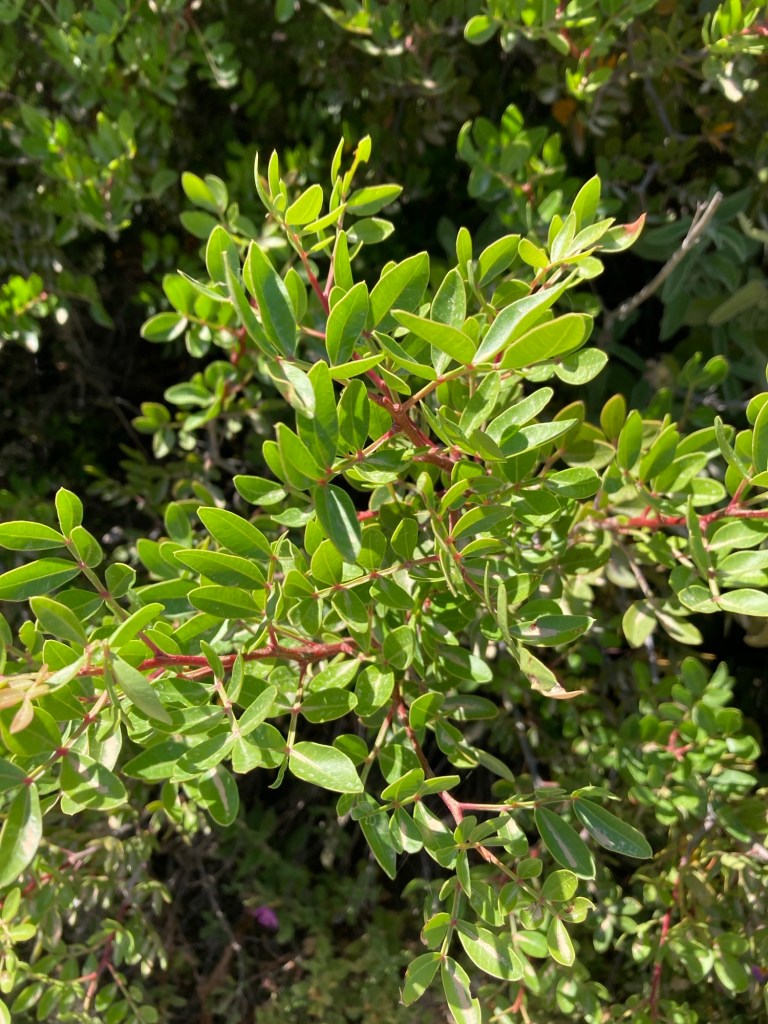
At some point as we were cooking Stella mentioned the herb mastic, and later while we were enjoying the food we’d prepared, I was pleased to tell our teacher that Pippin and I had seen mastic bushes on the Byzantine Road the day before. At least, that’s what our Seek app said it was, Pistacia lentiscus, and our research online seemed to agree…

Maybe it’s not mastic.

But Stella assured us that in Greece mastika (Μαστίχα) only grows on the island of Chios, though farmers are always trying to cultivate it elsewhere. We could tell she was a bit defensive at my proposing a conflicting story.

One thing Stella did confirm for me is that the best baklava is made mostly with sugar for sweetening, though she includes a very small amount honey in her recipe.

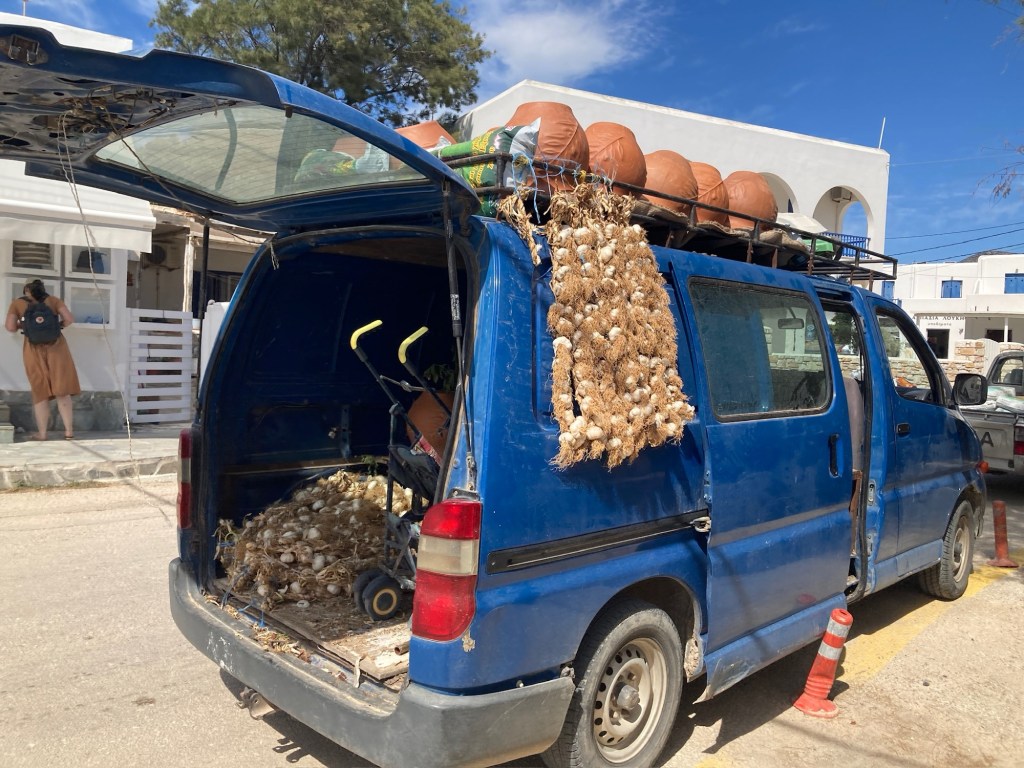
Garlic truck

In addition to the taste experiences of our class, my girls and I sampled in restaurants lots of different foods, or new presentations of familiar ones. The Greeks want very much for their guests not to miss out on any of the dishes they are proud of.

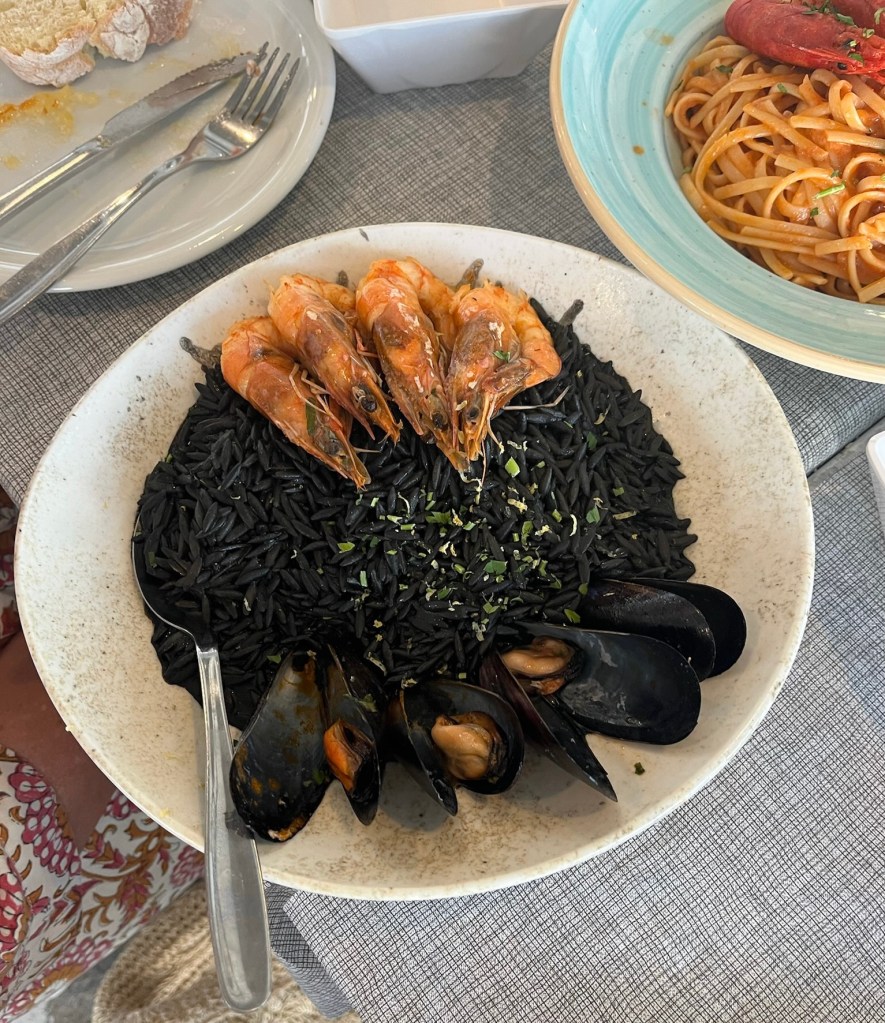
Orzo with cuttlefish ink.

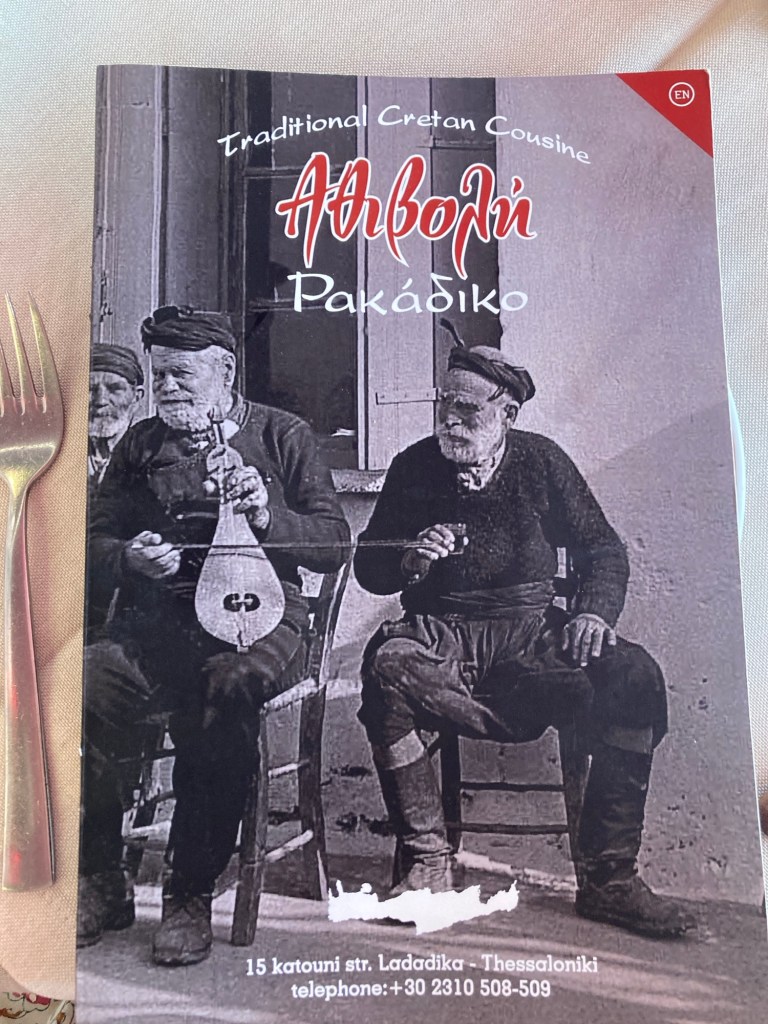
Today I met up with a Greek friend I knew from my parish in California, when she lived there for several years, and she was typically eager to feed me something I might not have tried in the last two weeks. So she took me to a Cretan restaurant.

I guess I shouldn’t have been surprised that the people of Crete have their special ways with the typical ingredients of the Mediterranean.

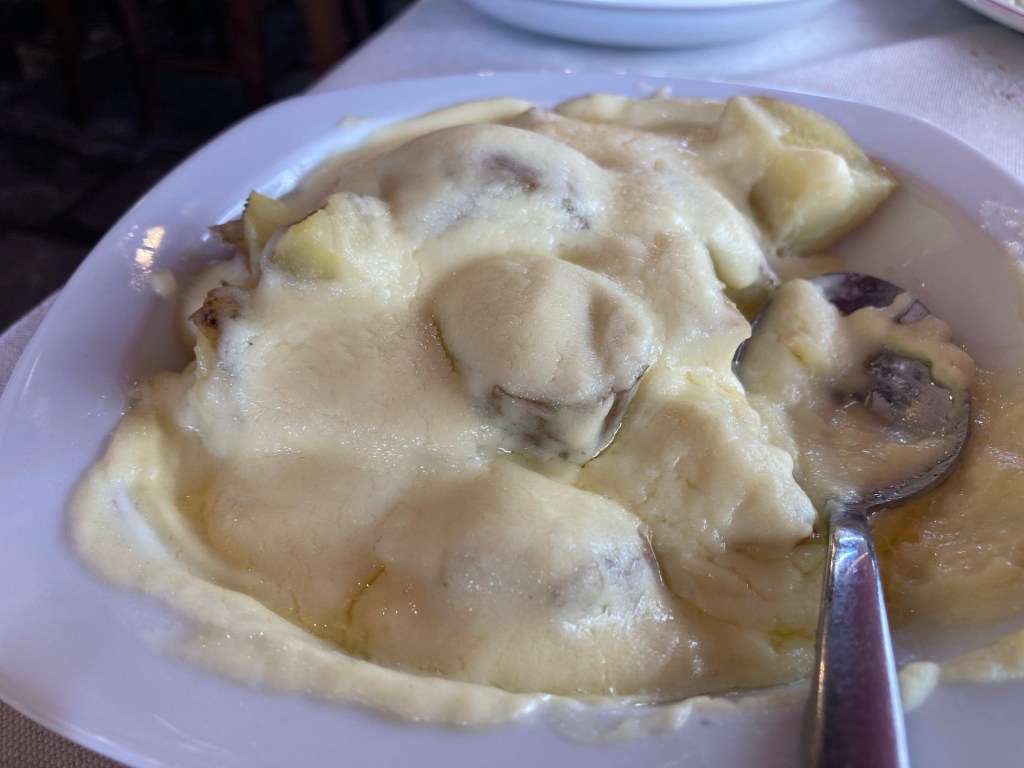
Some of the dishes I tried were: Potatoes With Goat Butter; Fennel Pie; and Rooster Baked in Wine, Served on Cretan Pasta.

Potatoes with Goat Butter

Almost always the platters of each dish are enough to serve 2-4 people, so it’s wise to agree with one’s friends on what you all like, so you can share. But so far, my dining companions are absolutely unconcerned about there being too much food on the table. Being a proper host almost requires it.

It’s a good thing I’m doing so much walking 😀

St. Paul preached here.

The Apostle Paul visited Thessaloniki on his second missionary journey, when it was called Thessalonica. He stayed in the city teaching in the synagogue and encouraging the Christians for at least three Saturdays/Sabbaths.

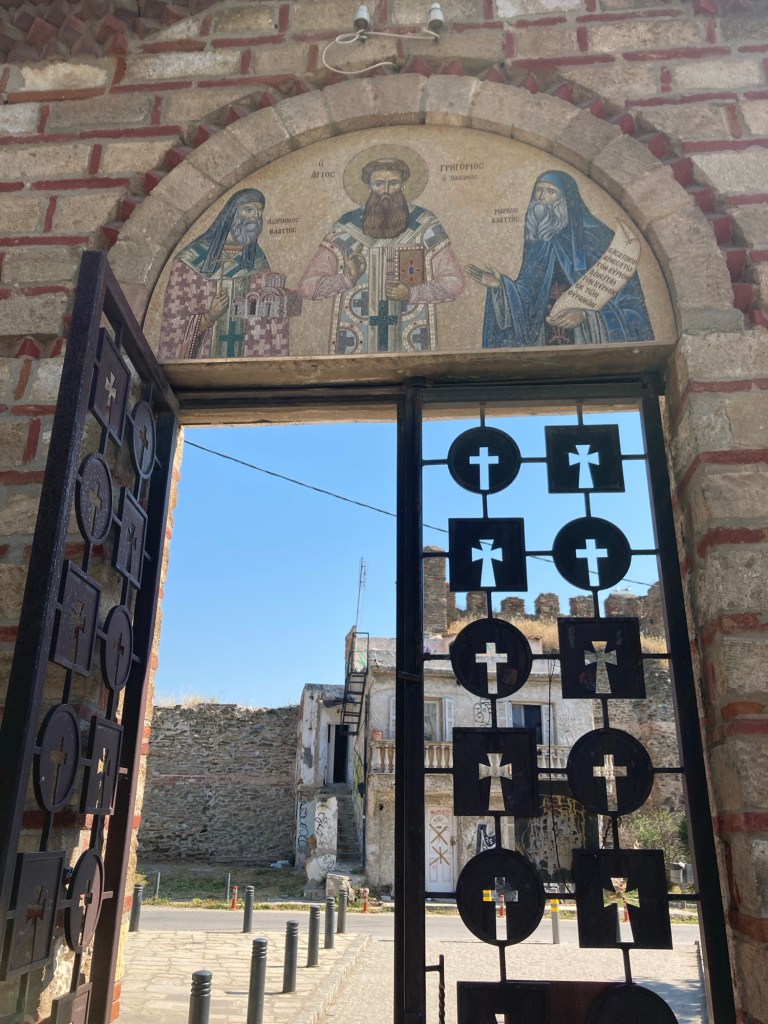
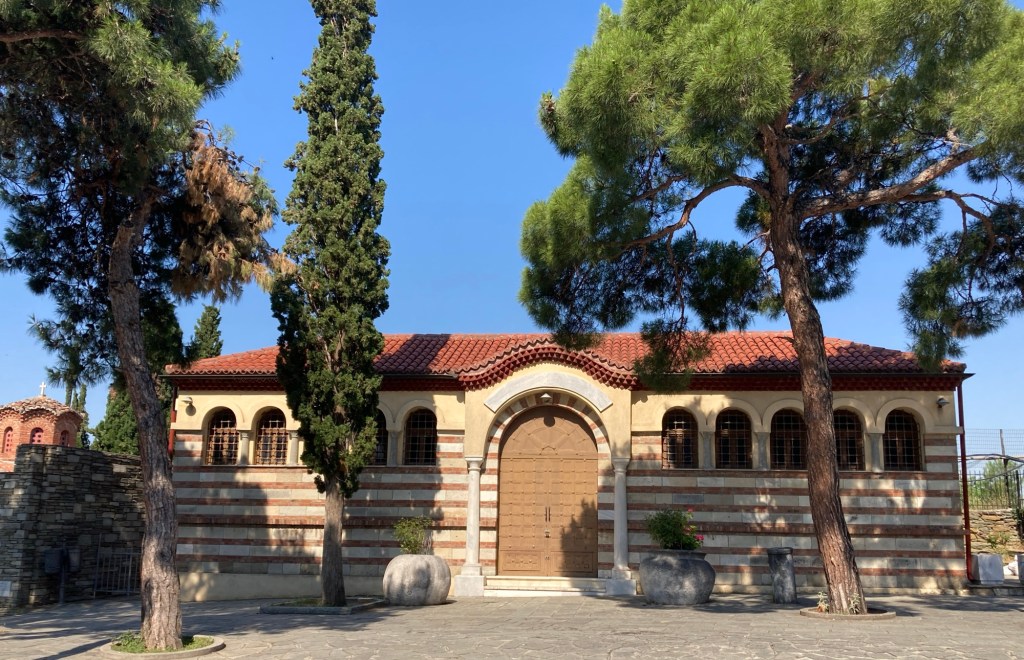
Maria and I visited the place where tradition has it that he preached, on which site Vlatadon Monastery was founded in the 14th century. Of all the monasteries in the city, is the only one still active, though there are many newer ones in surrounding more rural areas.

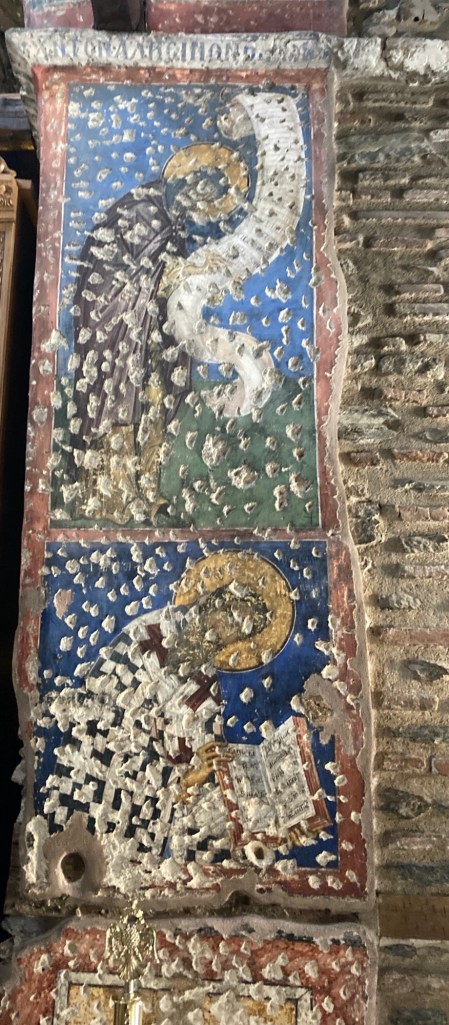
When Thessaloniki fell to the Ottomans in 1430, and the majority of churches were turned into mosques, the wall frescoes were punctured to facilitate plastering over them.

After we toured the monastery church and shady, peaceful gardens, Maria suggested we sit on a bench and read from one of St. Paul’s letters. It was not one he’d written to the Thessalonians, but the famous Love Chapter, I Corinthians 13:

A city of colorful layers.

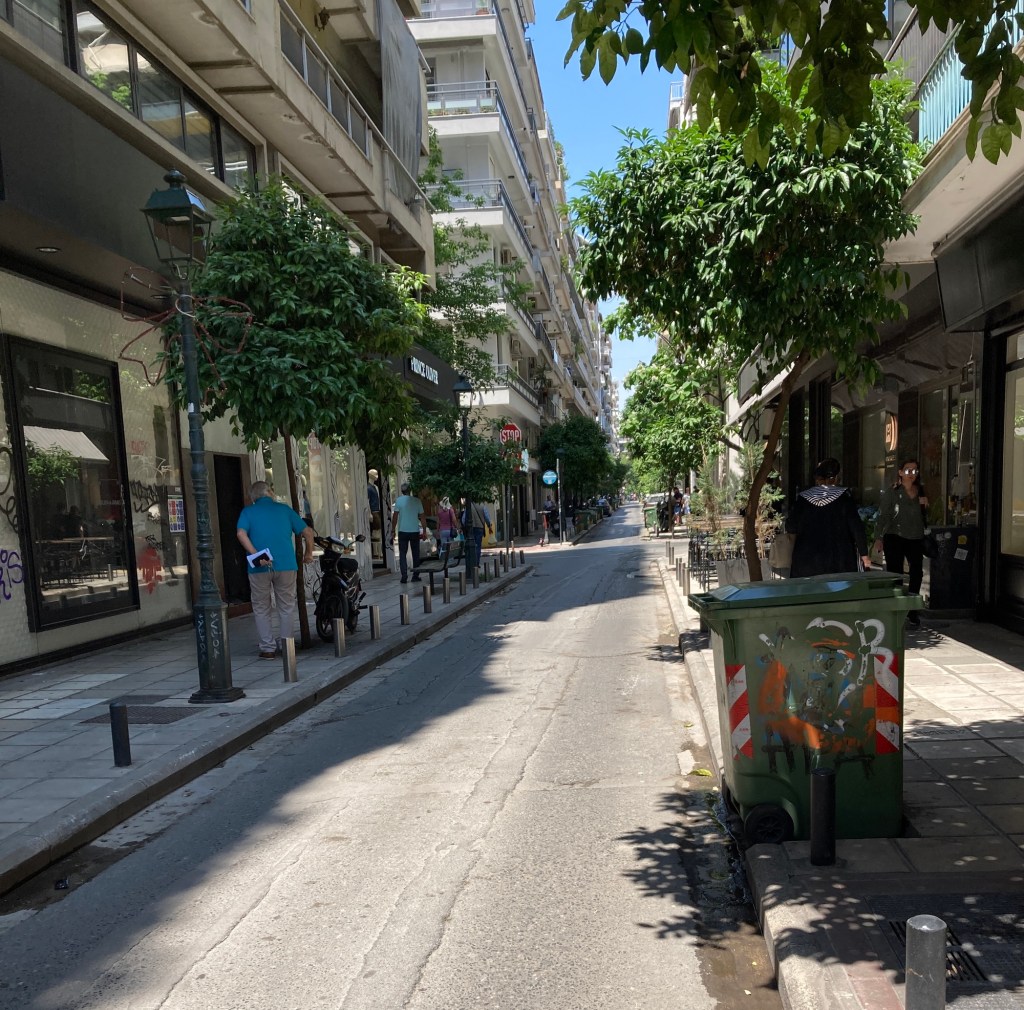
After arriving by plane in Thessaloniki last Saturday, I took a taxi into the central part of the city and my hotel. As we passed between high rise buildings in thick traffic, I was a little dismayed, after the quiet pace of island life, at how much a city it is. I said to the driver, “It’s big, isn’t it? The second largest city after Athens?” He said no, it’s small actually, and he tried to communicate to me how everything is right here and close by, it’s compact.

I am so thankful that in Thessaloniki I’ve been able to keep up with all the walking that enables me to stay literally on the ground and feeling intimate with the place, more than if I had to take a bus or taxi to visit all the places I want to see, or to meet up with friends.

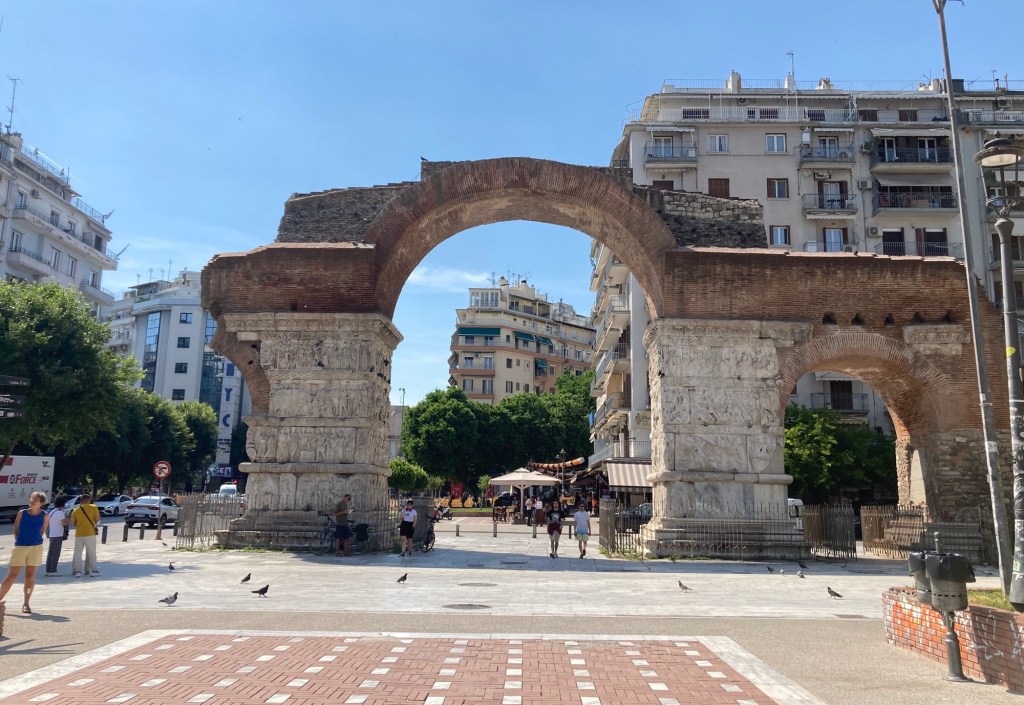
Arch of Galerius

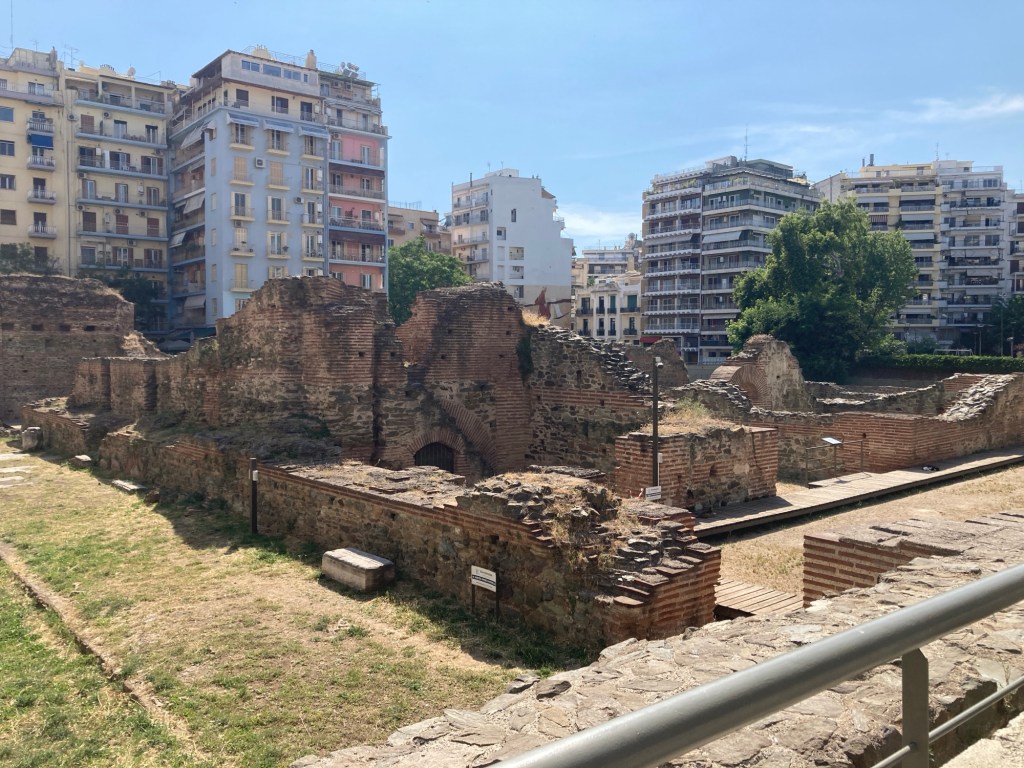
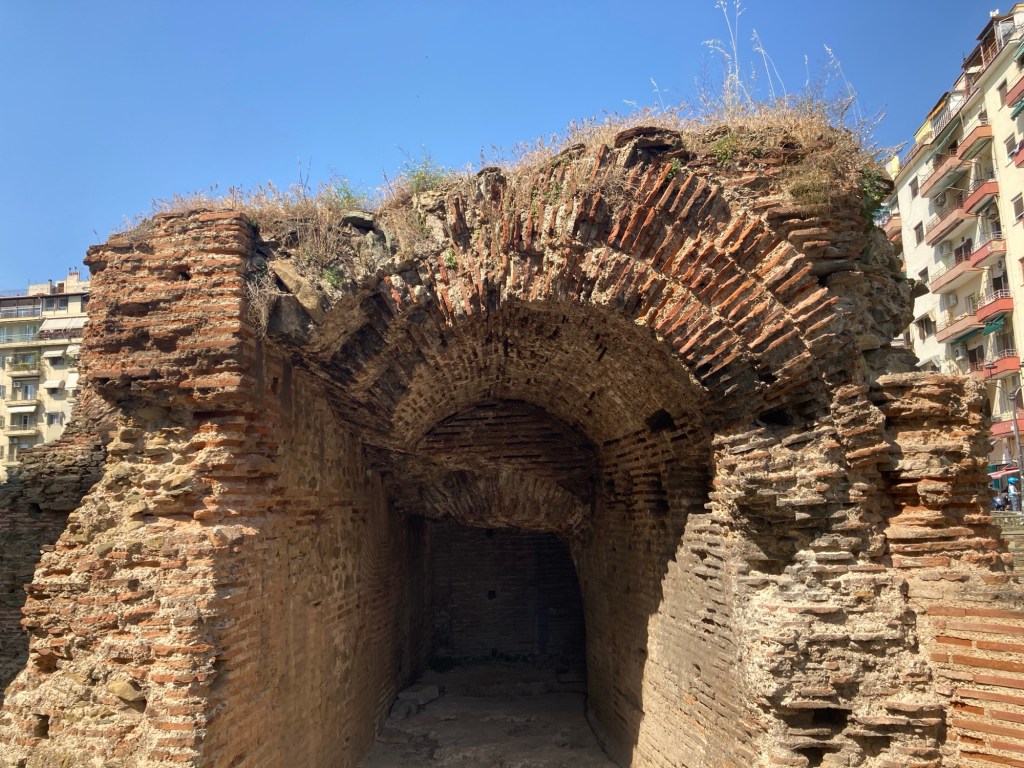
Monday when I didn’t have definite plans until the evening, I walked 15 minutes or so to St. Demetrios Church, and after spending a while there I took a different route back to my hotel, and came upon the Arch of Galerius, and a bit farther toward the sea the ruins of the palace of Galerius, who was the Roman emperor from 305-311 A.D.

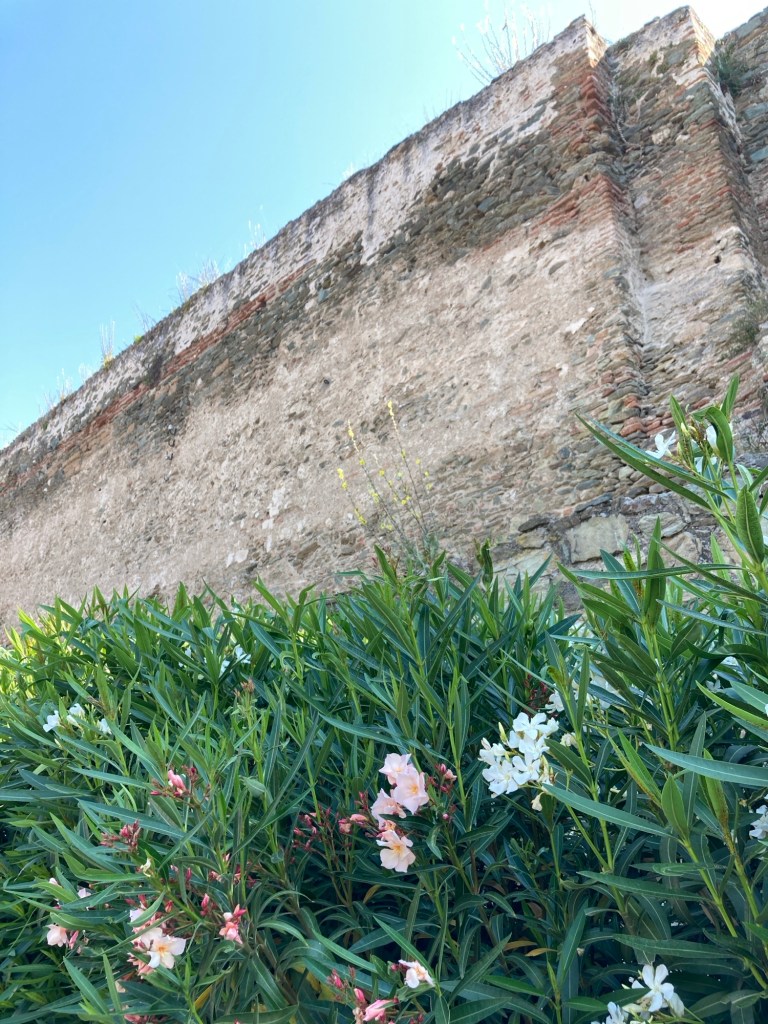
I could see up the hill the tower that remains from the ancient wall that once surrounded Thessaloniki, the lower portions dating from before Christ. It was in the 3rd century B.C. that Cassander, the Macedonian king and contemporary of Alexander the Great, first fortified the city.

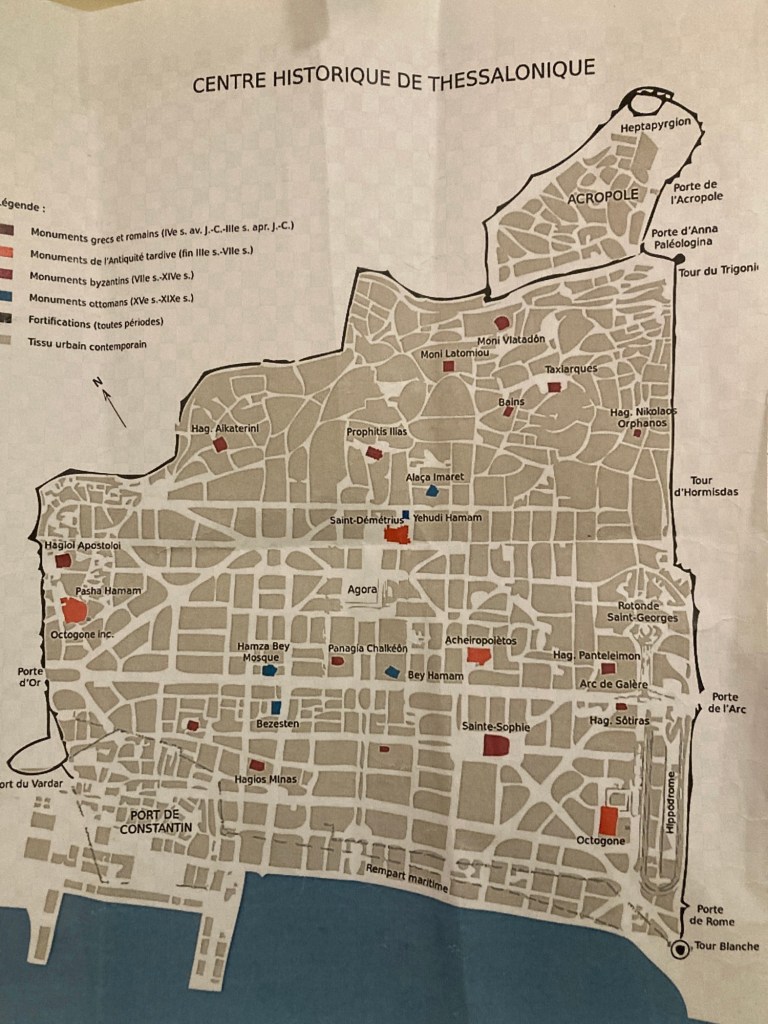
The map above (In French) shows the area of the city that lay within the old walls, with color coded monuments that have been preserved from different historical periods.

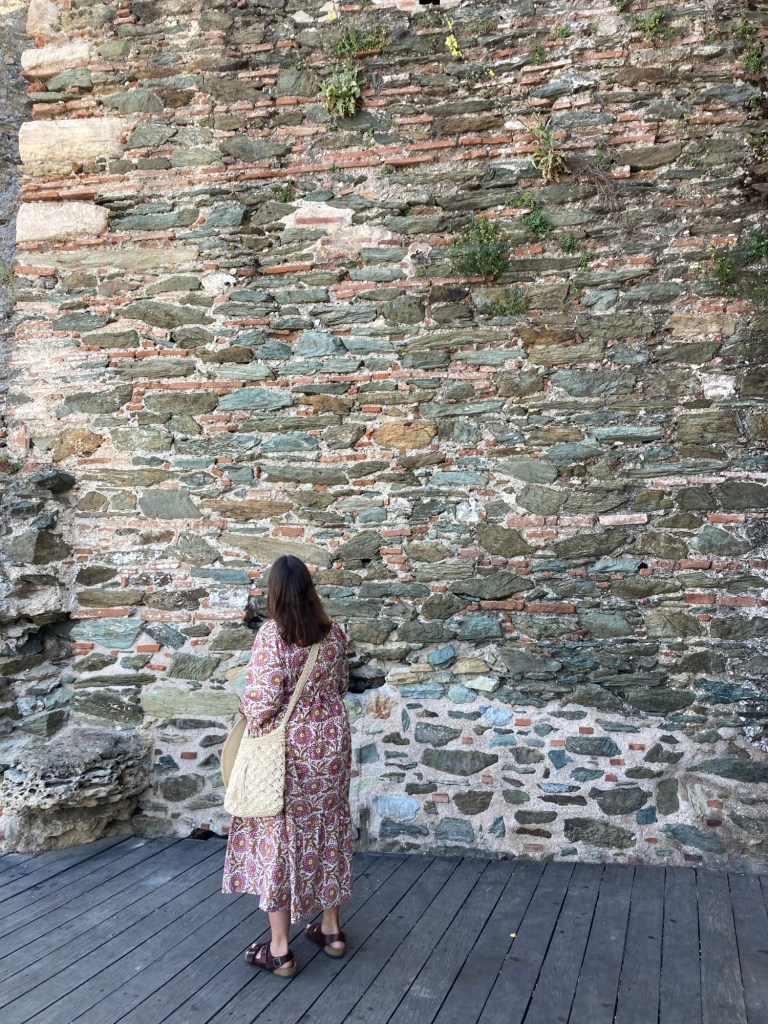
Except for the day we went out of the city to the monasteries, I’ve walked miles every day, back and forth, up slope and down, but only yesterday did I meet my guide Maria at the very top of the city, in the old town, to see one remnant of that old, old, many-layered wall. Byzantine era expansions re-used materials from the earliest structures; I could stare a long time imagining all the people through the ages who laid the bricks and stones, or who lived day to day with the walls framing their community.

From the high part of the city we descended in a leisurely fashion visiting Vlatadon Monastery and other churches on the way. I must tell you more about that later — it’s time now for more walking and exploration.