
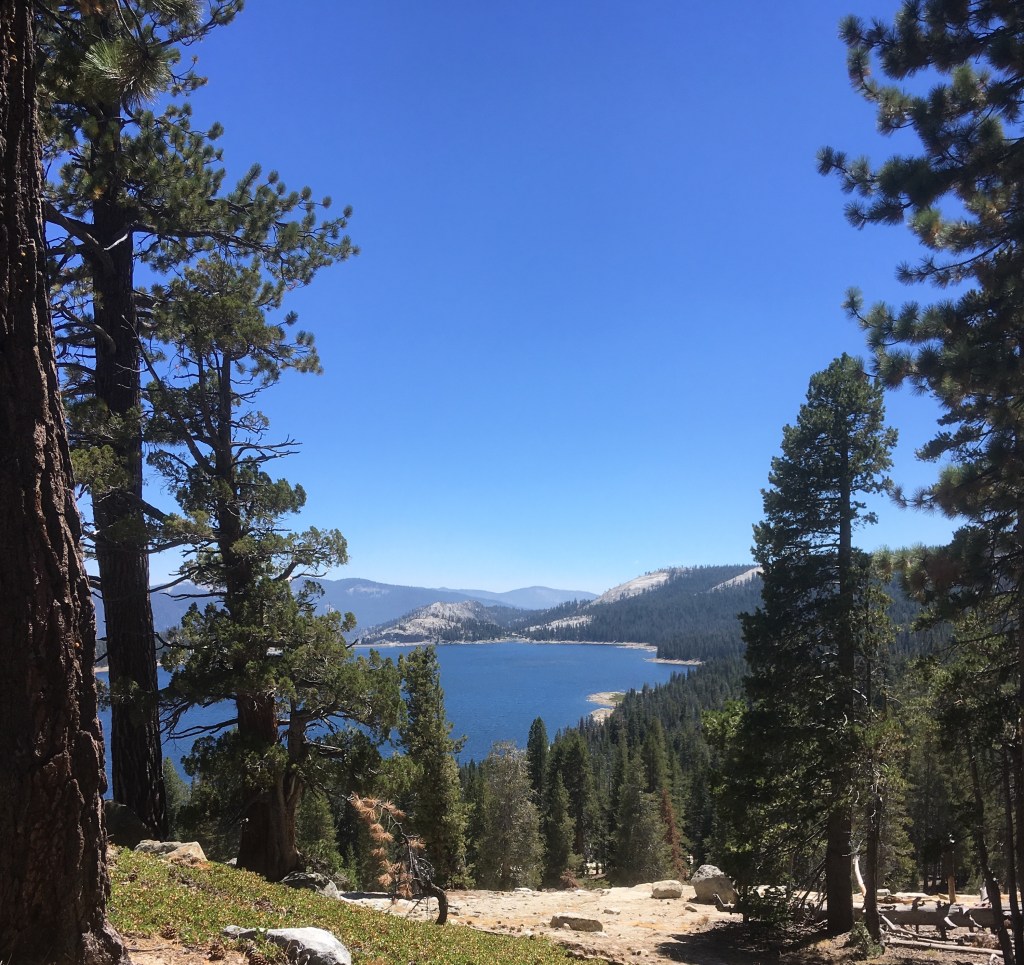
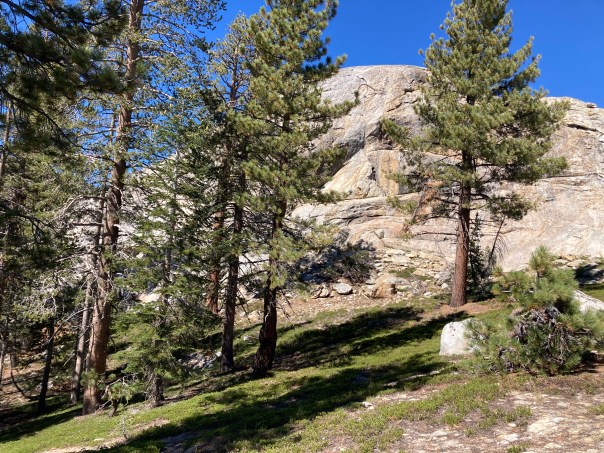
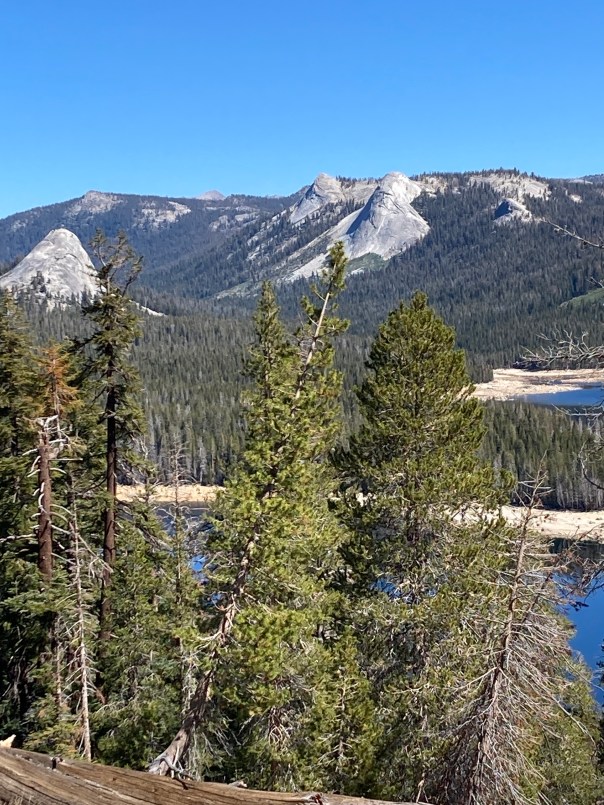
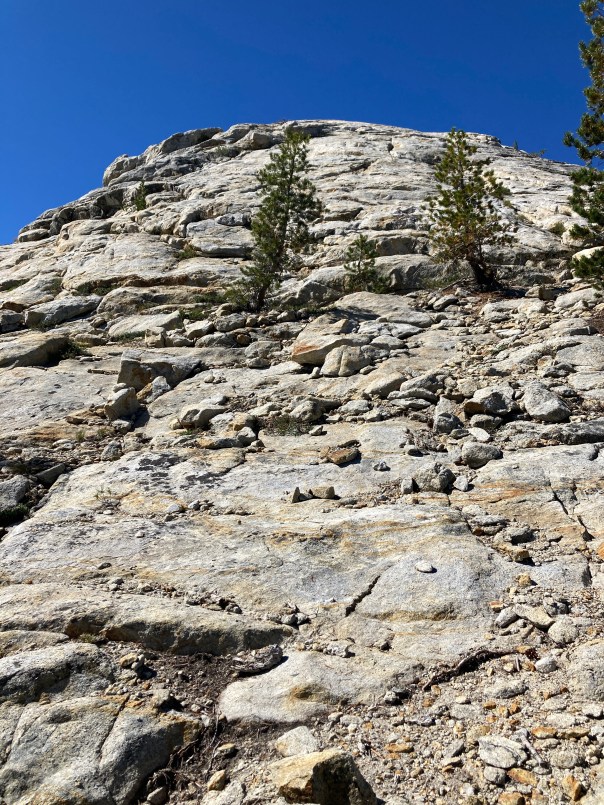
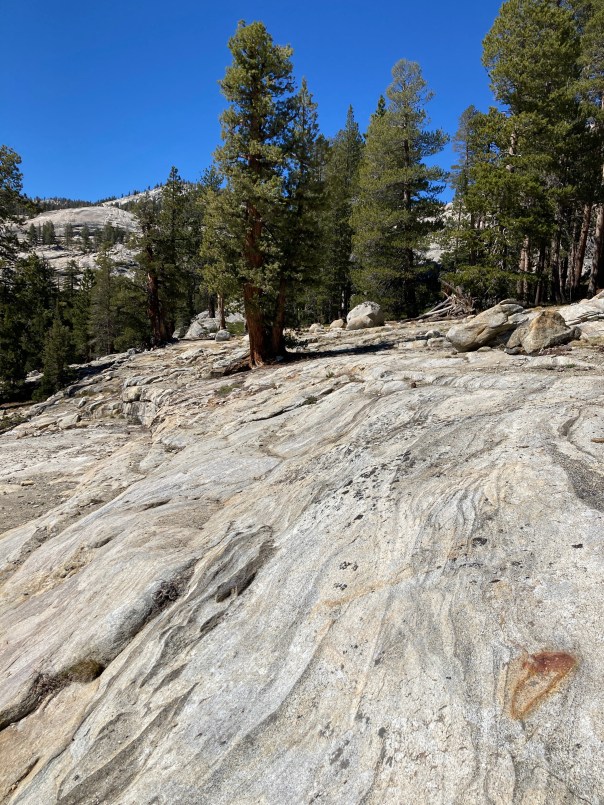
Our last day together at the cabin, Kate’s family and I took a walk to “Gumdrop Dome” in the morning. This is the walk I do every time I visit, not trying to climb to the top anymore, but picking my way around on its “shoulders” and feeling exhilarated from a combination of the exercise, sun, pine-scented air, and expansive views.
I very much wanted to introduce my grandsons to my favorite tree. When I mentioned my tree “friend” to them beforehand they asked what its name was — of course a friend would have a name, right? But I hadn’t thought to name it. So I said they could help me choose a name after they were introduced.

It took longer than expected for the whole expedition, because as we walked through an empty campground on the way, we met the campground host who loved to talk, and then his two “surprise rescue,” exuberant pups. That was fun, but eventually we started our ascent, which was slow and deliberate going as we adults cautioned the children about the gravel and the steep slopes. I avoided the trickiest gravel-strewn expanses of granite, and led our group into the manzanita ground cover higher up on the back of that hunk of rock, where we admired the lichens and flowers as we headed for the small dome to the side, which is easy to climb.

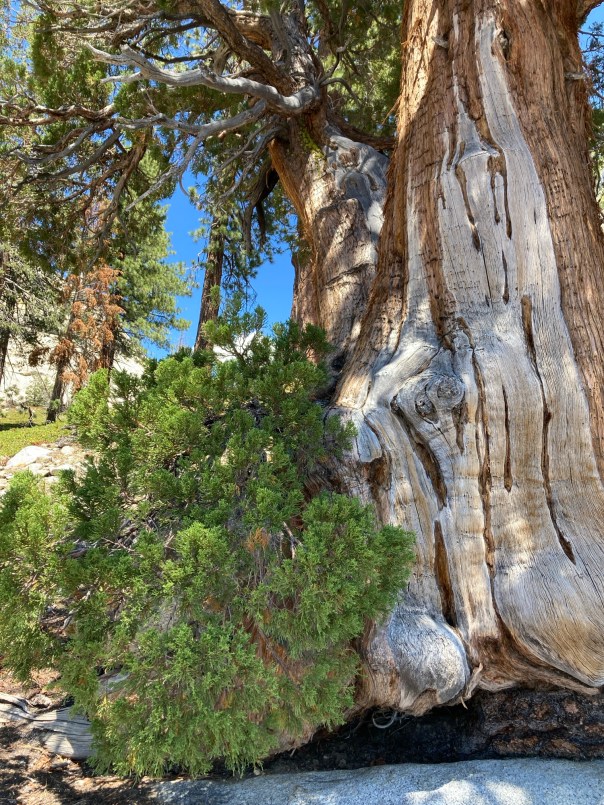
Then I found my friend, which is actually two trees intertwined, a Sierra Juniper and a pine. It/they were christened “Double Hug,” seeing as the two are in a forever embrace by means of large roots lying next to each other, and even their branches tangled together. We hugged the trees, and posed on the bench formed by those hugging arms.
Below, I am exclaiming over a little tree that, having been bent down by snow as a sapling, is growing sideways along the rock.

I don’t remember the last time I was with other humans on The Dome — it was a nice change, to have them along to “ooh” and “aah” with me. Tom also had never been up at the lake at all, and Kate not since she was a teen, so they were truly thrilled to be there.
In the afternoon we went to the lake for a canoe outing. The previous day, a neighbor had helped Tom and Kate get the very heavy boat out from under the cabin deck and on to his truck, to haul it down for the season. This day I rode down with the four of their family in their car to help them clean out the canoe, and I took pictures as they pushed off and paddled away.

 Then I began walking up the hill back to the cabin, a hike that can be done in ten minutes, but this time it took me one and a half hours, because I meandered and wandered and explored the woods and ditches along the way looking at the many beautiful plants, and also watching a mated pair of birds hopping back and forth on the road in front of me. They were Pine Grosbeaks. This is what the male looks like, from an internet photo, because mine were from too far away. That was definitely a new sighting for me, and combined with the junco nest, very encouraging, because other than Steller’s Jays, I rarely see birds up there. Maybe in my usual visiting month of September the birds are already gone to lower elevations.
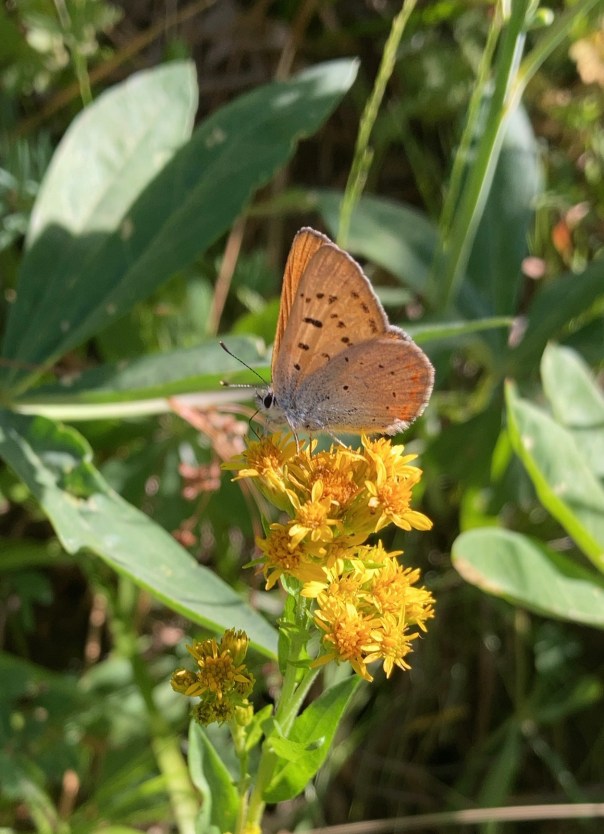
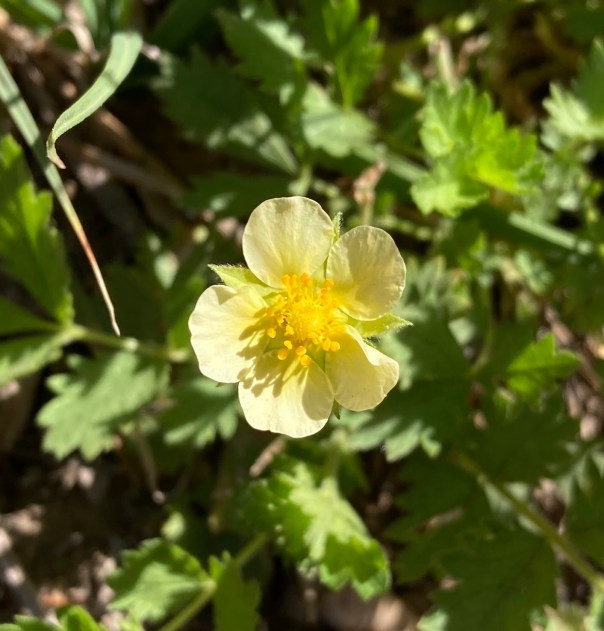
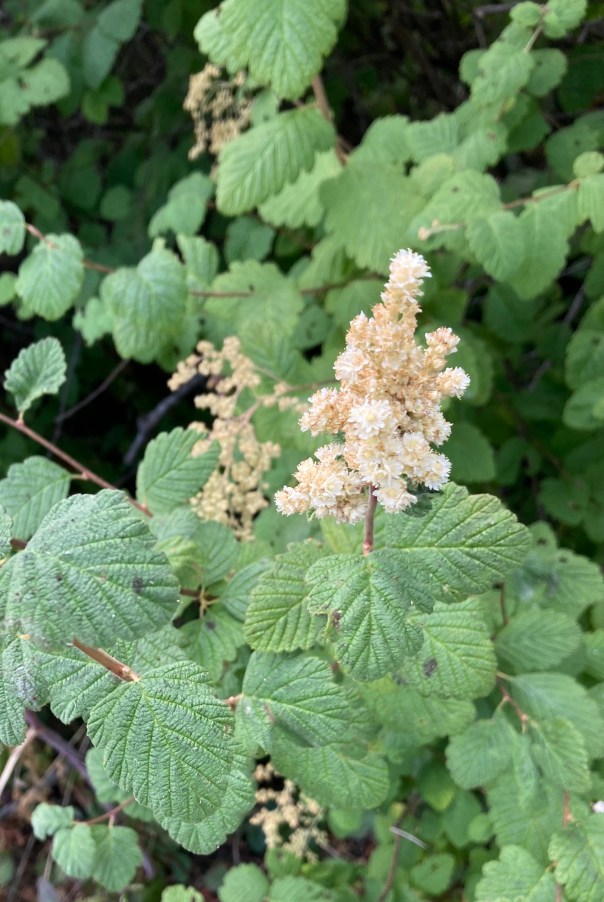
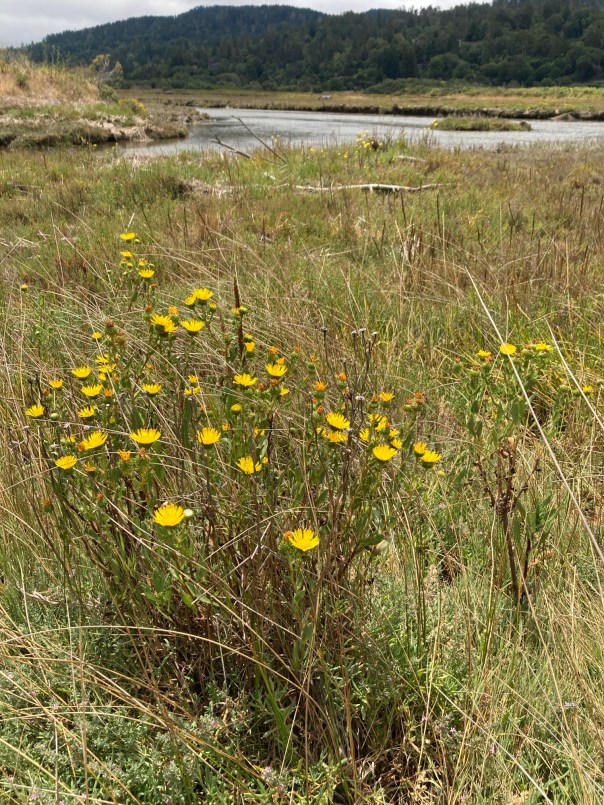
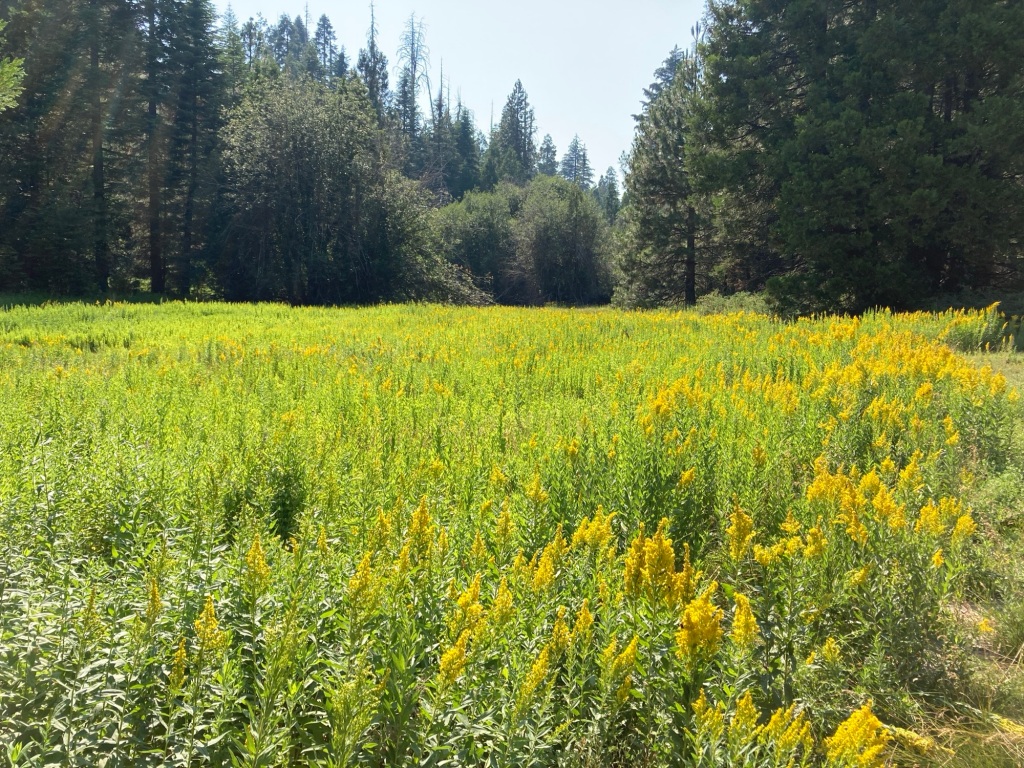
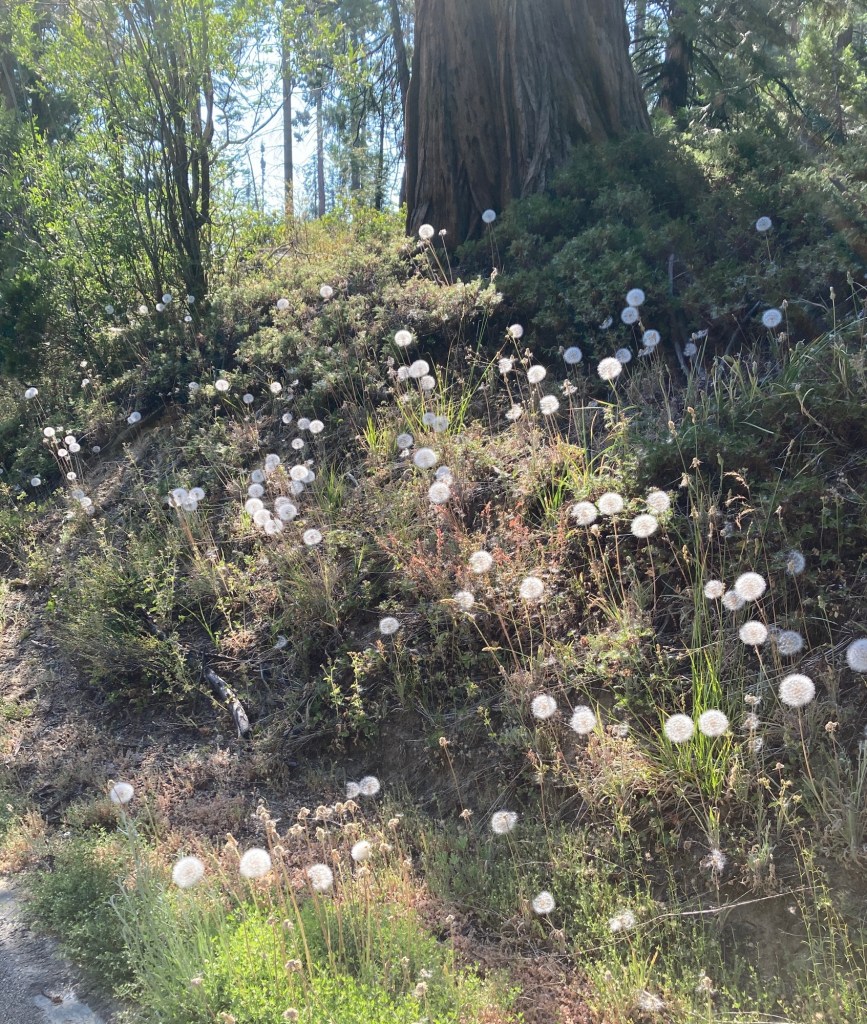
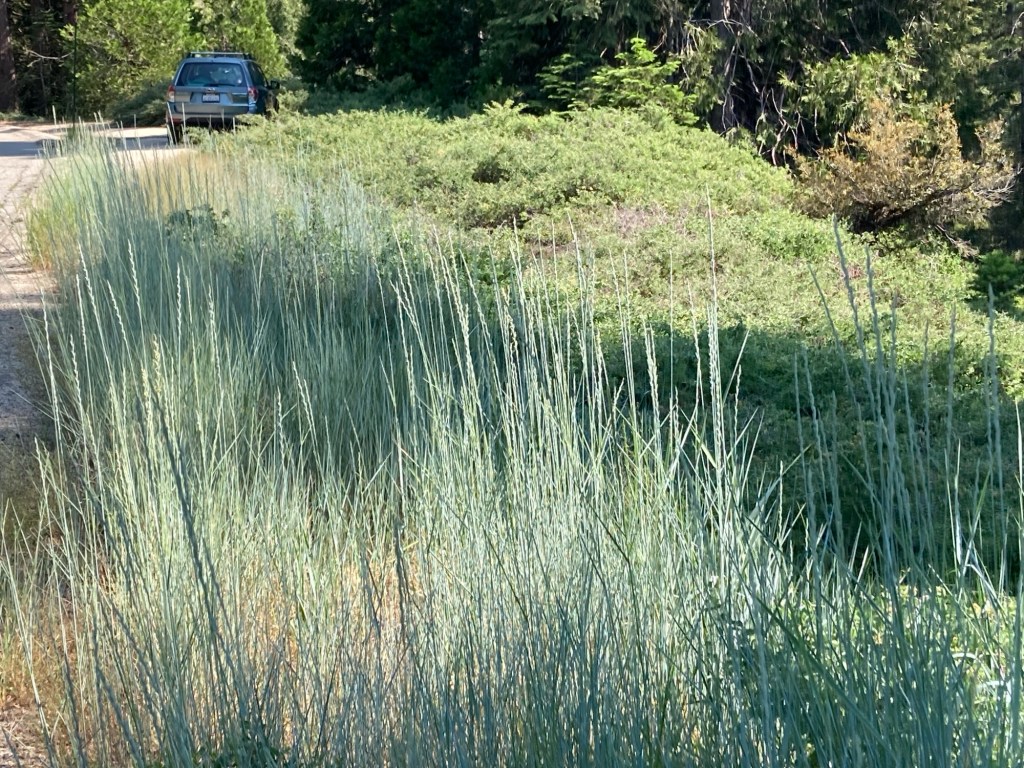
Some of the (mostly yellow) plants and insects I admired and/or identified by the roadside are below:


I met on the road a mother and daughter whose cabin is not far from ours, and the daughter told me that one of our hugging trees on the dome is a Sierra Juniper, Juniperus occidentalis. I had thought it was some kind of cedar tree, but when I researched it later I realized that it is indeed a Sierra Juniper. True cedars are not native to the Sierra Nevada, though one conifer typically called “cedar” does grow there, the Incense Cedar (Calocedrus decurrens).
The sad, sad day arrived, when we must pack up, clean up, and load up our cars, to caravan down to the valley and back to my house — but our vacation had not ended, only changed locations…

Soon Uncle “Pathfinder” had arrived to spend a day and a night, and we all headed out to the coast, to Tomales Bay, for a short walk through the entirely different biome. The sky was mostly cloudy and overcast, which is common in the summer.

In many places the paths were narrow tunnels through thickets of live oak and coyote brush, tall grass, fennel — and the dreaded poison oak reaching out threateningly. The boys’ uncle was a wise counselor who gently reminded them again and again to keep an eye out for those clusters of three leaves, often red and often shiny, so that they could squeeze by without their bare arms touching.
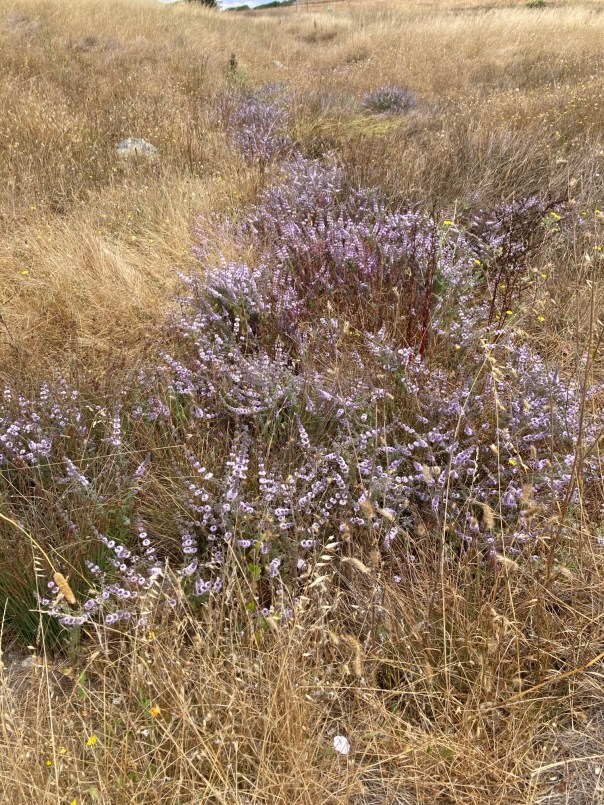
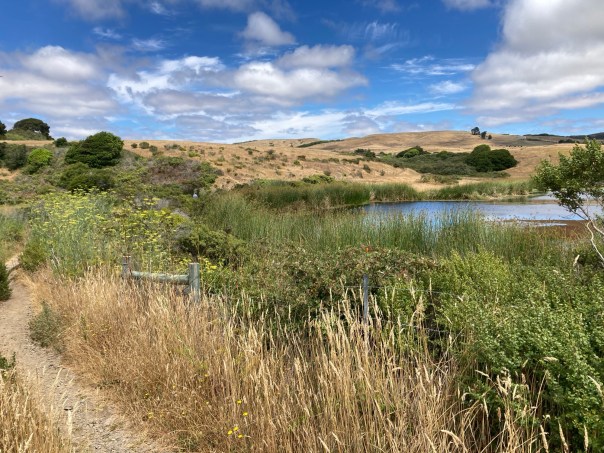
But mostly we walked through more open places with dry grass spreading away from the trail and far into the distance. I am actually on a path in this picture below. Kate had read a tick warning and no one wanted to venture into the foliage very much.

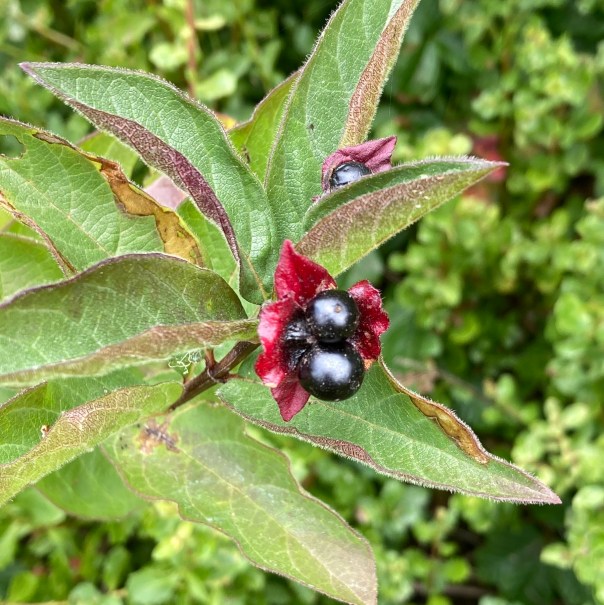
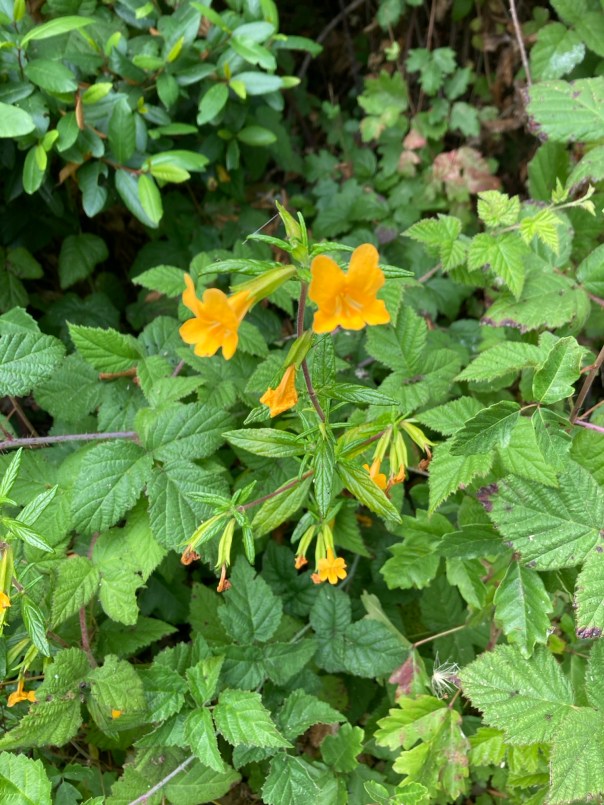
Pathfinder joined me in noticing various plants and talking about what they might be. He demonstrated to the nephews how the fennel fronds are pretty tasty for munching on, and he knew this flower that I didn’t, the Twinberry Honeysuckle:
 Raj and Rigo were hopeful of reaching the shore of Tomales Bay and getting their hands at least into the water, but every time we drew near, the ground turned out to be too boggy, and no one, including them, wanted them to sink into the mud, and who knew how far one might sink and stick into it.
So we continued looping around on the paths, going on faith that they would eventually lead us back to the parking lot…
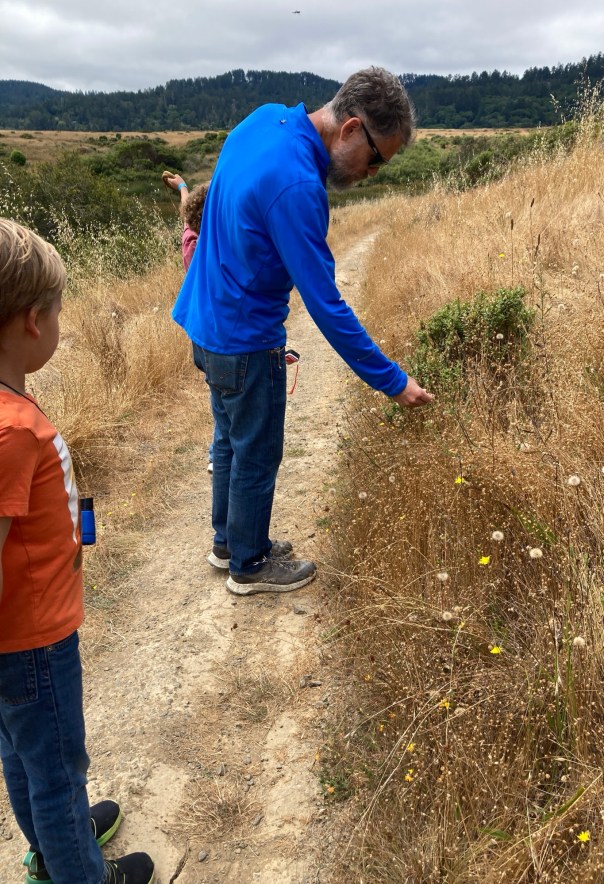
At left Pathfinder is looking at the Rattlesnake Grass, Briza maxima, which is not native here but has certainly naturalized and grows “everywhere.” It is native to areas of Africa, Asia and Europe. Do you have it where you live? I didn’t get a good picture this time, partly because it was not a good stand of the stuff, and most of the “rattles” were very short. You can click on the link to see the Wikipedia photo.


Related to the Golden Brodiaea I had seen at the lake, is the Elegant Brodiaea in its much drier habitat near the sea:
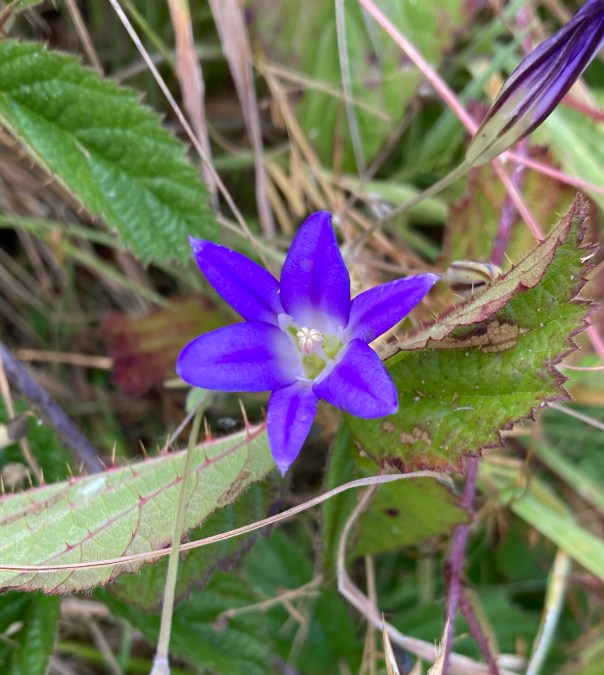
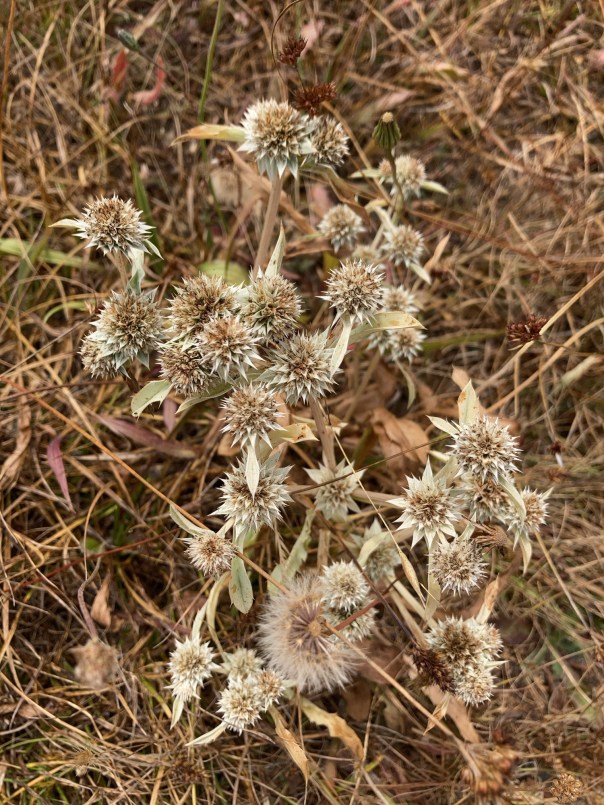
This forbidding plant has the agreeable name of Coastal Button Celery:


Oh, it smelled so good out there, among all that dry grass with the fennel and pennyroyal and other species continuing to dry up under our noses, where their essential oil droplets could be breathed into our lungs. I wished there were a bench to sit on… but there wasn’t, and anyway, we had places to go, things to do.
When we got back in the car we drove up the Coast Highway, Highway 1, and found the oysters Tom was longing for at Nick’s Cove. We didn’t order any of their special fries, but we noted on the menu that they came with a sprinkling of — chopped wild fennel!

It had been a most wonderful outing, and the final one of this visit with my dear children. This morning they will all have departed to their homes, and we’ll continue our adventures separately. It has been a very special couple of weeks, filling my gladness cup to overflowing. Thank you, Lord.



 Gladsome Lights