In the Good Old Days, as they appear now to be, I never thought to make the kind of meal one might eat at a restaurant. We had soup and bread several nights a week, interspersed with stews made from whatever came from the vegetable garden, cooked with some eggs. If company came for dinner, I would add dessert, and set the table more carefully, but soup and muffins were still as likely as not the main event.
I was thinking about this the other night when our son-in-law was in town and I invited him to dinner late in the day. I didn’t want to try to put together something really fancy because I didn’t have a couple of hours to spend on it, so I concocted a quite decent dinner with what was in the refrigerator. Three leftover items, some ham from the freezer (I love the microwave!) and a green salad, and we were all quite happy with the result.
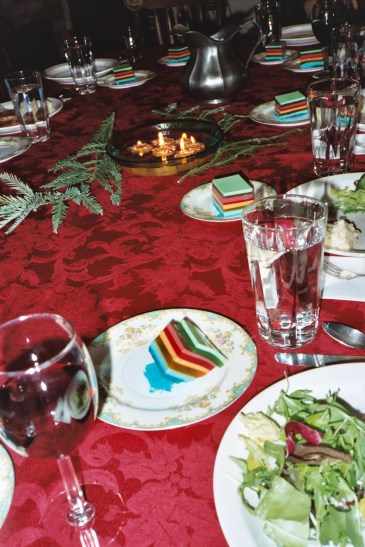 Jello wasn’t on the table that night, but I am working on incorporating it into the menus more, being inspired from two directions. Gelatin salads are making a comeback in the culinary world; renowned chefs now create gelatin dishes that are gourmet. (Or am I behind-the-times again, and they are through that phase?) They aren’t likely to have the Jello brand name in their titles, and all the artificial flavors or colors that we have become accustomed to, but that’s all for the better.
My friend Myriah wrote to me about her grandmother recently, and Jello figures in the story, which I share with her permission:
I remember my grandmother always in the kitchen cooking for her visitors and family. She would wake up before everyone and start baking sweet treats for the day. There was always a cake, pie or cookies freshly baked. Then she would make breakfast which always consisted of pancakes or waffles along with the eggs, bacon, sausage and canned fruit.
After breakfast dishes were cleaned up she often times would start canning fruit or peeling apples to make into applesauce. At 9 in the morning she would go to the donut store across from her house and have a lively conversation with neighbors. In the afternoons she would walk to town or go to her sewing club, Canasta club, or help out at the hospital. For a short time she went to bridge club but she stopped going being they didn’t break from cards and have a time to eat and enjoy each other’s company.
Every evening my grandmother made a huge meal for whoever was around. She often invited people she met during the day to come over and enjoy a meal. She loved people and would talk with anyone. When I was very young I would be nudged by my grandmother’s foot to quit staring at the guests. After dinner when I was helping with the dishes she would be explaining to me that it wasn’t nice to stare and that the person just had a drinking problem and had a big nose or that they slurred words because they couldn’t afford teeth, were dressed differently because they couldn’t afford clothes.
In my grandmother’s eyes everyone deserved to be loved and accepted right where they were at in life. Often times she would not give me an explanation, but would say they are an “odd duck” and that they just need to be loved. Her house was so different than my home. My parents guarded their privacy and even built a fence around the perimeter of our land to insure that privacy. Sometimes people would come to our house and ring the intercom and my mother would ignore them hoping they would drive away quickly. “Don’t talk to people you don’t know,” was often the message I heard growing up. When we had people over it was after my mom had fretted and planned for days what she would make for a meal or how she would cope with the guests.
I have a couple of memories swirling in my head as I write this. My mother stating that, “I wish your dad wouldn’t invite so many people from work.” Then I have another memory of my grandmother in her kitchen exclaiming ,”I love Jello, you can make a quick dessert and it is so cheap and feeds so many!”
My grandmother thought Jello could add to almost any meal. I am surprised she didn’t incorporate it into breakfast. When she was around 90 years of age and moving to a retirement home she gave me all of her recipe books and tin boxes of recipes. In one tin box there were over 50 Jello recipes. Almost any ingredient I find in my refrigerator I can use in one of my grandmother’s recipes. She has used cottage cheese, sour cream, whipping cream, lettuce, grapes, pineapple, cucumbers, onions, cranberries, nuts and even kale, just to name a few. She had Jello molds hanging on her kitchen walls. She also had a special glass dish to show off her layered Jello recipes.
I am fortunate to have had many days in my grandmother’s kitchen. I don’t have quite the joy she had when she talked about Jello. My girls and I have tried many of her Jello recipes over the years. They don’t remember their great-grandmother ever cooking. They remember drinking root beer and eating store-bought cookies in her retirement home. So, I have the tin of recipes sitting on a shelf. I read them once in awhile when I want to feel close to my grandmother.
I don’t remember eating Jello at my own grandmother’s house, but I did inherit her recipe box that included quite a few recipes for gelatin dishes. My mother-in-law got me started serving a Jello “salad” at Thanksgiving and I continued the tradition for a long time because we all found it a welcome contrast to the heavy foods on our plates.
Nowadays we try to have a couple of real vegetable salads on the sideboard at such feasts, but Jello is so much fun, I hate to abandon it entirely. I even made the rainbow jello pictured above for Christmas dinner one year. As my refrigerator is not level, it made for a wobbly rainbow that did not want to stand erect, but it is so pretty, I might even try it again now that several years have passed.
Grapefruit juice and fresh oranges went into the best concoction I made, and no artificial colors, but I haven’t perfected that recipe, [update: it’s now here in this post.] so I am going to give you one that comes down through my husband’s German relatives. I don’t care for it myself, but as I wanted this post to be about hospitality, it’s only right that I give this example of something I made many times for my husband’s sake, and for his birthday, actually.
Beet Salad
Heat in pan 1 cup water, 1/2 cup vinegar, 1/2 cup sugar. Boil 5 minutes with the following seasoning: 3/4 teaspoon salt and 3 or 4 shakes allspice.
In a bowl put 1 package lemon or lime Jello. Add the hot liquid (above) and dissolve Jello completely. Add 1/2 cup beet juice drained from a #2 can (about a 20 oz. can) of beets, to make 2 cups of liquid, and the drained cubed or julienne beets from that #2 can. Put in a pan and refrigerate until firm.
Serve with a dressing made of 3 boiled eggs that have been cut up and mixed with mayonnaise and a bit of salt.
Whether you serve your guests Jello or gelatin or something else more elaborate or healthfully balanced, I hope it is a project that doesn’t stress you out and keep you from putting your guests at ease, as the food is the least part of being truly hospitable.




 So many thoughts swirl in my own noisy mind and heart that I could not imagine how I might find a way to share even these few gleanings with you. Then, in God’s providence and the church calendar, appeared someone who is the supreme example for us of being ready for the moment, that time in history and that time in her life, in a particular moment of a day, when the Angel Gabriel appeared to her. Today we remember that event, when Mary listened, and responded,
 Gladsome Lights