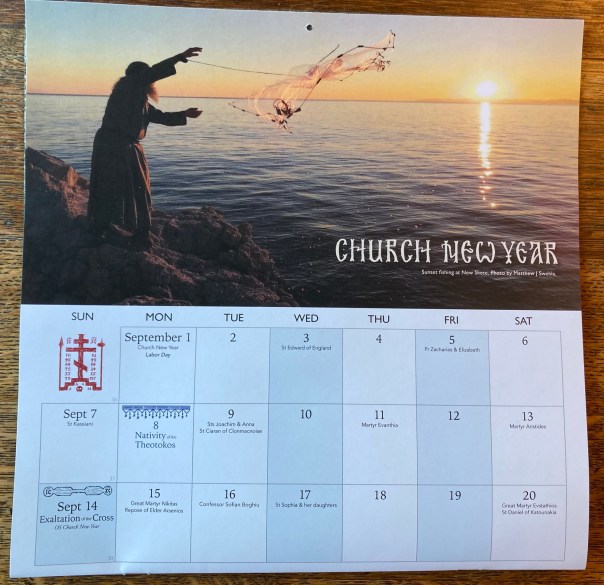
The American Labor Day holiday is on the very first day of September this year. This prompts me to pay closer attention at the outset, because that’s also the first day of the liturgical year for Orthodox Christians. I’ve been supremely blessed by various aspects and events of the day…
First, it’s quite warm, which is too hot for some people, but I guess it’s in my blood, to want to be enveloped by air that is not much colder than my body temperature. (Of course I don’t feel the same way about it when the humidity is approaching that of my blood.) No marine breeze has come against me for a couple of days; even at night, when the temperature eventually drops to the usual mid-50’s, evidently it lingers in those lower registers more briefly. It is sweet, to feel fully relaxed, without sweaters or quilts. This kind of day is why I love September so much.
My sometimes helper Alejandro wanted to come and work this morning, so he could do family things later on. He probably would have come at sunrise if I’d let him, but he was willing to come a little later, and he cleaned up and trimmed the most parched and spent things around the place. That lifted my already floating spirits a few feet higher.
I pruned the lemon tree a bit, and removed numerous pine needles and spider webs from it, then texted with my brother about what might be causing some fruit to be deformed. He helped me figure out that it is citrus bud mites. I don’t know, if anything, what I will do about this. Maybe some insecticidal soap…
I admired the tallest sunflower I have ever grown.
I dusted one bench, and sat on another
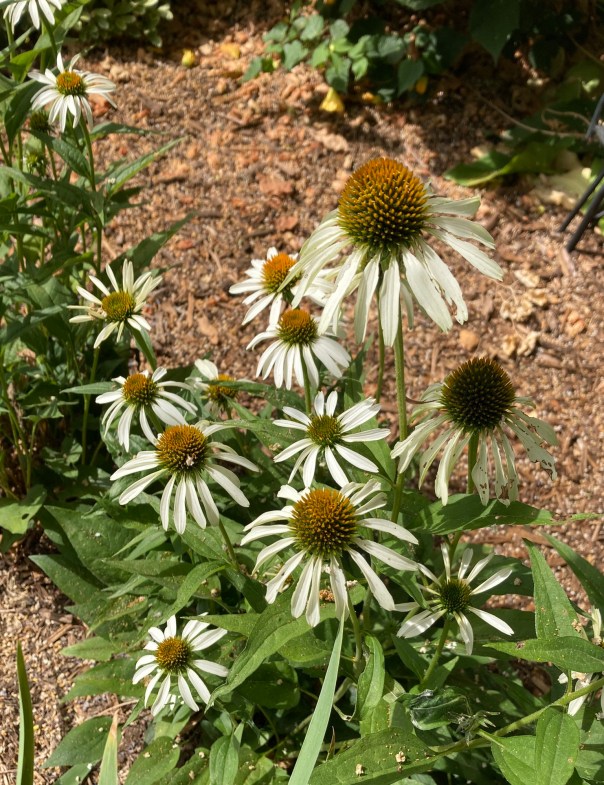
to admire my favorite echinacea flowers.
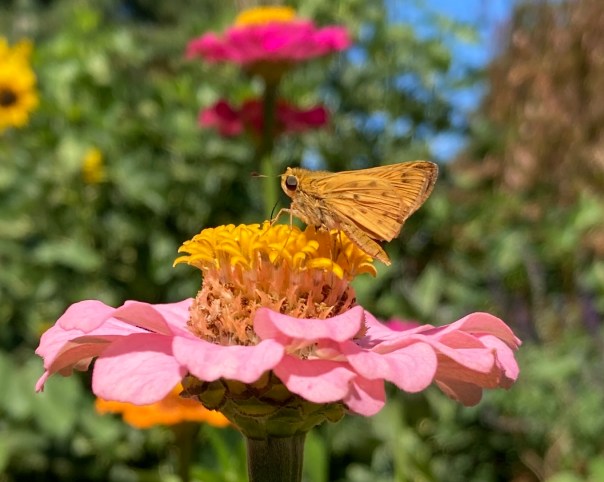
I watched the skippers on the zinnias,
and tidied up the apple mint and the lemon verbena.
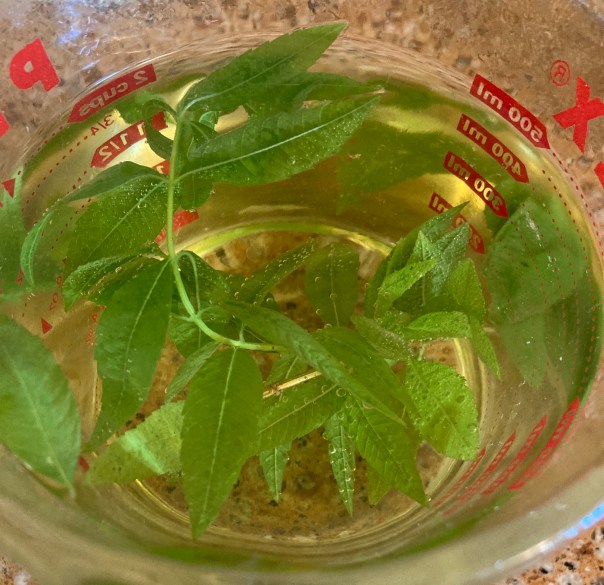
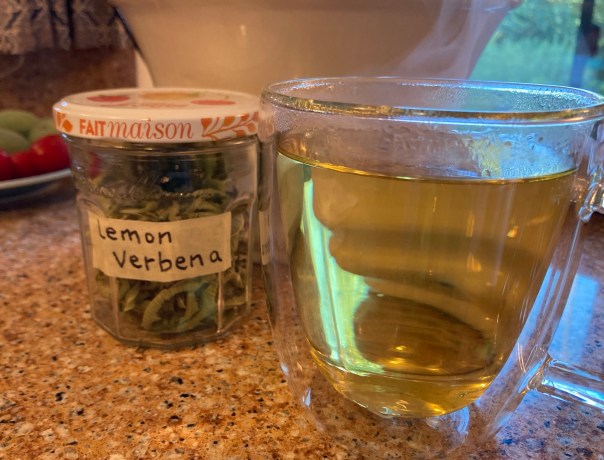
I made tea with the trimmings of the verbena.
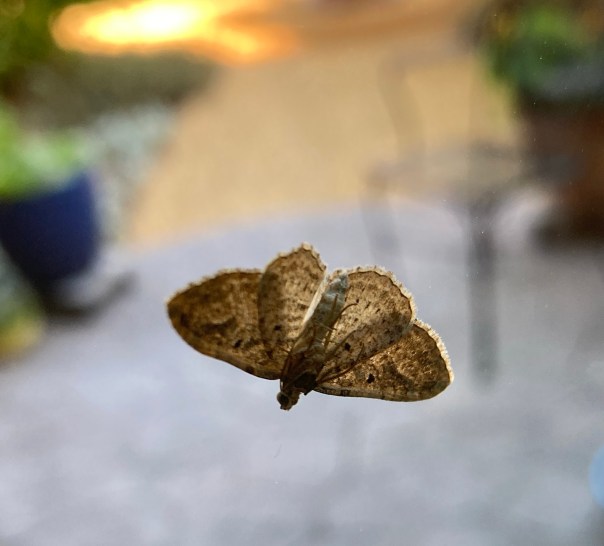
Bent-lined Carpet on the other side of the glass one morning.
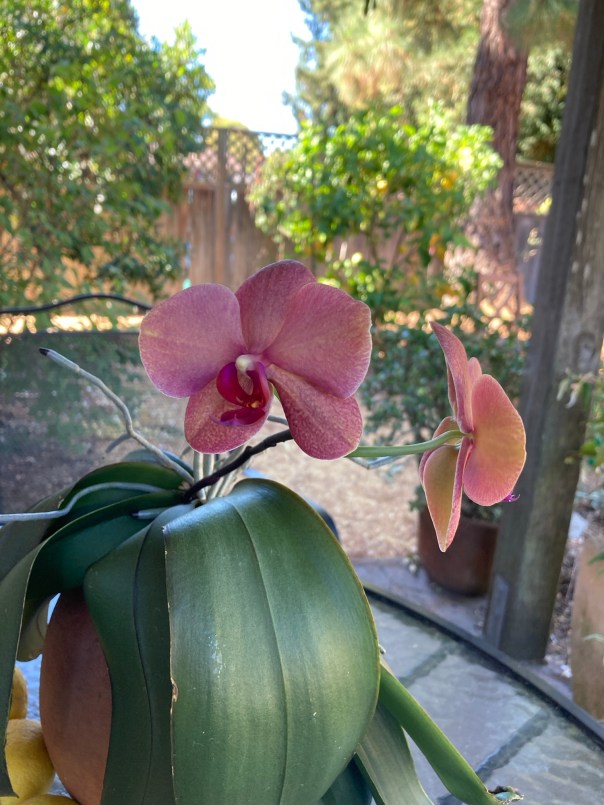
From time to time I consider tossing out the orchids that have come to me over the years, all but one of which has never bloomed again. But a friend told me that I should give them the kind of nourishment they like, food that is designed specifically for orchids. She said there are different orchid fertilizers depending on the species of orchid, and whether it is in the bloom period or not. I bought just one type so far; that is a start! My plants have been outdoors for the summer, in the shade, where I remember to water them more often, and they seem to be generally very happy, even if only the one is blooming. Today I will start being a less lazy orchid farmer.
Orchid, with lemon tree in background.
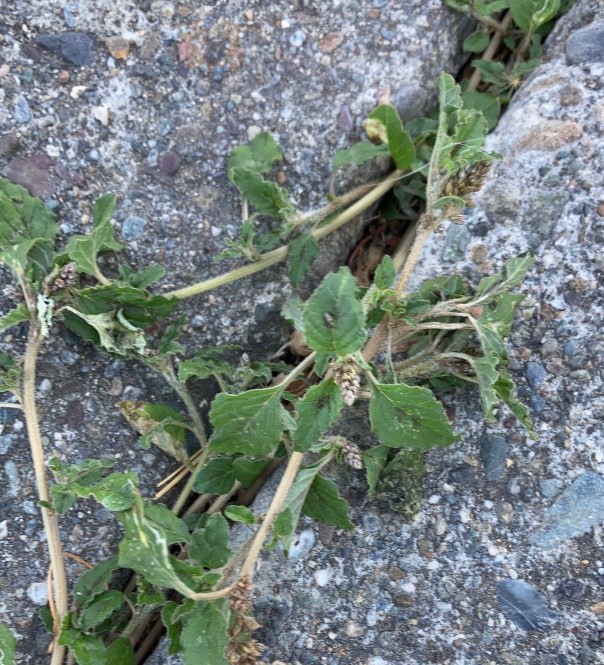
I really would like to grow amaranth in my garden, but I keep forgetting to try again. The one time I planted seeds, they did come up, but I think they were shaded by zinnias or other vegetables and never thrived. Maybe next year. In the meantime, I discovered that a type of amaranth has self-sown in the cracks of my driveway.
Amaranthus blitoides, Prostrate Amaranth
Is gardening labor, or is it work? Many people have weighed in on the difference in meaning between the two words, and after a brief perusal of their ideas it seems to me the discussion gets too complex for a day like today, when I am relaxing while working. I know working is the word I much prefer, unless I am talking about the births of my children.
Creeping thyme waiting to be planted.
I find a short quote about the words labor and work is not too taxing to think about on this non-laborious day:
“[Hannah] Arendt points to how language itself has always put a consistent break between them: “ponein and ergazesthai” in Greek, “laborare and facere” in Latin, “travailler and ouvrer” in French, “arbeiten and werken” in German, labor and work in English.” -Front Porch Republic
In any case, I’m sure I will continue to do both, through September and onward, and I will try, I will even work, to be thankful for all of it, whatever God gives me strength to do.
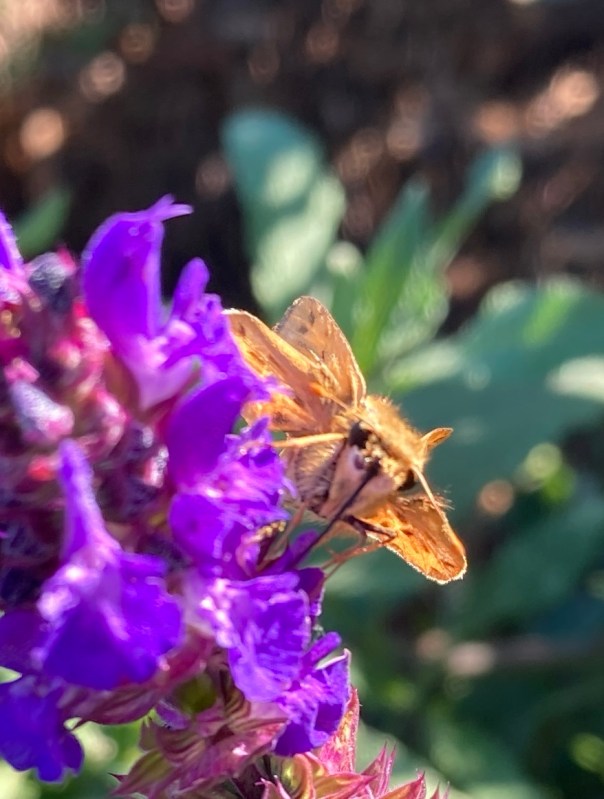
When I was pruning the salvia in front, this skipper was languidly sipping from the same. You can see its proboscis going right down in. The creature was definitely not feeling skippy… I wonder if skippers die in winter? Did it lay eggs somewhere already?
So much is going on in the garden. These irises really should have been divided again — but, already? I’m afraid they will have to wait until next year.
I ended up with so much lemon verbena — what wealth! This is a very nostalgic herb to me, because of when I was in Turkey riding non-air-conditioned buses across Anatolia, and first experienced its delicious scent, though I didn’t know what it was. The bus attendant would walk up and down the aisles every hour or so with a big bottle of something like cologne, and if you held your hands cupped he would sprinkle a tablespoon or so into them. I followed the example of others and quickly splashed it on my face and neck for refreshment. Later, when I returned home, I brought an empty bottle with me and kept it for many years, just so I could take a whiff from time to time.
It was decades before I matched that scent to the lemon verbena plant. I mentioned in the summer how I had made lemon verbena paste, and last week I made lemon verbena simple syrup, trying to use a lot of the leaves before they fall off when the bush goes dormant. Now I wish I had just dried them. Making tea is the obvious thing, but for some reason I never did, though I had dried a few leaves last year and they were sitting on the counter. Last week I made a pot of tea with them and loved it. It’s wonderful just “plain.”
A few months ago my neighbor Kim broke a big stem off a plant on her patio and handed it to me. “Stick this in the ground,” she suggested. Instead, I cut the stem into three parts and put them in water, wherre I noticed they had made a lot of roots pretty quickly. One day I spied this huge flower cluster at the back of the jar by the window. Kim says this is a Plectranthus ecklonii, and her plant never gets blooms like that. I don’t know what I will do with it, but I found out that it is not terribly frost tender.
Plectranthus ecklonii
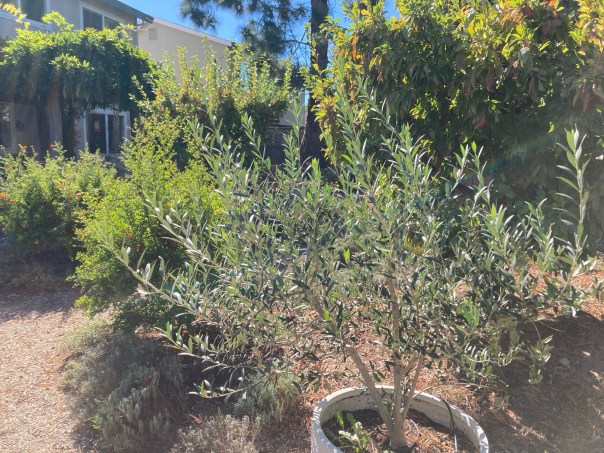
The olive that I repotted with great effort is looking healthy again. I guess my pruning wasn’t too bad, either. I do enjoy pruning, but I’m glad I don’t have to do all of it, or get on ladders anymore for that task. I can just prune the smaller bushes and leave the big ones for my helper.
Recently I did prune all four dwarf pomegranates, in advance of their dormant pruning that will happen later, because my new landscaper consultant told me I should “lift their skirts.” Ahem… is that common parlance in the gardening world? I had never heard the term, but I knew what he meant.
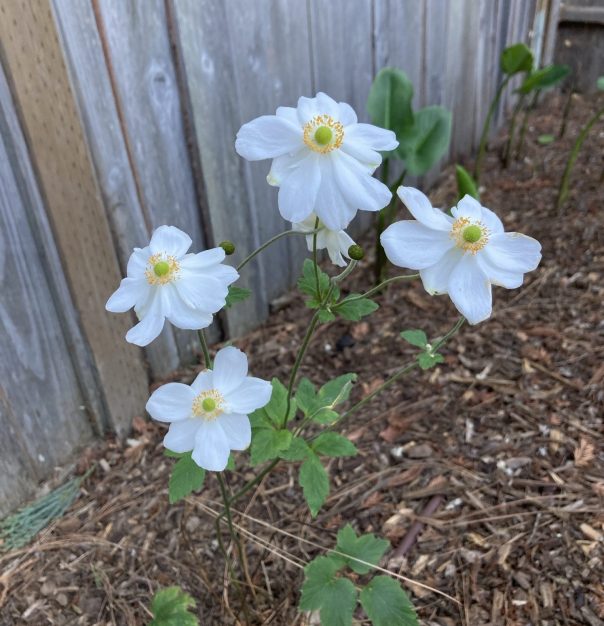
I am thrilled that my Japanese anemones (below) are putting on their best show ever, though they still are not robust — I gave the four of them extra water this year, and they have been getting more sun since the pine tree was thinned. If I feed them a little maybe they will do even better next year.
I have lots more to do before I will feel prepared for winter, but that skipper put me in touch with the reality that I, too, am slowing down. Most likely I won’t get “everything” done. And I guess that will have to be okay!
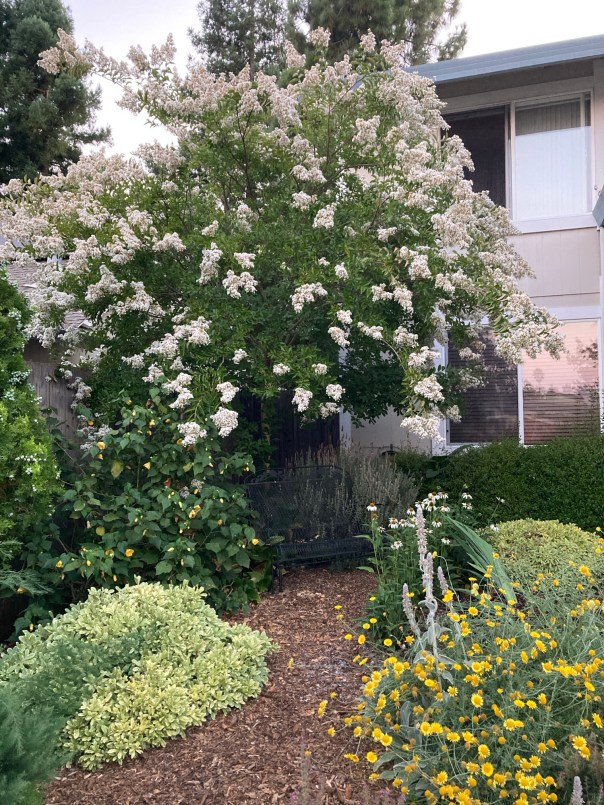
Crape Myrtles are in full bloom in my neighborhood, including on my own property. Mine is not more than five years old, and in the last year it seems to have doubled in size.
I’ve been walking down to the creek bridge and beyond several times a week, and all the trees and plants growing in and on the banks of that stream also seem to have mushroomed, so that I can barely see the water below the bridge.
I love the summer, because it’s only in the occasional heat waves of the season that I can feel fully at home and in sync with the earth. In this climate with marine influence, where the evenings get cold and breezy even in the summer, it’s a treat to fully sink into the warmth and stay there all evening; even when I climb into bed I am relaxed, and don’t have to pull several layers up to my chin against the chill. Of course, this sounds crazy to those of you who live in high-humidity summer zones!
Even when it was over 100 degrees last week, I was able to spend a lot of time in the garden morning and evening, and then work on other projects in the middle of the day. I have plenty of paperwork and sorting yet to accomplish. If I ever finish that — Please God, help me! — I could sew, or read, or get back into writing book reviews …
When I read on my phone, I’ve started taking screen shots of quotes that I don’t want to lose. And I often look up words I don’t know — On Substack there are so many good writers with vast vocabularies — and take screenshots of the definitions.
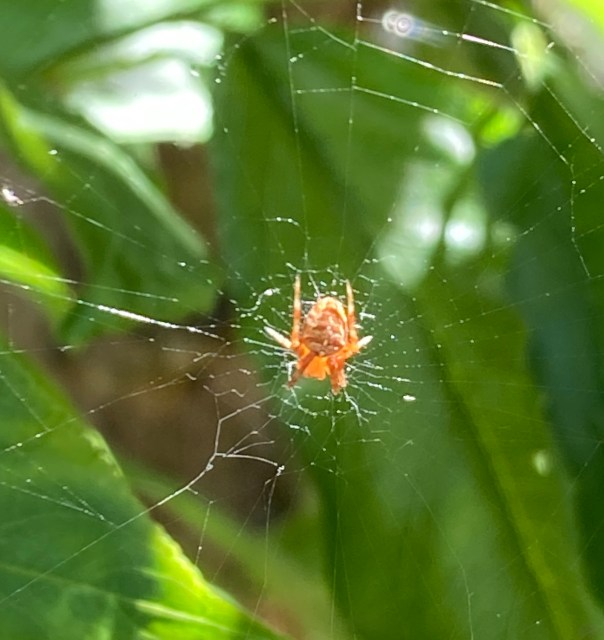
Spider in the plum tree.
One morning as I set out on my usual walking route, I passed by the house down on the corner, where a vegetable garden has been carved out of the lawn, next to the sidewalk. For months I have been admiring the health and size of the plants, and that morning I spied a dozen beautiful yellow summer squashes peeking out from under the leaves, several of which should have been picked days earlier; on my way back I debated about whether to inquire about them. If the owners didn’t want them for some reason, I would take them… and if the gardeners had suddenly been incapacitated and couldn’t pick their own squash, I could offer to do that for them….
It sounded reasonable… and one hates to see beautiful vegetables going to waste… but what if I got involved with people I found disagreeable? Or who were needy beyond my abilities to help? I stood on the sidewalk and thought a while, then walked up to the door and knocked. The result: I made a new gardening friend.
Dee gave me three overgrown squashes, though none of the size I’d have preferred, and she invited me to come back for more. She enjoyed talking about her garden, and told me about her family that she lives with, including her recently widowed mother, who she said is the cook of the household. I wondered if that cook prefers overgrown zucchinis…. On one of the less sweltering days I did cook the squashes into a spicy, satisfying stew, which I was glad to have..
That’s my own chard and collards in the picture above, the leaves that were not eaten by insects or mollusks; I picked almost all of my greens and now my own little squash plants are spreading out in the planter boxes. Recently I transplanted the tarragon out of a pot into one of those boxes where it will get more regular watering, and it is thriving.
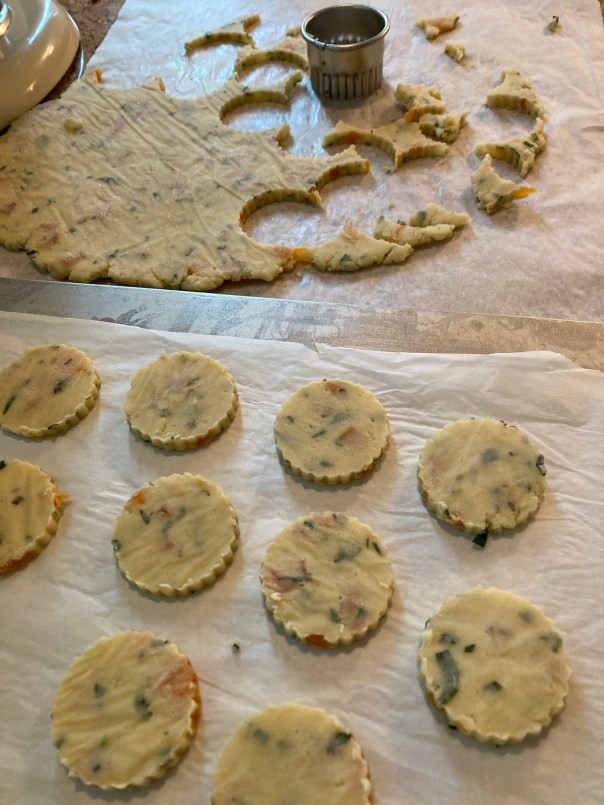
I used several sprigs of it to make Anytime Apricot and Tarragon Cookies from the Dorie’s Cookies book. They were in the chapter called “Cocktail Cookies,” and the recipe includes no sweetening beyond the dried apricots and tarragon.
I baked those savory shortbread cookies to take to friends who’d invited me for lunch, who I knew didn’t care for sweets very much. But they are winemakers, so I thought they might like the kind of savory cookies one could nibble on while sipping a glass of wine. We all thought they were really nice; it was amazing how much subtle sweetness we tasted in them; I think the level of saltiness helped bring it out.
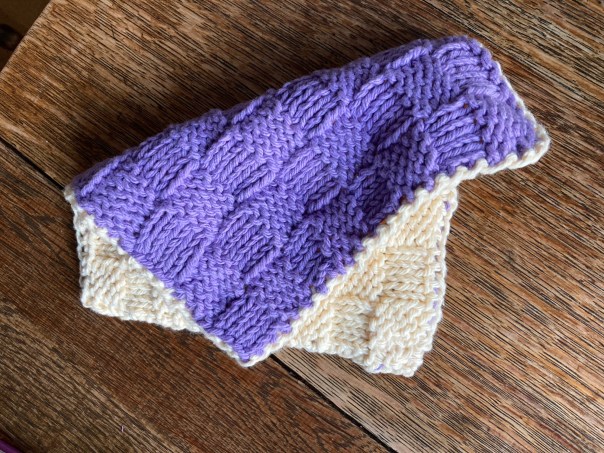
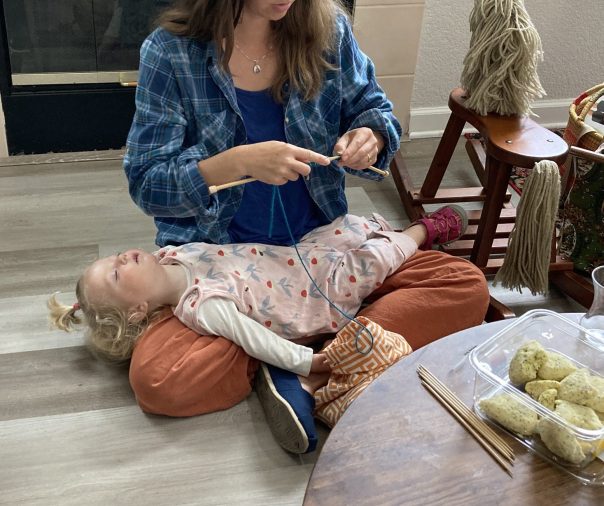
I got together with several women who are collaborating to share homemaking skills; for our first meeting we focused on knitting. I had two cotton dishcloths I’d knitted a while back, which I decided to join together. I tried crocheting them together but I couldn’t figure out how to do that while at the same time chatting with everyone, so I just sewed them together with a blanket stitch.
I don’t have hopes of becoming an expert knitter, but I like to be with these women. And their babies! (At church there is a new family with a little guy just turned one, and he is the friendliest love bug. He loves me! And I never tire of holding him.)
Our host had an awe-inspring jar of kombucha scoby on her kitchen counter, and two of our group were happy to take home a quart of it to get their own kombucha production up and running again. My own fermenting experiments stalled decades ago with yogurt-making, and a succession of three yogurt makers that never satisfied. I never tried making sauerkraut, because that was a food I have been prejudiced against ever since it made a regular appearance on our table when I was a child; I did somehow manage to enjoy kimchi when my son “Soldier” brought it into the family’s already international culinary repertoire.
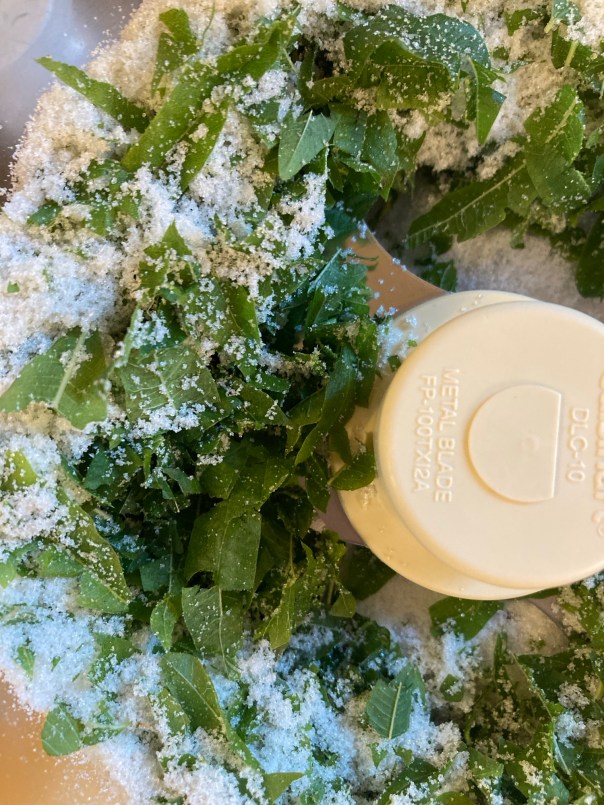
But I have made Lemon Verbena Sugar Paste! Lemon verbena is one of my garden treasures, but I haven’t pruned my plant often enough or used its leaves much, and it has gotten very leggy. So when I saw a young and well-shaped specimen in the grocery store, I brought it home and now have two such treasures. When I pruned the older plant, I took all the leaves to make Lemon Verbena Sugar Paste. There were more or less potent recipes online; I used the one with the highest ratio of herb to sugar, 2 cups to 1/2 cup.
I stuck the paste in the freezer and hope I will remember to bring it out to add to tea, sprinkle on desserts, use as a glaze, etc. Maybe I’ll also remember to tell you here if I do.
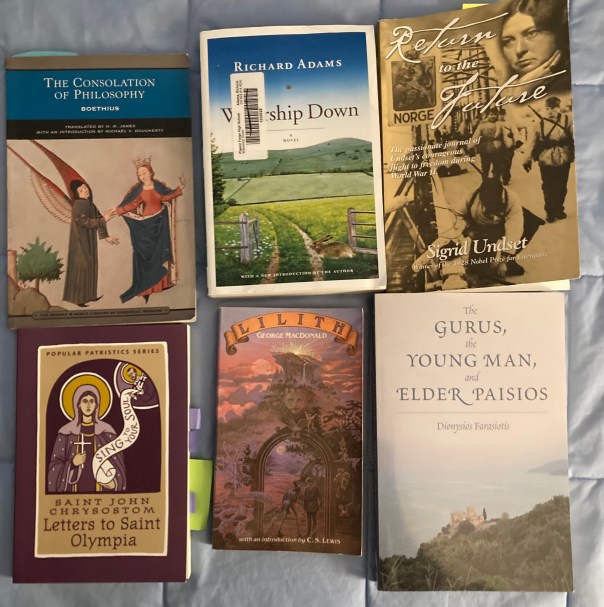
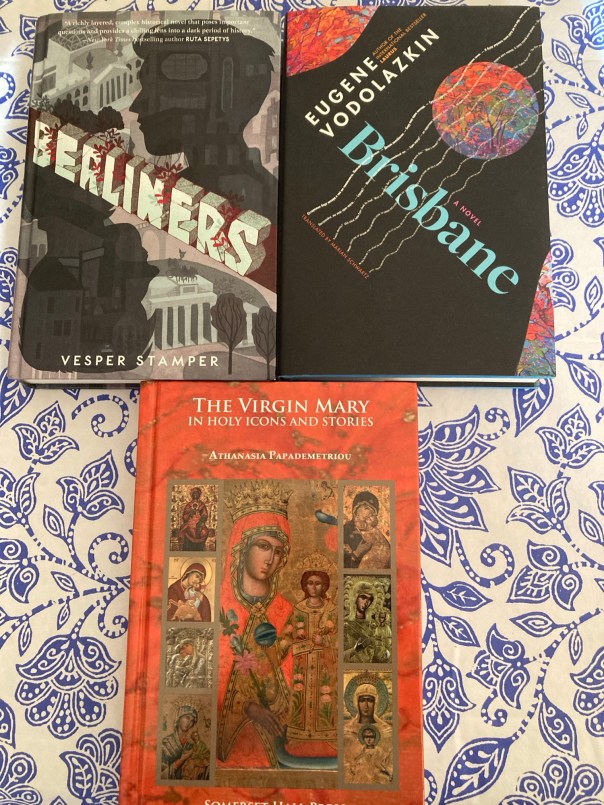
After I asked my friend Cori what were her summer reading plans, naturally she asked me back. I should have anticipated that and not asked her to begin with — because I have no real plans, and feel like an imposter. I have been reading less than usual. I see that of the nineteen books I pictured here five months ago, I have read just two. Only one of those I got to the end of was from the stack I was going to “try extra hard” to read this year. Well, the year is half over, so it doesn’t look promising for those selections. I took new pictures of the “summer books” to show Cori, because it was easier than typing out the titles.
Four of those I have at least started reading, and the Undset book is my current reading-while-falling-asleep choice. I have, typically, read several books that I didn’t anticpate back in February, and some of them were not worth talking about, or even reading to the end.
But let me just mention a young adult novel I did read to the end and liked a lot, What the Night Sings. Written by Vesper Stamper, who was one of the speakers at the Symbolic World Summit I attended earlier in the year in Florida, this is a coming-of-age-in-the-Holocaust story, illustrated by the author. First I listened to the novel, and then I borrowed the hard copy from the library, because I wanted to see the illustrations, which are many, and are very well done, as is the whole story. Stamper’s Berliners, is at hand, too, waiting for me.
If you have read — or even scrolled — this far in my ramble, I’m impressed! There is some reason you stayed so long, though there were doubtless some topics along the way that didn’t interest you. Whoever you are, I appreciate you very much.
It was hard to keep up with myself last week, and with all the friends, projects and tasks that fill my life to overflowing. I guess I was somewhat playing catch-up after my mountain retreat the previous week. The garden got gently rained on three times that last week of September, which is unusual. Combined with fog on other days, the dampness caused mildew in the planter boxes, but mostly the lower leaves of the tall zinnias have been affected.
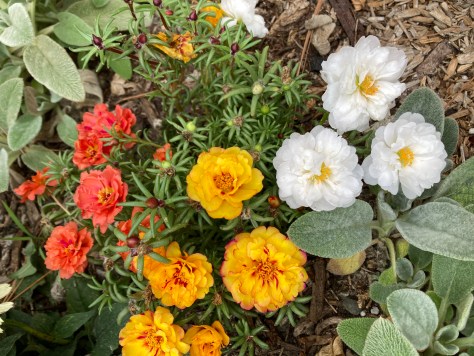
When I noticed the Japanese anemones looking better than ever, it occurred to me to plant a few more this fall, maybe some pale pink ones — but I corrected my impulsivity in time, and won’t be taking on one more project, what with so many others unfinished. A more reasonable goal would be to try to take better care of the anemones I have, and see if they can be encouraged to be taller and more robust. It’s a sign of their middling health, that they do not ever spread and multiply, and their flowers are few and small.
The sneezeweed I grow in a pot looks as well as it ever has. I bought it a few years ago at a native plant nursery, because I love the mountain versions of the flower. I put it in a pot so I could be sure to water it enough; the irrigation settings for most of my garden are set for drought-tolerant plants, and sneezeweed is not one of those. My type is pretty plain, or at least monochromatic, compared to the mountain ones.
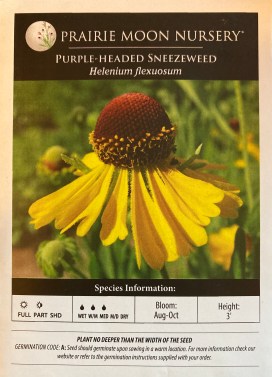
In search of fancier kinds, a few months ago I browsed sneezeweeds online for quite a while, and ordered seeds for this one, Purple-Headed. When I am looking at seed catalogs or even plants in nurseries, all the options seem so do-able and desirable. But once the time comes to get on with the actual work of planting… well, I literally drag my feet. So who knows what will happen with these seeds…
I used my sourdough starter twice last week, first to make a large pan loaf of seeded wheat-and-spelt bread. This is the recipe I have been trying to perfect, but perfection hasn’t happened yet. I may have to pause the sourdough project while I branch out and reach back, to other breads I have made or have wanted to try, like chocolate bread, Indian flatbreads, and applesauce rye.
Buttery Sourdough Crackers was a satisfying recipe that used a bit of starter. This picture shows the dough as it was resting overnight, along with leaves of the lemon verbena that I am drying, after pruning my plant for the first time ever.
I used this recipe for: Rustic Sourdough Butter Crackers as my jumping off place, substituting half dark rye flour, and adding sesame seeds to one half, and poppy seeds to the other. I baked them a lot longer than the recipe called for. The resulting crackers are nice and crispy and easy to eat. The butter ingredient plus the sourdough tang is a great combination.
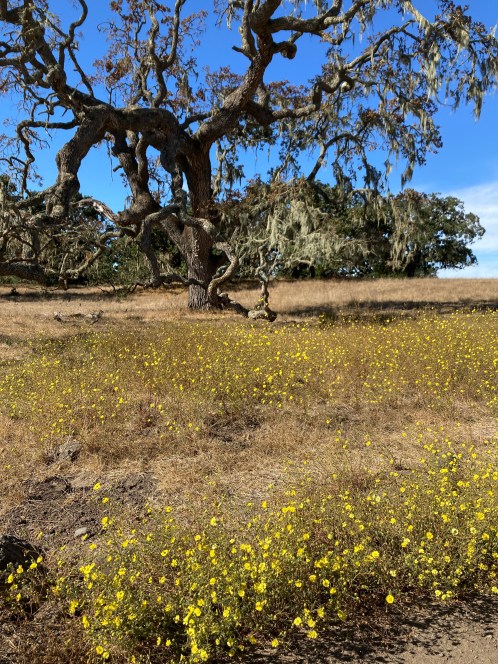
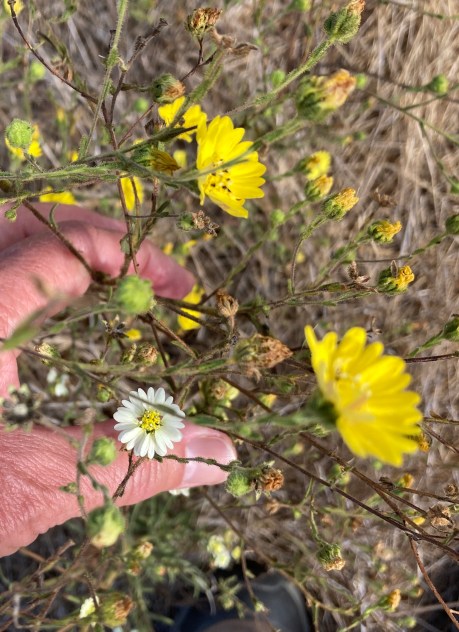
My friend Lucy and I took another one of our monthly walks, up in the hills again but to a park she hadn’t been to before. It’s mostly very brown up there now, but the poison oak is making red splashes in the landscape. And my old friend tarweed!
The Seek app tells me this is not either of the species I saw on my way up the mountain last month, but Hayfield Tarweed. And it seems to come in white or yellow versions, in one case growing side by side:
The third online Beowulf class was this week, and I spent more than two happy hours in the company of the most delightful teachers, Richard Rohlin and Jonathan Pageau. They both love the subject, and Richard is definitely a Beowulf scholar from way back. I will have to at least quote a couple of lines from the poem here eventually, though it seems that unlike me, most people I’ve talked to got an introduction to Beowulf in school. So you may already be more familiar with the story than I.
Apple orchard where I go.
At the end of the week, I remembered: apples! It’s time to make a trip my favorite apple ranch, and see which of their 30+ varieties is available now. I squeezed it in on Saturday afternoon, and added a stop at a nursery out that way, hoping they would have starts of some kind of leafy greens I could tuck into spaces in the planter boxes after I take out zucchini and tomatoes and eggplant. They did!
So here in the back of my car is a mix of apples Empire, Jonathan and Macintosh; and six packs of Swiss chard and collards. I do have chard growing right now, but I think I need more. And I wasn’t able to get collards started from seed in August.
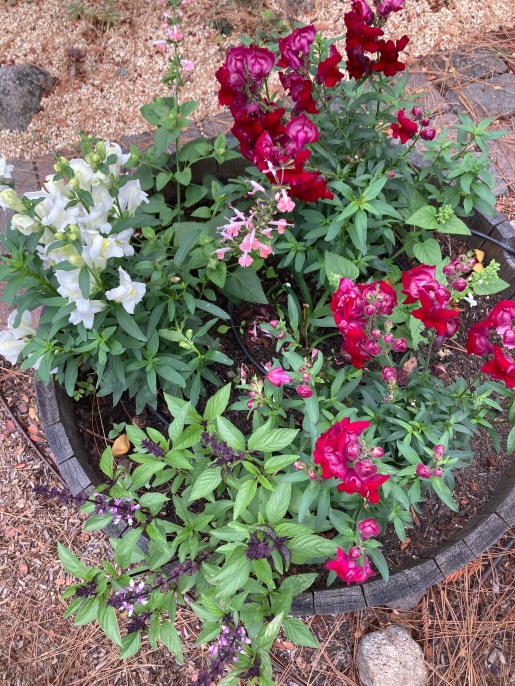
One more glad sighting of late summer I want to share, is this half wine barrel that was unplanted through last winter:
When I put in some snapdragon plants in late spring, I noticed a couple of tiny mystery plants that didn’t look like weeds, so I left them undisturbed. Now everything has filled out and I find that I have beautiful Thai basil and tropical sage complementing the snaps. Gardens are ever surprising.
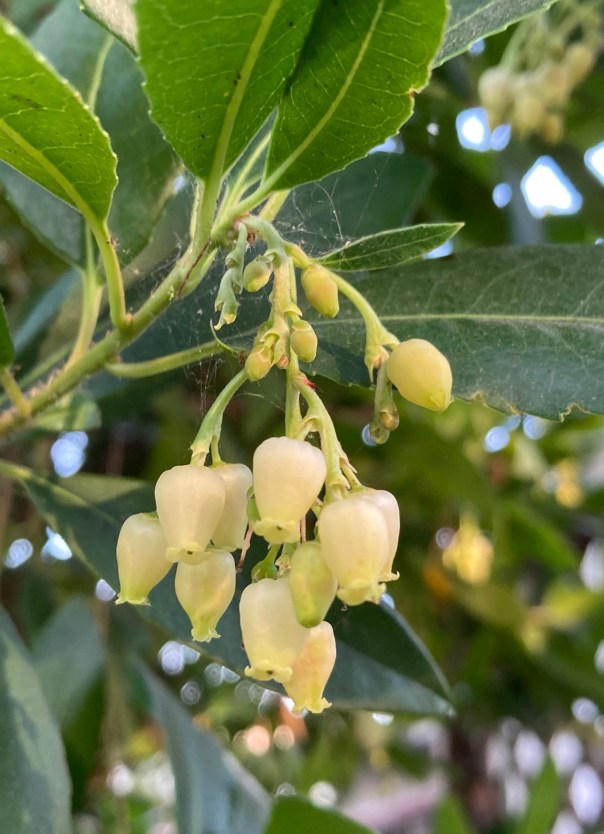
 Christians. I’ve been supremely blessed by various aspects and events of the day…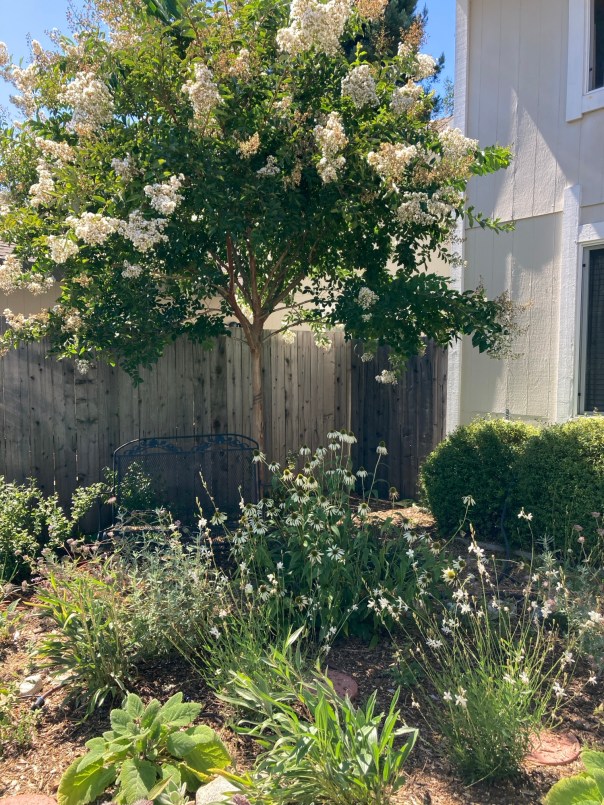
 My sometimes helper Alejandro wanted to come and work this morning, so he could do family things later on. He probably would have come at sunrise if I’d let him, but he was willing to come a little later, and he cleaned up and trimmed the most parched and spent things around the place. That lifted my already floating spirits a few feet higher.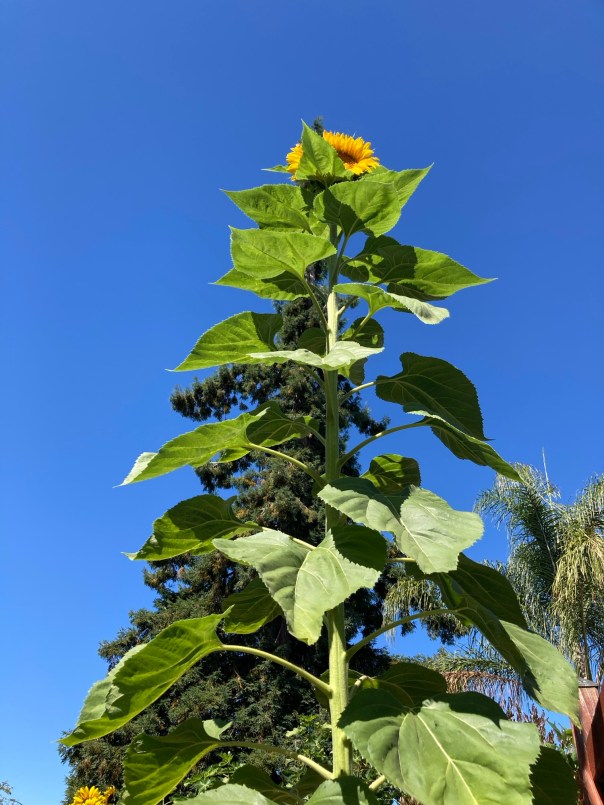


 followed the example of others and quickly splashed it on my face and neck for refreshment. Later, when I returned home, I brought an empty bottle with me and kept it for many years, just so I could take a whiff from time to time.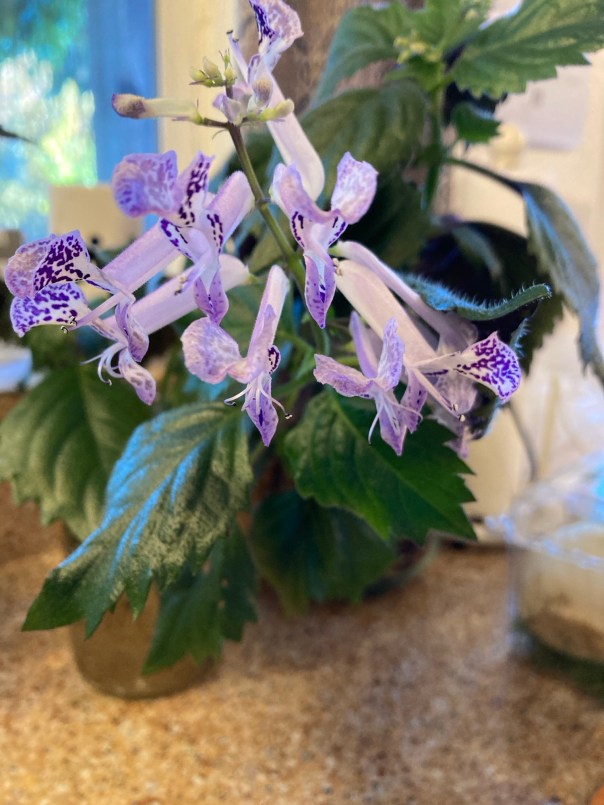
 I love the summer, because it’s only in the occasional heat waves of the season that I can feel fully at home and in sync with the earth. In this climate with marine influence, where the evenings get cold and breezy even in the summer, it’s a treat to fully sink into the warmth and stay there all evening; even when I climb into bed I am relaxed, and don’t have to pull several layers up to my chin against the chill. Of course, this sounds crazy to those of you who live in high-humidity summer zones!




 their babies! (At church there is a new family with a little guy just turned one, and he is the friendliest love bug. He loves me! And I never tire of holding him.)
 in February, and some of them were not worth talking about, or even reading to the end.

 When I noticed the Japanese anemones looking better than ever, it occurred to me to plant a few more this fall, maybe some pale pink ones — but I corrected my impulsivity in time, and won’t be taking on one more project, what with so many others unfinished. A more reasonable goal would be to try to take better care of the anemones I have, and see if they can be encouraged to be taller and more robust. It’s a sign of their middling health, that they do not ever spread and multiply, and their flowers are few and small.
 seed catalogs or even plants in nurseries, all the options seem so do-able and desirable. But once the time comes to get on with the actual work of planting… well, I literally drag my feet. So who knows what will happen with these seeds…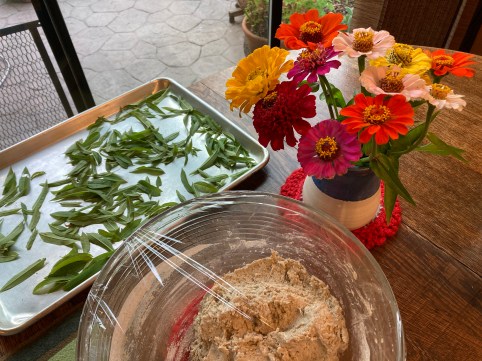




 Gladsome Lights