Tag Archives: marble

Sleepy celebrations of Pentecost.

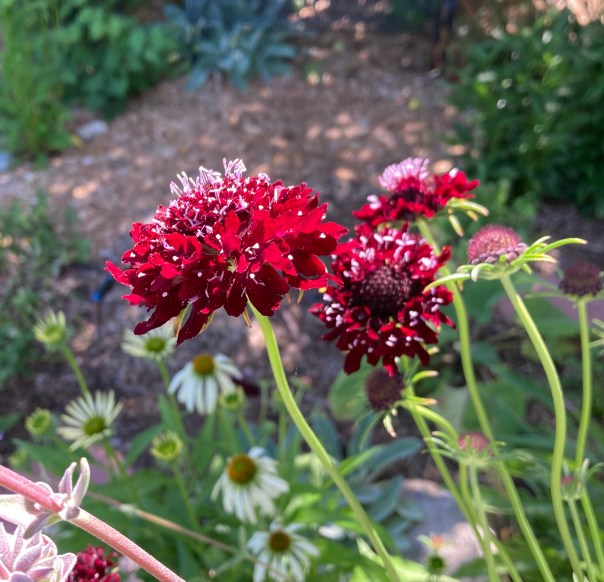
Pincushion flowers

My celebrations of Pentecost last year and this had one thing in common, that I was running short on sleep. Last year, in Thessaloniki*, it was because I had stayed up late the night before talking to an old friend. Today, I had waked at about 4:30 and was a bit dopey for the next twelve hours, until I came home and took a nap.

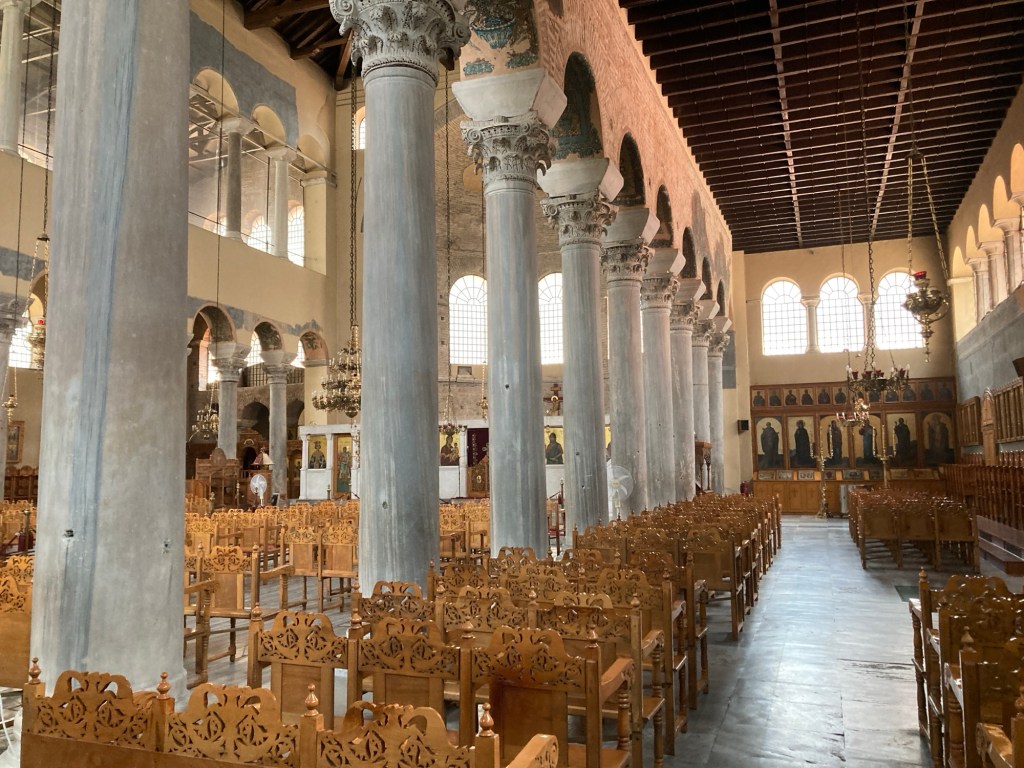
I just noticed that I never wrote here about Pentecost in Greece. I celebrated the feast at the The Church of Panagia Archeiropoietos that I had toured with my guide Maria a few days before. In the linked post I told about the blue-veined marble floors from the 5th century, symbolically arranged so that near the front, curvier veins make it look like rivers flowing out from the altar out to the back of the temple.
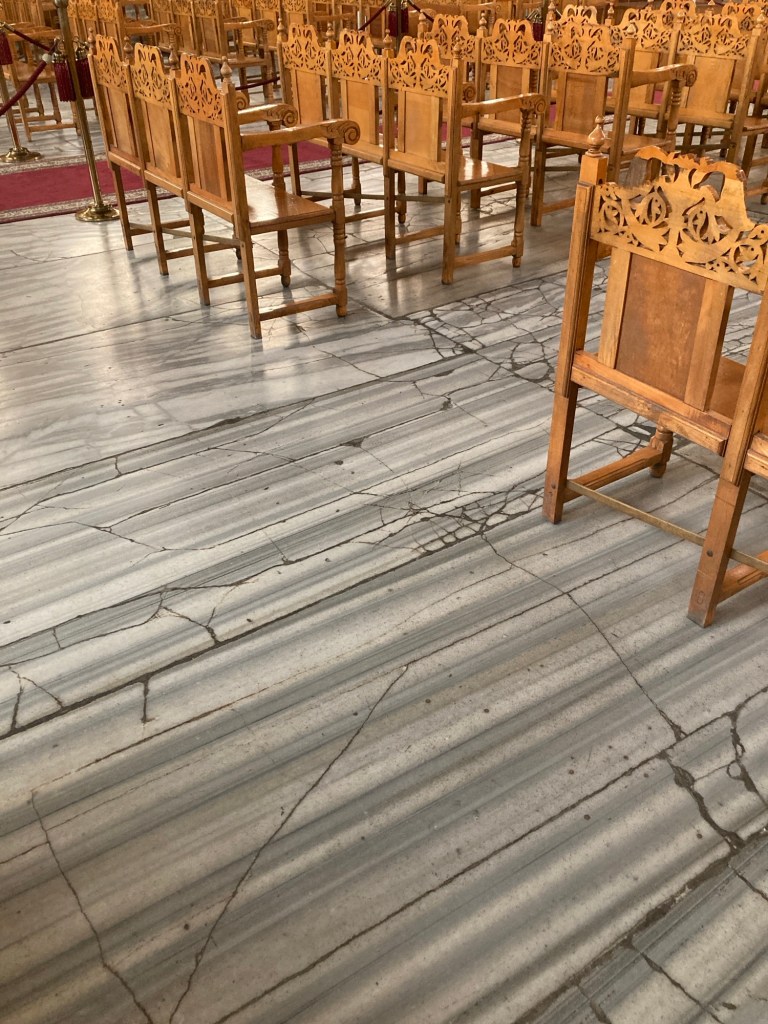
A few days later I attended Divine Liturgy in that church. On Pentecost we Orthodox have Kneeling Vespers shortly after Liturgy. This service includes three long prayers, “Again and again on bended knee,” and there I was down on that venerable floor, listening to the prayers in Greek, not knowing the language. I was beginning to feel sleepy, and almost dozed off. As special as it was to kneel there, I didn’t want to hit my head on that marble, knowing that any new cracks that might develop would be in my skull. So for the second two prayers I sat.
Today

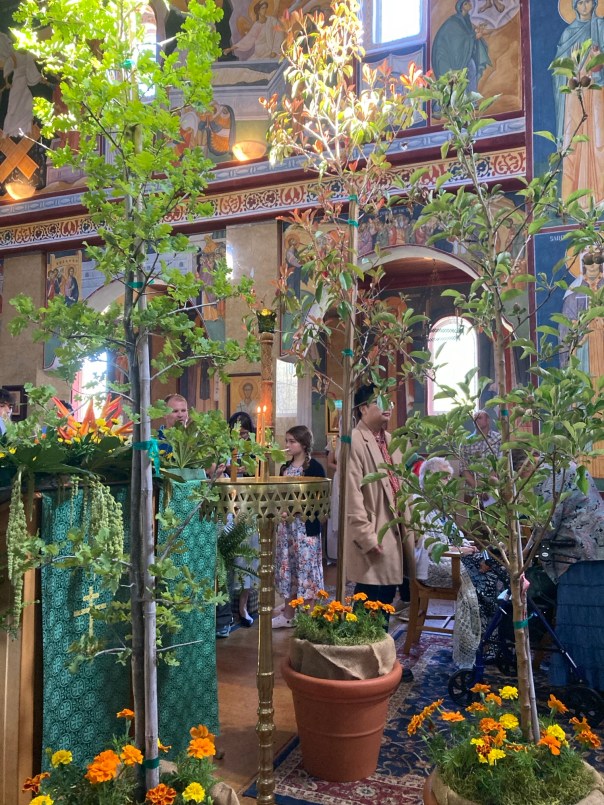
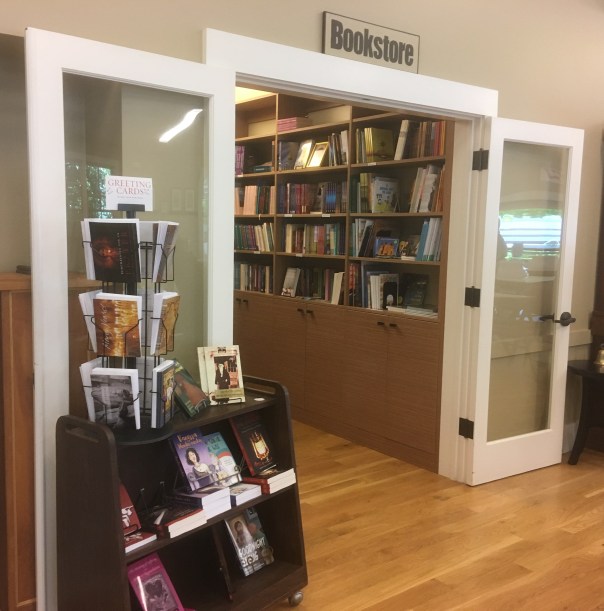
Today I was in my home parish, and it was a very joyous day! We received five new members into our church family before Liturgy, and that is always cause for celebration in itself. We typically have a potluck on Pentecost for our agape meal, instead of our usual arrangement of having a different team each week that plans and cooks a meal for 200 people. Today lots of people brought desserts, which were very popular. I was working in the bookstore, which is in the fellowship hall, and I got to meet two new catechumens and sell lots of books.
At Vespers, I didn’t kneel on the (cement) floor, because there was space on a rug. But it was a strain to make my groggy mind pay attention to the words. Soon after I came home I slept. Sunday afternoon naps are so often needed, and such a gift.

Just after I woke, a friend from church texted me that he could come over and help me move the last of my furniture back into place, things that had been moved for painting and carpet cleaning. I’m still able to move a lot of stuff myself, but this afternoon we needed to put a twin bed back together and push-pull a chest of drawers into the bedroom where my new housemate will be living. I don’t think I told you about her before, and I probably won’t tell you much about her in the future, but I’m very excited to have a student living here, a dear girl whom I’ve known since she was a baby.
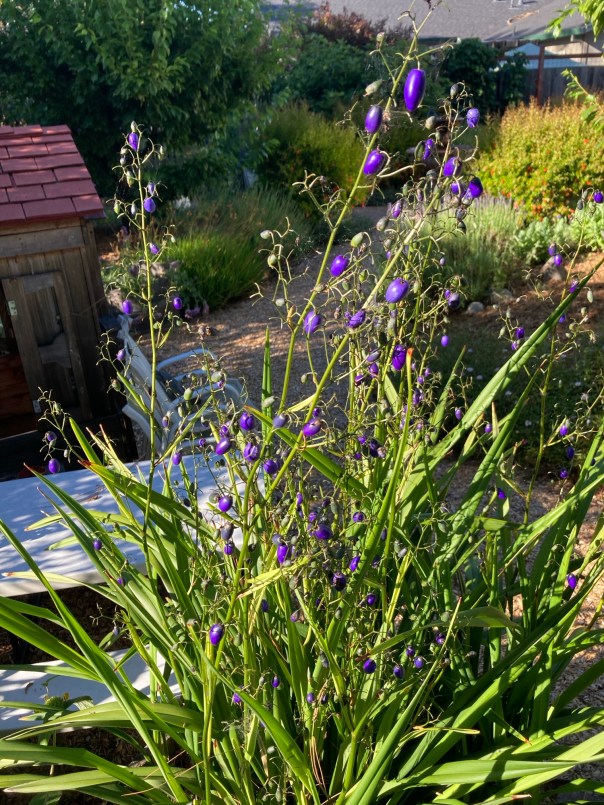
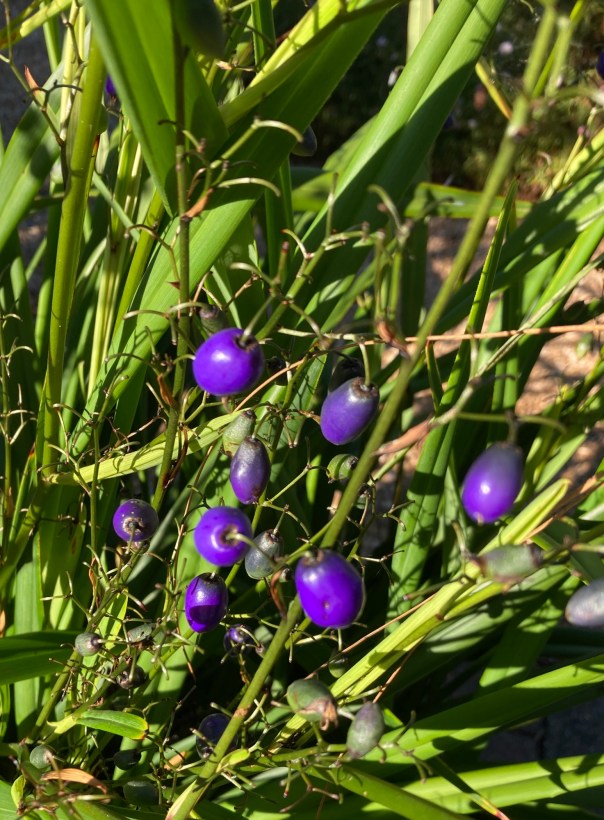
After that, there was still enough sunlight for me to wander a bit and take pictures of the garden. The Tasmanian Flax, Dianella tasmanica, is at the berry stage, covered with its grapey fruits. Those beautiful fruits are toxic “to an unknown degree,” at least to humans, but birds are said to enjoy them in the plant’s home territory of southeastern Australia.
What a wonderful day it has been. Tomorrow is Holy Spirit Day, and it would be lovely to continue the overflowing blessing of Pentecost into another day, and attend Divine Liturgy. If I go to bed early enough (like now), it could happen.

I wish you all a Happy June ❤
*If you’d like to read my other posts from Thessaloniki, they will all open up when you click on this tag: Thessaloniki. 

The week previous to being in that city, I was with family on the Island of Paros, Greece, and the posts I wrote about that time are here: Paros.
We step down and back.

You can’t walk very far in Thessaloniki without encountering antiquity as more than an idea; the present city layout incorporates reminders of previous communities and cultures, the oldest of which had been buried for thousands of years.

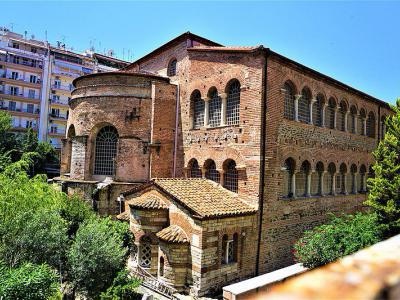
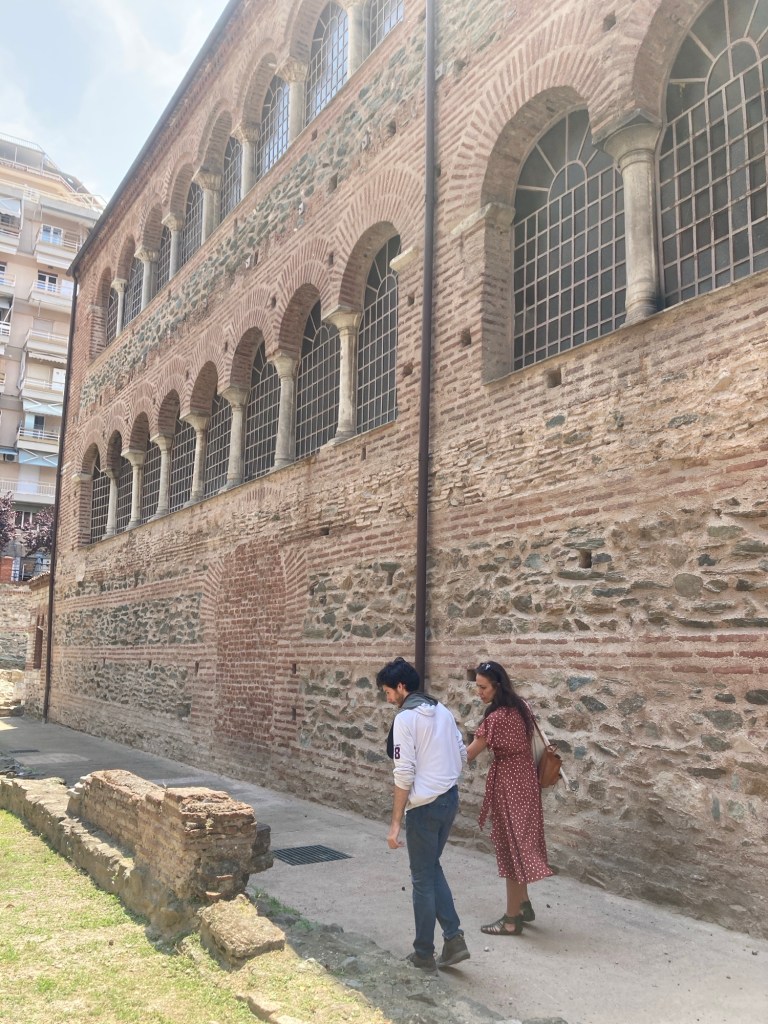
The Church of Panagia Archeiropoietos prompted me to think about this when I visited over the last week.

One has to descend a flight of steps in order to travel back in time to when Byzantine Christians first worshiped here.

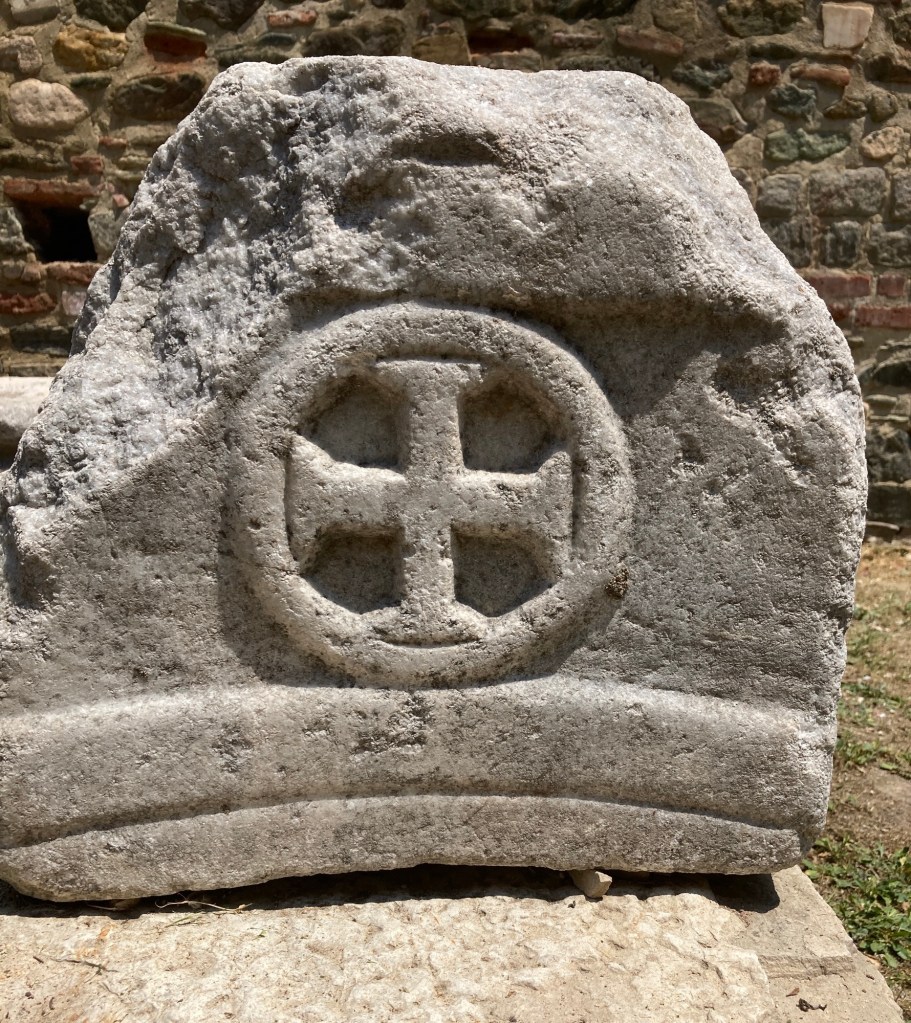
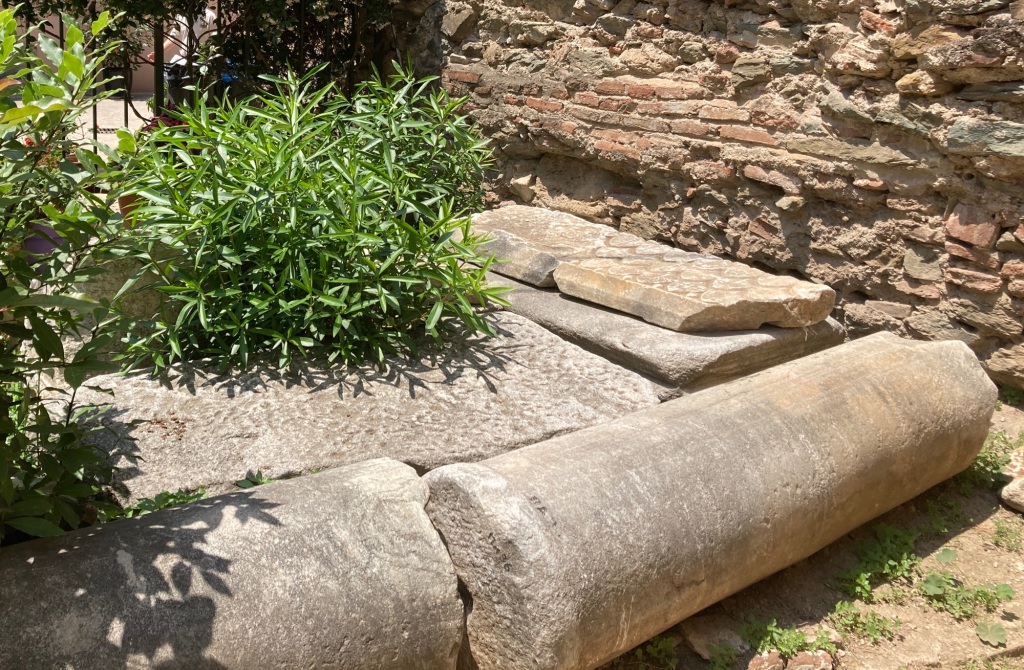
One afternoon my guide Maria and I found a university student at work behind the church, in a gated area where she had never been. The priest had given him two tasks: gardening, and also sorting and organizing stone and marble chunks of the church that had broken during earthquakes. He couldn’t have been more pleased.

“Would you like a piece of antiquity?” he asked me. “We have buckets of it!” And he handed me a few small souvenirs of my favorite type.

Inside the church, Maria pointed out to me distinctive features of this basilica style temple built in the 5th century.

It was the first church in Thessaloniki to be turned into a mosque when the Ottomans conquered the city in 1430, and Sultan Murad II inscribed his name and the date on a pillar.

Murad II’s insignia

Historians say that the blue-veined marble in the floors and columns of this church was sourced from the island of Proconnesos in the Sea of Marmara. Before the custom of sitting on chairs in church was introduced in the last century, the pattern on the floor imitating rivers would have been more obvious. Near the altar the lines are wavier. The floor is still the most captivating feature of the space for me. How many people have stood, processed, knelt and prostrated on these smooth and cool floors over the centuries?

I joined the ranks of that company this morning, not just to stand but to kneel, because it is Pentecost Sunday, when Orthodox Christians around the world join in three long prayers, in the service of Kneeling Vespers.

The Byzantine Christians built this temple on top of a Roman bath complex. At places in the church see-through panels (easily ignored and walkable for regular parishioners) reveal below, farther down and further back, three previous layers of Roman floor mosaics from that earlier era.

Yesterday I walked a half hour to the northwest corner of what would have been the old walled city. That’s where the Church of the Twelve Apostles is, which I hadn’t seen yet. But I had forgotten some of the things Maria told me about the best time to go, in order to find it open during or just following a service, and it was closed.

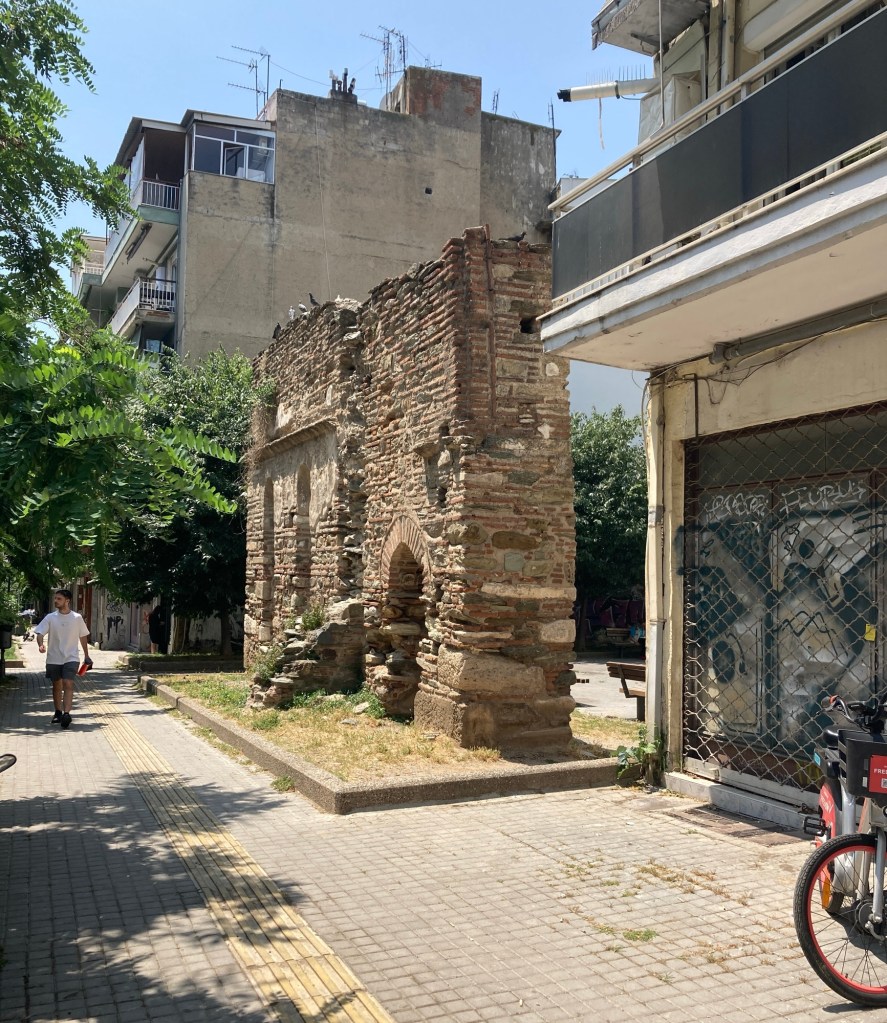
That was okay. I’m pretty much filled to the brim from all of the information and experiences of the last days, and was kind of happy just to have a walk in an area I hadn’t been yet. I came upon one wall portion…

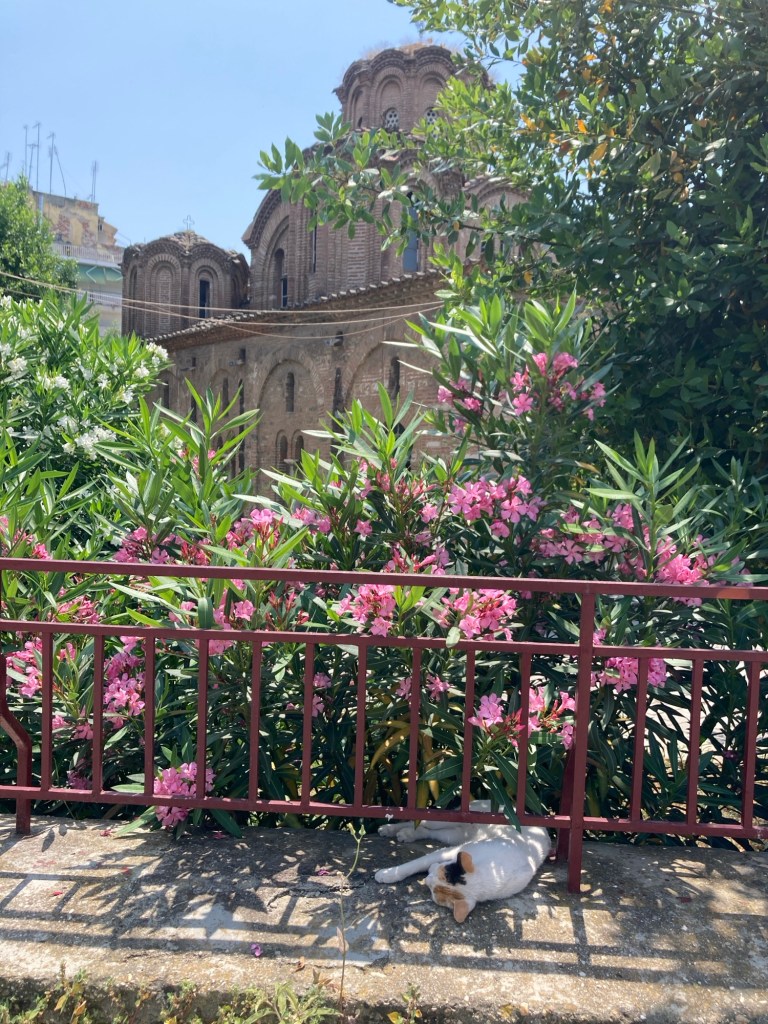
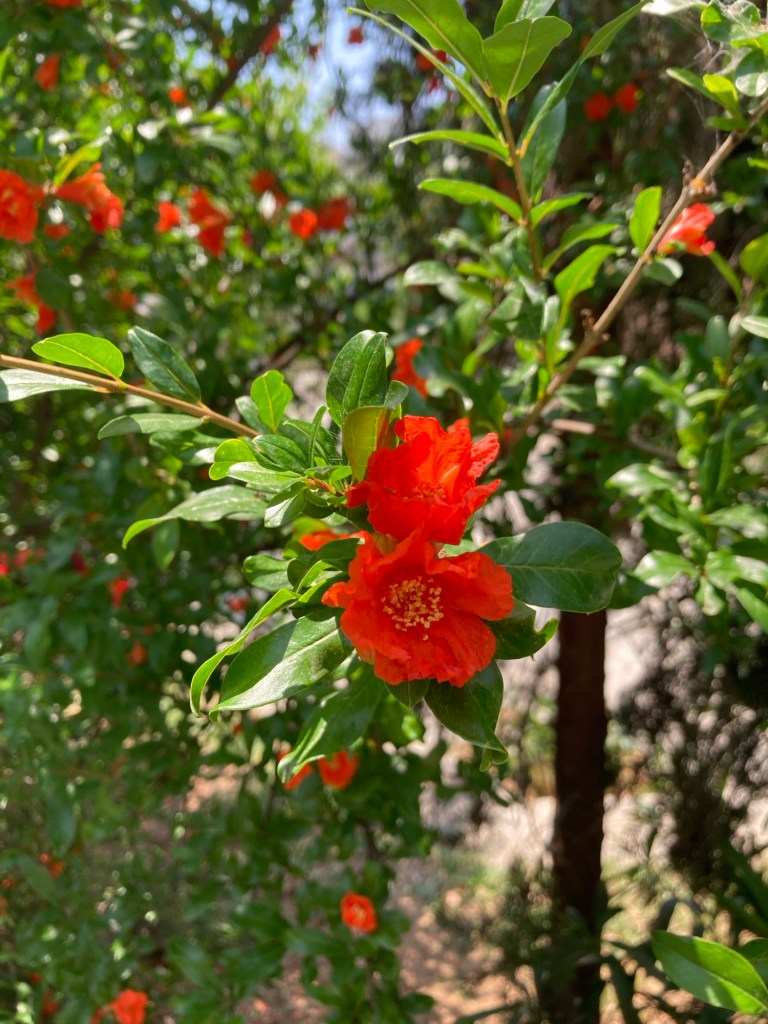
… and as I walked around the church, noting that every gate was locked, I saw a magpie in a tree, a cat trying to stay comfortable in the heat, and the most beautiful pomegranate tree.

The temperature has risen since my arrival in Thessaloniki, and the humidity increased, so that I have needed to walk less briskly, and to return to my hotel in the hottest part of the day to rest for a while before going out in the evening.

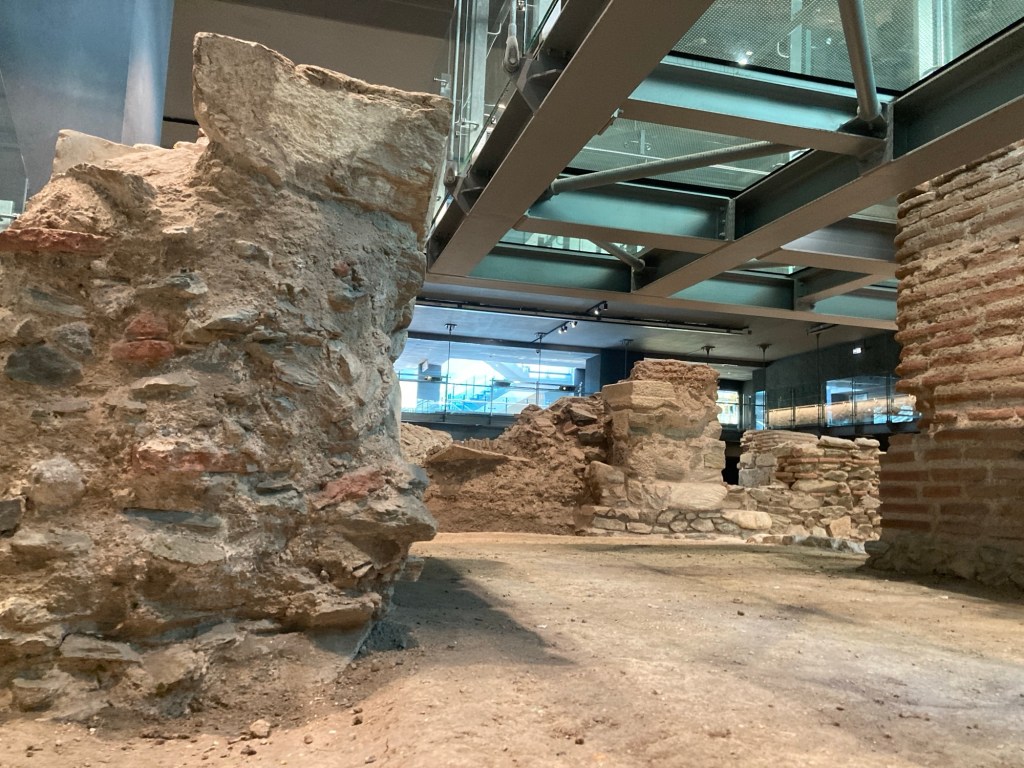
But I enjoyed strolling back through the center of the city, where the new Metro has also been built in such a way as to highlight the ancient civilizations that lie in its lower regions.

Maria gave me a tour of it also, and from all levels of that central station we got different views of the street scenes that have been preserved. It was the vastness of the archaeological discoveries, when excavation began for the project, that demanded a thorough and extended discussion about how to respect these artifacts.

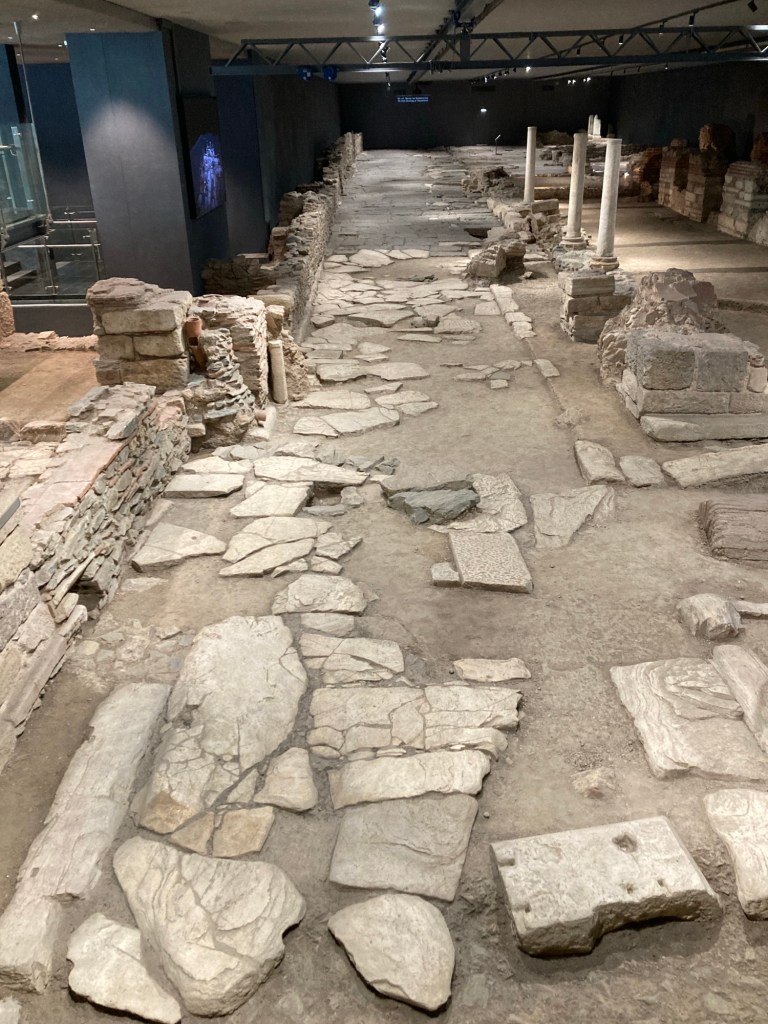
The main road of the Roman city.

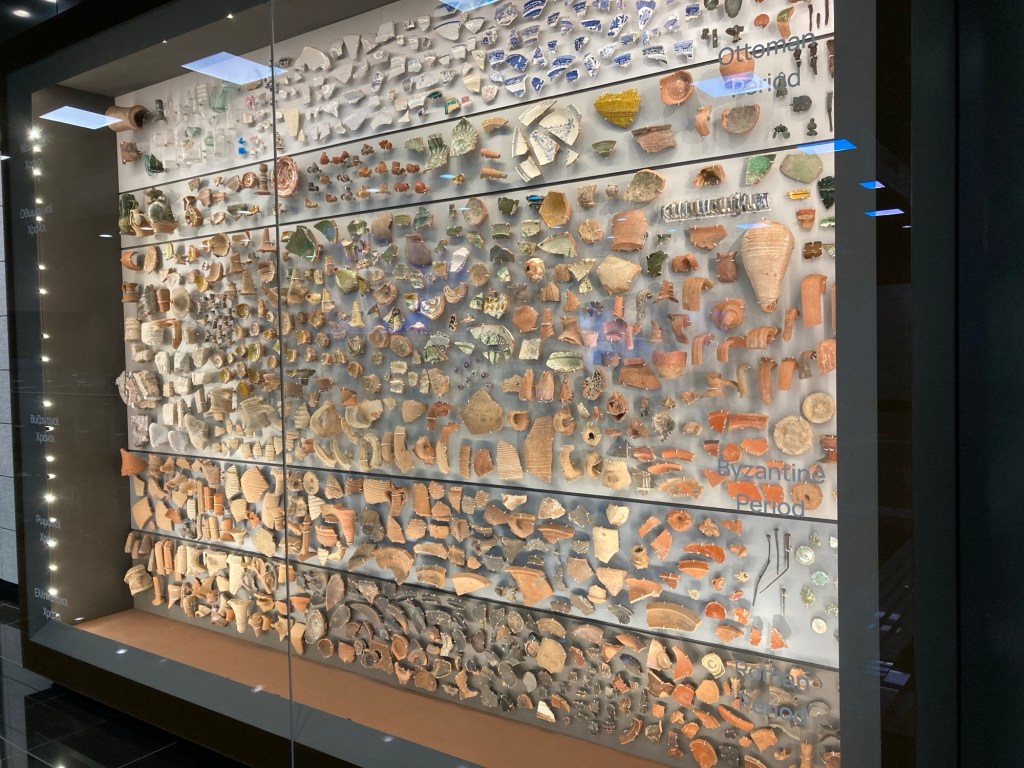
Layers representing Hellenistic, Roman, Byzantine and Ottoman societies were found, and the decision was made to display the Roman city. All of the artifacts will eventually be exhibited in a museum, a foretaste of which makes a wall display in the lower levels of the Metro station.

I am amazed at the vision and scope of this project. History is alive here.

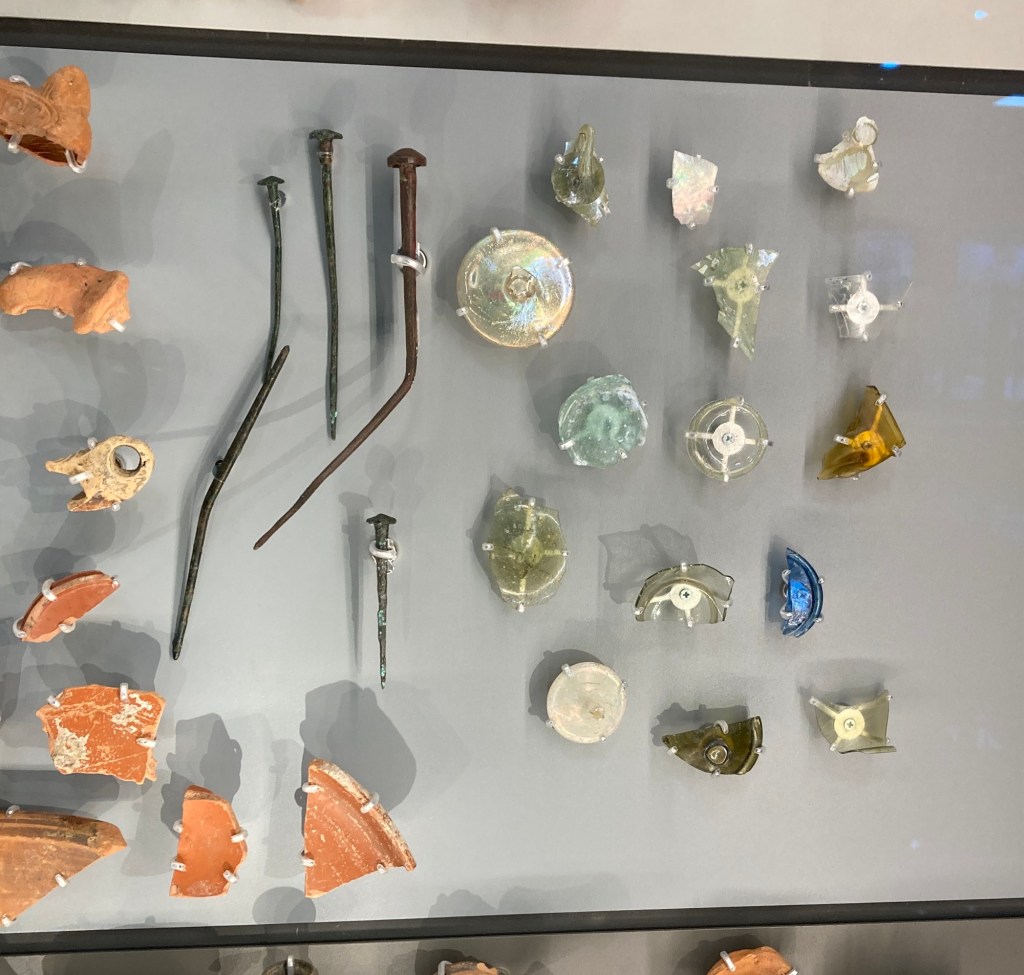
Roman artifacts

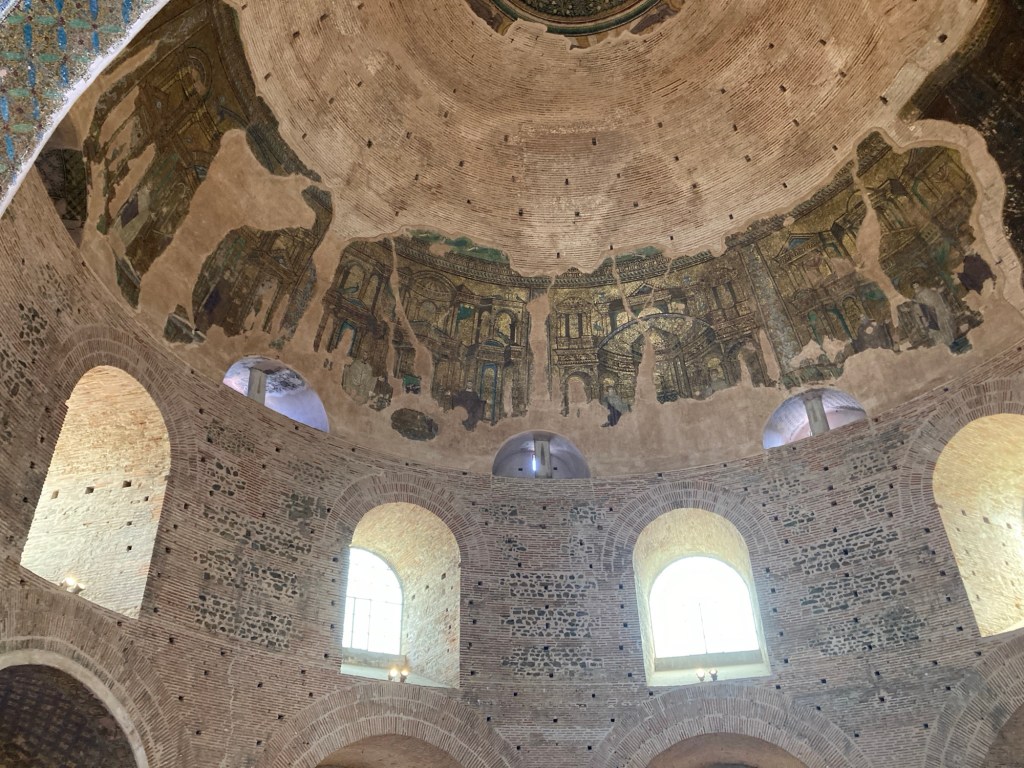
Because my time in Thessaloniki is running out, I need to tell you about the Rotonda now as well. It is the oldest of Thessaloniki’s churches.

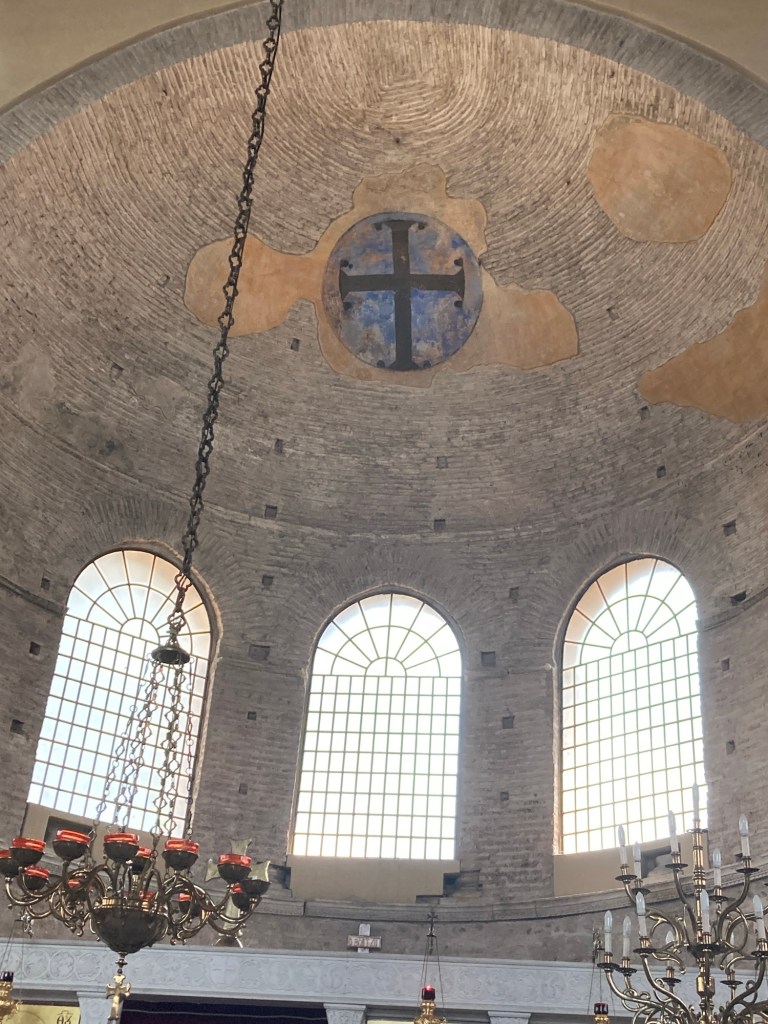
This edifice that was built in the early 4th century by the Emperor Galerius, possibly completed by Constantine when he lived here, has walls six meters thick. As soon as I was inside, I felt the immense presence of the place. The only visitor at that time besides us was a woman sitting on a folding chair and reading, and I knew it would be a blessed place just to sit. But I didn’t want it enough to go back and pay another ten euros to enter.

Some historians think that Galerius built it as a mausoleum, as part of the complex including the Arch of Galerius and the palace. But others think it was built as a temple to a god, possibly Zeus, who was Galerius’s patron god.

Galerius was buried in Serbia in any case, and a few decades later the Emperor Theodosius (probably) was the one who ordered the Rotonda to be made into a church dedicated to St. George.

In 1590 it was converted into a mosque for a few hundred years, and a minaret was added. It’s the only minaret that was not removed when the city was liberated from the Ottomans.

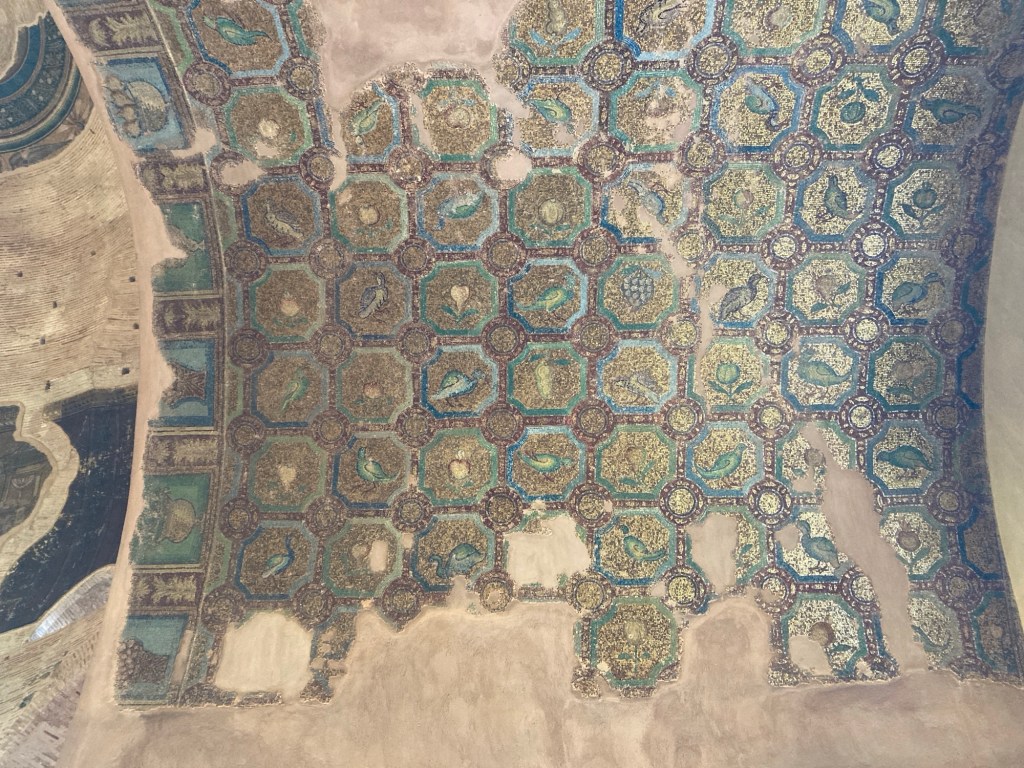
Along with the serenity and hugeness of the church, the remaining ancient mosaics impressed me, with their brilliance and detail. So, so lovely, the art that has survived nearly two thousand years and doesn’t show its age. If my neck were stronger, I’d have craned it longer to feast my eyes on the colors of the birds especially.

I think services are held there on the feast of St. George. One doesn’t have to go down to go back, when the Rotonda is taking you; it sits elevated above the city. You just walk up the hill, walk inside, and there you are.