
Today we celebrate the second of three days considered the “Winter Pascha.”
We are still singing these hymns of Nativity:
Thy Nativity, O Christ our God,
Has shone to the world the Light of wisdom!
For by it, those who worshiped the stars
Were taught by a Star to worship Thee
The Sun of Righteousness,
And to know Thee, the Dayspring from on High.
O Lord, glory to Thee!
and
Today the Virgin gives birth to the Transcendent One
And the earth offers a cave to the Unapproachable One!
Angels with shepherds glorify Him!
The wise men journey with a star!
Since for our sake the Eternal God was born as a Little Child!
On Christmas Eve, the sky dark with clouds at midday, we celebrated a Vesperal Liturgy, and the church glowed in a special way with the combination of candlelight and muted daylight.

Then Christmas Eve proper, when it became the next day liturgically, the Festal Matins of Nativity. How joyous! In the cathedral was the darkness of winter night, but with more candles and more festivity, because Christmas Day had begun! Our hearts were soaring. The children were drooping….

When I woke on Christmas Day I also was bushed. I had baked a few cookies between the previous day’s services, whic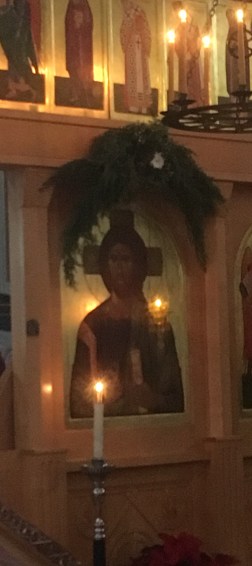 h meant I’d been on my feet most of that day. I chose different shoes Christmas morning, and before the service even began I had retrieved my joy. I was introduced to a woman who was visiting out of curiosity, had been raised Christian Scientist, and considered herself “more of a Buddhist.” But her friend of Ukrainian descent, who also had not been to our parish before, had invited and brought her.
As I began to explain why the icons, the incense and candles… to tell her about the materiality of our worship, how this very feast was a celebration of God Who has no flesh taking on human flesh for our sakes… well, it was thrilling to be able to give a little background to what was so vividly being expressed in fullness right there.
I pointed to the pillar with a fresco of St. John of Damascus painted on the side, and part of this quote on the scroll he is holding: I do not venerate matter, I venerate the fashioner of matter, who became matter for my sake and accepted to dwell in matter and through matter worked my salvation, and I will not cease from reverencing matter, through which my salvation was worked.
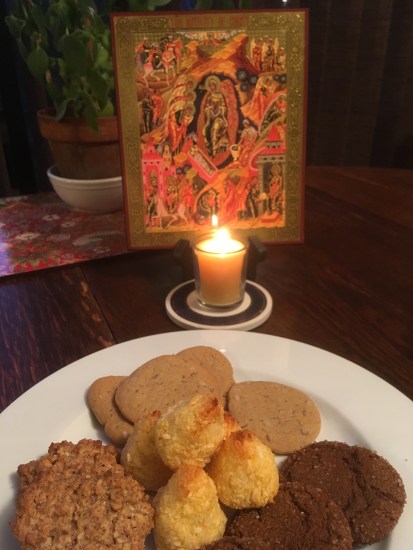
On the home front, concerning the matter that is our earthly food, I feel that I am way behind in my cookie-baking. I have made four kinds now… and no chocolate yet! I guess I never do have much chocolate in the Christmas cookies. But so far my collection leans heavily toward the nut-brown tones, partly because Trader Joe’s was out of their cranberry-orange relish that I use to make my jellies. I am out of energy to create an alternative recipe from scratch. I did one of those already last week.

The cookies above are the Apricot-Coconut Macaroons, which ended up low on the apricot element this time; I don’t know how that happened. I hope to make cookies for several more days, and during the next couple of weeks to invite friends to eat them with me!
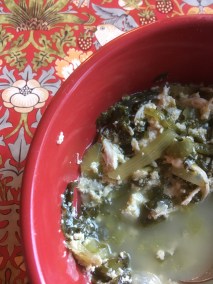
Today after church I visited two friends on opposite sides of town. I have no family with me this year, meaning more options than usual; I’m almost forgetting that I need to go to bed early and provide for some down time. At first I thought I could make four stops on Christmas afternoon, but that doesn’t sound very likely, does it? As it turned out, I got home in time for a bowl of Greek Wedding Soup that my housemate had made, and which tasted perfectly delicious and also seemed the perfect delicious holiday food to balance out cookies. She also had a fire burning in the stove, and Christmas movies playing on the TV.
I have plans for today, too, so I had to draft this post last night. I’m still trying to write every day in December — but maybe that was intended to be only till Christmas? I’ll check with Pom Pom. I think it’s been good for me to have this gentle pressure to write every day, because it’s a kind of work that satisfies something in me and helps keep me on an even keel in the midst of such a busy season. And it’s given me more chances to warm up to this:
Christ is born! Glorify Him!
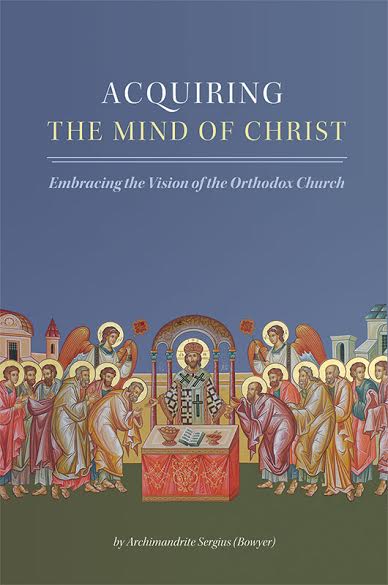 More and more I notice that people, including me, use the words brain and mind interchangeably; but they are not the same thing at all. No scientist has been able to find the mind in the brain. And when we are considering mind vs. heart, where is the heart exactly? As the Scripture says, “We are fearfully and wonderfully made.” The more researchers probe into the intricacies of the human body and its functions, the more complex we are found to be, the more questions emerge.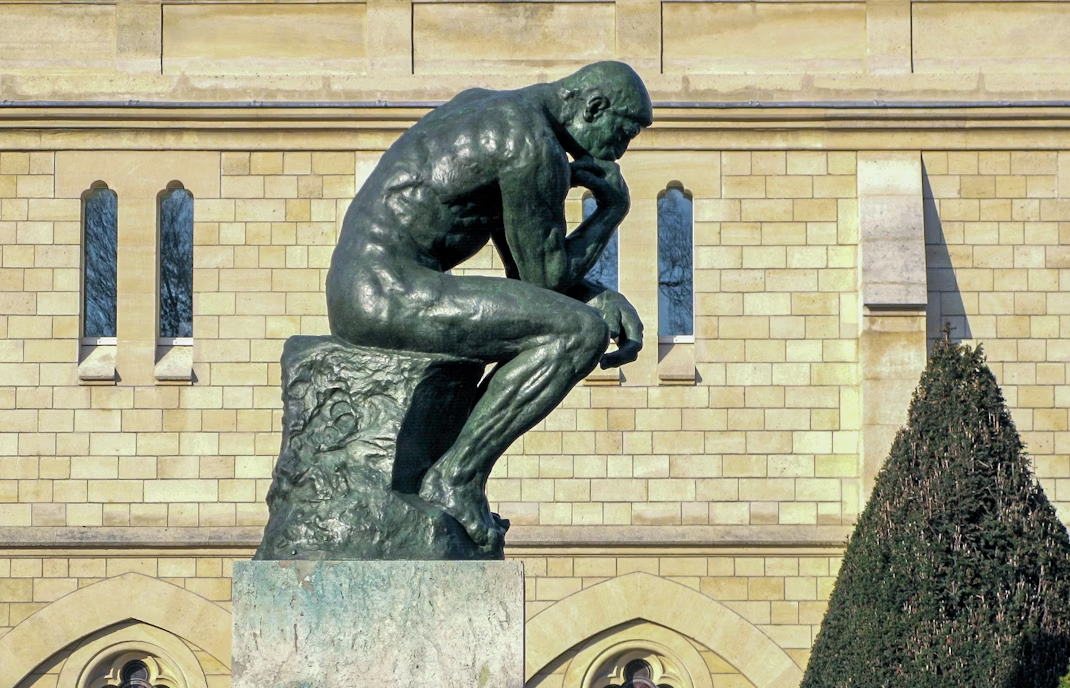
 ndwich
 Gladsome Lights