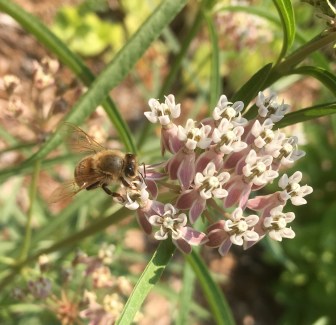
“The bee is more honoured than other animals,
not because she labors,
but because she labors for others.”
– St. John Chrysostom
“The bee is more honoured than other animals,
not because she labors,
but because she labors for others.”
– St. John Chrysostom
Our weather here in my northern California county was slightly strange the last couple of days, I think because of being near to the path of the tropical storm Hilary. We had lots of clouds, and it felt like a storm was coming, but no show. I worked in the garden this afternoon and at one point felt the slightest mistiness in the atmosphere. The heat hung on last night longer than usual, but today was cooler; tomorrow is predicted to be back in the 80’s.
What happened at my place, though, was wind! So much, that the wind chimes were making a racket, and when I went out after lunch, the whole southern end of my back garden was covered by a blanket of pine needles, from the Canary Island Pine that towers above that area.

I spent quite a while dragging a trash can around and gathering up armfuls of the needles, picking them off the manzanita bush, the heuchera, lavender, everything. I didn’t get half of them yet.
Last week the lavender got pruned, and the garden generally was looking pretty tidy, until today. On the north side, now that the zinnias are blooming and greens are growing tall, the planter boxes are filling in.
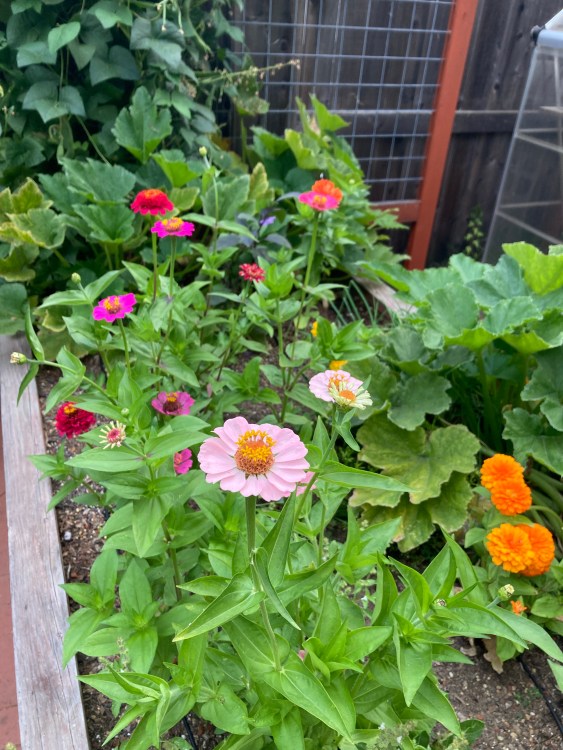
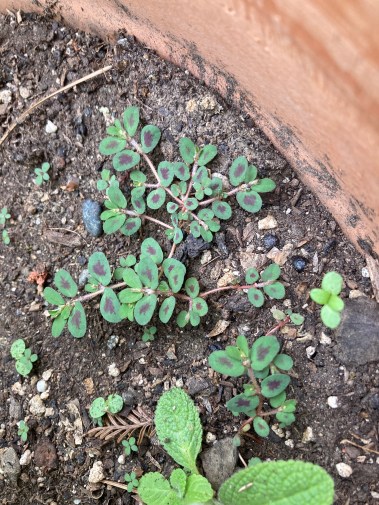
Spurge is growing throughout those boxes, but it’s easy to pull out. It doesn’t look like it would take much water from the other plants, though.
And the Narrow-Leaf Milkweed is blessedly free of aphids so far. I adore its flowers. Every year, so far, these plants are decimated by aphids before they go into dormancy, but the next spring they always come back bigger and stronger than ever.

Last year I tried planting three new species of milkweed, and none of them was successful. The year of the Monarchs, I had a beautiful Tropical Milkweed plant, the leaves of which the caterpillars didn’t care for. I wasn’t surprised when it didn’t survive the winter. That makes a total of six types I have planted in the last several years. The two native Californian species have always thrived, so I think I will give up being milkweed-greedy and not try any others again. I don’t know where I’d plant them anyway! And it’s pretty wonderful to have milkweed at all. ❤
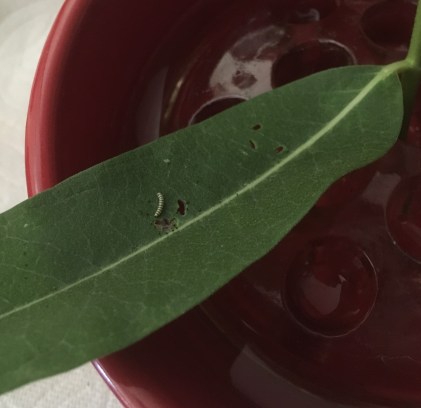
When I was planting the new milkweed species that I’d bought, I saw Monarch caterpillars on the established Showy Milkweed plant!

They are still there, three days later. But there is much less of the plant left for them to eat. I notice that this morning two have moved over to the smaller stem. (I wish I could have seen them doing that.) This milkweed is a young start that I moved across the yard from under the fig tree, where the original plant had reproduced dozens more over the years.

I transplanted it last year, close to the Narrow-Leaf Milkweed, out in the open where the Monarchs might find it. The Showy leaves are large and meaty, and they are what I fed my caterpillars four years ago, even though the eggs had been laid on the Narrow-Leaf. Meanwhile, the fig tree has grown so large, in spite of being a dwarf variety, that it is shading the Showy Milkweed out of existence over there.
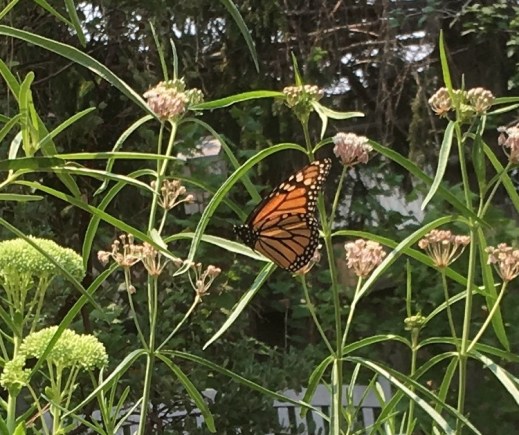

The Narrow-Leaf Milkweed is one of the two species native to my region, which is why I planted it originally. It has the most dramatic blooms, like ladies in crowns and pink dresses dancing in formation:

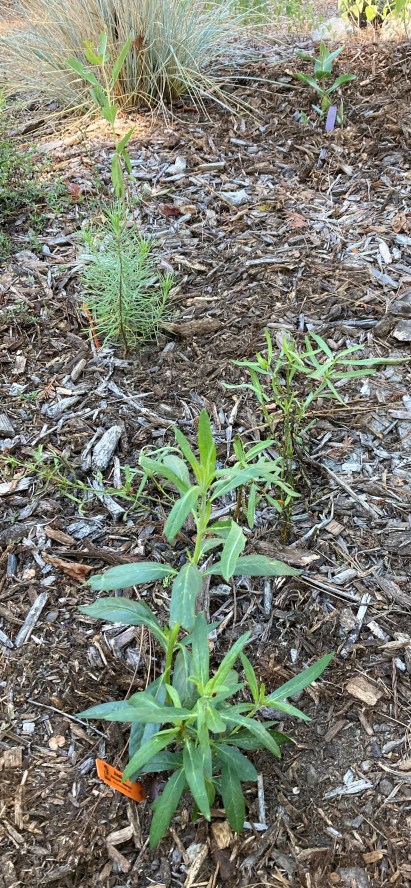 … but as I have said before, there is not enough leaf matter there to make the newborn caterpillars grow big and strong and become butterflies. It was my hope that if I put the Showy type out there, the Mama Monarch would choose it. And she did! But — it is hardly bigger than the new starts I set out. From the bottom of the picture at left:
1- Asclepias physocarpa – Family Jewels.
2- aphid-infested Narrow-Leaf Milkweed
3- Asclepias linaria – Pineneedle Milkweed
4- Showy Milkweed (top L)
5- Asclepias glaucescens – Nodding Milkweed (top R)
I know from the past, when I raised and released three butterflies, that they eat a lot. Back then I picked numerous large leaves off the Showy plant — which was huge — to feed them.
These three have already eaten half of the plant, and they have a lot more growing to do:

When I return from my trip north, I’m afraid that they will have eaten every last leaf, and then starved to death. Should I take them with me, and feed them? But feed them what? I only have two spindly Showy plants growing under the fig tree currently. What if I were to lay them on the ground under the one being eaten right now, making a path to the new starts? Do I really want them to possibly defoliate those, too, when they have barely begun? After that truly thrilling Monarch Project I undertook I decided once was enough. Bearing responsibility for caterpillars was too much work. And physically exhausting for other reasons! So… I think I will have to let nature take its course.
It might be that the smallish Showy Milkweed just wants a tiny bit more water to help Nature along, and then that course might result in this kind of Show next summer:
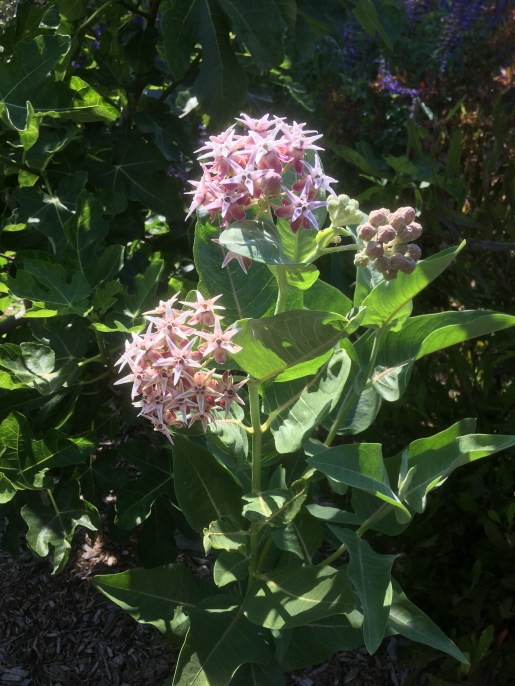
If so, there will be plenty of food for all caterpillar comers.
“For seasonable weather and the abundance of the fruits of the earth
and for peaceful times let us pray to the Lord.”
-Litany of Peace
 Gladsome Lights